
On Neurodivergence and Otherness
Show Table of Contents
INTRO
1. On Neurodivergence and Otherness: An Introduction
SENSES AND SENSORY SENSITIVITIES
2. Senses Count
3. Neurobiology for Dummies
4. Sensory Transmission and our Reward System
5. Sensory Receptors are the Body’s Cellular Plan
6. A Synthesis: Sensory Systems and our Emotions — Part I
7. A Synthesis: Sensory Systems and our Emotions — Part II
8. Sensory Disorders and Sensitivities
9. Etan’s Story
SYNESTHESIA
10. Synesthesia: Difference, But Not Disorder
11. Synesthesia, Creativity, Artistry — Part I
12. Synesthesia, Creativity, Artistry — Part II
AUTISM AND THE NEURODIVERSITY MOVEMENT
13. From “Mental Defectives” to Autism Spectrum Disorder
14. Changing Conception of Autism
15. Autism Diagnoses and Behavior Patterns
16. Autism Treatments that Help
17. Early Start Autism Treatment: A Case Study
18. Neurodivergence and the Neurodiversity Movement
19. Neurodiversity Takes Flight
20. ADHD and Neurodevelopmental Disorders
21. ADHD: A Preponderance of Risk Factors and Symptoms
22. ADHD: Inattentive, Impulsive … and Hyperactive?
23. ADHD: Named, Renamed, Still Needs a New Name
24. ADHD: Treatment and Coping Skills for All Ages
LGBTQ+
25. Neurodiversity and the LGBTQ+ Fight
26. LGBTQ+ Identity and Expression
27. LGBTQ+ and Mental and Behavioral Healthcare
ON LANGUAGE
28. Language Matters In and Around Neurodiversity
29. Neuroinclusion and Disability Language
30. Neurodivergent Language Difficulties
ON CREATIVITY AND GIFTEDNESS
31. Neurodiversity and Creativity
32. Giftedness is a Piece of Neurodivergence
SELF-IDENTITY
33. Self-Identity: The Cornerstone of Neurodiversity
34. Early Theories of Self-Identity Formation
35. Contemporary Theories of Self-Identity Formation
36. Authenticity and the Search for Self
37. Self-Concept and Self-Schema
38. Self-Labeling and Parts Work
39. Complexity, Clarity, and Self
40. Cognitive Complexity and Neurodivergence
41. Cognitive Complexity Meets Self-Identity
IMPROVING LIFE FOR NEURODIVERGENT PEOPLE
42. Empathy and Difference – Recognition and Effort
43. Empathy and Difference – Response
44. Reducing Neuroatypical-Neurotypical Conflict – Part I
45. Reducing Neuroatypical-Neurotypical Conflict – Part II
46. Communicating Across the Neurospectrum – Part I
47. Communicating Across the Neurospectrum – Part II
48. Neurodiversity: Advocacy and Education
49. Neuroinclusion in the Workplace
50. A Neurodiverse Lifestyle
IN CONCLUSION
51. In Conclusion: Neurodivergence and Inspiration
13. From “Mental Defectives” to Asperger Syndrome

We’ve come a long way from the origins of autistic thinking and schizophrenia in the work of early 20th-century German and Viennese psychiatrists. And from the mental defectives that filled institutions in mid-century. We’ve left behind a time of poorly understood diagnoses of loosely connected forms of autism, where treatment interventions held little regard for the person with the symptoms and, sometimes, their families. Even today, battles rage on about professional diagnostic standards and how we define, accept, treat, mainstream, and support people on the autism spectrum.
The long sad, but fascinating autism origin story is worth knowing. Psych origin stories are the histories of the psychiatric professions themselves — how early concepts, models, and treatments formed a fledgling science not trusted by the medical community, which was in its early days as well.
Over the 20th century, medical/psychiatric practice and exploration grew into more rigorous, evidence-based disciplines. And the psychiatric sciences became intrinsic to the studies of neurobiology, developmental neuroscience, and genetics — the brain-mind-body connection we know more about today. Learning these histories and the terrible, cruel ways so many people were treated and kept away from mainstream society has deepened my appreciation for the neurodiversity movement and our rapidly changing attitudes toward difference.
This post and the photos are largely drawn from individual Wikipedia pages, unless otherwise cited.
Autism and Infantile Schizophrenia
In 1903, a French psychiatrist explained reality as a synthesis of all psychological functions—from autonomic functions in the nervous system through to complex thoughts and actions. If the nervous system was weak, psychological tension would drop. And an individual would lose the ability to synthesize these complex functions and also lose the sense of reality. They’d revert to a form of thinking which preceded the individual’s ability to conceptualize the sense of self. —Bonnie Evans, “How Autism Became Autism,” National Library of Medicine/NIH
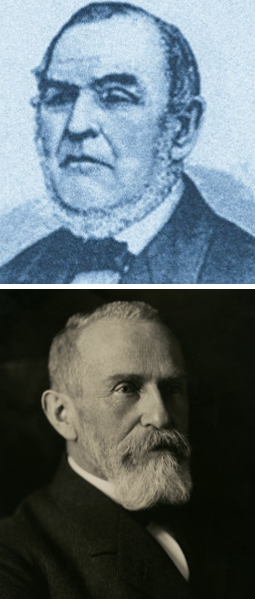
In 1908, Austrian educator Theodor Heller (1869–1938) first described a complex disorder that affects different areas of the child’s development — some 35 years before Leo Kanner and Hans Asperger described autism more as we understand it today. Heller first called the syndrome dementia infantilis. Now it’s called childhood disintegrative disorder (CDD), Heller’s Syndrome, or Disintegrative Psychosis. It’s a rare (1-2/10,000 children) condition characterized by late onset (3-10 years old) of severe regression in language, social function, motor skills, and mood. Until autism spectrum disorder (ASD) entered the lexicon in DSM-5, CDD was grouped with pervasive developmental disorders (PDDs). To this day, there is disagreement about how strongly CDD is related to autism and whether it belongs on the autism spectrum.
German psychiatrist Eugen Bleuler coined both autism and schizophrenia. In 1911, he described autism as a symptom of severe schizophrenia. Building on the work of Sigmund Freud, Carl Jung, and others, Bleuler defined autistic thinking as “infantile wishes to avoid unsatisfying realities and replace them with fantasies and hallucinations.”
German psychiatrist Eugen Bleuler coined both autism and schizophrenia. In 1911, he described autism as a symptom of severe schizophrenia. Building on the work of Sigmund Freud, Carl Jung, and others, Bleuler defined autistic thinking as “infantile wishes to avoid unsatisfying realities and replace them with fantasies and hallucinations.”
Theodor Heller and Eugen Bleuler
Art by Jan Swan
In addition to proactively treating older adults’ mental health, researchers suggested ways to lessen daily effects of sensory difficulties — which in turn lessens impact on mental health.
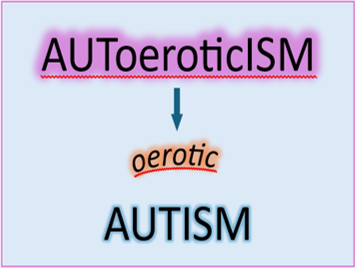
Bleuler attributed autism’s etymological roots to Freud’s use of the term autoeroticism. In 1905, Freud described autoeroticism as “hallucinatory thinking along with self-soothing” in the stage preceding an infant’s engagement with reality.
According to Bleuler, those with autistic thinking were like schizophrenics, who couldn’t draw on appropriate associations in the mind. This led to a poor sense of reality, with its own special laws. By blocking off perceptive-sensory stimulations of the outside world, they were no longer bound by the rules of logic.
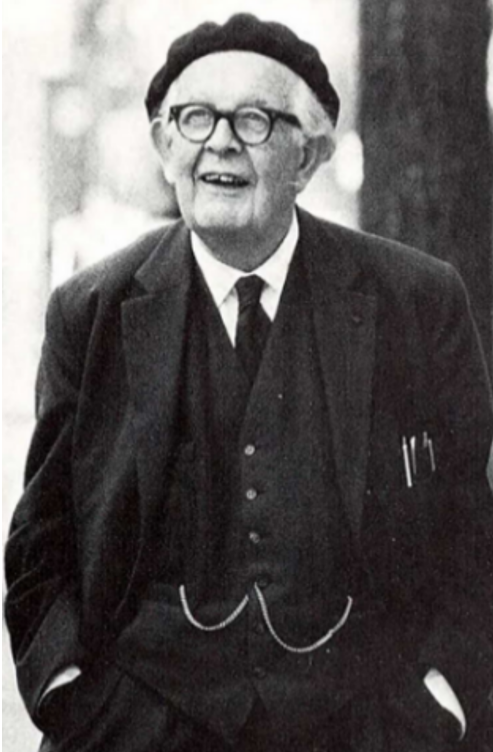
Jean Piaget
In 1922, Swiss child psychologist Jean Piaget theorized that infants develop a relationship to reality through everyday interactions with people and objects. He described children’s pre-verbal thinking as autistic or symbolic, with three distinctive features:
- Not able to follow logical rules
- Visual imagery predominates over an ability to think conceptually
- Lack of awareness of the connections between visual perceptions
In his book, Child’s Perception of the World (1929), Piaget wrote that autistic thinking subsides as babies grow more aware of concrete objects and surrounding reality. As they grow, children’s thoughts progress from their “primitive, magical imaginations” toward logical reasoning.
Autoeroticism, Autophilia, and Narcissism in Britain and France, 1920s-1940s
Like Freud and Bleuler, British child psychiatric researchers linked autistic/autoerotic and hallucinatory thinking, also drawing from Piaget’s work on child development. Autistic, schizophrenic, and psychotic were commonly used terms to describe child patients.
- Melanie Klein noted a child experienced psychosis if their “instinctual wish-fulfilment” clouded their recognition of reality. (In 1894 Freud first used psychosis to describe what he referred to as “hallucinatory confusion” in children.)
- Mildred Creak noted “normal infant” thought processes are like the “primitive and archaic forms seen in schizophrenics,” but childhood schizophrenia is the normal infant reacting to disturbing thought development. This has an effect on the developing intellect and motor coordination.
British and French analysts focused on adult autism and autoerotism, referring to aspects of autism as “autophilia, egocentricity, ego-hypertrophy, and augmentation of the sense of personality.” French counterparts criticized Bleuler’s direct association of autistic thought with losing a sense of reality.
Austrian-British psychoanalyst Anna Freud (Sigmund Freud’s sixth and final child) also developed theories of severe psychopathological thought processes in young children. Freud writes that, for six months after birth, the infant is inherently “narcissistic and autoerotic.” In this state, “satisfaction counts for everything, and objects count for nothing.”
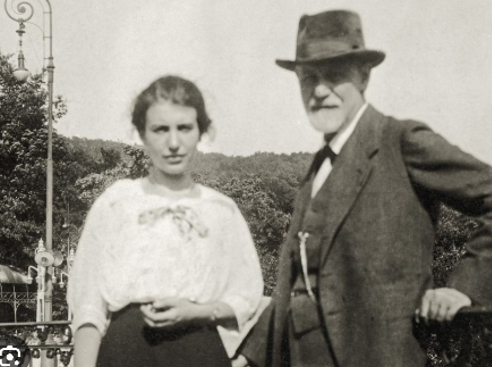
Anna Freud and Sigmund Freud. Photo: Independent, UK
The child had no awareness of the effects of his actions on others, had no sense of guilt or anxiety over his actions, and no sense of loss. —Anna Freud, quoted by Bonnie Evans, “How Autism Became Autism,” National Library of Medicine/NIH
Bonnie Evans writes that Anna Freud believed environmental factors and close relations could only cause psychopathology in a child starting at six months. But, Evans writes, “psychoanalysts and others frequently used autoerotism and primary narcissism to describe autism’s origins in the psychopathology of realistic and relational thinking.”
Maternal Deprivation and Infant Psychopathology, 1940s-1950s
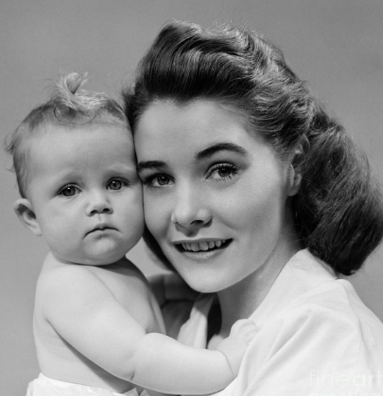
Mother and child, ca. 1940s-50s, H. Armstrong Roberts /Classic, Science Source Prints
In the 1940-1950s, researchers believed maternal deprivation explained why some but not other children developed pathological thinking patterns. They studied how the mother related to her child and its effect on the child’s ability to conceptualize and form relationships. Researchers thought maternal absence or coldness affected children’s unconscious mental processes, causing them to retreat from the outside world.
- During WWII in Britain, one million unaccompanied children were evacuated from cities. High-profile psychiatric professionals led the famous Cambridge Evacuation Survey to study the effects of separation from their parents and other sudden environmental changes.
- In the early 1940s, Americans Lauretta Bender and William Goldfarb’s studies on maternal deprivation drew similar conclusions to the Cambridge survey.
- As British psychiatrist/ psychoanalyst John Bowlby wrote, “With monotonous regularity, each [study] put its finger on the child’s inability to form relationships as being the central feature from which all other disturbances sprang.”
Infantile Autism and Refrigerator Moms
In 1943, Austrian-American psychiatrist Leo Kanner published the first systematic description of early infantile autism, in which he saw a pattern of abnormal behavior. Kanner wrote, “These children have come into the world with an innate inability to form the usual, biologically provided contact with people.” This, as described by PubMed/NIH, also credited Kanner for his prescient observations of parent behavior, foregrounding the importance of genetics.
Leo Kanner
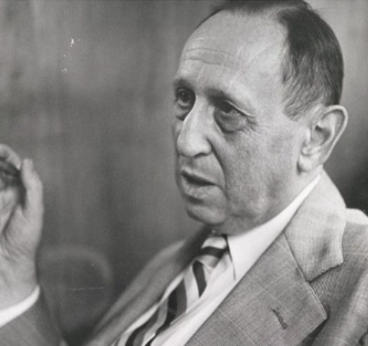
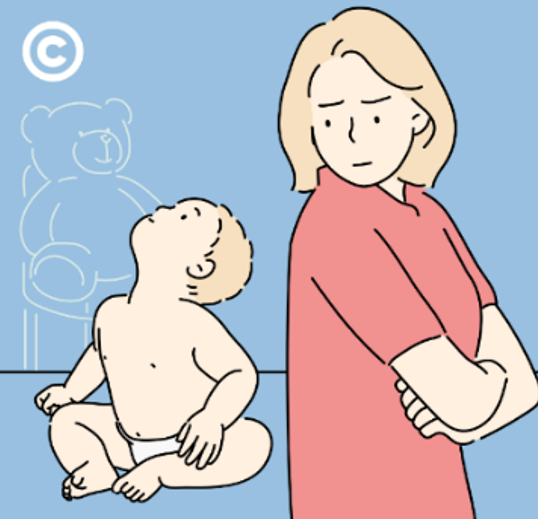
Source: Becommon
But Kanner also coined the term refrigerator mother in the 1940s to describe a cold, uncaring parent who “so traumatized their child that they retreated into autism.”
Bruno Bettelheim, a renowned professor of child development in the 1940s-1970s — and, according to Very Well Health, a great self-promoter often cited in the media — likened the idea of the refrigerator mother to guards in a Nazi concentration camp.
This concept caused heartache for many families over decades before it was debunked by researcher Bernard Rimland, founder of the Autism Research Institute and parent of a child with autism. His research and advocacy showed and promoted autism’s biological origins, rooted in brain development.
In 1943, British educational psychologist/psychoanalyst Susan Isaacs, who studied children’s intellectual and social development (and later was a leader in the nursery school movement), wrote that children experienced phantasies in relation to early experiences. These fantasies led the children to “repress or divert internal forces and drives, which could manifest problems in later life.”
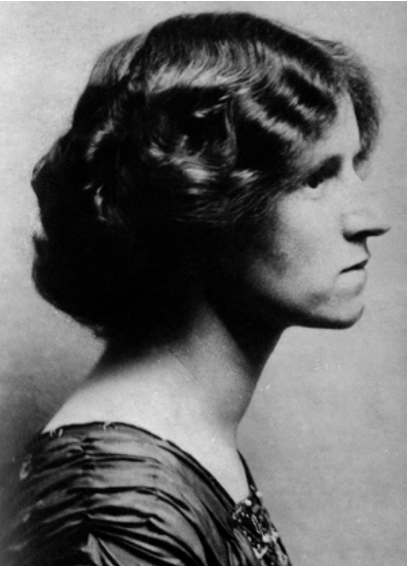
Susan Isaacs
From the moment an infant experienced an instinctual urge, they could fantasize about that urge and imagine its direction. Isaacs argued, “Phantasy is the mental corollary, the psychic representative of instinct…. Every impulse, every feeling, every mode of defense is expressed and experienced in such a specific phantasy, which gives it mental life and shows its specific direction and purpose.” —Bonnie Evans, quoting Susan Isaacs, National Library of Medicine/NIH
Infant Psychopathology Claims Raise Questions
But the early 1940s also saw major disagreements on claims attributing advanced psychical thought processes to infants and their ability to cause psychopathology. Critics of prevailing theories argued the evidence and critical explanation weren’t thorough to support such claims.
The term autism first appeared in the DSM in 1952, but it was used in connection with schizophrenic reactions in young children.
Autistic Psychopathy — Later, Asperger Syndrome
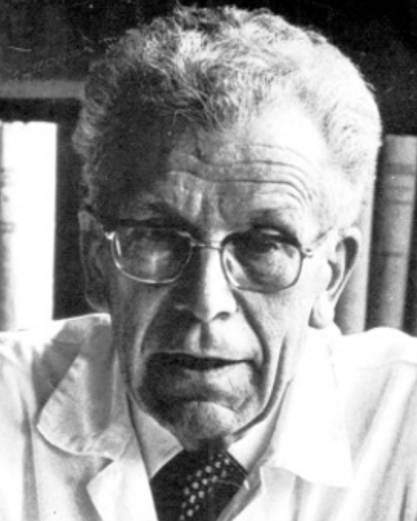
Hans Asperger
In 1944, Viennese psychiatrist Hans Asperger studied children with “Kanner’s autism,” but with average-to-superior language abilities. Both Kanner’s and Asperger’s autism shared other common impairments. Asperger called his version autistic psychopathy.
In the 1980s, Lorna Wing introduced Asperger syndrome and pioneered autism as a spectrum condition, based on Hans Asperger’s work. Asperger’s syndrome became a diagnostic term for autistic people without a learning disability.
Also in 1980, infantile autism was officially recognized as a diagnosis, separate from schizophrenia, when the American Psychiatric Association (APA) included it in the Diagnostic and Statistical Manual of Mental Disorders, 3rd edition (DSM-3). Children were diagnosed with infantile autism if they had significant language impairments and intellectual disabilities.
During the 1980s, autism research became more common, with increasing studies into causes, symptoms, comorbidities, and treatments. In 1987, the revised DSM (DSM-3-R) changed the name to autistic disorder, describing it as a “pervasive lack of responsiveness to other people.”
Asperger Syndrome’s Short Life as a Standalone Diagnosis
Asperger syndrome became the high-functioning autism, officially recognized in 1992 with its inclusion in the International Classification of Diseases, 10th edition (ICD10) and in the 1994 DSM-4 in the U.S. The idea of an autism spectrum was gradually recognized in 1993-95.
- A 1993 study of ASD children (IQ of 70 or above) found a rate of 36/10,000 with Asperger’s and another 35/10,000 including children with social difficulties. Their teachers recognized social and/or educational differences, but without finding a reason for them.
- In 1995, an Edinburgh study of children of average-to-high ability—who had difficulty with social interaction, but not other symptoms—found 71/10,000. These children represented the “subtle” end of the spectrum, with most becoming independent as adults, many marrying, and some showing exceptional talents.

Photo: Lisa Freed & Heather Gilmore, “Autism and Language Development,” Behavioral Innovations
Asperger’s was associated with Star Trek’s Spock and The Big Bang Theory’s Sheldon Cooper — fictional characters with “considerable skill, especially in technical, scientific, or musical fields, who nevertheless lacked social awareness and savvy,” according to the University of Oregon’s Autism History Project.
Asperger syndrome would soon be brought under the autism spectrum disorder (ASD) umbrella—in DSM-5 in 2013 and ICD11 in 2019—once autism was changed to a spectrum of low-to-high function.

Psychiatric social worker Liliana Valvano, writes in her article “Helping Neurodivergent Individuals Succeed in a Neurotypical World,” Columbia University’s Lieber Recovery Clinic, that research suggested significant clinical overlap between Asperger’s and other forms of autism. And psychotherapists weren’t consistent in how they diagnosed Asperger’s. Valvano adds, “Some argued that maintaining separate diagnostic labels for conditions like Asperger’s perpetuated stigma and discrimination. By emphasizing the commonalities, the hope is to promote greater acceptance and understanding of individuals across the spectrum.”
Another reason for eliminating Asperger’s syndrome as a term came to light through the scholarship of Edith Sheffer, a modern European history scholar. According to Wikipedia, Sheffer wrote in 2018 that Hans Asperger cooperated with the Nazi’s, including sending children to the Am Spiegelgrund clinic, which participated in the Nazi euthanasia program to kill individuals with disabilities. While other scholars question whether Asperger was aware the children he referred to the clinic were being murdered, Sheffer makes a compelling case he did. She noted Asperger belonged to organizations that sympathized with Nazi ideology and made written statements in support of “racial purity.”
Wikipedia also provides accounts of Hans Asperger’s written statement in 1962, claiming the Gestapo attempted to arrest him after a 1938 lecture. Except there’s no corroboration for such an incident. In a 1974 interview, shortly before his death, Asperger repeated the claim of being “saved from the Gestapo” by his mentor Franz Hamburger and he “volunteered for the army to escape Gestapo reprisals because he had refused to cooperate with Nazi racial hygiene policies.” There’s no archival evidence for either of these claims.
Doorstep of Am Spiegel-grund clinic, Wikipedia

Other facts speak against Asperger’s self-portrayal as a man persecuted by the Gestapo for his resistance to Nazi racial hygiene, who had to flee into military service to avoid further problems. On several occasions, he published approving comments on racial hygiene measures such as forced sterilizations. —Herwig Czech, “Hans Asperger, National Socialism, and ‘race hygiene’ in Nazi-era Vienna,” Wikipedia
Flipping the Switch on Autism, 1960s+
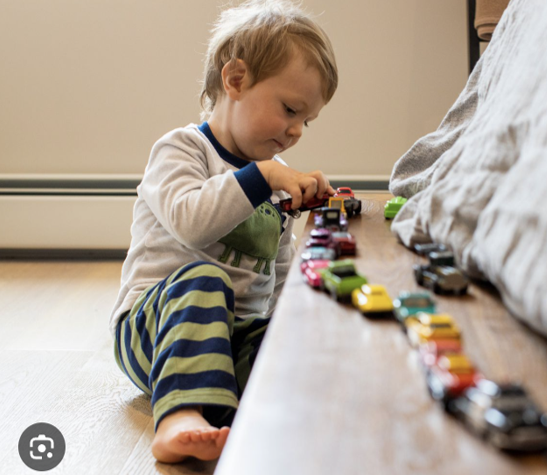
“Reasons Autistic Children Play Differently,” by Lisa Jo Rudy, Very Well Health. Image: Jordan Siemans/Getty Images
From the 1960s on, autism was wholly reconceived to fit with new models of child development. Child psychologists referred to autism to describe the exact opposite of what it had meant up until that time.
- Scientific research becomes more rigorous and replicable. Researchers use epidemiological and statistical studies of autism. Theories associate autism with adult schizophrenia, reconceptualizing development in infants and children.
- Institutions for mental defectives or the mentally retarded close, increasing how many children need care and more humane treatment — and needed changes in terminology.
- Speech therapy services encourage new ways to understand autist infants/children.
Autism Prevalence: First Studies
Twenty years after Kanner and Isaacs, psychiatrist Victor Lotter published the first epidemiological study of children with autism, giving an overall prevalence rate of 4.5/10,000 children (a 2006 Lancet article claimed a rate of 116/10,000 children in the UK.)
As researchers noticed a rise in autism numbers, they continued to see autism as a singular disorder with a set of specific symptoms.
- In the U.S. and other western countries, autism diagnoses rose after mental institutions closed in the 1960s. Children were integrated in mainstream educational and social settings.
- In the 1960s-1980s, autism changed from “profound mental retardation” to “other developmental or physical disorders,” increasing the numbers of children with autism.
- Studies in other countries also looking into autism had results ranging from 3.3/10,000 to 60/10,000—a variation due to different conceptions of autism.
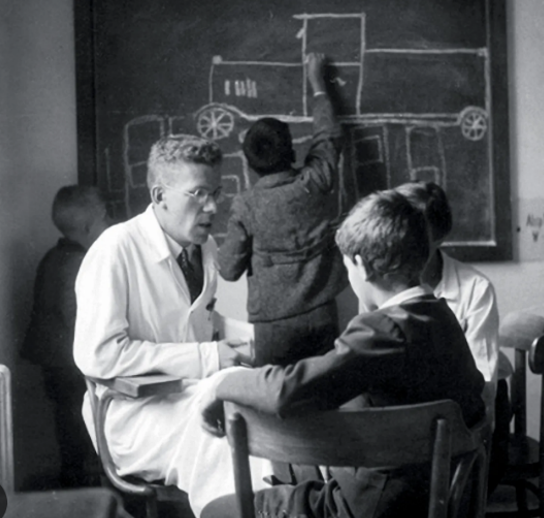
Photo: John Donvan and Caren Zucker, “The Early History of Autism in America,” Smithsonian Magazine
In the 1970s, British researcher Michael Rutter conducted the first genetic study of autism. He wrote, “The autistic child has a deficiency of fantasy, rather than an excess,” referring to a complete lack of an unconscious symbolic life.
The meaning of the word autism was then radically reformulated from a description of someone who fantasized excessively to one who did not fantasize at all. This change in meaning was part of a general shift to understand psychological problems through epidemiological studies rather than individual cases. —Bonnie Evans, “How Autism Became Autism,” National Library of Medicine/NIH
Coming Up Next

In Post 14: Changing Conception of Autism, I move the story of autism closer to the present in the quest to understand the condition and what the experience of life looks like for those living on the spectrum.
Copyright ©2026 Jan Swan
 English