On Neurodivergence and Otherness
Show Table of Contents
INTRO
1. On Neurodivergence and Otherness: An Introduction
SENSES AND SENSORY SENSITIVITIES
2. Senses Count
3. Neurobiology for Dummies
4. Sensory Transmission and our Reward System
5. Sensory Receptors are the Body’s Cellular Plan
6. A Synthesis: Sensory Systems and our Emotions — Part I
7. A Synthesis: Sensory Systems and our Emotions — Part II
8. Sensory Disorders and Sensitivities
9. Etan’s Story
SYNESTHESIA
10. Synesthesia: Difference, But Not Disorder
11. Synesthesia, Creativity, Artistry — Part I
12. Synesthesia, Creativity, Artistry — Part II
AUTISM AND THE NEURODIVERSITY MOVEMENT
13. From “Mental Defectives” to Autism Spectrum Disorder
14. Changing Conception of Autism
15. Autism Diagnoses and Behavior Patterns
16. Autism Treatments that Help
17. Early Start Autism Treatment: A Case Study
18. Neurodivergence and the Neurodiversity Movement
19. Neurodiversity Takes Flight
20. ADHD and Neurodevelopmental Disorders
21. ADHD: A Preponderance of Risk Factors and Symptoms
22. ADHD: Inattentive, Impulsive … and Hyperactive?
23. ADHD: Named, Renamed, Still Needs a New Name
24. ADHD: Treatment and Coping Skills for All Ages
LGBTQ+
25. Neurodiversity and the LGBTQ+ Fight
26. LGBTQ+ Identity and Expression
27. LGBTQ+ and Mental and Behavioral Healthcare
ON LANGUAGE
28. Language Matters In and Around Neurodiversity
29. Neuroinclusion and Disability Language
30. Neurodivergent Language Difficulties
ON CREATIVITY AND GIFTEDNESS
31. Neurodiversity and Creativity
32. Giftedness is a Piece of Neurodivergence
SELF-IDENTITY
33. Self-Identity: The Cornerstone of Neurodiversity
34. Early Theories of Self-Identity Formation
35. Contemporary Theories of Self-Identity Formation
36. Authenticity and the Search for Self
37. Self-Concept and Self-Schema
38. Self-Labeling and Parts Work
39. Complexity, Clarity, and Self
40. Cognitive Complexity and Neurodivergence
41. Cognitive Complexity Meets Self-Identity
IMPROVING LIFE FOR NEURODIVERGENT PEOPLE
42. Empathy and Difference – Recognition and Effort
43. Empathy and Difference – Response
44. Reducing Neuroatypical-Neurotypical Conflict – Part I
45. Reducing Neuroatypical-Neurotypical Conflict – Part II
46. Communicating Across the Neurospectrum – Part I
47. Communicating Across the Neurospectrum – Part II
48. Neurodiversity: Advocacy and Education
49. Neuroinclusion in the Workplace
50. A Neurodiverse Lifestyle
IN CONCLUSION
51. In Conclusion: Neurodivergence and Inspiration
26. LGBTQ+ Identity and Expression
The neurodiversity movement is a global struggle to protect the rights, freedom, and access to school, work, healthcare for all neurominorities. This includes all public manifestations of that freedom for the LGBTQ+ community, which strictly speaking isn’t a neurominority — unless you accept that ongoing, relentless discrimination and trauma alters the brain. In this post, I’ll discuss LGBTQ+ sex and gender against a backdrop of prejudice and threat — and celebrate progress in places where there’s acceptance and safety.
In sex and gender, people both internalize and project outwardly who they are, which can be — but is often not — the same thing.
Neurotypical straight people made uncomfortable by difference possibly weren’t taught tolerance — or worse, were taught intolerance. Or they cover their own fears and insecurities with avoidance or hate. This can cause people on the sex/gender spectra to don the mask when not safe within their home or out in the community.
Equally compelling is a genuine, optimistic counternarrative to this old playbook. Younger generations find prejudices and hate-mongering ignorant and pointless. They freely explore their own proclivities — accepting not only without judging, but with rage at the system judging.
In a 2015 review of 40 years of data on changed attitudes about sex, researchers found the following regarding same-sex relationships and practices:
- Attitudes toward same-sex practices have become more permissive, with a greater acceptance of same-sex marriage.
- Acceptance of same-sex sexual experience has quadrupled, and the number of people who have had same-sex experiences has doubled.
- In 2004, 60% of Americans opposed same-sex marriage, but by 2019, 61% supported it.
- Younger generations have shown the most dramatic and decisive changes.
Among 18- to 29-year-olds, 21% of Boomers in the early 1970s believed same-sex sexual activity was “not wrong at all,” compared to 26% of GenX’ers in the early 1990s and 56% of Millennials in the 2010s. —Jean Twenge, et al., “Changes in American Adults’ Sexual Behavior and Attitudes, 1972–2012” (2015), Archives of Sexual Behavior
Photo: Byrdie
We’re in the middle of something real and vibrant. I hope each generation erases prior generations’ misunderstandings and prejudices to arrive at more acceptance and celebration of difference. One could argue that neurodiversity includes everyone who is ready for this.
Sex and Gender
We may identify at any point within or outside a sexual or gender spectrum. Or a nonbinary spectrum or even a more particular spectrum, such as from asexual (little or no sexual attraction) to allosexual (sexual attraction to others, regardless of sexual orientation). For every form of identity, there are greater/lesser degrees of attitudes, behaviors, and self-definition.
According to Wikipedia, the sexual component of our identity reflects our sexual self-concept toward our attractions for partners.
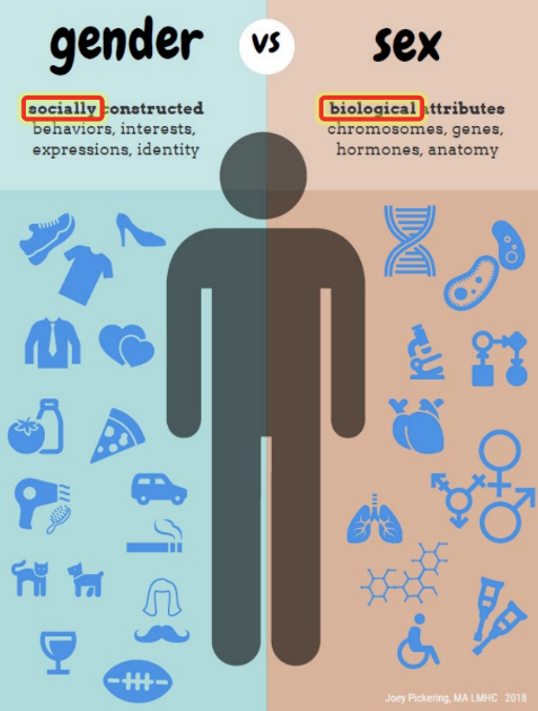
Source: Joely Straseski, PhD, “Inclusivity in Laboratory Medicine: Endocrine Testing in Transgender Individuals.” Graphic: Joey Pickering, ARUP Laboratories
I like the Canadian Institutes of Health Research’s definition of terms:
Sex refers to a set of biological attributes, primarily associated with physical and physiological features, including chromosomes, gene expression, hormone levels and function, and reproductive/sexual anatomy. Sex is usually categorized as female or male, but there is variation in the biological attributes that comprise sex and how those attributes are expressed.
Gender refers to socially constructed roles, behaviors, expressions, and identities of girls, women, boys, men, and gender-diverse people. It influences how people perceive themselves and each other, how they act and interact, and the distribution of power and resources in society.
SEXUAL IDENTITY AND SEXUAL ORIENTATION
Sexual identity is how we perceive our sexuality — the label we choose to describe our sexuality — in terms of romantic or sexual attractions. It may include our sexual orientation, how we feel about our sexuality, and how we choose to express it (gay, asexual, queer, etc.). It can also be fluid and change over time as we learn more about ourselves — and may/may not align with our biological sex, sexual behavior (sexual activity), or sexual orientation.
Sexual orientation is solely focused on the sexual, emotional, and romantic attraction we direct to others — a pattern of attraction we experience toward those of the same/opposite sex/gender, to both sexes, to one or more genders, or to no one (straight, gay/lesbian, bisexual, pansexual, asexual).
As WedMD notes, sexual orientation involves feelings and a sense of identity but is not necessarily noticeable to others.
Sexual orientation is an updated term from sexual preference because it isn’t a choice and can’t be changed, as researchers agree. It stems from emotional, hormonal, environmental, and biological factors — and not from how children are raised by their parents or trauma.
Beyond reproduction, sexuality defines how we see ourselves and how we physically relate to others. And people may/may not act on the attractions they feel. A major 1994 survey of sexual practices in the general U.S. adult population reported this:
- Only 16% of women and 35% of men who had some same-sex attraction had a LGB identity.
- 96% of women and 87% of men with a LGB identity had sexual activity with someone of the same sex — in contrast with 32% of women and 43% of men with same-sex attractions.
Development of self-identification as [LGB] is a psychological and socially complex state, something which, in this society, is achieved only over time, often with considerable personal struggle and self-doubt, not to mention social discomfort. —Edward Laumann, et al., The Social Organization of Sexuality, University of Chicago Press (1994)
Sexual orientation identity is how we label and understand our own sexual attraction within a sexual or gender spectrum, including our personal perception and self-concept related to it. It’s how we choose to identify our sexual orientation to ourselves and others. If our sexual orientation is biologically fixed, sexual identity and sexual orientation identity are when we define ourselves, perhaps differently from what’s fixed. For example, a gay man presents himself publicly as straight or bisexual … or gay.
Some who experience unwanted sexual attraction may choose to dis-identify with a sexual minority identity, which creates a different sexual orientation identity from their actual sexual orientation. Sexual orientation identity, but not sexual orientation, can change through psychotherapy, support groups, and life events. A person who has same-sex feelings can self-identify in various ways. An individual may come to accept an LGB identity, develop a heterosexual identity, reject an LGB identity while choosing to identify as ex-gay, or refrain from specifying a sexual identity. —Wikipedia
GENDER IDENTITY
Gender identity is not confined to a binary (girl/boy, woman/man) nor is it static; it exists along a continuum and can change over time. There is considerable diversity in how individuals and groups understand, experience, and express gender through the roles they take on, the expectations placed on them, relations with others, and the complex ways that gender is institutionalized in society. —Canadian Institutes of Health Research
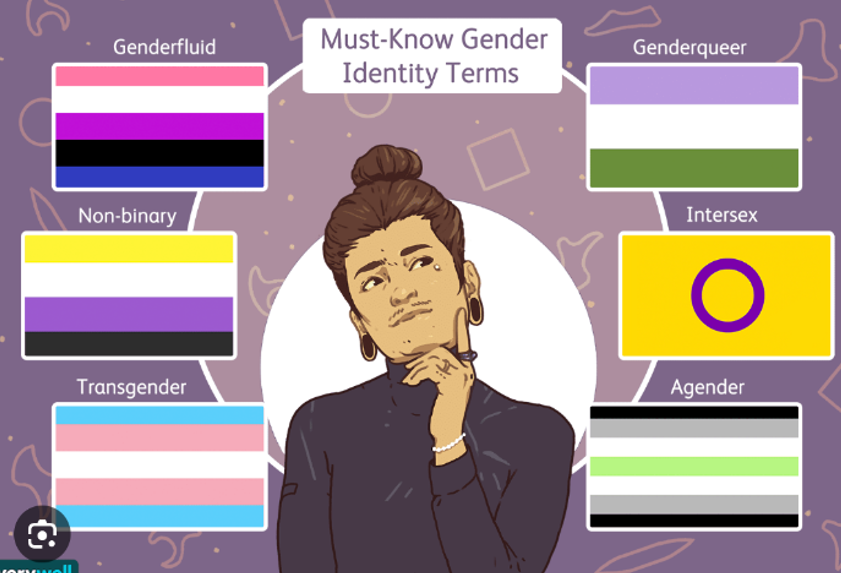
Photo: Very Well Mind
Gender identity doesn’t necessarily correlate with assigned sex at birth — but exists on a spectrum from cisgender to transgender. Feelings can begin in toddlerhood. While most people identify as male/female, including trans people, some blend female/male, differ from female/male, or are neither female/male. Some feel like a masculine female or a feminine male. Others describe themselves as genderfluid or genderqueer, with their gender changing from time to time.
According to ZhenyaKon, who I found on Reddit, terms are useful but “without walls — they’re permeable, personal, political.”
Queer is either a catch-all term describing non-cis/non-straight identities or a term that aligns a member of the LGBTQ+ community with a specific political history of radical liberation for all.
Genderqueer refers to an experience of gender beyond the traditional male and female—like nonbinary. People associate with one term or another based on personal feelings…. I personally see “genderqueer” as a more forceful term (in a good way), one with a longer history that’s tied to queerness as a political identity.
Genderfluid means a person experiences life as different genders at different times. This can change by the day, the month, the hour. One can be any combination of genderfluid, genderqueer, nonbinary, and queer — these terms aren’t mutually exclusive. —ZhenyaKon, Reddit
While ZhenyaKon makes a case for a person’s gender identity fluctuating frequently and rapidly, other sources note that kind of change, if it happens at all, is very slow to change — except perhaps during early childhood or adolescence, during a period of internal exploration and understanding:
With exceptions, gender identity develops surprisingly rapidly in the early childhood years, and usually appears to become at least partially irreversible by ages 3-4. —Frederick R. Hine, Introduction to Behavioral Science in Medicine (2012)
Considerable scientific evidence has emerged demonstrating a durable biological element underlying gender identity. Individuals may make choices due to other factors in their lives, but there do not seem to be external forces that genuinely cause individuals to change gender identity. —Endocrine Society
Social constructivists argue that gender identity, or the way it is expressed, is socially constructed, determined by cultural and social influences…and is not necessarily incompatible with the existence of an innate gender identity [also called essentialism], since it may be the expression of that gender that varies by culture. —Wikipedia
Gender Roles in Society
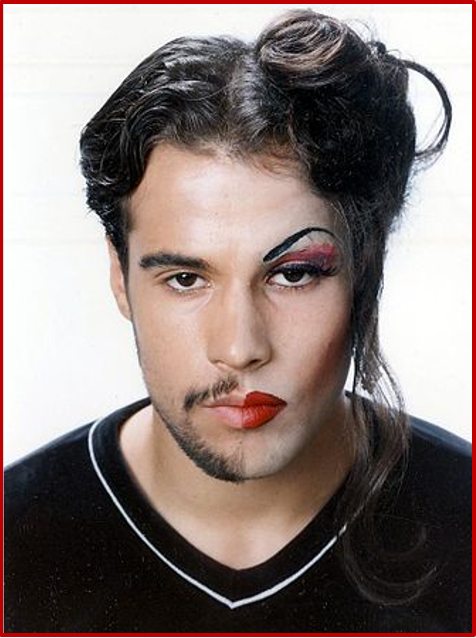
Gender identity is partly how a person responds to socially accepted and desired gender roles most commonly found — centered on masculine/feminine traditions. Although gender roles have evolved and expanded, many societies still keep women in the “private” sphere and men in the “public” one.
Gender roles can dictate choice of profession, play, sports, relationships — and how someone acts within those relationships. Wikipedia notes, society setting static gender roles alienates those who feel “they have to be at one end of a linear spectrum and must identify themselves as man or woman, rather than being allowed to choose … in between.”
Gender depicted as an ambiguous phenomenon, by a young Swedish actor, Wikipedia
Globally, communities interpret biological differences between men and women to create a set of social expectations defining “appropriate” behaviors for men and women and determine their different access to rights, resources, power in society, and health behaviors. Although the specific nature and degree of differences vary from one society to the next, they still tend to typically favor men, creating an imbalance in power and gender inequalities within most societies. —Wikipedia
Gender Expression vs Gender Identity
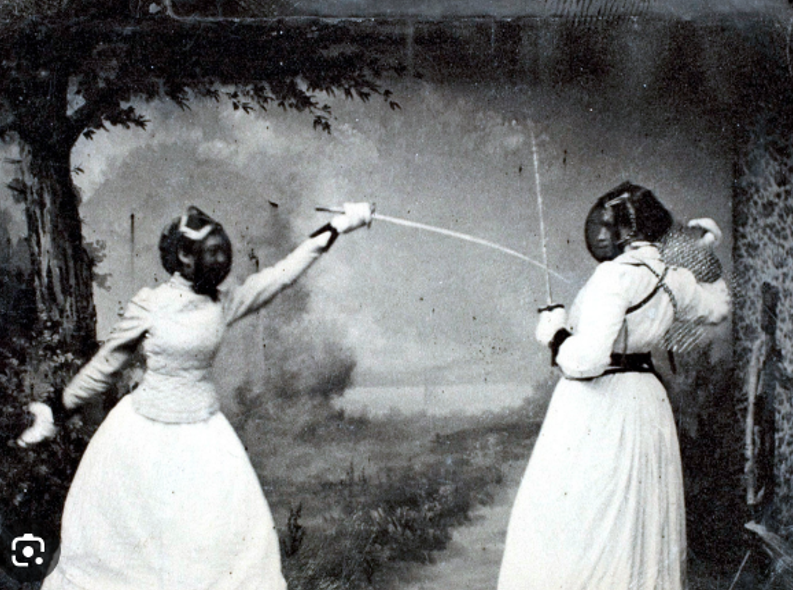
Source: Photographer unknown, Eastman House Collection, The New York Times
Historically, sex and gender were assumed to be entwined and immutable: all males should be masculine, all females feminine. Many cultures still set rigid, stereotyped expectations for how to behave and appear based on assigned sex. Going against this risks bullying, discrimination, and harassment. Most understand gender expression can be influenced by gender identity, which doesn’t necessarily align with biological sex.
Gender expression shows who we are — through attitude, voice, movement, dress, pronouns, interests, behavior (use of a restroom matching our gender) — all key to self-identity, mental health, and wellbeing. Unlike gender identity, self-expression can change depending on the moment. How we identify with our sexual orientation, are romantically or sexually attracted to others, or see ourselves in varied cultural/social contexts — and our acceptance of gender diversity in that context.
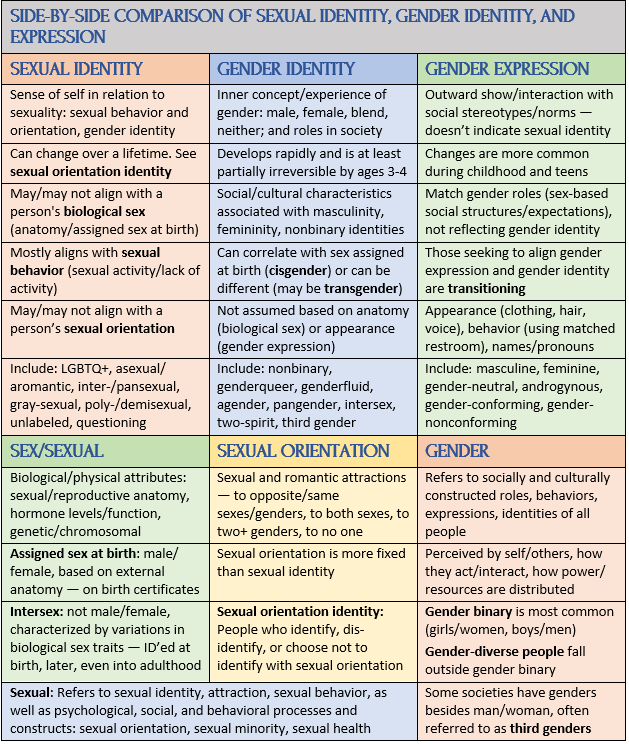
This next chart summarizes the differences in meaning, drawn from Very Well Mind and multiple additional sources:
Nonbinary Gender Identity Defined
Advocates for Trans Equality (A4TE) notes being nonbinary is nothing new. “Nonbinary people aren’t confused about their gender identity or following a new fad — nonbinary identities have been recognized for millennia by cultures and societies around the world.”

Some have a gender that blends elements of being a man or a woman, or a gender that is different than either male or female. Some people don’t identify with any gender. Some people’s gender changes over time.
People whose gender is not male or female use many different terms to describe themselves, with nonbinary being one of the most common. Other terms include genderqueer, agender, bigender, and genderfluid. None of these terms mean the same thing — but all speak to an experience of gender that is not simply male or female. —Advocates for Trans Equality (A4TE)
Photo: Byrdie
More particular terms are third gender and two-spirit. Some other A4TE truisms (paraphrased):
- Nonbinary people don’t need medical care to live a fulfilling life, but it’s critical and life-saving for many.
- Most transgender people are not nonbinary and have a male/female gender identity — and should be treated like any other man or woman.
- Being nonbinary is different from being intersex, who identify as men or women. Some intersex people may be nonbinary. Most nonbinary people are not intersex.
Being Intersex
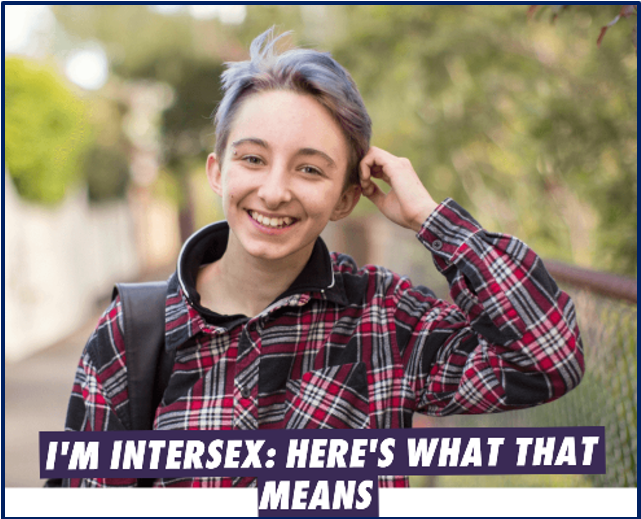
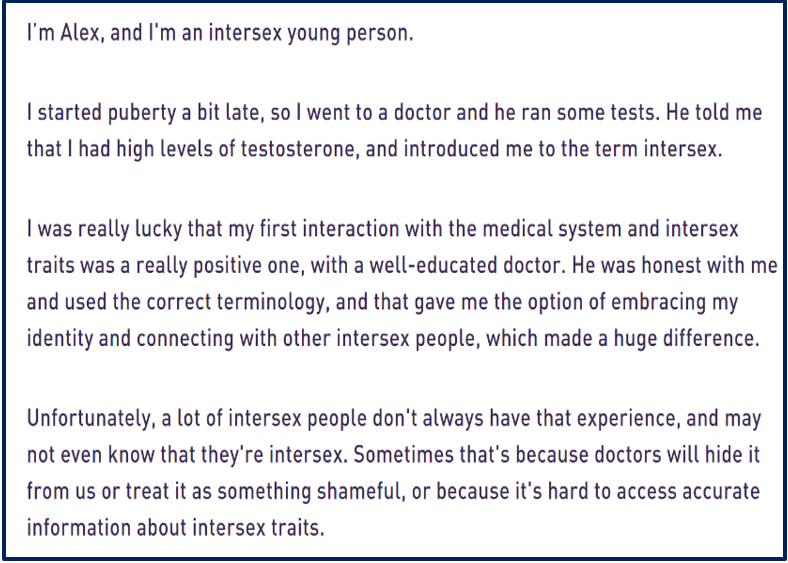
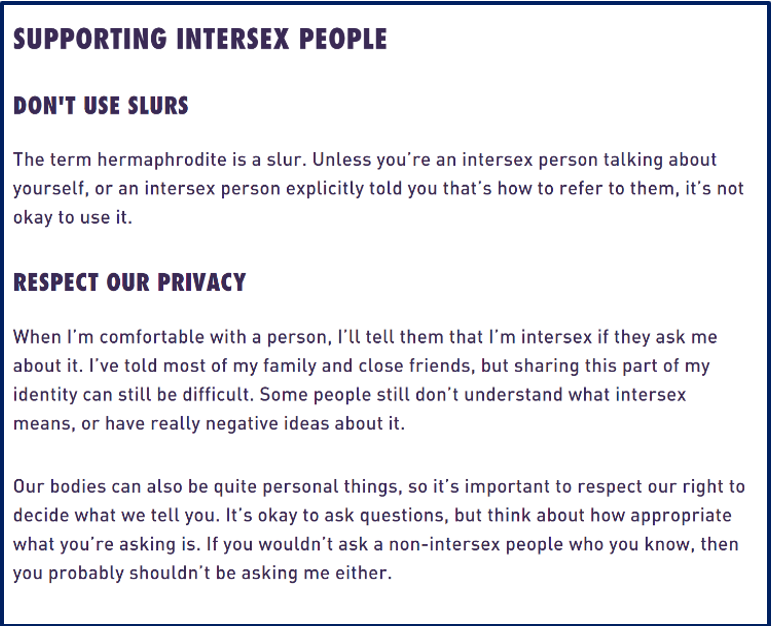
Intersex people’s reproductive/sexual anatomy isn’t binary male/female. Traits can affect chromosomes, hormones, and the reproductive system — appearing at birth or puberty, may not be obvious, or only show up in adults after surgery or imaging tests.
Being intersex doesn’t affect sexual orientation and isn’t the same as being transgender — unless their gender identity is a mismatch with the sex they were assigned or raised as. Intersex people have the same range of gender identities as others — some consider their gender to be intersex and others identify as female, male, nonbinary, or a different gender.
Being intersex affects 1 in 100 Americans or 2% of people worldwide. Previously known as a disorder of sex development (DSD), intersex is not a disorder and doesn’t require special treatment or care. Some people who are intersex choose gender-affirming options to better align their bodies with their gender identities. Experts don’t know all the causes, though some intersex traits are genetic. The most common include:
- Combination of chromosomes: Everyone inherits sex-linked chromosomes — males have XY, females XX. Intersex people may have a mix: XXY chromosomes, some XY and some XX, just one X (XO), or other.
- Mixed reproductive and sex organs: Intersex people may have ovarian and testicular tissue (ovotestes) associated with assigned males at birth (AMAB) and internal reproductive anatomy or hormone levels associated with assigned females at birth (AFAB).
The rates of suicidal ideation and self-injury among transgender people are alarming — particularly for transgender nonbinary adults. A lack of societal recognition and acceptance of gender identities outside of the binary of cisgender man or woman and increasing politically motivated attacks on transgender individuals, increase stigma and prejudice and related exposure to minority stress, which contributes to the high rates of substance use and suicidality we see among transgender people. —Ilan Meyer, Distinguished Senior Scholar of Public Policy and study author, Williams Institute, UCLA Law School.
Coming Up Next

What I’ve written is basic for the LGBTQ+ community, but hopefully valuable for straight people who’d like to better understand the diversity within the community. Also why being connected to the larger neurodiversity movement makes sense, given the effects of trauma and discrimination on mental health and wellbeing. Advocating for rights knows no boundaries.
In Post 27. LGBTQ+ and Mental and Behavioral Healthcare — the third and final post devoted to the LGBTQ+ community — I briefly cover issues ranging from coming out to mental health assessment and treatment.
Sources
Copyright ©2026 Jan Swan
 English