
On Neurodivergence and Otherness
Show Table of Contents
INTRO
1. On Neurodivergence and Otherness: An Introduction
SENSES AND SENSORY SENSITIVITIES
2. Senses Count
3. Neurobiology for Dummies
4. Sensory Transmission and our Reward System
5. Sensory Receptors are the Body’s Cellular Plan
6. A Synthesis: Sensory Systems and our Emotions — Part I
7. A Synthesis: Sensory Systems and our Emotions — Part II
8. Sensory Disorders and Sensitivities
9. Etan’s Story
SYNESTHESIA
10. Synesthesia: Difference, But Not Disorder
11. Synesthesia, Creativity, Artistry — Part I
12. Synesthesia, Creativity, Artistry — Part II
AUTISM AND THE NEURODIVERSITY MOVEMENT
13. From “Mental Defectives” to Autism Spectrum Disorder
14. Changing Conception of Autism
15. Autism Diagnoses and Behavior Patterns
16. Autism Treatments that Help
17. Early Start Autism Treatment: A Case Study
18. Neurodivergence and the Neurodiversity Movement
19. Neurodiversity Takes Flight
20. ADHD and Neurodevelopmental Disorders
21. ADHD: A Preponderance of Risk Factors and Symptoms
22. ADHD: Inattentive, Impulsive … and Hyperactive?
23. ADHD: Named, Renamed, Still Needs a New Name
24. ADHD: Treatment and Coping Skills for All Ages
LGBTQ+
25. Neurodiversity and the LGBTQ+ Fight
26. LGBTQ+ Identity and Expression
27. LGBTQ+ and Mental and Behavioral Healthcare
ON LANGUAGE
28. Language Matters In and Around Neurodiversity
29. Neuroinclusion and Disability Language
30. Neurodivergent Language Difficulties
ON CREATIVITY AND GIFTEDNESS
31. Neurodiversity and Creativity
32. Giftedness is a Piece of Neurodivergence
SELF-IDENTITY
33. Self-Identity: The Cornerstone of Neurodiversity
34. Early Theories of Self-Identity Formation
35. Contemporary Theories of Self-Identity Formation
36. Authenticity and the Search for Self
37. Self-Schemas and Neurodivergence
38. Self-Labeling and Parts Work
39. Complexity, Clarity, and Self
IMPROVING LIFE FOR NEURODIVERGENT PEOPLE
40. Empathy Recognizes and Navigates Difference
41. Reducing Neurotypical-on-Neuroatypical Conflict – Part I
42. Reducing Neurotypical-on-Neuroatypical Conflict – Part II
43. Communicating Across the Neurospectrum – Part I
44. Communicating Across the Neurospectrum – Part II
45. Neurodiversity: Advocacy and Education
46. Neuroinclusion in the Workplace
47. A Neurodiverse Lifestyle
IN CONCLUSION
48. In Conclusion: Neurodivergence and Inspiration
18. Neurodivergence and the Neurodiversity Movement
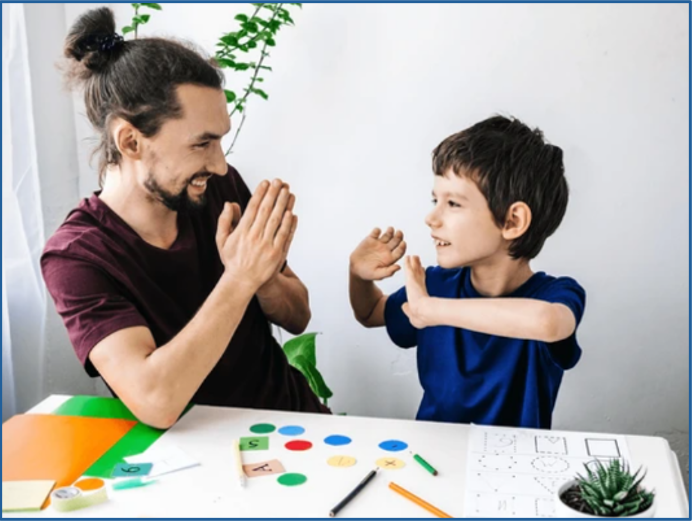
Hard to recall a time when gay or lesbian individuals were closeted because to do otherwise would have cost them their jobs and maybe their families — or their freedom. Or a time when a cousin or an uncle with a severe mental disorder or physical disability was institutionalized because there was no other way to get help and keep them safe — but then they disappeared from sight. People who are different, who don’t blend in, were shunned at best by society and, at worst, were freaks in a sideshow, hidden away by ashamed families, and institutionalized or jailed. This tragic history is mostly but not altogether behind us.
Photo: Instagram
Autism and Neurodivergence
Our understanding of autism has evolved significantly since first described by Bleuler, Anna Freud, Kanner, and Asperger. Today, autism is universally recognized as a spectrum disorder caused by neurological differences with varying degrees of severity. We understand it’s not caused by bad parenting or personal choice. The spectrum concept is applied to more and more mental and emotional conditions, to allow for more nuanced understanding of how they affect people’s lives, without diminishing their humanity and unique qualities.
People on the autism spectrum, even those of normal-to-high intelligence or showing exceptional gifts, can still have a difficult time at school/work and in relationships. Experts caution against applying value-based labels, like high- or low-functioning, to describe people who are uniquely different and capable of intelligence, creativity, and promise.
Judy Singer’s coined the term neurorealism to make clear to government, insurance, and the medical health profession that the neurodiversity movement doesn’t preclude providing its members with needed supports and interventions. Different, difficult, wonderful, able/less able, people on the neurospectrum need recognition, understanding, and acceptance from their parents, teachers, coworkers, and community.
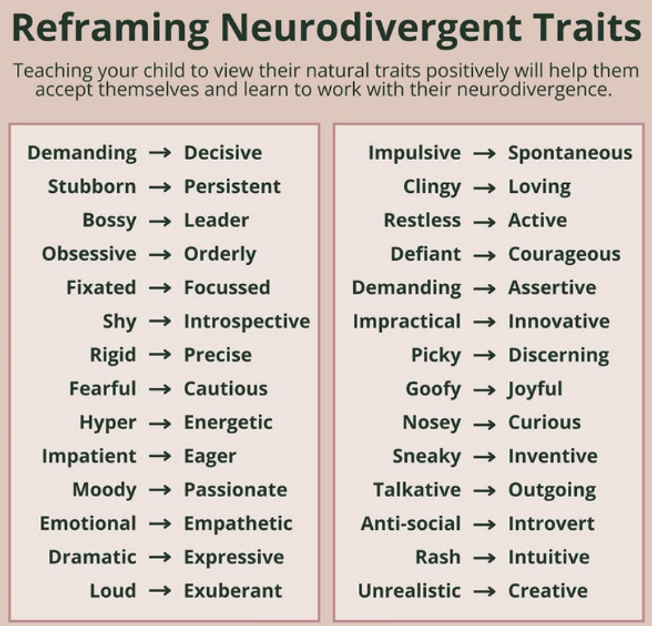
Graphic: Dr. Morgan Beidleman
The medical model conceptualizes neuro-divergence as a series of deficits rather than unique qualities, placing the onus on the individual to be treated or cured, rather than on society to make space for those who are different. Autistic people may “stim,” engaging in various behaviors to get sensory stimulation, such as fidgeting, swaying, or humming. A medical model focuses on eliminating these behaviors, rather than understanding the autistic person’s inner world and advocating for a society that accepts those who present differently…. The neurodiversity model embraces that a person’s divergences are worth celebrating and advocates for society to change to accommodate neurodivergent people, rather than asking neurodivergent people to change to accommodate society [emphasis added]. —Psychiatric social worker Liliana Valvano, “Helping Neurodivergent Individuals Succeed in a Neurotypical World,” Columbia University’s Lieber Recovery Clinic
Neurodivergent Disorders and Differences
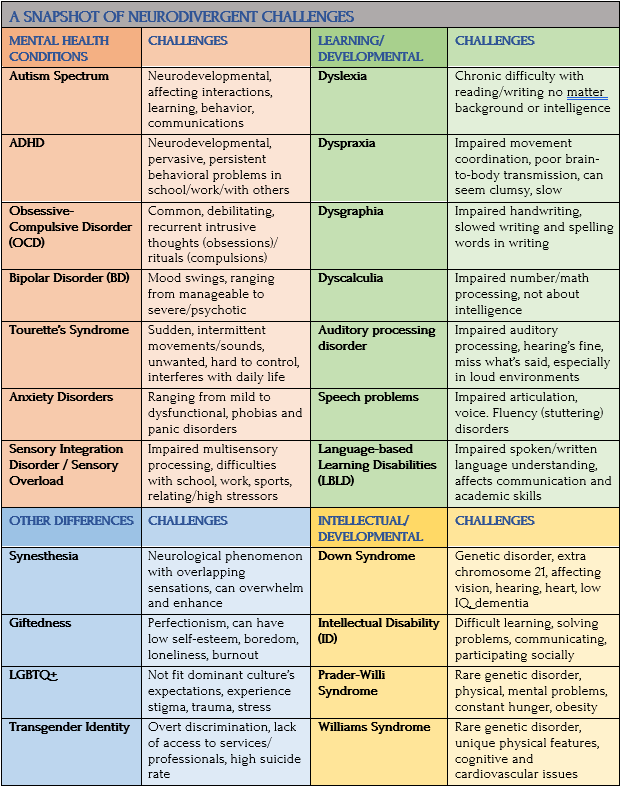
Neurodiversity also includes subgroups ostracized by society and hated for what they are, not who they are. Members of the LGBTQ+ community, especially transgender/transsexual youth, are one of the most targeted groups in the U.S. for hate crime—40% of all trans individuals have attempted suicide, compared to 13% of the general population.
Washington University Do-It describes a neurodivergent “person on the autism spectrum or, more generally, [as] someone whose brain processes information in a way that is not typical of most individuals. These people may have learning disabilities, attention deficit and anxiety disorders, obsessive-compulsive disorder, and Tourette’s syndrome. Through a neurodiversity lens, such conditions reflect different ways of being that are all normal human experiences.”
Neurodiversity’s Origin Story and the “Autism Wars”
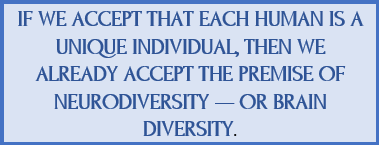
Melanie Heyworth, “Neurodiversity (What is it and Why Do We Care?),” Reframing Autism
Neurodiverse and neurodivergent promote the idea that just because autistic brains process information atypically, people on the spectrum don’t need to be “cured.” Nor should they be isolated in their homes, ostracized or terrorized by others, excluded in everyday play or work—rather, they should be appreciated for whom they are, what they contribute, and what supports they need to live full and rewarding lives.
Based on competing accounts and the so-called “Autism War” — a battle of wills, it seems, in claiming who invented the terms vs the concepts vs the movement — I’ve relied primarily on Reframing Autism, Springer Link, and a Neurodiversity2 rebuttal to several claims to tell the neurodiversity origin story as I feel is solid, though many may disagree.
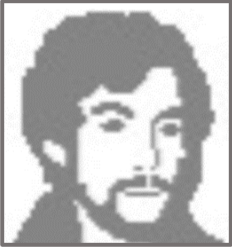
Neurological diversity emerged as a social movement in the 1990s, both in scholarship and in a fledgling, autism-led online space, launched by Martijn Dekker (on the spectrum) from Groningen, Netherlands. In 1996, Dekker founded Independent Living on the Autistic Spectrum (InLv), as an email listserv. Over the years, InLv evolved to an autism online community, providing a forum for discussion and publishing essays by people in the autistic diaspora. He wrote an eloquent account of his childhood struggles on Springer Link.
Martijn Dekker
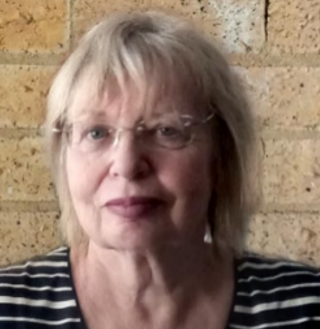
Judy Singer, “Mother of neurodiversity”
In 1998, the term neurodiversity was coined by Australian sociologist Judy Singer, as an alternative to deficit-based language, such as disorder and abnormality. In an interview with David Harris of The Guardian, Singer said, “I knew what I was doing. ‘Neuro’ was a reference to the rise of neuroscience. ‘Diversity’ is a political term; it originated with the black American civil rights movement. ‘Biodiversity’ is really a political term, too. As a word, neurodiversity describes the whole of humanity. But the neurodiversity movement is a political movement for people who want their human rights.” Singer was on the mild end of the spectrum and also a member of InLv, where she contributed scholarship and insights about the strengths of those with autism, like the ability to focus, recognize patterns, and remember information.
Unlike the 2010 study, no differences in improvements in cognitive ability, adaptive behavior, and autism severity showed up between treatment and control groups. Why? Because both groups showed improvement — the improved branded program influenced design of the community-based program, so everyone benefited. The only significant change was gains in language ability in the treatment group. Halladay notes, “Not all families live in communities that provide high levels of early intervention. We have to … make sure all children in all communities get access to evidence-based early intervention.”
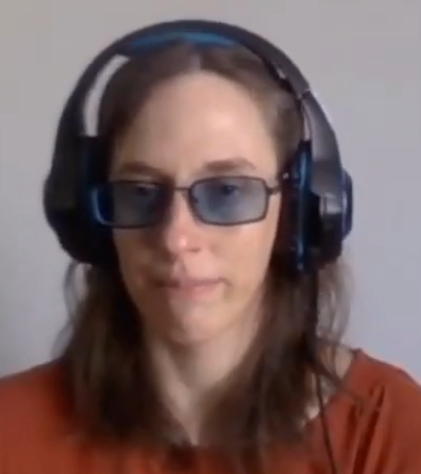
Kassiane Asasumasu, “Neurodivergent Shorts,” Foundations for Divergent Minds, You Tube
In 2000, autism activist/neuroatypical Kassiane Asasumasu coined the related term neurodivergent. She wanted a wider definition once the neurodiversity umbrella opened to include “all sorts of people who recognize that our world should be accepting, inclusive, and accommodating of people regardless of their neurotype…. inclusive of the variety of divergences beyond only autism.”
A bio note: Asasumasu was born in 1982 and has seven neurotypical siblings. She was diagnosed as autistic at age 3. She’s open about being bullied most of her childhood and also having temporal lobe epilepsy and post-traumatic stress disorder (PTSD), which she ascribes to applied behavior analysis (ABA). Asasumasu is Hapa (a Hawaiian word for someone of multiracial ancestry) and Asian American.
These are Asasumasu’s words:
Neurodivergent simply means that a person’s brain works in a way that is not expected. It is commonly used when the behavior or response diverges from what is expected socially, physically, or verbally. Neurodivergence can be innate (ADHD, autism, depression, dyslexia, obsessive compulsive disorder) or due to a brain-altering event (head trauma, medicines, drug use). —Kassiane Asasumasu, Wikipedia
Wikipedia quotes Neurodiversity for Dummies: “Asasumasu’s work set the stage for a broader understanding and acceptance of neurological differences.” Autistic, ADHD, and schizophrenic author David Gray-Hammond put it more directly in his Emergent Divergence blog:
A neurodivergent person is an individual who cannot perform neurotypically …. Some incorrectly believe the term refers exclusively to those born with a neurological difference, such as autistic and ADHD people, but it reaches further.
Neurodivergence also refers to the full spectrum of mental health conditions, as well as traumatic brain injury and epilepsy, to name a few. If your brain functions differently, for any reason, congratulations! You’re neurodivergent. —David Gray-Hammond, Emergent Divergence
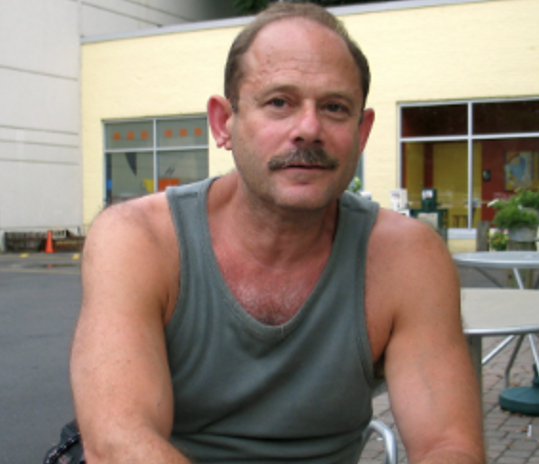
American journalist Harvey Blume, who died in 2023, an InLv member, further popularized the terms. In Melanie Heyworth’s account on Reframing Autism, Blume “refers to the reality that a diversity of human brains and minds exist. It is a biological fact each person’s brain is different, since the brain is a complex organ that develops through a continuing interaction between a person’s genetics and their experiences and environment.”
Harvey Blume
With the pioneering work of Singer, Dekker, Blume, Asasumasu, and others on the spectrum, the terms neurodiversity and neurodivergence took off like a moon shot. They defined and met the needs of neurominorities (groups with similar forms of neurodivergence). They popularized InLv’s neurological diversity movement — soon to become neurodiversity movement — that was gaining momentum and is still going strong today. Neurological disability and difference — physically, mentally, by gender identity, by learning disability, or by anything else that innately or accidently sets you apart — no longer fit the stigmatizing and negative framing of abnormality.
Harvey Blume
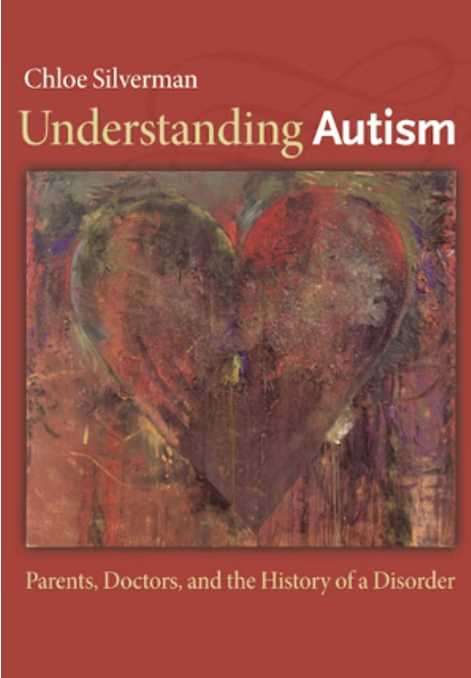
Research and public attention led to new behavioral treatment methods — and a backlash against psychoanalytic treatments. Chloe Silverman’s Understanding Autism explored this history in the U.S. She describes how parents challenged the work of Bruno Bettelheim, et al. at the University of Chicago and covers parents advocating for new therapies and research, including genetic and environmental studies — changes that presage broader shifts in child psychiatry/psychology and activism.
I find it sad that all this incredible work by people on the spectrum resulted in a decades-long “autism war” over credit and blame. The origin story I’ve recounted is credible and multi-sourced. Singer’s published academic work has often been quoted out of context, and she was unjustly criticized for claims she never made (she claimed coining the term neurodiversity, not inventing the movement). International internet “tag” can hurt a lot of people and needlessly damage reputations.
Genius and Autism
According to Above & Beyond Therapy, Ohio State conducted a 2015 study suggesting a chromosomal connection between genius and autism. Families with a higher likelihood of having autistic children were more likely to have children with exceptional intellectual abilities—showing a “complex relationship between genetics, exceptional abilities, and autism.” While it’s not possible to definitively diagnose historical figures, such as Albert Einstein, experts who examine their characteristics explore the potential connection between genius and autism. Here are three profiles of extraordinary people (bio details/photos from Wikipedia):
Albert Einstein
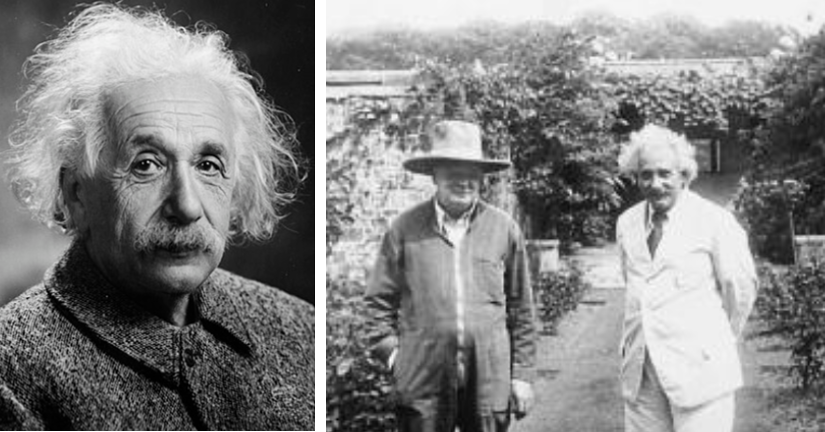
Albert Einstein, 1947, and with Winston Churchill at Chartwell House, 1933. Photos: Wikipedia
German-American theoretical physicist Albert Einstein (1879-2055) is most famous for developing the theory of relativity, as well as for important contributions to quantum mechanics. His mass-energy equivalence formula E=mc2 has been called the world’s most famous equation. In 1905, Einstein published four groundbreaking papers that outlined a theory of the photoelectric effect, explained Brownian motion, introduced his special theory of relativity — a theory which accounted for the behavior of the electromagnetic field—and demonstrated mass and energy are equivalent to each other.
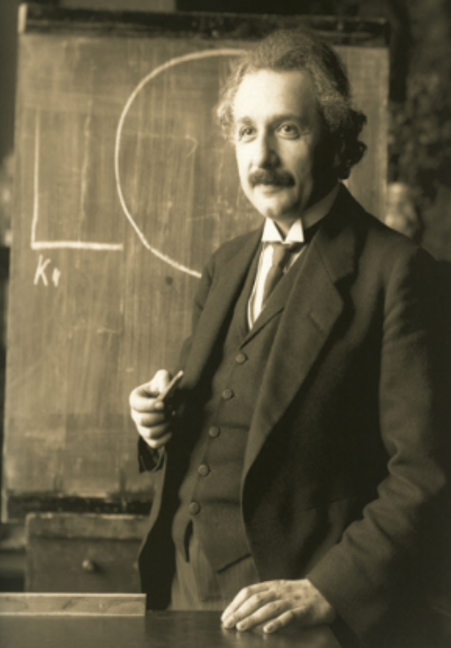
Einstein went on to have an illustrious career in science. In 1916, he published a “cosmological” paper that discussed the implications of relativity for the modeling of the structure and evolution of the universe. Einstein received the 1921 Nobel Prize in Physics “for his services to theoretical physics, and especially for his discovery of the law of the photoelectric effect,” a pivotal step in the development of quantum theory.
According to Above & Beyond Therapy, Einstein found it difficult to make friends as a child, had significant delays in developing language, and spent most of his time alone reading books, playing the violin, working on puzzles, solving math problems, and building elaborate structures. It’s on the basis of Einstein’s intense interests and repetitive behaviors that experts have speculated about his possible autism.
Einstein in 1921 received Nobel Prize in Physics for his Photoelectric Law. Photo: World Cultural Council
American Zoologist Temple Grandin
With more research and awareness, the science and healthcare communities will hopefully incorporate minority stress into research and clinical practice in understanding, treating, and supporting ND individuals. The specific promise here is for autism treatments to focus as much on the debilitating effects of minority stress as on the more practical concerns of daily living, so people with autism feel proud and hopeful and not socially awkward or a burden to society.
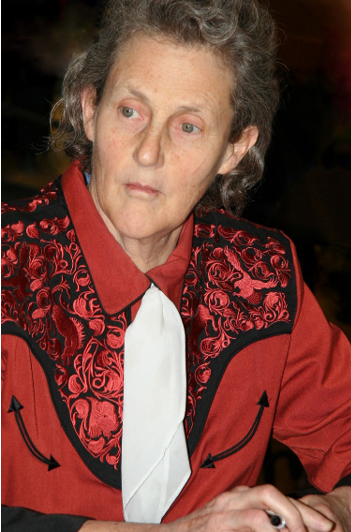
Temple Grandin
Temple Grandin (b. 1947) is a prominent proponent of the humane treatment of livestock headed to slaughter and the author of 60 scientific papers on animal behavior. In 2010, Time 100, an annual list of the 100 most influential people in the world, named her in the “Heroes” category. Grandin is famously on the autism spectrum and an advocate for autism and neurodiversity. She was the subject of the 2010 award-winning HBO film Temple Grandin, played by Claire Danes. Wikipedia quotes Grandin as saying that “the part of other people that has emotional relationships is not part of me,” and she never married nor had children. Grandin has written that autism affects every aspect of her life. She wears comfortable clothes to counteract her sensory processing disorder (SPD) and has structured her lifestyle to avoid sensory overload. She regularly takes antidepressants, but no longer uses her squeeze machine, stating “I’m into hugging people now.”
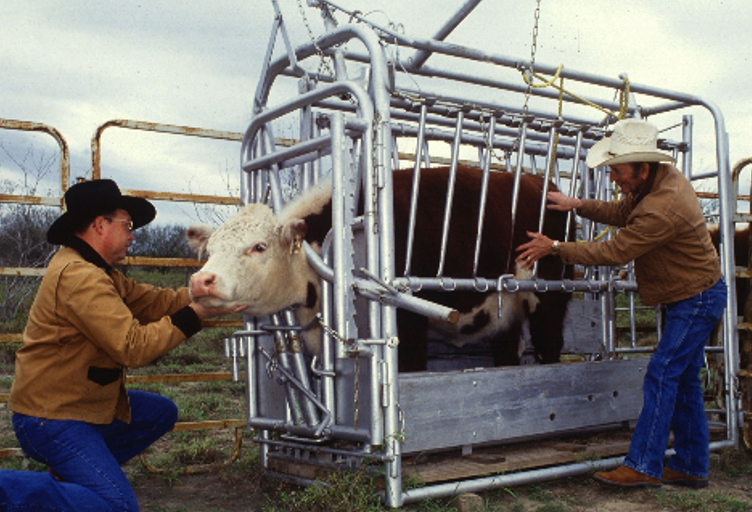
Cattle squeeze chutes, like portable one here, were Grandin’s inspiration for her hug machine. Wikipedia
Swedish Climate Activist Greta Thunberg
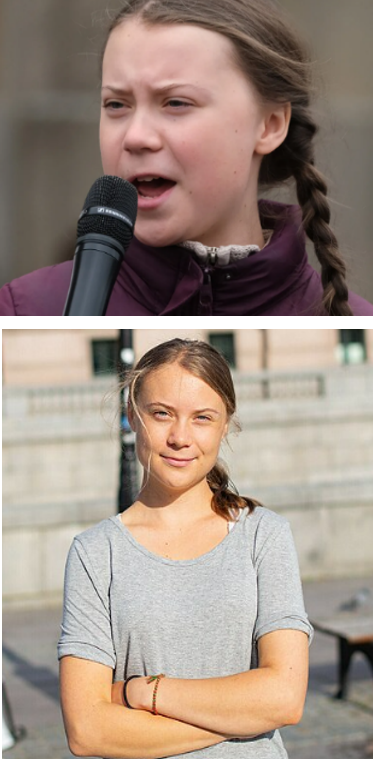
Greta Thunberg (b. 2003) became famous as a young teen on the autism spectrum for challenging world leaders to act on climate change. After she addressed the 2018 United Nations Climate Change Conference, she created Fridays for Future (FFF), with school students around the world skipping Friday classes to demonstrate against political inaction and make demands for renewable energy. In 2019, Thunberg crossed from England to New York on a carbon-free yacht to address the UN Climate Action Summit, where she made international headlines by exclaiming “How dare you,” to world leaders who were ignoring the climate crisis. After Thunberg graduated from high school in 2023, her activism continued to gain international attention, as she tackled climate change-deniers.
Thunberg struggled with depression for four years before her activism. Her father said, “She can either sit at home and be really unhappy, or protest and be happy.” In 2015, her mother made public her daughter’s diagnosis of Asperger’s syndrome [now autism] to help families in similar situations. She said, while Greta was limited by her autism when younger, she no longer regards it as an illness and has instead called it her “superpower.” She is now an equally famous autism activist. In 2021, Thunberg said many people in the Fridays for Future movement are autistic.
Greta Thunberg, 2013 and 2021
Thunberg thinks the reason so many autistic people become climate activists is…they have to tell the truth as they see it. “I know lots of people who have been depressed, and then they have joined the climate movement or Fridays for Future and have found a purpose in life and found friendship and a community that they are welcome in.” She considers the best things that have resulted from her activism to be friendships and happiness. —Wikipedia
Coming Up Next

In Post 19: Neurodiversity Takes Flight, I’ll continue with the topic of neurodiversity and autism — with my ruminations about why the movement went from obscurity to international take-up and broad, though not universal, acceptance in a few years.
Copyright ©2026 Jan Swan
 English