On Neurodivergence and Otherness
Show Table of Contents
INTRO
1. On Neurodivergence and Otherness: An Introduction
SENSES AND SENSORY SENSITIVITIES
2. Senses Count
3. Neurobiology for Dummies
4. Sensory Transmission and our Reward System
5. Sensory Receptors are the Body’s Cellular Plan
6. A Synthesis: Sensory Systems and our Emotions — Part I
7. A Synthesis: Sensory Systems and our Emotions — Part II
8. Sensory Disorders and Sensitivities
9. Etan’s Story
SYNESTHESIA
10. Synesthesia: Difference, But Not Disorder
11. Synesthesia, Creativity, Artistry — Part I
12. Synesthesia, Creativity, Artistry — Part II
AUTISM AND THE NEURODIVERSITY MOVEMENT
13. From “Mental Defectives” to Autism Spectrum Disorder
14. Changing Conception of Autism
15. Autism Diagnoses and Behavior Patterns
16. Autism Treatments that Help
17. Early Start Autism Treatment: A Case Study
18. Neurodivergence and the Neurodiversity Movement
19. Neurodiversity Takes Flight
20. ADHD and Neurodevelopmental Disorders
21. ADHD: A Preponderance of Risk Factors and Symptoms
22. ADHD: Inattentive, Impulsive … and Hyperactive?
23. ADHD: Named, Renamed, Still Needs a New Name
24. ADHD: Treatment and Coping Skills for All Ages
LGBTQ+
25. Neurodiversity and the LGBTQ+ Fight
26. LGBTQ+ Identity and Expression
27. LGBTQ+ and Mental and Behavioral Healthcare
ON LANGUAGE
28. Language Matters In and Around Neurodiversity
29. Neuroinclusion and Disability Language
30. Neurodivergent Language Difficulties
ON CREATIVITY AND GIFTEDNESS
31. Neurodiversity and Creativity
32. Giftedness is a Piece of Neurodivergence
SELF-IDENTITY
33. Self-Identity: The Cornerstone of Neurodiversity
34. Early Theories of Self-Identity Formation
35. Contemporary Theories of Self-Identity Formation
36. Authenticity and the Search for Self
37. Self-Concept and Self-Schema
38. Self-Labeling and Parts Work
39. Complexity, Clarity, and Self
40. Cognitive Complexity and Neurodivergence
41. Cognitive Complexity Meets Self-Identity
IMPROVING LIFE FOR NEURODIVERGENT PEOPLE
42. Empathy and Difference – Recognition and Effort
43. Empathy and Difference – Response
44. Reducing Neuroatypical-Neurotypical Conflict – Part I
45. Reducing Neuroatypical-Neurotypical Conflict – Part II
46. Communicating Across the Neurospectrum – Part I
47. Communicating Across the Neurospectrum – Part II
48. Neurodiversity: Advocacy and Education
49. Neuroinclusion in the Workplace
50. A Neurodiverse Lifestyle
IN CONCLUSION
51. In Conclusion: Neurodivergence and Inspiration
9. Etan’s Story

Photo: Snapklik.com
My sons are not only neuroatypical, but they’re saddled with comorbidities. My older son Jaden (37): bipolar disorder/ ADHD/trauma. My younger son Etan (34): major depressive disorder (MDD)/generalized anxiety disorder (GAD)/ADHD, and in his childhood sensory processing disorder (SPD). I’ve devoted a blog series to bipolar, telling Jaden’s story. Now, I turn my attention to Etan, diagnosed at age 4 with sensory integration dysfunction (now, SPD) and ADD (now, ADHD) in middle school.
Here’s his story, through his mother’s telling, with passages from Etan himself. His adult perspective on his childhood is pretty rough at times for this mother to hear. But we’ve had many positive conversations about his experiences that our relationship is now stronger than it’s ever been. During his childhood, I tried to get him help, but it wasn’t at all like it is today, and I didn’t know then what I know now. Today, his treatment team would’ve been better.
Childhood
Etan’s story begins with a premature birth, a month early. I had no concerns with my baby’s delayed milestones into toddlerhood. He had bright eyes, was highly responsive, and understood everything. He made steady progress — but the delays were significant.
Someone seeing him scoot along the floor on his bottom told me years later babies who don’t crawl typically have developmental issues. “Bottom scooting — or shuffling — is a way that many children use when first learning how to explore their environment. Even though it is effective, this position can exacerbate muscle weakness and asymmetry,” writes physical therapist Rose McLean, “The Problem with Bottom Scooting,” Chicago Pediatric Therapy. “Therefore a means of mobility that we want to discourage.”

Photo: From Rose McLean, “Problem with Bottom Scooting,” Chicago Pediatric Therapy
Chiropractor Clint Steele advised in one of his YouTube videos to move scooters to their belly, so they can develop neurologically and physically and integrate cognition and proprioception across the brain’s right/left hemispheres. What a simple idea that denied me an opportunity to correct.
Story #1: Etan’s Assessment
At age two, when Etan was still not walking, his pediatrician sent him for an MRI to rule out physical causes. Three weeks later, he started walking (thanks a lot, little Etan!). He was a very sweet Buddha baby. And later, in nursery school, the director advised putting him with children a year younger. His nursery school friends, unbeknownst to me, helped compensate for his motor delays — they helped him put on his jacket to go outside, pushed him on the swings, and led him to reading circle. The nursery school director advised me to get him assessed.

Photo: Danielle Nagel, Domino
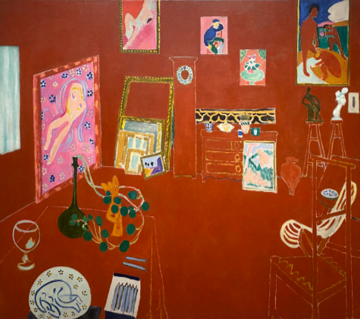
Henri Matisse, Red Studio, 1911
To qualify for state funding to cover expensive occupational and physical therapy (OT/PT) sessions, Etan needed a comprehensive evaluation: cognitive, emotional, psychosocial, developmental. At the testing place everything went swimmingly with the first two women assessors — they loved him, and he was responsive and happy. But with the third tester, Etan turned off, shut down, said not a word. She showed him an illustration of a dollar bill and asked him what it was. Nothing. A refrigerator. Again, no answer. A bicycle. Nada. We took a cookie break, which he liked.
Back to the picture books. Instead of showing him more boring line drawings, she opened an oversized book with lots of colorful pictures. Again, nothing. No response. I said, he knows what these things are — he just doesn’t want to answer for some reason. I saw her scribble notes. Something like, overbearing mother, kid with cognitive issues. Then, she flips to a bright picture of an interior room, and Etan turns to me and says, “Look, Mom, this looks like a Matisse.”
Ages 4-6, Etan received OT for fine motor coordination. Now a visual artist, illustrator/animator, and designer, my son might not remember holding a pencil like he was about to mash potatoes. He still writes numbers and letters from the bottom up and backwards (as I see it).
He also received PT for gross motor coordination — or, to develop his proprioceptive and vestibular sensory abilities. This included jumping off boxes, bouncing on giant balls, and many other colorful and fun tasks. Except Etan didn’t have fun and never wanted to go. In my retrospective thinking — and didn’t this occur to his OT/PT therapists — he was overstimulated, over exposed, required to relate to too many people, with too bright lights and too many colors. (Note to children space designers: not everything has to be in bright primary colors.)
Etan’s sensory dysfunction told me he wouldn’t be playing Little League or riding a two-wheeler anytime soon. Not until he develops more proprioceptive movement and coordination skills — and with maturity, overcomes many childhood sensory challenges.

Photo: Project Play Therapy
It’s hard to say exactly when, but I knew I was different early in elementary school. I didn’t have a lot of self-awareness, but probably by third grade I knew I wasn’t performing at the same level and didn’t have a lot of the same interests as other kids, like sports. I was already starting to fall behind on homework. I can’t remember much else. But once I was aware my grades were a problem, my self-esteem was pretty low — and that continued all through high school.
I was definitely conscious of physical delays. The PT/OT stuff made me more aware I was behind — and it was not great for how I felt about myself. It was so chaotic in the play-ground, so I didn’t know just how behind I was until we played ballgames or team sports in gym class. I thought, I’m the worst athlete here. Being forced to play sports in gym was horrible — it was never fun. I was always the last kid picked on the team, in the back not doing much, messing something up, and then getting shit for it from the other kids.
Most of my experiences with teachers were negative. I definitely remember some teachers, especially in high school, who didn’t understand or didn’t care and just gave me scornful looks every day when I didn’t have my homework. I became afraid of teachers because I didn’t want to be a disappointment. My self-esteem was so low, and I went into school just dreading the homework check. That was the main thing. An authority figure being disappointed in you, and then I would face my mother’s disappointment in me at home. So it was tough. Sometimes if I was asked questions, I could answer them — not every time — but I avoided talking as much as possible. I constantly, absolutely, felt myself adrift. —Etan Swan, age 33, 2024
School and Individualized Education Plans
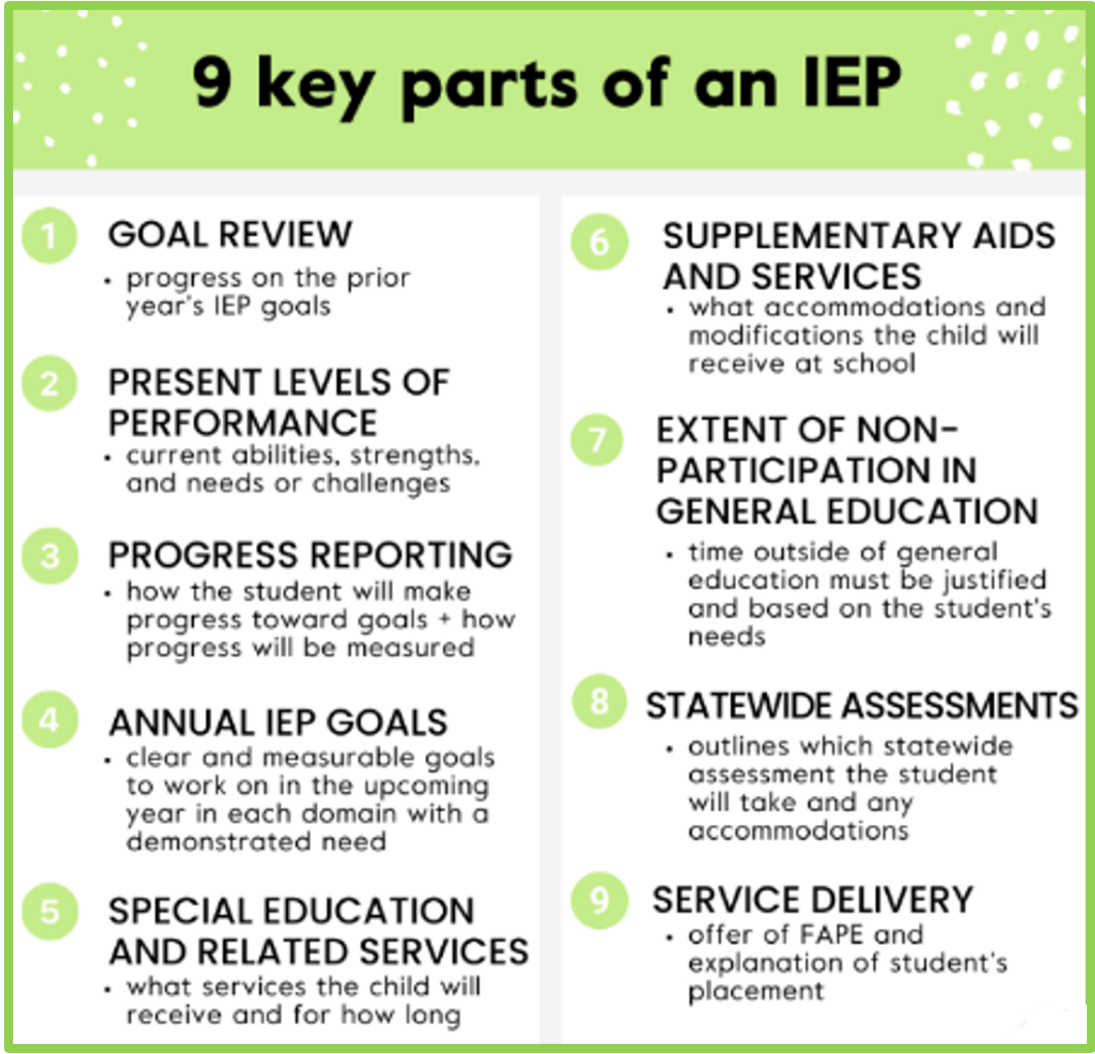
Illustration: undivided.io
The school system set two extremely low bars: Etan had to write his name and had to be able to leave the building in a fire drill. Once they were confident my 6-year-old met these milestones, OT/PT funding was cut off — even though it was benefiting him.
It took us another six years until he could receive state-supported assistance again, in an individualized education plan (IEP). This helped somewhat with his executive functioning (EF) deficits — the attentional variety (no hyperactivity). When he was anxious, he would turn inward as if a diminished presence would render him invisible to the teachers.
In later years, even in the rare times when he completed his homework, the assignments might not have reached their destination, either because he forgot them at home or left them crumpled at the bottom of his locker. Homework was an unyielding, continual struggle every grade, from third until he graduated high school. Etan has great advice for schools:
In terms of school for ADHD kids, the eight-period classroom learning isn’t good. A block schedule would’ve been better. It’s overwhelming to have homework for every class every night. If I had half my classes every other day, I’d only have four classes and four assignments — instead of seven or eight. Or eliminate it altogether. That’d be great for ADHD kids, if they could be guided through learning during the school day. —Etan
Yes, better guidance through the day. What a radical thought.
When I consider Etan’s sensory processing issues, I’m surprised sensory processing disorder (SPD) wasn’t a stand-alone condition in DSM-5. My son’s issues — which most of his teachers (nor I) understood at the time — were noticeable and ignored. As a child, Etan couldn’t articulate what he was experiencing. It was all he knew. It’s still hard for to accept that he didn’t get help. I was focused on his anxiety and shyness, but clueless about what was feeding it. There was too much guesswork — his therapist, teachers, and doctors missed the mark.
These supports would be in place today. A multi-diagnostic team of education, medical, and psychological professionals would have designed an age-appropriate treatment plan for my son, including guidance for me (parent behavioral training).

Photo: Atlantic Health

I asked Etan’s PT therapist to explain sensory integration to me. She said think of skiing down the mountain, feeling the wind on your face, skiing one way to avoid a tree branch, while swerving another way to avoid a patch of rough ground. Etan couldn’t integrate all these sensations without intense concentration to make it safe down the mountain.
On the sensation of taste, Etan ate typical kid things: pasta, chicken fingers, hotdogs, pizza, scrambled eggs, and mac’n cheese, but this repertoire didn’t expand for the remainder of his teens. While certainly a more adventurous eater now, he still reacts strongly to heat and spiciness, strong flavorings, and textures.


His biggest child/teen struggle was school, in understanding what was required of him, in not being terrorized by teachers, and in outwardly expressing himself and his very original mind and his wonderful artistic ability. My son was easily overcome by anxiety and pressure. I tried to shield him from some of it, create a set of priorities to add structure to his life, and give him positive reinforcement. I was an imperfect mom. I didn’t have the language of divergence. I wanted him to thrive and grow like a “normal” kid.
From spring of 6th grade and into middle school, for almost 2 years, Etan had psychosomatic stomach aches — though the pain was real to him — to subconsciously avoid school. The power of the brain-mind-body connection. When things are barely tolerable for a boy with sensory overload, neurodevelopmental delays, and attention deficits, the body makes a play to protect him.
Photo: Freepik
I kept getting dinged on my grades for lateness. It was on my IEP that I wasn’t supposed to get graded down for lateness. Maybe if the teachers actually understood and implemented the IEP, things could’ve been different — because I shouldn’t have had to be the one to think about all that stuff.
This could go back to self-esteem, but for a large chunk of school I didn’t think I had ADHD — I just thought I was lazy. It turns out a lot of people with ADHD think that. Because a huge problem is the amount of effort it takes to complete assignments at the same rate as neurotypical students. You don’t understand that when you’re younger. You just end up feeling terrible about yourself. —Etan
Story #2: The Literary Robot

Illustration: Fine Art America
When Etan was in 10th grade, I served on the principal’s site committee. One time meeting at his school, I saw a flyer for students to enter a drawing competition, on the theme of reading, for an upcoming issue of the school’s literary magazine. The winner would get 50 bucks and the back cover.
After many I don’t want to’s, Etan finally agreed to enter — like I was sending him on a quest for the golden fleece. He agreed but as the deadline approach hadn’t started the drawing. I was doggedly persistent. But he came through. His drawing of a robot reading in a comfy armchair was full of humor and warmth. I was grateful he did the drawing, but was dismayed to find out he didn’t turn it in. Day after day, I cajoled, pleaded, and was about to give up, when it finally happened.
The drawing got turned in under the wire and … he won the competition. What joy!
But seriously, I questioned myself — was it worth the amount of energy I expended to make it happen?
As it turned out, yes. I’m not sure Etan would agree, but I believe winning that competition was a turning point in his self-confidence — as well as an accomplishment for college admissions.
Throughout his childhood, Etan’s dad and I tried hard to focus on what was important. Surrounding him with love, fun outings with family, encouraging his friendships, encouraging his art, and attending to education and health/mental health. And we tried to ignore the rest: his avoidant behavior with anything he couldn’t do, videogame play to the exclusion of other activities, making his bed.
College Years and Adulthood
While Etan squeaked through high school, he was more motivated to do well in college. He appreciated the clean slate and no longer wanted “adults” supervising his progress.
The reason I was less anxious in college had to do with school management issues. They didn’t require you to submit homework in person — it was mostly through the Internet — so even if I wasn’t getting the homework in on time, I wasn’t facing that daily shame. Most college classes didn’t require attendance. I slept through all the morning classes almost every time or just didn’t go. I put my effort into writing the papers, which worked in some classes. Other times were bad. I skipped logic class because it was boring and difficult. I got a C. I still did better than high school, even making Dean’s list one semester. I have a recurring nightmare I had to return to HS because by mistake I wasn’t given my HS diploma, even though I’d completed my BA. —Etan Swan
Success in college helped Etan make his way over these past ten years, building his portfolio of art and animation work, tech skills, getting jobs, and attending graduate school. But his SPD story doesn’t end here. Like his older brother, Etan still has challenges as a neuroatypical. He’s certainly aware it’s all up to him — the choices he makes to be well. He manages his stress and depression, which aren’t responsive to most medications (he takes a cocktail of antidepressants and a mood stabilizer), plus seasonal affective depression and social anxiety. But he’s learned what to do that does work, how to compensate for his impaired executive functioning (EF) — being organized and staying on task.

A Mom’s Analysis

Illustration: Fine Art America
You’re going uphill but getting tired, cold, and hungry. But you decide to stop fretting. Instead, you sit down on a log and plan what you have to do. Once you have figured this out, you take the first steps — knowing it’s a long way down.
That’s Etan. Gentle, kind, talented, disorganized, processing life silently, but sometimes undone by depression and acute anxiety. But there’s a strength there now. Etan knows his own mind, his capacities and his limitations. A competitive, capitalistic race to the top is not his race — but he still needs to survive in a neurotypical world. This is a life challenge — one he’s managing to, sometimes from a dark, hopeless place and other times, with grace, humor, and optimism.
And always the artist, like his dad. He balances his EF deficits with his art. The brain is differently wired, but the person is beautiful.
One positive thing I can think of is creativity — this is big in ADHD people. It’s enhanced my art. Another is hyperfocus, which is when we’re in the zone. We get super focused on a task and become efficient and good workers. That’s special. I didn’t recognize it when I got in that kind of zone. I thought that was how all people worked.
Of course, as a kid, videogames played into that hyperfocus — satisfying to play because of short-term reward loops — something highly rewarding and engaging for the ADHD brain. Besides videogames, getting into a flow state only happens when I’m making art. Even though I’m good at the technical skills I have, hyperfocus doesn’t happen. —Etan
I’m also aware of my own limitations to help my sons more than I do. I have remorse for the moments I wasn’t the parent Etan needed, when I didn’t understand why my boys didn’t want to do sports or do extracurricular stuff at school. Now I know why they’re still not where they need to be in life and what it will take to make progress.
The Right Help at the Right Time for the Right Person
For anyone who has a hard time articulating what’s going on with them: talk therapy doesn’t work. I eventually ended 12-yo Etan’s therapy after he came home too many times upset by questions he was asked. His therapist told me he would only talk about our dog. Otherwise, he shut down like a mimosa touch-me-not.
Once a young adult, Etan benefitted greatly from psychotherapy and cognitive-behavioral therapy (CBT) — along with antidepressants. I’ll talk more on treatments for ADHD, anxiety, and depression. More recently, Etan was helped by ketamine–infusion therapy. I end on a hopeful note [edited/paraphrased]:

Illustration: Fine Art America
As we learn more about how the human brain works and the different ways in which neurodivergence manifests itself, we see a shift in society. People are more careful with treating ND as a disability or something to be cured.
With more awareness and time, how we treat neurodivergence will change, so school and work foster accepting environments. Special education focuses on how people with assorted ND tendencies learn best and is making progress in some parts of the world.
We need to accept humans are different and unique. It’s not an abnormality if some- one’s brain functions differently than us. They deserve to be treated the same to lead fulfilling and meaningful lives. —Austin, “What is Neurodivergence?” My Tutor Source
Coming Up Next

In the next three posts, starting with Post 10: Synesthesia: Difference, But Not Disorder, I’ll explain the sensory phenomenon called synesthesia, a fascinating deviation from the sensory norm. Eight times more artists have this ”atypical mode of perception” than non-artists, within a small percentage of the population. We can learn, however, so much about ourselves from a study of this somewhat rare sensory experience.
 English