On Neurodivergence and Otherness
Show Table of Contents
INTRO
1. On Neurodivergence and Otherness: An Introduction
SENSES AND SENSORY SENSITIVITIES
2. Senses Count
3. Neurobiology for Dummies
4. Sensory Transmission and our Reward System
5. Sensory Receptors are the Body’s Cellular Plan
6. A Synthesis: Sensory Systems and our Emotions — Part I
7. A Synthesis: Sensory Systems and our Emotions — Part II
8. Sensory Disorders and Sensitivities
9. Etan’s Story
SYNESTHESIA
10. Synesthesia: Difference, But Not Disorder
11. Synesthesia, Creativity, Artistry — Part I
12. Synesthesia, Creativity, Artistry — Part II
AUTISM AND THE NEURODIVERSITY MOVEMENT
13. From “Mental Defectives” to Autism Spectrum Disorder
14. Changing Conception of Autism
15. Autism Diagnoses and Behavior Patterns
16. Autism Treatments that Help
17. Early Start Autism Treatment: A Case Study
18. Neurodivergence and the Neurodiversity Movement
19. Neurodiversity Takes Flight
20. ADHD and Neurodevelopmental Disorders
21. ADHD: A Preponderance of Risk Factors and Symptoms
22. ADHD: Inattentive, Impulsive … and Hyperactive?
23. ADHD: Named, Renamed, Still Needs a New Name
24. ADHD: Treatment and Coping Skills for All Ages
LGBTQ+
25. Neurodiversity and the LGBTQ+ Fight
26. LGBTQ+ Identity and Expression
27. LGBTQ+ and Mental and Behavioral Healthcare
ON LANGUAGE
28. Language Matters In and Around Neurodiversity
29. Neuroinclusion and Disability Language
30. Neurodivergent Language Difficulties
ON CREATIVITY AND GIFTEDNESS
31. Neurodiversity and Creativity
32. Giftedness is a Piece of Neurodivergence
SELF-IDENTITY
33. Self-Identity: The Cornerstone of Neurodiversity
34. Early Theories of Self-Identity Formation
35. Contemporary Theories of Self-Identity Formation
36. Authenticity and the Search for Self
37. Self-Schemas and Neurodivergence
38. Self-Labeling and Parts Work
39. Complexity, Clarity, and Self
IMPROVING LIFE FOR NEURODIVERGENT PEOPLE
40. Empathy Recognizes and Navigates Difference
41. Reducing Neurotypical-on-Neuroatypical Conflict – Part I
42. Reducing Neurotypical-on-Neuroatypical Conflict – Part II
43. Communicating Across the Neurospectrum – Part I
44. Communicating Across the Neurospectrum – Part II
45. Neurodiversity: Advocacy and Education
46. Neuroinclusion in the Workplace
47. A Neurodiverse Lifestyle
IN CONCLUSION
48. In Conclusion: Neurodivergence and Inspiration
21. ADHD: A Preponderance of Risk Factors and Symptoms
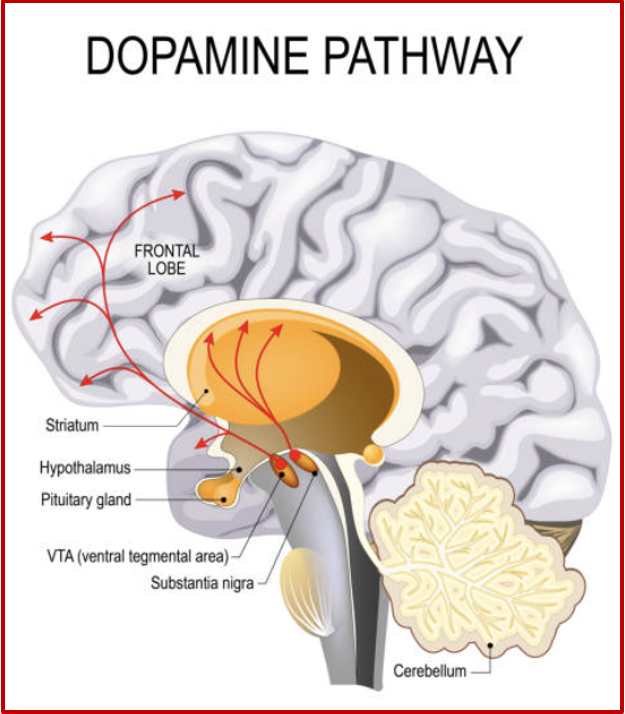
Photo: iStock
By now we know attention-deficit/hyperactive disorder (ADHD) is a common neurodevelopmental, neurodivergent condition characterized by mostly (but not all) genetically based behavioral, cognitive, and motor difficulties. ADHD brain structure, function, and chemistry are different in same age non-ADHD brains [see post 20]. I’ll begin this post by the ADHD brain’s great dopamine imbalances or deficiencies and/or its difficulties processing dopamine — which suppresses motivation and finding certain activities rewarding.
Dopamine regulates our body’s pleasure and reward systems. It boosts motivation, learning, social acumen, and curiosity (excitatory) and regulates mood, inhibits behavior (which might be a good thing), and returns us to sleep (inhibitory).
To best understand ADHD, we need to understand dopamine’s most vital role is as a neurotransmitter, the chemical messenger that transmits messages neuron-to-neuron until reaching the brain.
The reason alcohol/illicit drug overuse is so damaging, especially to those with low dopamine levels, is because usage temporarily increases and then depletes dopamine in the blood — which is why those with addictions find little relief from once pleasurable activities.
Dopamine lite explains a lot about why ADHD causes the life challenges it does.
People with ADHD have a low supply of dopamine. Dopamine is not just a reward hormone; it is essential to live. You would be catatonic without it. ADHD’ers have a low supply of dopamine and want to avoid feeling low energy as much as possible. So ADHD’ers are like the hunter-gatherers of old times to procure dopamine to survive. They go where they can find it. In impulses, spontaneity, variety, and fun, which you can create if you understand why it is important. However, the reality is day-to-day life is mundane so there isn’t much dopamine. —“A Neurodivergence Journey: What lies beneath?,” Until Now Therapy
ADHD and Reward Deficiency Syndrome
Science has found a neurobiological explanation for ADHD that adds pieces to the puzzle. According to Kenneth Blum, et al., in a research paper, “Attention-deficit/hyperactivity disorder and reward deficiency syndrome,” PubMed/NIH, people with ADHD have at least one defective gene — the DRD2 gene — that makes it difficult for neurons to respond to dopamine.
To explain their findings, I’ve “translated” Blum’s research abstract: Genetic research has identified several genes that act as intermediaries to develop — or at least be more susceptible to developing — ADHD.
Researchers also agree people with ADHD have an impaired brain reward cascade in their dopamine system, which requires them to boost dopamine levels to avoid unpleasant feelings. Having a pleasurable experience starts a neural chain reaction in the brain, which motivates us to repeat the behavior to re-experience the reward. But the low or hypo-dopaminergic trait in the ADHD brain reduces motivation and the pleasure response to reward.
This high-risk genetic trait leads ADHD’ers to seek external stimulation — often drug use that can activate dopamine release and reduce inappropriate cravings. The trait stems from the DRD2 gene that prevents normal dopamine receptors from working in the brain’s reward sites. DRD2 and others that process neurotransmitters can create more deficits, motivating ADHD’ers to seek risky, impulsive, and compulsive behaviors.
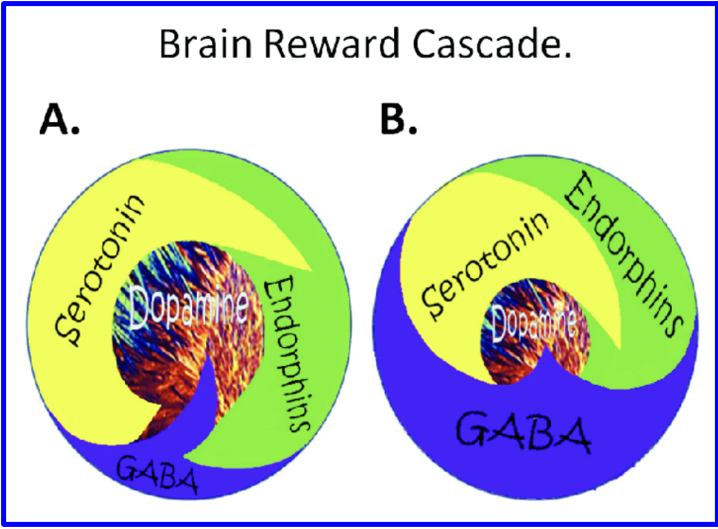
Kenneth Blum, et al., “Normal/Abnormal Schematic Representation of Brain Reward Cascade,” Research Gate
A. “Normal” physiologic state of the brain’s neurotransmitter interaction. Serotonin in the hypothalamus inhibits release of GABA, allowing for normal amount of dopamine to be released at the nucleus accumbens (brain’s reward site)
B. “Abnormal” hypo-dopaminergic state from genetic/ environmental elements: stress and neurotoxicity from psychoactives (alcohol, heroin, cocaine). Such impairments (in serotonergic, endorphinergic, GABergic, and dopaminergic genes) can reduce domamine release or reduce numbers of dopaminergic receptors.
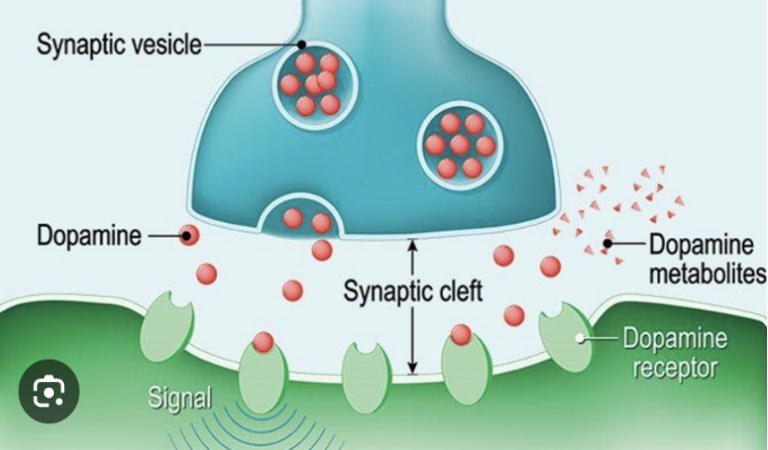
Researchers think genetic variants of dopaminergic and other reward genes lead to reward deficiency syndrome (RSD) (see below). Scientists believe early diagnoses of these high-risk genetic traits — through genetic testing and treatment of children — may reduce ADHD’s harmful behavioral symptoms. Processes for releasing dopamine and serotonin (another significant neurotransmitter) in the system may open avenues to find new treatments for both ADHD and drug addictions.
Whitney Elaine, “Role of Dopamine in Major Depressive Disorder,” Simply Neuroscience
What Works — It’s Complicated …
Here’s the rub. Simply increasing dopamine is not the answer. The reality is more complicated. As neurologist Heidi Moawad writes in “The Link Between ADHD and Dopamine,” Very Well Health, dopamine levels are sometimes described as too high or too low, but research suggests dopamine -caused disorders show more complex changes. Moawad says symptoms are better explained as a dopamine-system imbalance, with slow/fast fluctuation.
Structure of a dopamine molecule. Graphic: Research Gate
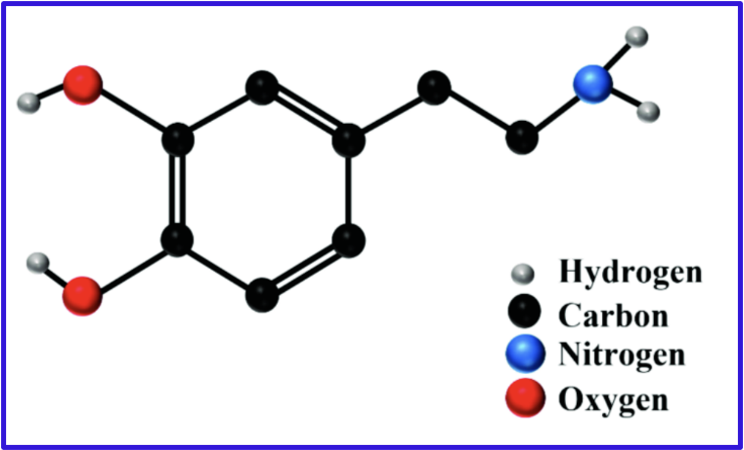
Moawad cites studies confirming the ADHD–dopamine connection:
- Most-used ADHD medications, like Adderall (dextroamphetamine), increase levels of dopamine in the brain.
- ADHD brain imaging has shown problems in areas where dopamine supports learning.
- People with ADHD are at risk of drug dependence — associated with low dopamine.
Not only that, but surges in dopamine drop back down.
Concerns about time or consequences are dwarfed by the pursuit of pleasurable reinforcement. Dopamine-deficient brains experience a surge of motivation after a high-stimulation behavior triggers a release of dopamine, but in the aftermath of that surge and reward, they return to baseline levels with an immediate drop in motivation. —Clinical psychologist Ellen Littman, PhD, quoted by Melanie Wachsman, The ADHD Brain
This is like trying to fill a leaky bucket, says social worker/ADHD coach Eric Tivers, founding CEO of ADHD reWired. “Water comes into the bucket as fast as it goes out,” he explains to neurologist Jessica McCabe.
When dopamine is dipping, how can you resist the impulse to scroll it back up? Just like it’s hard to make really good food choices when you are already hungry, it’s really hard to make good dopamine choices when you’re already low on dopamine. A person with ADHD has to figure out what those choices are, weigh them, figure out the steps involved, then initiate them, and, because the more satisfying dopamine choices usually take longer to set up, they have to tolerate the distress of being bored in the meantime. —Jessica McCabe, quoted in “Using a Dopamine Menu to Stimulate Your ADHD Brain,” by Melanie Wachsman, ADDitude, The ADHD Brain
Natural Ways to Increase Dopamine Levels
Since dysfunction in the brain reward cascade can lead to low dopamine levels, the brain requires more dopamine to avoid feeling uncomfortable. Stimulants target dopamine, but natural ways can boost it as well.
- Consistent, relaxing sleep routine
- Quick activities, like jumping jacks, coffee, or listening to a favorite song
- Several mini-meals throughout the day
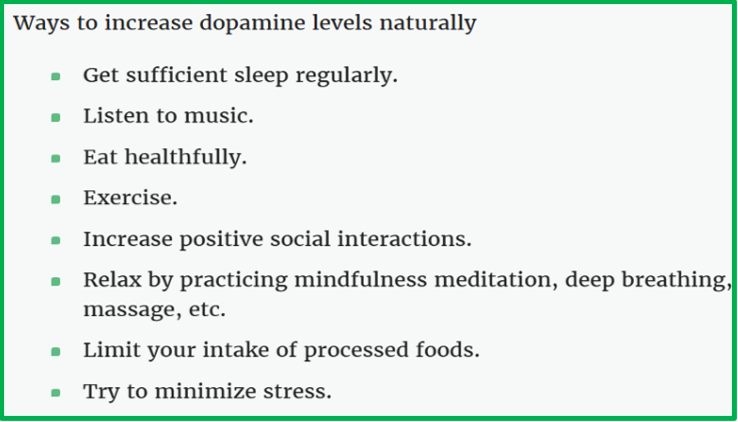
Graphic: Very Well Mind
Creating Your Own Dopamenu
In “Using a Dopamine Menu to Stimulate Your ADHD Brain,” Melanie Wachsman, senior consumer health editor of ADDitude, The ADHD Brain, writes about those with ADHD creating a personalized “dopamenu,” with pleasurable, healthy activities. The brainchild of neurologist Jessica McCabe, creator of a YouTube series and a book, How to ADHD, the dopamenu includes yoga poses as appetizers and HIIT [high-intensity interval training] classes as main courses to feed the ADHD brain as sources of stimulation when needed.
Most of us don’t spend hours scrolling through social media because we think it’s a good use of our time; we do it because we are looking for the stimulation we need to function. Unfortunately, the quick and easy sources of dopamine we tend to turn to often aren’t enough to satisfy that need. Or we hit the pleasure button on the same activity so many times, it stops being as fun. —Jessica McCabe, quoted by Melanie Wachsman, The ADHD Brain
McCabe’s idea is to separate the planning from the choosing with a curated list of options. It’s a little silly, but hey, if it works…
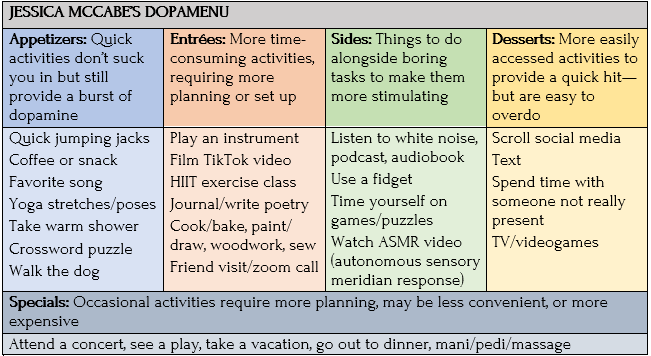
Sources: Jessica McCabe, YouTube/book, How to ADHD; Eric Tivers, ADHD reWired; Melanie Wachsman, The ADHD Brain
Bouncing Between RSD and RRE
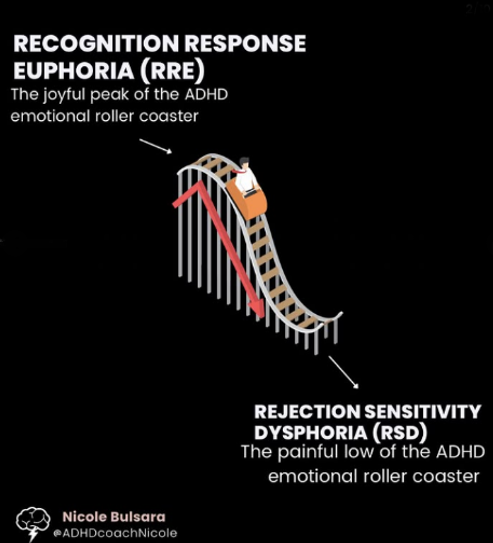
Two informal (not recognized in DSM-5) conditions can cause people with ADHD to ride a rollercoaster between two opposing tendencies. At one end of the spectrum is rejection sensitive dysphoria (RSD), a phrase coined by retired Harvard Medical School professor/psychiatrist William Dodson. RSD is extreme emotional sensitivity in the face of criticism and feelings of rejection and failure. At the spectrum’s other end is recognition responsive euphoria (RRE), feelings of intense elation that can occur when a person with ADHD is recognized for doing well. RSD was coined by psychiatrists and world-renowned experts on ADHD, Edward Hallowell and John Ratey, both of Harvard Medical School.
Graphic: Nicole Bulsara, @ADHDcoachNicole
To date, the soaring peaks of positivity and euphoria have been largely overlooked. This sister syndrome — which I’ve observed in my 69 years of living with ADHD and my 38 years of treating the condition in children and adults — is sweet and wonderful. It’s to be cultured and captured at every turn. It is our great friend, ally, and tool for growth and productivity….
Perhaps because people who have untreated ADHD are so accustomed to making mistakes and receiving criticism, they become positively giddy when they receive positive recognition. The best way to get them charged up and motivated is to praise — legitimately, honestly — some element of a project they’re working on. Compliment an outfit they’re wearing or praise a proposal they’re developing or an idea they’re hatching. —Edward Hallowell, founding director, The Hallowell ADHD Centers
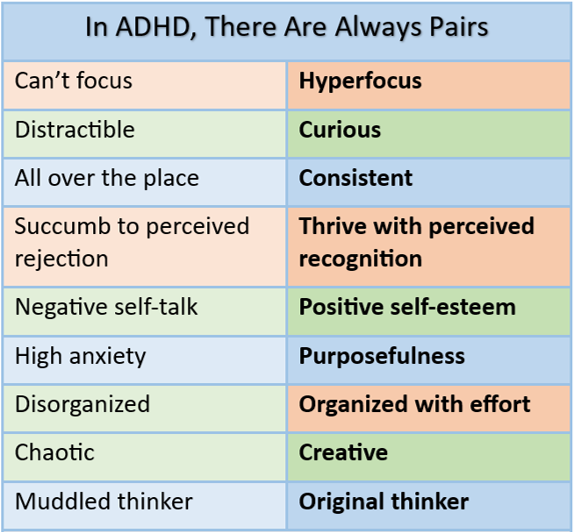
In his ADDitudeMag post, Hallowell continues, with ADHD there are always pairs:
You can hyperfocus and then you can’t focus. You are distractible, but you’re also curious. So if individuals with [ADHD] tend to succumb to perceived rejection, they can just as easily thrive with perceived recognition… —Edward Hallowell, ADDitudeMag
Augmented list of ADHD pairs, by Edward Hallowell, The Hallowell ADHD Centers
Rejection Sensitive Dysphoria (RSD)

RSD is a common but highly disruptive and painful feature of emotional dysregulation — and, in turn, a common but often misunderstood symptom of ADHD, particularly in adults. Just the idea, let alone the reality, that maybe you’ve disappointed others in your life can make you feel you’ve lost their love, approval, or respect. The same painful emotional reactions can occur when you fail or fall short of your goals and expectations, even if set unrealistically high.
RSD’s more likely to be an innate feature of ADHD and not caused by trauma — though experiencing RSD can be quite traumatic. Hallowell writes, “The emotional intensity of RSD is described by my patients as a wound. The response is well beyond all proportion to the nature of the event that triggered it … 1/3 of my adult patients report that RSD was the most impairing aspect of their personal experience of ADHD, in part because they never found any effective ways to manage or cope with the pain.”
RSD triggers can be episodes of real/perceived rejection, teasing, criticism (even if constructive), persistent self-criticism, or negative self-talk. Negative moods tend to match the perception, clouding more realistic assessments of what occurred. More from my son Etan.
More from Etan, Age 34
From my formative years, I felt inferior and incapable of dealing with life. I feared what would come next. I still do. Other people go step by step, but for me, it’s not a stairway. It’s a bunch of shifting steppingstones across the pond or the Hogwarts stairways.
Depression is comorbid with ADHD a lot of the time, but anxiety big time. My depression is maybe more clinical because it’s consistently there regardless of my situation. If I don’t deal with it, it gets worse. It’s an unfortunate cocktail of depression, anxiety, and ADHD.
By college I knew my ADHD diagnosis meant I wasn’t neurologically typical — it didn’t make me feel good, despite the diagnosis explaining stuff — removing the self-blame and self-loathing I was feeling. When I started reading and researching in grad school, I learned how many things about myself were ADHD, things I had no idea were related.
Besides anxiety and depression, another thing was working memory, never knowing where my keys are, having to walk across my apartment five times before I figured out what I was doing. It was empowering to read about it and be able to connect to it and understand it, well, because I’m experiencing it.
Thinking of it as a disability led to lower self-esteem. But, in terms of neurodiversity, stuff that had dragged me down felt more uplifting, especially over the last five years or so. I don’t have to feel lesser than other people and can recognize the things about ADHD that are advantages. It’s been a big change for my self-esteem. —Etan Swan
According to Hallowell/Ratey in ADDitude webinar, “The Flip Side of Rejection Sensitive Dysphoria: How to Tap into ADHD Energy and Motivation,” once “these triggered emotions are internalized, the person can instantaneously appear as if they have a full major mood disorder syndrome and suicidal thinking. If the feelings are externalized, they are commonly expressed as rage at the person or situation that wounded them so severely.” The moods quickly return to normal so a person with ADHD can have multiple episodes of mood dysregulation in a single day.
Those with RSD may hide intense emotional reactions, feeling ashamed of their vulnerability. They can feel a profound sense of failure, like they can’t meet personal or others’ expectations.
Recognition Responsive Euphoria (RRE)
The ADHD brain is turned up to 11; our neurotransmitters burn bright. On an emotional level, this means we feel the stabbing pain of rejection, frustration, and failure more acutely than do others. On the flip side, we also experience a meaningful and powerful zing of energy and esteem with every word of encouragement, praise, or approval we receive. The smallest gesture can power euphoria — and great accomplishments — for us. —Edward Hallowell, The Hallowell ADHD Centers

Image: Greg Pease, Getty Images
Unless it’s Hallowell writing or others linking to Hallowell, there’s not a lot of wisdom out there about RRE. So I visited sites like Reddit and YouTube to see if people with ADHD know about it … turns out many do. Here are a few random comments:
Why do I feel this extreme sense of happiness every time someone shows care for me, every time someone laughs at a joke I made? What is this thing I am experiencing? I got curious and got hyper-fixated on learning more about this.
Yes, it’s crazy how my body reacts. I’m suddenly awake, my eyesight gets better, colors are more vivid, brain fog gone, feelings of euphoria …
Love this term! The flip of trigger is glimmer — I love the positive of glimmers and RRE.

“ADHD’ers” are fed up with being recognized for low energy and motivation, for not working up to their potential, or for being scattered. “I have ADHD” is one way to get people off their backs when yet another criticism comes at them for forgetting to pay their bills, handing in homework on time, or keeping someone waiting.
The best way to break a negative cycle of hopelessness is to be, according to Hallowell, “a dream maker, not a dream breaker.” To provide encouragement for positive ideas and actions.
Image: Greg Pease, Getty Images
So one of the best ways to get them going in a good direction, in spite of all the negativity they have to contend with, is to find something positive in what they are doing and notice it. Go for it. You will quickly see eyes light up, and the person swing into action like a whirling dervish of positive energy.
First of all, make sure you find people who have lots of encouragement and recognition to give. They are precious. Some people are notoriously stingy with it, as if it were a valuable coin not to be parted with. True, it’s not to be given undeserved, for then it loses all its power. But neither should it be withheld until a person [wins the] Nobel Prize. —Edward Hallowell, The Hallowell ADHD Centers
If you’re not in therapy nor benefitting from RRE, try responding to Hallowell’s revelatory prompts. It has helped me sort through the good and what sucks about my life right now:
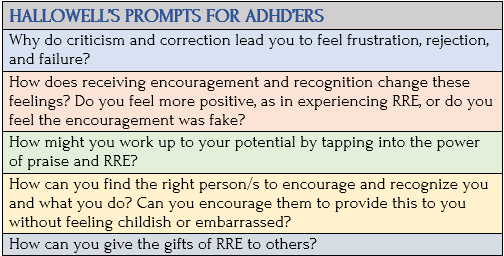
While there’s skepticism in the psychiatric community in believing RSD and RRE exist, there is ongoing research looking into the neurology of these conditions.
Coming Up Next
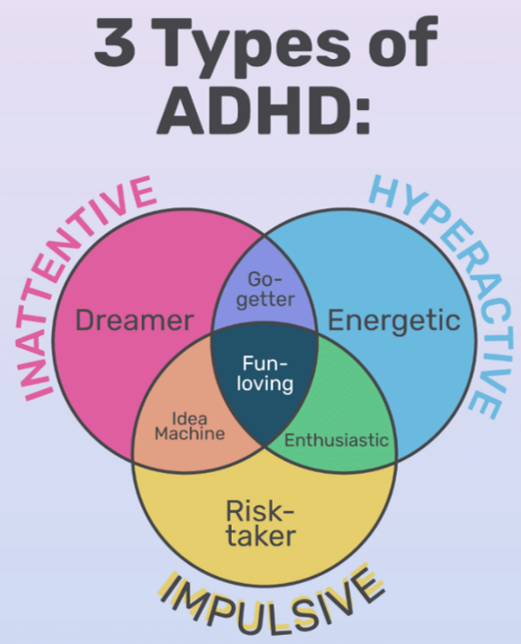
In Post 22. ADHD: Inattentive, Impulsive … and Hyperactive? I’ll describe the predominate ADHD subtypes and what’s known about risk factors and causes.
Copyright ©2026 Jan Swan
 English