On Neurodivergence and Otherness
Show Table of Contents
INTRO
1. On Neurodivergence and Otherness: An Introduction
SENSES AND SENSORY SENSITIVITIES
2. Senses Count
3. Neurobiology for Dummies
4. Sensory Transmission and our Reward System
5. Sensory Receptors are the Body’s Cellular Plan
6. A Synthesis: Sensory Systems and our Emotions — Part I
7. A Synthesis: Sensory Systems and our Emotions — Part II
8. Sensory Disorders and Sensitivities
9. Etan’s Story
SYNESTHESIA
10. Synesthesia: Difference, But Not Disorder
11. Synesthesia, Creativity, Artistry — Part I
12. Synesthesia, Creativity, Artistry — Part II
AUTISM AND THE NEURODIVERSITY MOVEMENT
13. From “Mental Defectives” to Autism Spectrum Disorder
14. Changing Conception of Autism
15. Autism Diagnoses and Behavior Patterns
16. Autism Treatments that Help
17. Early Start Autism Treatment: A Case Study
18. Neurodivergence and the Neurodiversity Movement
19. Neurodiversity Takes Flight
20. ADHD and Neurodevelopmental Disorders
21. ADHD: A Preponderance of Risk Factors and Symptoms
22. ADHD: Inattentive, Impulsive … and Hyperactive?
23. ADHD: Named, Renamed, Still Needs a New Name
24. ADHD: Treatment and Coping Skills for All Ages
LGBTQ+
25. Neurodiversity and the LGBTQ+ Fight
26. LGBTQ+ Identity and Expression
27. LGBTQ+ and Mental and Behavioral Healthcare
ON LANGUAGE
28. Language Matters In and Around Neurodiversity
29. Neuroinclusion and Disability Language
30. Neurodivergent Language Difficulties
ON CREATIVITY AND GIFTEDNESS
31. Neurodiversity and Creativity
32. Giftedness is a Piece of Neurodivergence
SELF-IDENTITY
33. Self-Identity: The Cornerstone of Neurodiversity
34. Early Theories of Self-Identity Formation
35. Contemporary Theories of Self-Identity Formation
36. Authenticity and the Search for Self
37. Self-Concept and Self-Schema
38. Self-Labeling and Parts Work
39. Complexity, Clarity, and Self
40. Cognitive Complexity and Neurodivergence
41. Cognitive Complexity Meets Self-Identity
IMPROVING LIFE FOR NEURODIVERGENT PEOPLE
42. Empathy and Difference – Recognition and Effort
43. Empathy and Difference – Response
44. Reducing Neuroatypical-Neurotypical Conflict – Part I
45. Reducing Neuroatypical-Neurotypical Conflict – Part II
46. Communicating Across the Neurospectrum – Part I
47. Communicating Across the Neurospectrum – Part II
48. Neurodiversity: Advocacy and Education
49. Neuroinclusion in the Workplace
50. A Neurodiverse Lifestyle
IN CONCLUSION
51. In Conclusion: Neurodivergence and Inspiration
11. Synesthesia, Creativity, Artistry — Part I
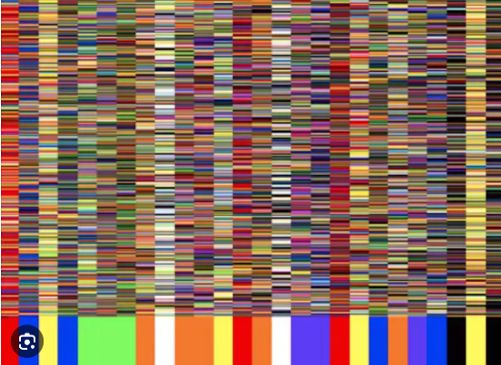
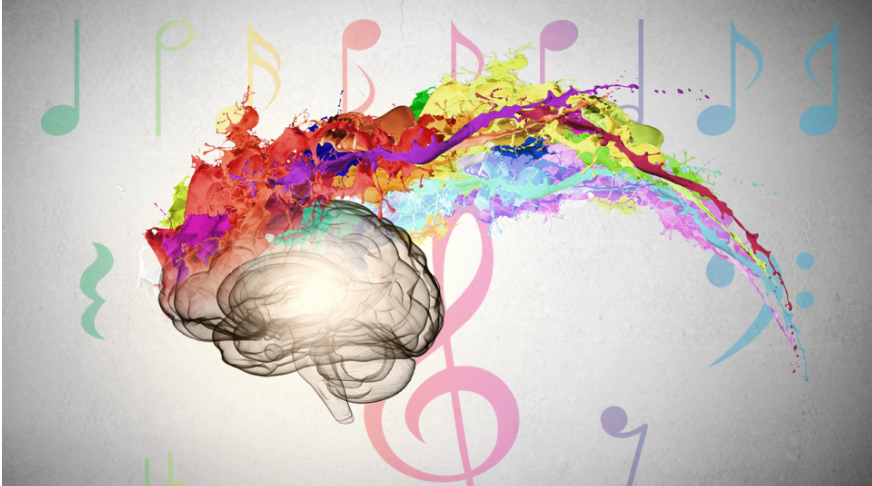
Research has found strong correlations between synesthesia and creativity, possibly because synesthetes bring their unique and unusual perceptions and ideas about the world to their art. Other research has found synesthetes tend to be more creative in specific areas, like music and visual art. From the work of artists, thinkers, and innovators, those of us without the gift of synesthesia get a chance to share their unique, magical way of perceiving the world—and be richer for it.
A Frontiers in Psychology study found synesthetes who saw colors when listening to music (sound-color) were more likely than “normies” to have a career in music or the arts. Another study in the Journal of Neuroscience found grapheme-color synesthetes had increased activity in brain regions associated with visual imagery when viewing art.
Music and color are inextricably linked and in multiple ways. In some particular cases, the bond is so strong that it creates a different experience: synesthesia. From the Greek syn and aesthesis which mean together and sensation, synesthesia is the variation of human perception through different senses. It is not a disease but rather a phenomenon: the stimulation of one sense automatically and involuntarily causes the stimulation of a second sense that also responds. As they are idiosyncratic perceptions, there are different cases of synesthesia, such as seeing colors in sounds, feeling the taste of words, or perceiving touch on the cheek when savoring a food. —Elisabet Franch, “Painting with Sounds, Composing with Colors: On Synesthesia,” The Flute View
The cultural, historical significance of synesthesia has contributed to a growing interest in the condition, with artists, writers, and musicians continuing to use synesthetic experiences as inspiration for their work. Nonetheless, research raises questions about the evidence for assertions of synesthesia. Science on creativity in synesthetes or any population that excels in creativity can be used to shed light on the basis of creativity in all of us.
In addition to these correlations between synesthesia and creativity, evidence suggests synesthesia can directly enhance creativity. It may lead to deeper emotional connections to experiencing art or music and a more profound creative response. Synesthesia may also enhance memory and attention — components of creative thinking.
Synesthetes and Metaphor
There is a distinction between those who have “literal” synesthesia — it’s in their brain wiring — and those who use synesthetic metaphor in their art, language, thought. All of us are in the latter camp when we talk about “warm color” or “feeling blue.”
“Warm color” is a metaphorical “sensory mismatch,” describing a visual color with an adjective conveying a tactile sensation of temperature. Something we take for granted. This contrasts with “warm breeze,” a non-synesthetic expression since both words refer to the tactile sense.
“In semantics,cognitive linguistics, and literary studies,” writes English and rhetoric professor Richard Nordquist, University of Georgia, “synesthesia is a metaphorical process by which one sense modality is described or characterized in terms of another, such as ‘a bright sound’ or ‘a quiet color.’” He adds this is also known as linguistic or metaphorical synesthesia, from the Greek: “perceive together.”
Sources: Yoshikata Shibuya, et al., “Understanding Synesthetic Expressions: Vision and Olfaction with the Physiological=Psychological Model,” Speaking of Colors and Odors, 2007. Cited by Nordquist, who compiled synesthetic writings on a Thought Co. blog post, “Synesthesia: Glossary of Grammatical and Rhetorical Terms.”
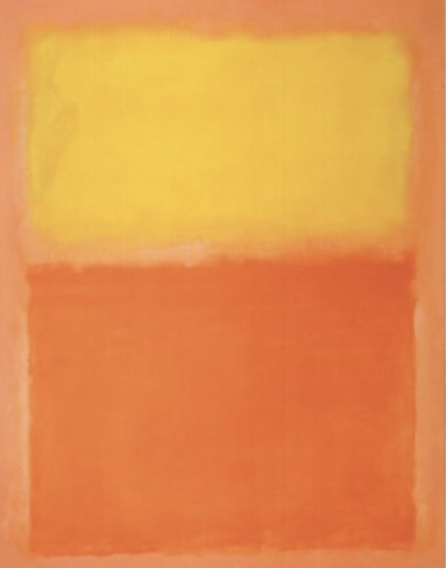
Marc Rothko, Orange and Yellow, 1956
Famous Synesthetes: Musicians / Composers
Many artists, musicians, and writers throughout history have reported on how their synesthetic experiences were expressed by their art. As I quoted in the prior post, more than eight times as many creative people are synesthetes, with many influential artists using their gift as aid or inspiration.
Leonard Bernstein
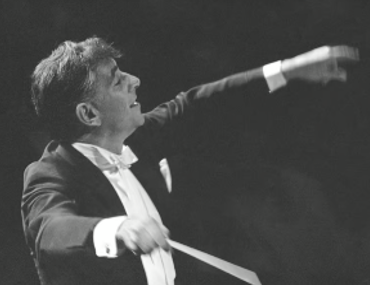
American composer and conductor Leonard Bernstein (1918-1990) associated music with color. My search for Bernstein and synesthesia led me to a modest webpage [catemcc] by artist Cate.
McCauley recounting her conversation with the conductor at Tanglewood in 1968, when she was age 9. It was so charming and her artwork so joyful, I’m reproducing a sizable excerpt.
Leonard Bernstein conducting the New York Philharmonic Orchestra, 1962
My Conversation with Bernstein
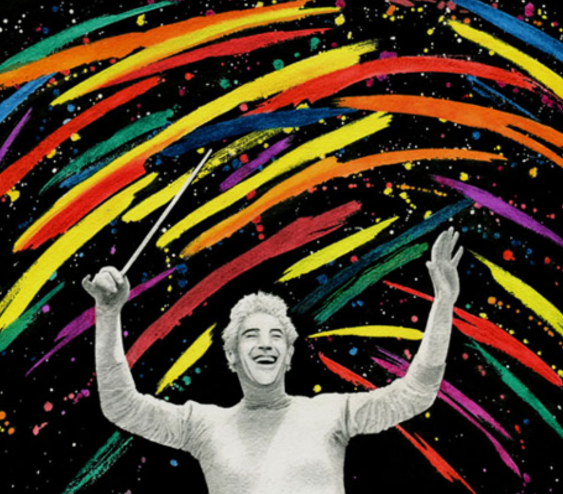
He asked if I was looking forward to the concert that night. I said yes, but he sensed my general lack of enthusiasm.
“Do you get bored at these concerts?” he asked.
“The music is nice, but it’s so boring to look at, all black, white, and gray. It doesn’t match the music. I like art, so I came up with my own way of dealing with that.” He seemed quite interested so I continued.
“I imagine all the instruments have a color. String instruments are yellows, reds, and orange. Horns are blue. For some reason, I see the
drum section as purple. They all dance and move to the music. It helps a lot.”
He chuckled in wholehearted agreement, his wild head of gray hair flying about. “Stay as long as you like. Enjoy the concert.”… We went to the back of the amphitheater to watch the orchestra take the stage. That’s when I discovered who the gray-haired man was, only this time he was in a tuxedo. He was the conductor Leonard Bernstein.
I had no idea what a big deal he was in the world of music. I was 9…. He was a really nice man. The only person I had ever told of my concert color theories.
Life went on, and I soon forgot the whole thing. Until 22 years later when I awoke with the memory of that experience clear as the day it happened. How odd, I thought, something from so long ago, so fresh in my mind. It stuck with me all day.
Later that night while watching the evening news I found out Leonard Bernstein had passed away the night before. It stunned me. Did he brush past me on the way out of town? A jolt of energy ran through me.
In that moment, I had a vision of a happy Bernstein in his gray sweatshirt conducting an orchestra full of dancing colors. I tucked that image away with the memory of a kind man I had met so long ago.
It would take another 24 years for the opportunity to bring that image to Earth. All total, “My Conversation with Bernstein” was 46 years in the making. How to accomplish this kept me awake for weeks. It was most persistent, seemingly wanting to come forth one way or another. RIP Leonard.
I later discovered Bernstein had synesthesia, the ability to see colors and movement when he hears musical tones. —Cate McCauley, catemcc

Tori Amos
American singer-songwriter, pianist, and mezzo-soprano Tori Amos (b. 1963) is notable for having a form of synesthesia that affects how she processes sounds. Different sounds produce light images that make songs appear as strings of color. She calls these “light creatures” and claims she’s never seen the same one twice. [Source: Interesting Engineering]
Duke Ellington
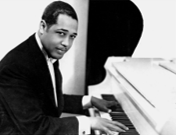
Jazz great, composer, and pianist Duke Ellington (1899-1974) interpreted notes as colors — a form of timbre-to-color/texture synesthesia — influencing his jazz compositions. He’s quoted as saying, “I hear a note by one of the fellows in the band, and it’s one color. I hear the same note played by someone else, and it’s a different color. When I hear sustained musical tones, I see just about the same colors you do, but I see them in textures. If Harry Carney is playing, D is dark-blue burlap. If Johnny Hodges is playing, G becomes light-blue satin.” [Source: Interesting Engineering]

Billie Eilish
American singer-songwriter Billie Eilish (b. 2001) first gained public attention in 2015 with her debut single Ocean Eyes, written and produced by her brother Finneas O’Connell, with whom she collaborates on music and live shows. Both brother and sister are synesthetes.
Billy Joel
American singer-songwriter Billy Joel (b. 1949) wrote a book, Tasting the Universe, which explores his ability to correspond color to musical genres and letters, according to Maureen Seaberg’s article, “He’s Got A Way About Him: America’s Piano Man, synesthete Billy Joel, finds inspiration in colored music,” Psychology Today. Seaberg writes how Joel doesn’t want the neurobiological explanation for synesthesia to explain away the magic.
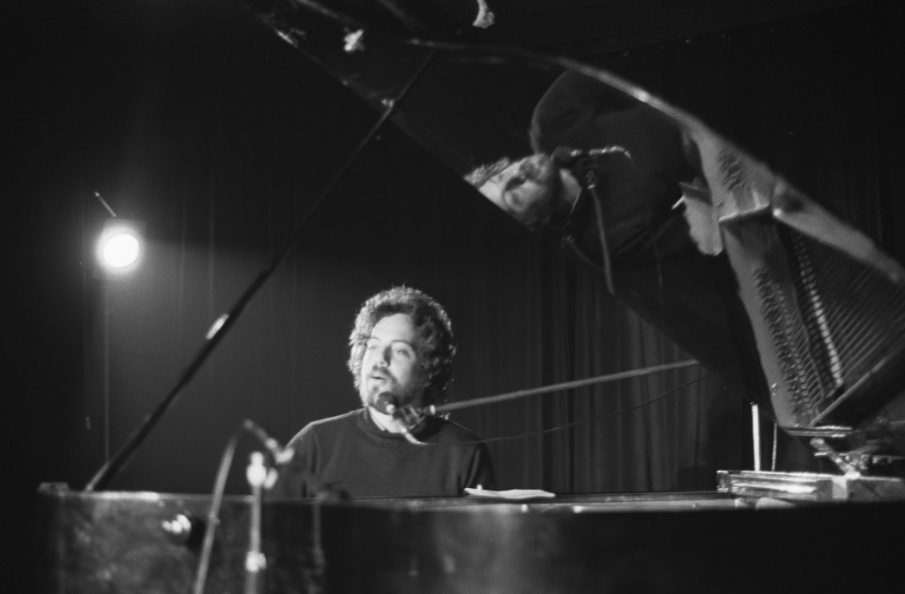
Billy Joel, 1972, when he wrote Piano Man. Redbook. Photo: Sepia Times/Getty Images
“If I figure it out, somehow the sorcery disappears. Because I don’t want to become formulaic with it; I like the spontaneity and the mystery of it all. It’s very intriguing to me.”
Mr. Joel expresses something all we synesthetes feel — there is an ineffable quality to the gift. To ascribe it to unpruned neurons or lack of chemical inhibition alone — two of the dominant theories — somehow takes the magic away. And further, we can’t imagine life without these impressions and even like them. Perhaps synesthesia is a function of consciousness as much as anatomy. —Maureen Seaberg, Psychology Today

Billy Joel, 1972, when he wrote Piano Man. Redbook. Photo: Sepia Times/Getty Images
Joel’s grapheme-color synesthesia causes him to associate letters, particularly vowels, with color. Strong vowel endings such as A, E, or I evoke images of blues and greens, whereas hard sounding consonants like T or P are associated with vivid shades of red or gold.
Joel says he dreams of his hit songs as they appear in amorphous fields of abstract-colored shapes. He also associates musical genres in full color: ballads are blues and greens; with rock music, a more vivid palette. Seaberg quotes Joel: “When I have a particularly vivid color, it’s usually a strong melodic, strong rhythmic pattern that emerges at the same time. When I think of those certain songs, I think of vivid reds, oranges, or golds.”
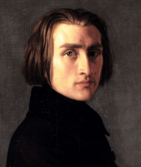
Franz LiszT
Prolific Hungarian composer and virtuoso pianist/organist, conductor, philanthropist, and author Franz Liszt (1811-1886) experienced music-to-color synesthesia and believed that specific keys and chords had associated colors and emotions.
“When Liszt first began as Kapellmeister in Weimar (1842), it astonished the orchestra that he said: ‘O please, gentlemen, a little bluer, if you please! This tone type requires it!’ Or: ‘That is a deep violet, please, depend on it! Not so rose!’ First the orchestra believed Liszt just joked; later they got accustomed to the fact that the great musician seemed to see colors there, where there were only tones. (Anon., quoted in Friedrich Mahling.)” [Source: Arts Academy in the Woods]
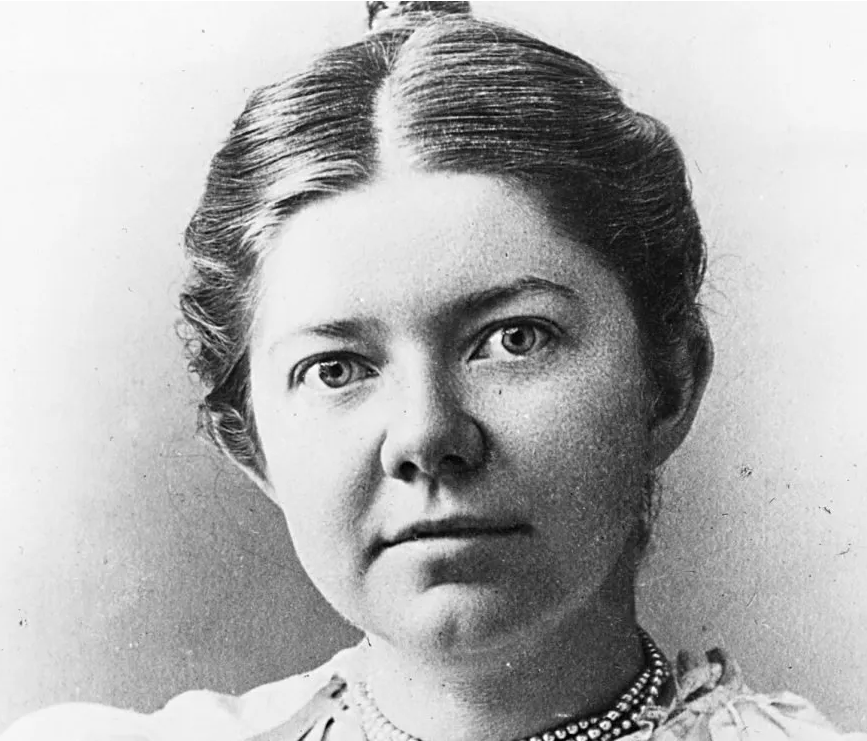
Amy Beach
Also from the 19th century, composer Amy Beach had chromesthesia and perfect pitch. Her mother recorded that she connected specific major notes with colors (F-sharp was black, G was red). Along with her chromesthesia and perfect pitch, Beach could re-create an image from memory
Photo: From David Dring, “Chromesthesia: Seeing Sound in Color,” Bearded Gentlemen Music
Itzhak Perlman
Israeli-American virtuoso violinist, conductor, and professor of music Itzhak Perlman (b. 1945) perceives specific violin strings as different colors. In her Psychology Today blog post, “The Red of His E String: Itzhak Perlman’s Synesthetic Musical Associations,” synesthete and synesthesia author Maureen Seaberg, quotes the famous violinist:
Itzhak Perlman plays at the White House State Dinner honoring Queen Elizabeth II, 2007
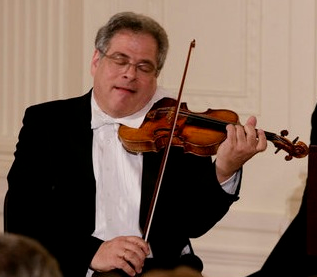
Perlman: I know I can describe certain sounds with color. It’s not music — it’s notes, it’s single sounds. If I hear a particular sound on a particular string on the violin, I could associate that sound with color …. It’s not like I play a piece and see sparkling blue things.
Seaberg: Perlman started the song slowly. I, too, don’t want people to think I walk around like someone on an acid trip all the time. I’m careful how I describe this, and he wants to be, too.
Perlman: If I play a B flat on the G string, I would say the color for me is probably deep forest green. And if I play an A on the E string, that would be red. If I play the next B, if I look at it right now I would say it’s yellow. The bright colors are the upper strings of the violin — for me I associate it with bright colors of the spectrum.
Seaberg: To share one’s personal associations is currency in the synesthesia world, and I am so grateful to know his personal palette …. There is great diversity within the synesthesia realm. —Maureen Seaberg, Psychology Today
Pharrell Williams
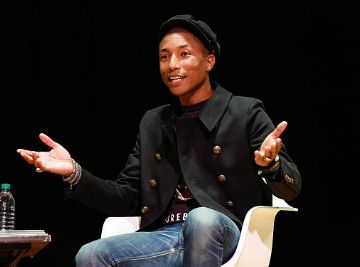
One of today’s most well-known synesthetes is American musician, singer-songwriter, rapper, record producer, and fashion designer Pharrell Williams (b. 1973), who feels colors when he hears music and sounds.
Williams relies on his synesthesia when making music. He’s able to determine when something is in key based on it matching the color he sees in his mind.
Pharrell Williams, “In Conversation,” NPR Music and NYU Tisch School of the Arts, 2015

Most artists have synesthesia. It’s no big deal. There’s a lot of people who are … undiscovered artists, and they have it, too …. When you’re born, your nerve endings are … all melded together, if you will. And then they prune, right? So, all your sensory nerve endings are kind of connected, as I understand it, and then they sort of prune when you’re one [years old]. Sometimes some of them stay stuck together and, for a visual and auditorial synesty, it just means the visual nerve ending and the auditorial nerve ending are still connected. So, they send ghost images to each other. People with synesthesia, we don’t really notice until someone brings it up, and then someone else says, ‘Well, no, I don’t see colors when I hear music.’ And that’s when you realize something’s different.” —Pharrell Williams, interview, NPR with Morning Edition’s David Greene
Stevie Wonder
Pop legend singer-songwriter, musician, and record producer Stevie Wonder (b. 1950) can visualize music , despite being blind his whole life. Wonder speaks of music notes eliciting different colors in his mind’s eye (chromesthesia). He said music gives him the gift of colors. When he plays piano, he said he can neurologically perceive colors from his notes.
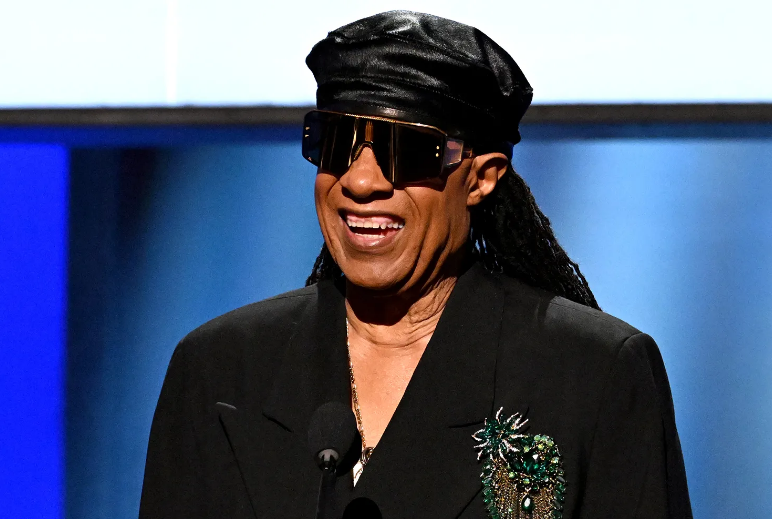
Stevie Wonder, “Happy Birthday, Stevie Wonder! 25-Time Grammy Winner’s Life in Photos,” People. Photo: Michael Kovac/Getty
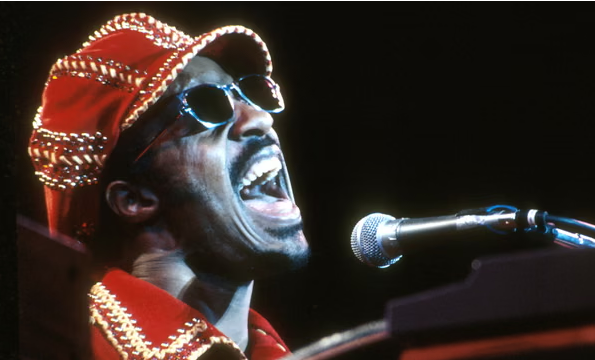
Stevie Wonder, performing in the 1970s, The Guardian: Photo: Michael Ochs Archives/Getty Images
Coming Up Next

Post 12: Synesthesia, Creativity, Artistry — Part II continues my list of famous synesthete artists and thinkers.
 English