On Neurodivergence and Otherness
Show Table of Contents
INTRO
1. On Neurodivergence and Otherness: An Introduction
SENSES AND SENSORY SENSITIVITIES
2. Senses Count
3. Neurobiology for Dummies
4. Sensory Transmission and our Reward System
5. Sensory Receptors are the Body’s Cellular Plan
6. A Synthesis: Sensory Systems and our Emotions — Part I
7. A Synthesis: Sensory Systems and our Emotions — Part II
8. Sensory Disorders and Sensitivities
9. Etan’s Story
SYNESTHESIA
10. Synesthesia: Difference, But Not Disorder
11. Synesthesia, Creativity, Artistry — Part I
12. Synesthesia, Creativity, Artistry — Part II
AUTISM AND THE NEURODIVERSITY MOVEMENT
13. From “Mental Defectives” to Autism Spectrum Disorder
14. Changing Conception of Autism
15. Autism Diagnoses and Behavior Patterns
16. Autism Treatments that Help
17. Early Start Autism Treatment: A Case Study
18. Neurodivergence and the Neurodiversity Movement
19. Neurodiversity Takes Flight
20. ADHD and Neurodevelopmental Disorders
21. ADHD: A Preponderance of Risk Factors and Symptoms
22. ADHD: Inattentive, Impulsive … and Hyperactive?
23. ADHD: Named, Renamed, Still Needs a New Name
24. ADHD: Treatment and Coping Skills for All Ages
LGBTQ+
25. Neurodiversity and the LGBTQ+ Fight
26. LGBTQ+ Identity and Expression
27. LGBTQ+ and Mental and Behavioral Healthcare
ON LANGUAGE
28. Language Matters In and Around Neurodiversity
29. Neuroinclusion and Disability Language
30. Neurodivergent Language Difficulties
ON CREATIVITY AND GIFTEDNESS
31. Neurodiversity and Creativity
32. Giftedness is a Piece of Neurodivergence
SELF-IDENTITY
33. Self-Identity: The Cornerstone of Neurodiversity
34. Early Theories of Self-Identity Formation
35. Contemporary Theories of Self-Identity Formation
36. Authenticity and the Search for Self
37. Self-Schemas and Neurodivergence
38. Self-Labeling and Parts Work
39. Complexity, Clarity, and Self
IMPROVING LIFE FOR NEURODIVERGENT PEOPLE
40. Empathy Recognizes and Navigates Difference
41. Reducing Neurotypical-on-Neuroatypical Conflict – Part I
42. Reducing Neurotypical-on-Neuroatypical Conflict – Part II
43. Communicating Across the Neurospectrum – Part I
44. Communicating Across the Neurospectrum – Part II
45. Neurodiversity: Advocacy and Education
46. Neuroinclusion in the Workplace
47. A Neurodiverse Lifestyle
IN CONCLUSION
48. In Conclusion: Neurodivergence and Inspiration
19. Neurodiversity Takes Flight

New ideas or new ways of doing things take off and take hold of the public consciousness — or, conversely, they don’t. It usually has little to do with marketing campaigns and everything to do with a mix of persistent and dedicated work, evidence the new thing is better than the old thing, and — serendipity. People are paid large sums of money to bring ideas or products to the marketplace—only to see them flounder and fail. When things succeed it’s because people are motivated and compelled to take action.
Even with passion and virtue, it’s still a slog, a slow-burning interchange of research, changes in policy and practice, and efforts to change hearts and minds. When an idea slices through the noise you know something important has happened. An innovation is better, faster, sometimes cheaper. In psych, streamlined evidence-based protocols and treatments save lives or make them better. Noise-cancelling headphones help an over-stimulated kid make up a math test in a noisy classroom (my kid). A neurodiversity movement provides safe harbor for isolated, marginalized, and often stigmatized individuals.
Neurodiversity’s Lift Off
In this post, I offer my analysis on why neurodiversity — term, concept, AND movement — took off and became a rallying cry for and about neuroatypicals who want to be fully themselves. I found terms like autonomous motivation and self-determination theory (SDT) to explain why people work tirelessly for intangible rewards.
In “Self Determination Theory and How It Explains Motivation,” Positive Psychology writer Courtney Ackerman, advocate of positive psychology, writes, “Although self-determination is generally the goal for individuals, we can’t help but be motivated by external sources — and that’s not necessarily a bad thing. Both intrinsic and extrinsic motivation are highly influential determinants of our behavior, and both drive us to meet the basic needs found in the Self-Determination Theory (SDT) model [paraphrased]:
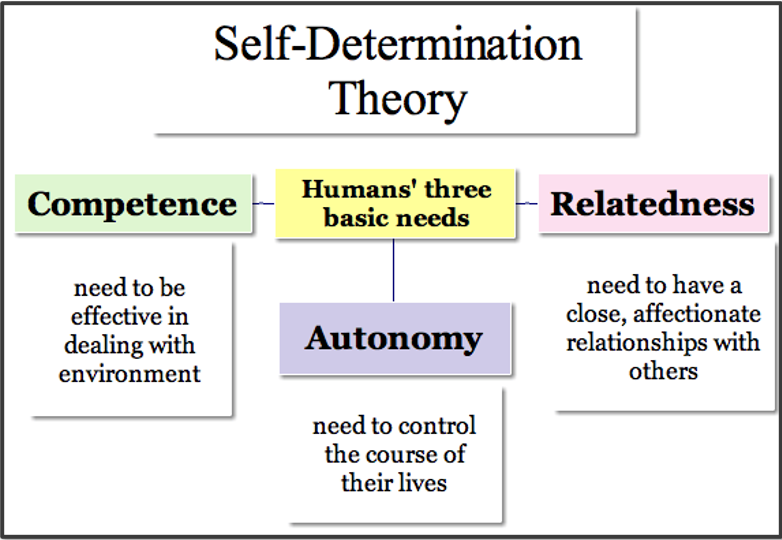
Graphic: Jennie Dunlap, “What is Self-determination Theory,” Medium
- Autonomy: We need to feel we’re masters of our own destiny and have at least some control over our lives. Importantly, we need to feel we’re in control of our behavior.
- Competence: We need to develop competence and mastery over tasks we believe are important to achieve our goals.
- Relatedness: We need a sense of belonging and connectedness with other people, at least to some degree.
Most us would relate to this aspirational model. With it in mind, here are four points I believe caused the neurodiversity movement to have international impact.
Point 1: The Time Was Ripe
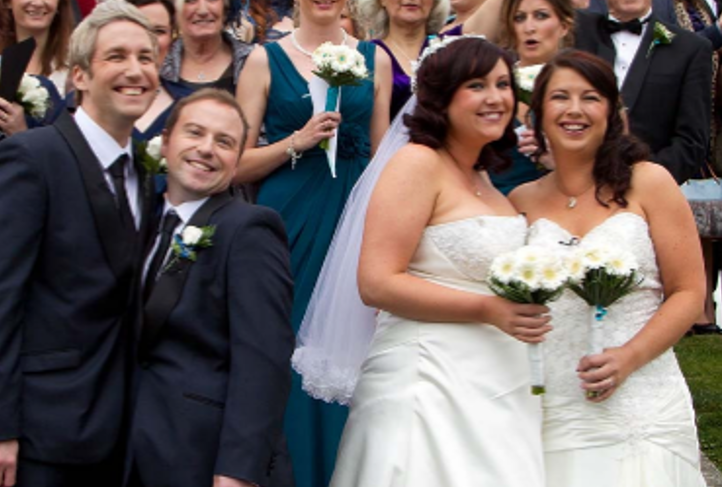
Sometimes it’s about timing. Once this country embraced same-sex marriage, ratification of the landmark 2015 Supreme Court decision into law happened quickly — but any earlier and the effort might’ve failed. The public needed to be ready to embrace the change promoted by the advocates.
Neurodiversity coalesced as a movement at a time of upheaval and protest for the rights of people with disabilities — a lengthy battle starting in the late 1970s and culminating with passage of the 1990 Americans with Disabilities Act (ADA).
New generations of young adults, disquieted by slow progress and older people’s prejudices, accelerated change. They saw the potential and had the skills for building online communities. As children, they were pulled out of class for reading, OT/PT, and other special services. They received early diagnoses for dyslexia, dyspraxia, ADHD, and sensory processing disorder (SPD). As young adults, they wrapped themselves in the cloak of neurodivergence — less disability and more difference — ready to bring home the fight for human rights.
Point 2: Deep Psychological Need
Remarkably, a grassroots autistic community defined for itself what it needed, because a sense of community was denied to them where they lived as individuals. As community, they could fend off oppressive isolation and fear of stigma, mistreatment, and rejection. They shared tips for independent living (IL). For the first time, they had a voice to write and speak. Autist pioneer Martijn Dekker writes, “We provided mutual support to accept autistic people as individuals, promoting inclusion, and resisting conformity, while helping one another to self-advocate and secure civil rights and appropriate services.”
Powered by a deep psychological need, the drive toward IL is fundamental to the goals and desires of the movement. It’s exactly what any young person wants and expects — to choose their own homes, careers, activities, friends, political/ideological beliefs, affiliations. This comes with controlling one’s own life choices, taking responsibility for one’s own actions, and being as self-sufficient as possible. Advocates for Life Skills & Opportunity (ALSO) notes, “Fortunately, people with disabilities and their advocates have passionately fought to secure equal access to independent living opportunities that those without disabilities experience every day.” Despite great strides forward, these freedoms remain elusive.
Point 3: Intellectual Honesty
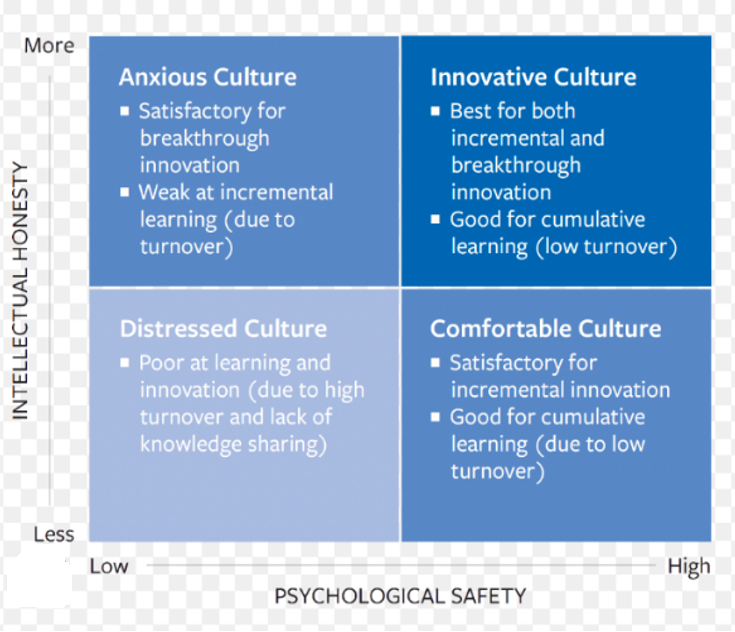
For the entire 20th century, autism was a subject of psychiatric theories being formed, debunked, reformed. Autism’s origin story paralleled the rise of the psychiatric profession itself — as rigor was added to research and accountability to clinical practice. This in time led to scientific breakthroughs in developing new treatments and new medications. Based on empirical evidence and speedier internet technologies, online group discussions gained a foothold in the culture of inquiry. For the first time, they could help determine what was authentic, meaningful, and humane for those who were living it, to ensure their needs were being met, and their dollars were being spent wisely.
Graphic: “Why Innovation Depends on Intellectual Honesty,” MIT Sloan Management Review
Because each instance of intellectual dishonesty tears the social fabric of our civilization, allowing our worst human id impulses to perpetuate a cycle of violence against each other. The problems we face…can only be solved by a cooperative effort of people from different walks of life, seeing different sides of the cube, who trust each other’s intentions. That trust is built on the foundation of intellectual honesty.
Intellectual honesty is the lifeblood of many professions, but especially psychology. Accordingly, I believe intellectual honesty reflects one’s commitment to pursue truth while resisting it’s two most insidious enemies: propaganda and logical fallacies. —Psychologist John Cottone, “Are You Intellectually Honest?” Psychology Today
Intellectual honesty can be demonstrated through replicable, scientific evidence, not anecdotal evidence, but also from being honest when research doesn’t result in hoped for outcomes.
Point 4: Accessible Mode of Communications
Source: Wikipedia
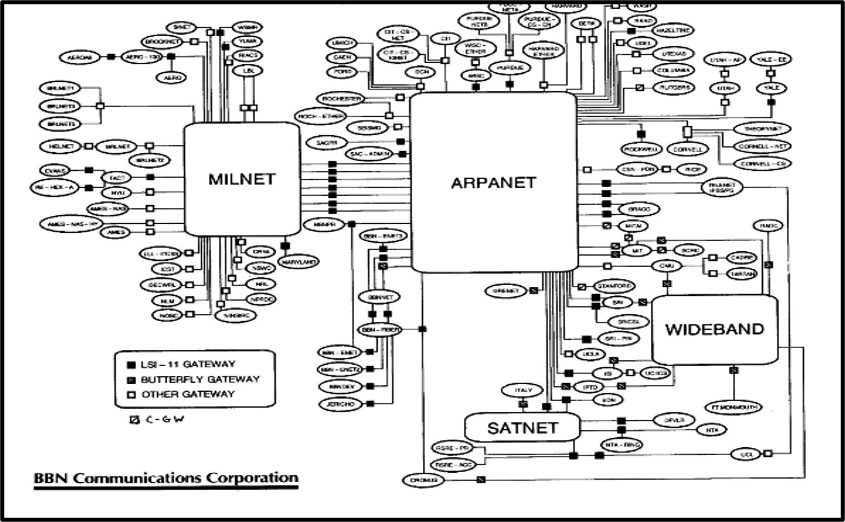
Dekker seized on a rudimentary, dial-up technology to create his community. He writes, “… in this pre-social media era, with the World Wide Web still a toddler, starting a group of any description on the Internet was non-trivial at best. No services existed that let you do this at the click of a button.” Dekker describes how he distributed group email in batches a few times a day, every day, over the Internet through a dial-up line.
Finally, cable internet, the precursor to what we know today, was available in 2000. Then the international community grew fast.
Key to communicating:
- Always communicate the best understanding of what science and clinical experience show, while resisting the urge to make unsubstantiated claims.
- Be open to input and new knowledge, constantly learn from others, grow as an advocate and a person, and be willing to correct mistakes.
We’ve experienced what happens when we go to the most comfortable sources of information, no matter their legitimacy, accuracy, or political agenda. Social media once provided safe spaces for groups to spread the word and build a following, but no more — even within groups that started out with good intentions. The autism wars [see post 13] makes this point. A small, dedicated group loses its innocence as it grows up and no longer knows all its members. They squabble, do power plays, change brand, and need money to survive. Despite this, it’s easier than ever to target communities that need what you have to share: evidence of good practice, research breakthroughs, tips for living, and help for those seeking resources, safe harbor, or safety. In other words, good communications tech and good information go hand in hand.
In sum
Neurodiversity became an international movement because the stars aligned these four elements: the timing was right, there was a deep psychological need, there was a push toward intellectual honesty, and communications became accessible, cheap, and crossed boundaries. The four points account for the movement’s success, despite setbacks. Algorithms fill my social media with information relevant to my internet searches — about neurodiversity, sensory processing, vagus nerve stimulation, ketamine-infusion therapy, and breakthroughs in autism research. Connecting to people without hidden agendas, so personal beliefs and biases don’t interfere with what the facts say, can start a movement.
The Neurodiversity Paradigm
Graphic: Mary Colley, ADHD Aware
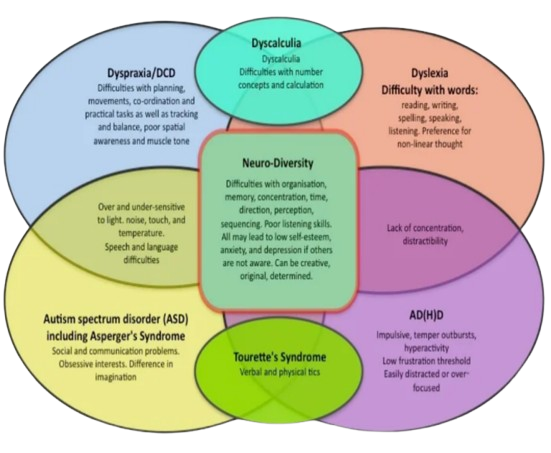
The concept called the neurodiversity paradigm proposes two broad swaths of the population in terms of how their brains work, defined by Medical News Today.
Neurotypicals (NTs) are the largest segment of the population. The term subjectively describes any of us who think and process information how expected by our culture. With variation, NT children reach develop-mental milestones at a similar time to their age group, have social and organizational skills like their peers, are able to tolerate some sensory discomfort, adapt to change, and have many interests.
Neurodivergent (ND) or neuroatypicals comprise smaller subsets of people. It describes those of us who process information and behave in a way that differs from the actual or perceived norms of a particular culture. It’s having the same rights as everyone else and not being considered a problem to society.
According to ADHD Aware, 15% of the UK population is neurodivergent. The term has no fixed meaning, but represents a range of conditions, needs, issues, preferences, intelligence, and creativity. Individuals can use the term to define themselves AND their neurodevelopmental diagnoses of autism, ADHD, learning disabilities (dyslexia, dysgraphia, dyspraxia), motor disabilities, Tourette’s syndrome, and synesthesia. Melanie Heyworth, founder/head researcher, Reframing Autism, Australia, describes it this way:
The liberation of existing without being labeled neurologically impaired or deficient has proved an enticing prospect for those of us whose neurology strays further from the expected putative “norm” than just that we like art or numbers or what music we prefer.
And that’s how the neurodiversity paradigm evolved. Because autists — and many others with different neurological variances — want the opportunity to exist without judgement.
So, the neurodiversity paradigm takes the basic concept of neurodiversity and proposes that some brains are neurotypical (broadly conforming to a standardized, typically developing norm), and some brains are neurodivergent (diverging from that standardized, typically developing norm). —Melanie Heyworth, “Neurodiversity (What is it and Why Do We Care?),” Reframing Autism
Michelle Reed-Harris, “Top 10 Signs of a Gifted Child,” Pasen
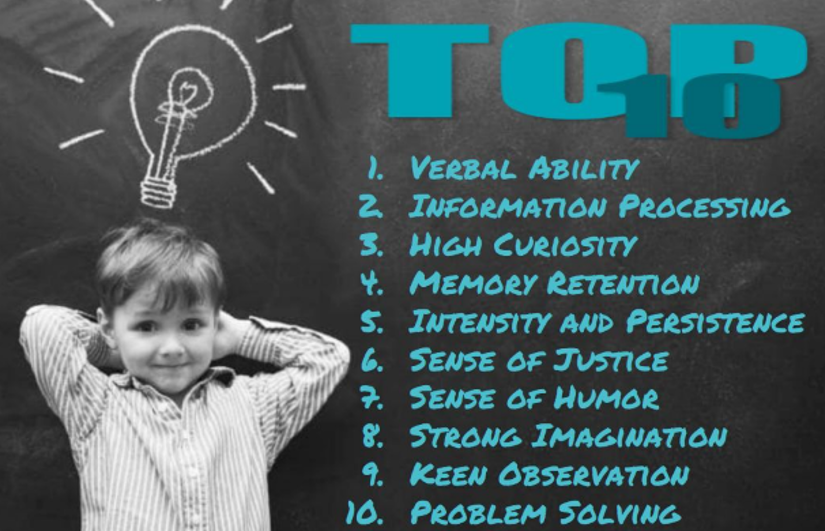
Heyworth further explains the ND paradigm as divorcing “the neurology of autism, from the ideological construct of disorder. A useful analogy here is giftedness, which is also a specific neurodivergence. We do not ‘diagnose’ a child with giftedness … as a society, we value giftedness. We do not judge gifted ND as lacking or deficient. And yet, gifted individuals often testify to the challenges and negative experiences arising from their giftedness: giftedness is not without its own struggles.” These struggles include feelings of social isolation from peers, being relentlessly pressured to perform perfectly, being observed by all kinds of different people, boredom, and burnout.
Neurological differences are normal and have existed throughout human history, therefore neuroatypicals should be respected, understood, and supported, rather than pathologized or viewed as disordered. The thinking here is there’s nothing to cure. Modifying the environment of a neurodiverse individual, reducing stigma, and prioritizing each person’s inherent dignity will, proponents argue, allow for such individuals to discover innate talents and thrive within a diverse society. —Washington University Do-It
The Politicization of Neurodiversity
Like most social movements gaining traction, they become politicized — leading to unintended consequences. The neurodiversity movement lost Singer’s support some 25 years after she invented the term. Singer and other health advocates believed the pendulum swung too far in the other direction, so that supports were cut for those in need of long-term care. Singer’s attempt to promote a new term — NeuroRealism — was poorly received:
When I tried to promote it, I got an avalanche of opposition…. You must be realistic—meaning evidence-based — to survive in this world. If you can’t swim and you go in the ocean, you’re going to drown. That’s realism. NeuroRealism is a counter to Pollyanna/ Pangloss neurodiversity. It demands we aim to meet the actual needs of everyone, as they experience them, whether they consider themselves disabled or different. —Medical historian Amy Lutz, University of Pennsylvania, quoting Singer in “Asperger’s Syndrome: An Interview with Neurodiversity Originator Judy Singer: A new framework to promote honest discussion about impairment,” Psychology Today

Singer adds, “As a parent who is constantly being told by neurodiversity advocates that my severely autistic son really can live independently, work a competitive, minimum-wage job, or even write poetry, neurorealism sounds like an idea that is way overdue. We are not doing anyone any favors by obscuring devastating impairments — that may, according to recent estimates by the CDC, affect almost 14 percent of the autistic population — behind the celebratory façade of identity politics ….”
Lutz writes, “‘Autism is trendy now,’ Singer reflected, with some surprise. But I was even more surprised that … so many of her beliefs aligned with mine. ‘I’m on your side,’ she confirmed, in closing. And it’s not because she has abandoned the philosophy she created. It’s because the philosophy she created has been twisted.”
Most surprising of all, for me, was how my conversation with Singer cemented my growing conviction that, despite much media attention focused recently on the so-called Autism Wars, there’s a growing number of people — maybe even a majority — on both sides of the traditional fault lines in the community who are genuinely interested in collaboration. Who believe autistic adults, families, researchers, clinicians, and other providers are all important stakeholders who deserve to be heard — who believe that this is, in fact, the only way to advance the goals of the entire community. Who recognize those goals will look very different at the opposite ends of the spectrum. Who believe, in other words, in NeuroRealism. —“Asperger’s Syndrome: Interview with Neurodiversity Originator Judy Singer,” by Amy Lutz, Psychology Today
Dekker says it best — about neurodiversity’s impact on autism as InLv evolved from the purely personal to the political:
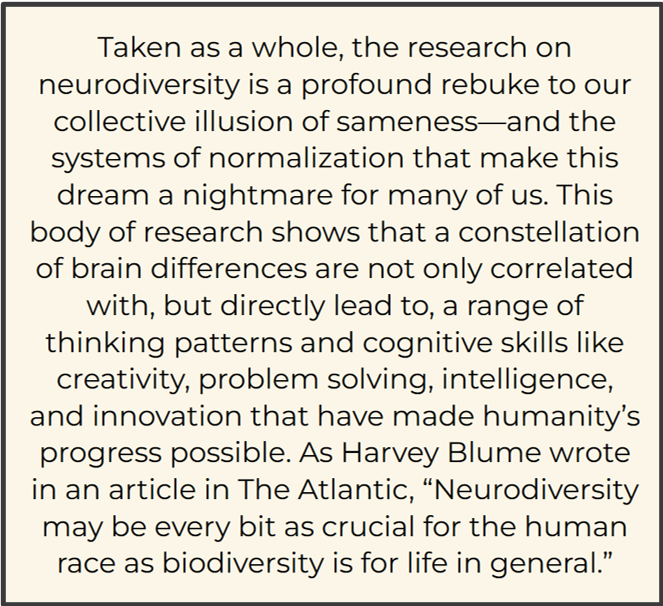
A new idea came up in the [InLv] group, based on the evidence and lived experience that autistic brains are wired differently from the mainstream on a fundamental level. Biological diversity of all kinds is essential to the survival of an ecosystem — so why should neurological diversity, which is one aspect of biological diversity, be any different? The objective fact that neurological diversity exists emerged as a strong argument for the acceptance of autistics and other neurological minorities as distinct classes of people among many, who have something valuable of their own to contribute, and who are as inherently worthy of equal rights as anyone. —Martijn Dekker, “From Exclusion to Acceptance: Independent Living on the Autistic Spectrum,” Springer Link
From Normal Sucks: How to Live, Learn, and Thrive, Outside the Lines, by Jonathan Mooney, Stimpunks Foundation
The politicization of neurodiversity’s origin story continues to this day. Luckily, it remains a brilliant origin story of self-advocacy and community-building by people with autism for people with autism — and, in turn, for people with other neurologically atypical brains — which is helping thousands of individuals around the world.
Neurodiversity and neurodivergence have replaced “disorder” and “abnormality” for those living the experience, as Dekker notes, and not by those from bygone eras who conceived now debunked theories. It’s time for the rest of us to catch up. Parents, families, therapists, medical doctors, health advocates, and influencers in media and on social media.
A statement from a psychiatric social worker [paraphrased, abbreviated]:
Many people with [autism] describe feeling like an alien and hating themselves for it. The neurodiversity lens tells you nothing is wrong with you despite your differences, your differences come with strengths, and you should join a supportive, advocacy community waiting to help you find your place in the world—even if that requires extra support. —Liliana Valvano, interviewed in “Helping Neurodivergent Individuals Succeed in a Neurotypical World,” Columbia University’s Lieber Recovery Clinic
In “A Neurodivergence Journey – What lies beneath?,” Until Now Therapy, unidentified blogger and psychotherapist was diagnosed late in life with ADHD after her daughter was diagnosed. She writes how negative ADHD information is at first encounter. It “talks about the deficit, the issues, and the problems this condition creates ….” when instead it should highlight “how many people are doing amazing things who have ADHD.”
This is because ADHERs are creators and inventors. They are athletes and performers. They are grounded in crisis, so make good frontline workers. They … can be wonderful at adapting to change and crave variety in their worlds. They also have an amazing capacity for intuition and empathy, so clearly healers, therapists, doctors, working with animals, support, and social work roles are a natural choice. [Ed note: and artist/designer roles]
They are also every person who’s unrecognized in everyday jobs, which means they may be working in environments that aren’t conducive to supporting their brains and unconsciously putting themselves under too much pressure, leading to self-medication and burnout. —Anonymous, “A Neurodivergence Journey – What lies beneath?,” Until Now Therapy
Trauma and neurodivergence echo each other in masking and pretending [you’re] ok when you’re not. It is often hidden, internalized, and shows up through a pattern of failed toxic or unfulfilling relationships/jobs. Trauma is not always what happened to you. It may be what didn’t happen for you. (Neglect, isolation, not feeling seen or relevant.) ND people often feel rejected, not good enough, like they are broken. I started to relate to this unique brain why certain environments cause me stress and why I shaped my life in the way I had … maybe this was also my story. And I was right, I was also ADHD combined. I had it all my life and it went unnoticed, unsupported, and uncared for. —Anonymous, Until Now Therapy
Coming Up Next

The neurodiversity movement started with autism and grew into a concept requiring no other membership than recognition in one’s own difference. Whether neurological or defined by discrimination and stigma. Since its early days, the movement’s steady growth, as documented in this post, should be seen as a good challenge to the mainstream, especially its leaders and professionals: to change laws that protect, to change medical and psychiatric care to embrace difference, to insure healthcare that includes gender-affirming surgery, and to hire, train, and support ND people on the job. Because living independently is a beautiful thing.
In the next posts, I’ll cover attention-deficit/hyperactivity disorder (ADHD), a condition — not a disorder, even if called that — defining a lot of neuroatypicals. Post 20: ADHD and Neurodevelopmental Disorders covers the ADHD brain.
Copyright ©2026 Jan Swan
 English