On Neurodivergence and Otherness
Show Table of Contents
INTRO
1. On Neurodivergence and Otherness: An Introduction
SENSES AND SENSORY SENSITIVITIES
2. Senses Count
3. Neurobiology for Dummies
4. Sensory Transmission and our Reward System
5. Sensory Receptors are the Body’s Cellular Plan
6. A Synthesis: Sensory Systems and our Emotions — Part I
7. A Synthesis: Sensory Systems and our Emotions — Part II
8. Sensory Disorders and Sensitivities
9. Etan’s Story
SYNESTHESIA
10. Synesthesia: Difference, But Not Disorder
11. Synesthesia, Creativity, Artistry — Part I
12. Synesthesia, Creativity, Artistry — Part II
AUTISM AND THE NEURODIVERSITY MOVEMENT
13. From “Mental Defectives” to Autism Spectrum Disorder
14. Changing Conception of Autism
15. Autism Diagnoses and Behavior Patterns
16. Autism Treatments that Help
17. Early Start Autism Treatment: A Case Study
18. Neurodivergence and the Neurodiversity Movement
19. Neurodiversity Takes Flight
20. ADHD and Neurodevelopmental Disorders
21. ADHD: A Preponderance of Risk Factors and Symptoms
22. ADHD: Inattentive, Impulsive … and Hyperactive?
23. ADHD: Named, Renamed, Still Needs a New Name
24. ADHD: Treatment and Coping Skills for All Ages
LGBTQ+
25. Neurodiversity and the LGBTQ+ Fight
26. LGBTQ+ Identity and Expression
27. LGBTQ+ and Mental and Behavioral Healthcare
ON LANGUAGE
28. Language Matters In and Around Neurodiversity
29. Neuroinclusion and Disability Language
30. Neurodivergent Language Difficulties
ON CREATIVITY AND GIFTEDNESS
31. Neurodiversity and Creativity
32. Giftedness is a Piece of Neurodivergence
SELF-IDENTITY
33. Self-Identity: The Cornerstone of Neurodiversity
34. Early Theories of Self-Identity Formation
35. Contemporary Theories of Self-Identity Formation
36. Authenticity and the Search for Self
37. Self-Schemas and Neurodivergence
38. Self-Labeling and Parts Work
39. Complexity, Clarity, and Self
IMPROVING LIFE FOR NEURODIVERGENT PEOPLE
40. Empathy Recognizes and Navigates Difference
41. Reducing Neurotypical-on-Neuroatypical Conflict – Part I
42. Reducing Neurotypical-on-Neuroatypical Conflict – Part II
43. Communicating Across the Neurospectrum – Part I
44. Communicating Across the Neurospectrum – Part II
45. Neurodiversity: Advocacy and Education
46. Neuroinclusion in the Workplace
47. A Neurodiverse Lifestyle
IN CONCLUSION
48. In Conclusion: Neurodivergence and Inspiration
16. Autism Treatments that Help

The autism story is complicated by how people with difference are treated. Better, more humane supports for autistic people than even 10 years ago promises to help shield them from isolation, neglect, and trauma. Proliferating evidence-based programs are helping very young grow up to be a part of the real world, to the extent they’re able. While meds can’t change autism, they’re highly effective treating comorbidities. There’s still bitter controversy over treatment programs, even as they’ve improved. From my outsider perspective, it seems autism advocates could do more to build consensus on what’s right for autistic people.
As children with autism mature, they can engage with others and have fewer disruptions in behavior. Those with less severe symptoms may lead the lives they want. For others with more challenges with language or social skills or who develop behavioral and emotional problems as teens, individualized treatments help reduce and alleviate symptoms.
Autism Behavioral Treatments to Improve Daily Life
Autism treatments vary with degree and nature of symptoms and seek to slow down symptoms that interfere with daily quality of life. Treatment can be behavioral, developmental, educational, social-relational, pharmacological, or psychological—and complementary. The type of treatment a child receives depends on their needs.
Autism is a spectrum disorder (it presents differently, ranging from mild to severe), and each child with it is unique, therefore, there are various treatments. Symptoms of [autism] can sometimes overlap with some disorders, like ADHD. Consequently, treatment approaches should prioritize addressing an individual’s needs rather than solely relying on the diagnostic label. —Chiugo Okoye, et al., “Early Diagnosis of Autism Spectrum Disorder: A Review and Analysis of the Risks and Benefits,” PubMed/NIH
Research and public attention have led to new behavioral treatments, with promising outcomes. Most children benefit from early, intensive, and structured educational therapy, speech and language therapy, motor skills development, and play and socialization with peers, so children learn how to talk and communicate, play interactively, and care for themselves.
Once a child is diagnosed, parents and a team of specialists in autism, speech, OT/PT, and whatever else is needed can tailor treatment to severity, need, and age. Treating even mild symptoms help with behavior problems, stress in the family, trauma, social isolation, bullying, learning and school issues, employment problems, and living independently challenges.
Applied Behavior Analysis (ABA) Therapy
ABA therapy is a targeted behavioral intervention considered the treatment of choice for autistic children. ABA therapists work with the children to improve their social skills and decrease less desired behaviors. They also work with parents/guardians to develop a plan for home and other settings, with benchmarks for positive behaviors, setting new goals as the child progresses or regresses. These include better communications skills, more self-control and self-regulation, ability to make the transition to new environments, and reduce negative behaviors, like self-harm.
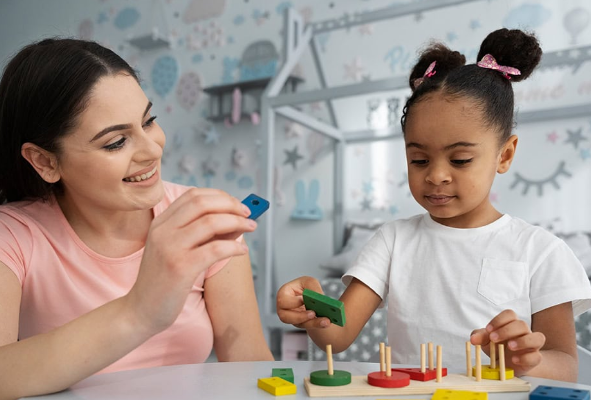
ABA uses positive reinforcement to instill desired behaviors by rewarding a child with something they value after completing a task or reaching a goal behavior. ABA discourages negative behaviors through behavior and consequence to help them connect what happens before and after a behavior. A child asked to put away toys who does no received the reward (positive consequence). A child acts out and throw their toy receives no reward (negative consequence), until they cooperate. Over time, the child connects the dots. Adapted forms of ABA therapy can also help adults with autism.

Photo: Brain Facts, iStock.com via Antonio_Diaz
Studies show children receiving long-term ABA therapy — 25-40 hours/week for 1-3 years — have good outcomes, with gains in language development, intellectual abilities, daily skills, and social abilities. It can also reduce repetitive behaviors, sensory-seeking behaviors, and aggression.
ABA Controversy
The core ABA controversies are about not involving autistic people in the design process and not considering the ethical claims of setting goals to normalize fit within neurotypical society. A paper, “Ethical Concerns with Applied Behavior Analysis for Autism Spectrum ‘Disorder,’” by Daniel Wilkenfeld and Allison McCarthy, PubMed/NIH, concludes, “From a bioethical perspective, autism advocates are fully justified in their concerns. The rights of autistic children and their parents are being regularly infringed upon. Employing ABA violates the principles of justice and nonmaleficence and, most critically, infringes on the autonomy of children and (when pushed aggressively) of parents as well.”
Other Therapies and Accommodations
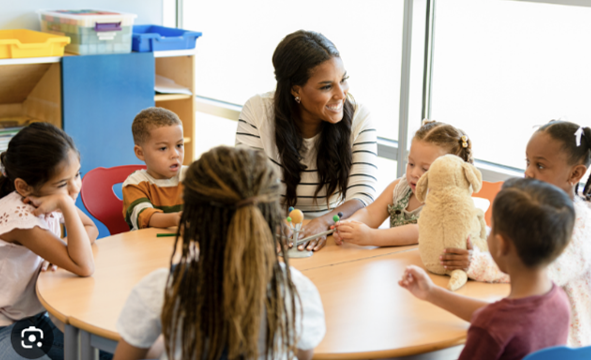
Photo: iStock
School: School supports include observation and consultation, developing Individualized Education Plans (IEPs) and helping with school placement issues.
Work: Employment supports include help in applying, starting, and keeping a new job — a wide-open area that deserves a lot more attention than it’s getting.
Relationship Therapy: Two behavioral-communication therapy for young children are a relationship-based approach, called Floortime. The adult (therapist or parent) gets on the floor with a child and plays their favorite activities. The other takes a visual-based approach, using picture-exchanging conversations to communicate with the child.
Social Skills Training: Social skills groups can effectively teach all ages (by age group) how to start a conversation or take turns, interpret nonverbal communications, make eye contact, and play/socialize. Between-therapy assignments help them use these skills at home, school/work, and in other social situations. According to “Social Skills Training for Autism Spectrum Disorder,” by Ralph Moller, Above and Beyond Therapy, evidence-based techniques in social skills training (SST) increase social confidence and self-esteem, help create connections and develop friendships, increase understanding of social expectations and norms (reducing social anxiety), improve academic performance and participation in school settings or, if an adult, have greater independence and better navigate work situations.

Cognitive Behavioral Therapy (CBT): CBT aims to identify and change self-destructive or unhealthy thoughts, feelings, and behaviors. Therapists can modify CBT to address autism in children and adults, varying visual supports for those with more cognitive ability and simple coping skills for those with less ability. CBT is most effective in treating comorbid anxiety, depression, and trauma.
Photo: Hope Well Health Solutions

Parent Behavioral Training (PBT): PBT is effective for the parents and families of children with autism to help them generalize skills to multiple settings, maintain gains made in treatment, and be cost effective. Research shows that using PBT is related to improvements for both parents and children, such as decreased child behavior problems, autistic symptoms, and parental distress.
Photo: iStock
Medication for Autism and the Search for Biomarkers
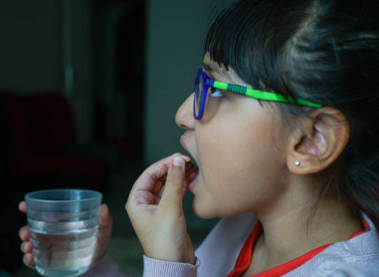
Photo: iStock
Despite hundreds of ongoing clinical trials, no medications are available to treat autism — but they can help manage excitable energy, difficulty focusing, or self-harming behaviors. Or comorbid anxiety/depression and medical conditions, like seizures, sleep problems, or gastrointestinal issues. It’s hard to prove the effectiveness of medications being tested, because autism is caused by many genetic and environmental factors.
To make progress, scientists search for validated biomarkers — biological sources of reliable information, like insulin levels for diabetes or temperature for infection.
Physician Shafali Jeste — site principal investigator for the Autism Biomarkers Consortium for Clinical Trials (ABC-CT), one of the National Institutes of Health’s largest autism research initiatives — aims “to identify, quantify, and validate biomarkers and clinical endpoints relevant for autism.”
In Jeste’s study, autistic children take a series of tests, including electroencephalography (EEG) to measure brain function, eye tracking to determine visual attention, and recordings for speech and behavior. Tests repeat at six weeks and six months. Results are compared with controls.
Biomarkers would give us a way to meaningfully group children with common characteristics with the goal of eventually testing a medication in less heterogenous groups. Changes in a stable biomarker also would provide an objective way to determine if a medication was affecting the brain and, as a result, could improve a core feature of autism. —Shafali Jeste, MD, quoted by Ellin Kavanaugh, “The Future of Autism Treatment,” Children’s Hospital of Los Angeles
New Research
Research will find more effective, evidence-based treatments. I’m a frequent visitor to the National Institute of Health’s (NIH) many centers, like the National Center for Biotechnology Information (NCBI). Published papers provide reliable information from trustworthy sites. But it’s tough for the lay reader sometimes! For example:

There is a critical need for effective treatment of the core symptoms of ASD. The purinergic antagonist suramin may improve core symptoms through restoration of normal mitochondrial function and reduction of neuro-inflammation via its known antagonism of P2X and P2Y receptors. Nonclinical studies in fragile X knockout mice and the maternal immune activation model support these hypotheses. —PubMed Central/NIH
I think this is promising, even if it sounds like we’re on the USS Enterprise and Dr. McCoy is conducting the research. “Monthly suramin intravenous infusions may be a safe and potentially efficacious treatment for the core symptoms of ASD.” Luckily for you and me, I found a source to explain in plain English a number of drug innovations.
The source is Ralph Moller’s “Revolutionizing Autism Therapy: Innovative Approaches and Techniques,” Above & Beyond Therapy. I’m not going into it extensively, except to mention some drug research that shows promise in improving language, social communications, and cognitive abilities, and reducing repetitive behaviors, in people with autism:
- Nirsevimab “modulates the concentration of cell division proteins in specialized brain cells” and shows promise for helping children with severe autism.
- Balovaptan “modulates oxytocin receptors in the brain” and shows potential in improving behaviors and recognizing emotional faces.
- Suramin, an antiparasitic drug, shows promise in all areas, including improving language.
Moller also mentions two areas of technology innovations for people with autism:
- Technology advancements, like virtual agents, artificial intelligence, virtual reality, and augmented reality, can help people develop communication and life skills. Those with autism like technology, use it effectively, and benefit from its predictability and structure.
Alternative communication technologies: For autists struggling with language and speech skills, alternative technologies — text-to-voice applications, tablets, smartphones, etc. — help them express their needs and interact with others, both independently and effectively.
Meet Helen

Henri Matisse, Lady in Hat with Flowers, 1920
A schoolmate’s behavior grew strange. After a playdate, I told my mother I didn’t want to be her friend. Later diagnosed with autism and schizophrenia, Helen refused to live in a group home. Her parents couldn’t handle her loud, uncontrolled behavior, so barred her from their home. She floated in and out of their lives, living on and off the street.
The last time I saw her, we were in our 20s, riding a commuter train. Dressed in a flouncy outfit, with a big hat and flowers on the brim, face heavily rouged, she was talking loudly with exaggerated politeness to passengers, as if their close friend. Seeing this, I understood she hadn’t received or perhaps refused effective treatment. She died in her 40s.
I felt sad for her lonely life and guilty I joined all the others in shunning her. It’s hard to imagine how she lived. I wonder whether today this would all have gone differently. Maybe it would’ve gone differently if her parents knew then what we know now.
Rejection and Unhealthy Outcomes

Today, autistic neuroatypicals can find humane treatment, be mainstreamed in schools, find/hold jobs, and receive compassionate support in many settings. But to do so, they must expend considerable energy to “pass” for “normal” — to hide their odd or awkward behaviors, disordered thinking, their social awkwardness, or Tourette’s syndrome.
Research has established clear links between parental/societal rejection and negative health problems for people, especially young people, who feel compelled to mask their true selves.
Those with a serious mental illness (SMI), substance abuse disorders (SUD), or sensory processing disorder (SPD) avoid the very interactions with neurotypicals and everyday life that could help them make progress in their lives. It’s not yet a safe, trauma-free world for them.
Neurological difference itself encompasses more normal variations in brain development. The idea of neurologically “atypical” people could reflect different ways of being human.
Neurodiversity is often contrasted with the “medical model,” which views ASD or ADHD as disorders to prevent, treat, or cure. There has been a push to move away from this idea of pathology and toward a more nuanced perspective with variations of what is “normal”…. Although neurodiversity is used to describe a group of neurodivergent individuals, it also refers to all humankind, because everyone has a unique way of processing information. —Washington University Do-It

Naoki Higashida
The Reason I Jump by Naoki Higashida
A few years ago, I read a remarkable, beautiful book, The Reason I Jump, by a 13-year-old Japanese child, Naoki Higashida, who was diagnosed with severe autism when he was five. He had no speech nor any way to communicate until he used a handmade alphabet grid and started writing poems and short stories. Higashida’s book was written in 2007, translated into English in 2013, and subsequently published in 14 languages. It was the subject of an equally remarkable and award-winning Japanese TV documentary in 2014, filmed around the world and showing all the ways people on the spectrum were coming out from their muted shells to communicate openly and movingly with the world. Higashida has since published several books in Japan, including children’s and picture books, poems, and essays. I end my post on autism with a few passages from his book, selected by James Clear:
When you see an object, it seems that you see it as an entire thing first, And only afterwards do its details follow on. But for people with autism, the details jump straight out at us first of all, and then only gradually, detail by detail, does the whole image float up into focus.
On our own we simply don’t know how to get things done the same way you do things. But, like everyone else, we want to do the best we possibly can. When we sense you’ve given up on us, it makes us feel miserable. So please keep helping us, through to the end.
But I ask you, those of you who are with us all day, not to stress yourselves out because of us. When you do this, it feels as if you’re denying any value at all that our lives may have — and that saps the spirit we need to soldier on. The hardest ordeal for us is the idea that we are causing grief for other people.
We can put up with our own hardships okay, but the thought that our lives are the source of other people’s unhappiness, that’s plain unbearable. True compassion is about not bruising the other person’s self-respect.
To give the short version, I’ve learnt that every human being, with or without disabilities, needs to strive to do their best, and by striving for happiness you will arrive at happiness. For us, you see, having autism is normal — so we can’t know for sure what your “normal” is even like.
But so long as we can learn to love ourselves, I’m not sure how much it matters whether we’re normal or autistic. Everybody has a heart that can be touched by something. —Naoki Higashida, age 13
There is a fantastic story Higashida tells about learning to wave goodbye to a friend. People kept telling him that he was doing it incorrectly, but he didn’t understand why until someone had him look in a mirror. He finally realized that he was waving goodbye to himself with his palm facing toward his own face rather than his palm facing away and toward the other person. He was simply mimicking what he saw when someone waved goodbye to him (the other person’s palm) but couldn’t fully translate what he saw into the correct behavior. He spends much of his day feeling like a failure and knows he screws up often. Childish behavior does not equal childish intelligence. —James Clear
Coming Up Next
Autism interventions, as seen through a neurodiversity lens, have become controversial. I’ll devote Post 17: Early Start Autism Treatment: A Case Study to an evidence-based intervention — the Early Start Denver Model (ESDM) — subject of a major 2010 research study. Great progress has been made since 2010. No doubt this progress will continue over the next decade to keep making the daily lives of children, teens, and adults with autism less difficult and more independent — without forfeiting the essence of who they are as people.
Copyright ©2026 Jan Swan
 English