On Neurodivergence and Otherness
Show Table of Contents
INTRO
1. On Neurodivergence and Otherness: An Introduction
SENSES AND SENSORY SENSITIVITIES
2. Senses Count
3. Neurobiology for Dummies
4. Sensory Transmission and our Reward System
5. Sensory Receptors are the Body’s Cellular Plan
6. A Synthesis: Sensory Systems and our Emotions — Part I
7. A Synthesis: Sensory Systems and our Emotions — Part II
8. Sensory Disorders and Sensitivities
9. Etan’s Story
SYNESTHESIA
10. Synesthesia: Difference, But Not Disorder
11. Synesthesia, Creativity, Artistry — Part I
12. Synesthesia, Creativity, Artistry — Part II
AUTISM AND THE NEURODIVERSITY MOVEMENT
13. From “Mental Defectives” to Autism Spectrum Disorder
14. Changing Conception of Autism
15. Autism Diagnoses and Behavior Patterns
16. Autism Treatments that Help
17. Early Start Autism Treatment: A Case Study
18. Neurodivergence and the Neurodiversity Movement
19. Neurodiversity Takes Flight
20. ADHD and Neurodevelopmental Disorders
21. ADHD: A Preponderance of Risk Factors and Symptoms
22. ADHD: Inattentive, Impulsive … and Hyperactive?
23. ADHD: Named, Renamed, Still Needs a New Name
24. ADHD: Treatment and Coping Skills for All Ages
LGBTQ+
25. Neurodiversity and the LGBTQ+ Fight
26. LGBTQ+ Identity and Expression
27. LGBTQ+ and Mental and Behavioral Healthcare
ON LANGUAGE
28. Language Matters In and Around Neurodiversity
29. Neuroinclusion and Disability Language
30. Neurodivergent Language Difficulties
ON CREATIVITY AND GIFTEDNESS
31. Neurodiversity and Creativity
32. Giftedness is a Piece of Neurodivergence
SELF-IDENTITY
33. Self-Identity: The Cornerstone of Neurodiversity
34. Early Theories of Self-Identity Formation
35. Contemporary Theories of Self-Identity Formation
36. Authenticity and the Search for Self
37. Self-Schemas and Neurodivergence
38. Self-Labeling and Parts Work
39. Complexity, Clarity, and Self
IMPROVING LIFE FOR NEURODIVERGENT PEOPLE
40. Empathy Recognizes and Navigates Difference
41. Reducing Neurotypical-on-Neuroatypical Conflict – Part I
42. Reducing Neurotypical-on-Neuroatypical Conflict – Part II
43. Communicating Across the Neurospectrum – Part I
44. Communicating Across the Neurospectrum – Part II
45. Neurodiversity: Advocacy and Education
46. Neuroinclusion in the Workplace
47. A Neurodiverse Lifestyle
IN CONCLUSION
48. In Conclusion: Neurodivergence and Inspiration
34. Early Theories of Self-Identity Formation

The concept of neurodiversity asks us to understand people whose brains develop and function differently. As this series has been exploring, neurodivergent (ND) and neurotypical (NT) person share the same broad processes of human development, but their brains don’t develop or function just alike. This surely explains our unique and distinctive ways of learning, interacting, and participating — and perceiving the environment that forms the world we live in.
In this and the next post, I’ll talk about historical and more contemporary theories of self-identity formation, which I believe can provide profound insights into who we are as people and how our differences show up and affect us — especially for neurodivergent individuals.
Such ideas about how we develop a sense of who we are emerged gradually over more than a century. Two early thinkers are particularly important. Swiss psychiatrist Carl Jung (1875–1961) wasn’t developing a theory of self-identity in the contemporary sense. But he was asking a question that belongs in its history: How do the psychological demands of becoming ourselves change as we move through life? A generation later, German-American psychoanalyst Erik Erikson (1902–1994) put identity itself at the center of one crucial period of development: adolescence.
And since then psychologists and other researchers have been asking and revising their answers as our understanding of human development has grown more sophisticated and scientific. What’s amazing is actually how recent this form of exploration is, given the much longer history of intellectual thought. But I like to go back to the old ideas, because they show us where the questions came from.
Carl Jung’s Stages of Life
A human being would certainly not grow to be 70 or 80 years old if this longevity had no meaning for the species. The afternoon of human life must also have a significance of its own and cannot be merely a pitiful appendage to life’s morning.
The significance of the morning undoubtedly lies in the development of the individual, our entrenchment in the outer world, the propagation of our kind, and the care of our children….
Whoever carries over into the afternoon the law of the morning, or the natural aim, must pay for it with damage to his soul, just as surely as a growing youth who tries to carry over his childish egoism into adult life must pay for this mistake with social failure. —Carl Jung, 1931, from “Abstract of Jung’s ‘The Stages of Life’ in the Collected Works
Jung’s approach also departed from Sigmund Freud’s emphasis on childhood and psychosexual development. Jung was interested in psychological development across the lifespan — including the possibility that adulthood brings developmental challenges of its own.
Jung pictured the lifespan as the sun moving across the sky:
In the morning, it rises into a world that seems to expand as the sun climbs higher. In the morning it rises from the nocturnal sea of unconsciousness and looks upon the wide, bright world which lies before it in an expanse that steadily widens the higher it climbs in the firmament. —Carl Jung, “The Stages of Life”
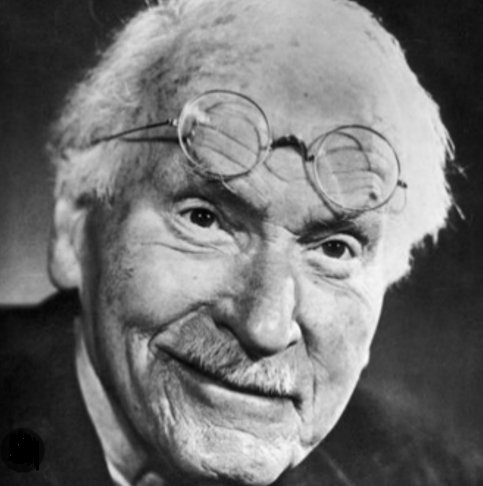
Carl Jung. Photo: Wikipedia
Youth, for Jung, begins with puberty and extends into roughly the mid-30s. Along with physical and sexual changes, puberty begins psychological separation from parents. Adolescents move into a world of romantic and peer relationships, work and life responsibilities, expectations, and choices. It’s easy to recognize that this progression doesn’t always go smoothly.
Jung thought one challenge was a young person’s reluctance to relinquish childhood. Another was the collision between an imagined adult life and what actually happens along the way.
Jung thought one challenge was a young person’s reluctance to relinquish childhood. Another was the collision between an imagined adult life and what actually happens along the way. Leaving their childhood home can clash with unrealistic expectations. A young person seeking independence may feel inferior, uncertain, and certainly not prepared.

Source: From Melisa Holmes, MD, et al., “Sex, Gender Identity, and Puberty,” Healthy Children
Jung’s observations of this stage are still recognizable nearly a century later:
Being ridiculed feeds our secret fears we’ve been found out — we are losers. Fear of rejection can make us wary of revealing ourselves — even when rejection hasn’t happened. We may begin masking to pass for people we’re not, hiding the very traits we fear will bring criticism or exclusion. Over time, other people’s perceptions can become entangled with our own.
This is why self-recognition is key. A child who knows, My brain works differently, has a better explanation for difficulty than one who concludes, There’s something wrong with me.

Source: From Melisa Holmes, MD, et al., “Sex, Gender Identity, and Puberty,” Healthy Children
An adult who finally understands lifelong difference may be able to look back and reinterpret experiences once understood as personal failures.
The consequences go beyond how we describe ourselves. Feeling unsafe at home can be devastating to a developing person. A child who depends on others for love, guidance, and a sense of their own worth but instead encounters abuse, neglect, or persistent rejection can only construct a self from profoundly distorted feedback.
A strong self-concept cannot protect us from everything life throws at us. But knowing and accepting who we are gives us something to stand on when the world challenges that understanding.
Something in us wishes to remain a child, to be unconscious or, at most, conscious only of the ego, to reject everything strange, or else subject it to our will, to do nothing, or else indulge our own craving for pleasure or power. —Carl Jung, “The Stages of Life”
I believed the troublesome transition from puberty to adolescence to young adulthood was a modern phenomenon, and people handled it better “back then.” With shorter lifespans and more rigid societal demands, a young person needed to find their way more quickly and with less angst. Becoming acquainted with Jung’s ideas made me reconsider that assumption. He was describing a fraught passage into adulthood nearly a century ago. More than aging, Jung was interested in psychological development — what he elsewhere called individuation, the continuing process of becoming more fully oneself.
According to Jung, as young people move into a new period of life, they may psychologically cling to what worked in the period before it. Yet the adaptations that helped them establish an adult life would no longer be enough.
For Jung, that essential dilemma becomes especially important in midlife, when the sun has begun its descent from the highest point, to use Jung’s metaphor. Simply put, the goals that help a young person become independent and establish an adult life may no longer be enough to sustain that person through midlife.
Thoroughly unprepared, we take the step into the afternoon of life. Worse still, we take this step with the false presupposition that our truths and our ideals will serve us as hitherto. But we cannot live the afternoon of life according to the program of life’s morning, for what was great in the morning will be little at evening and what in the morning was true, at evening will have become a lie. —Carl Jung, “The Stages of Life”
Jung’s formulations are nearly a century old, and developmental psychology has moved far beyond them. But one idea here resonates with what I wrote about in post 33: the self is not finished when childhood ends. Who we are continues to encounter new demands, new experiences, and new questions across a lifetime.
Erikson’s Identity Crisis vs Role Confusion
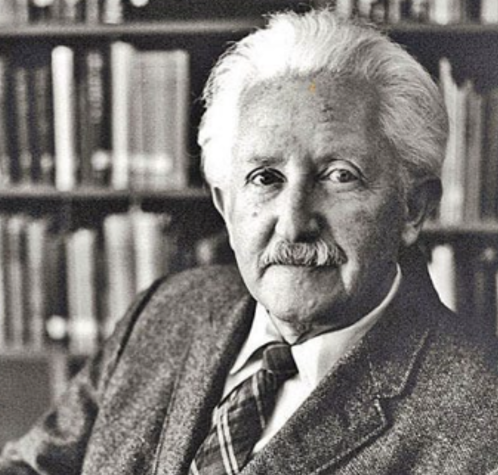
While Jung didn’t quite develop a theory of identity formation, he suggested we continue to become ourselves across a lifetime. Erikson picks up on the idea of changes across a lifespan to understand self-identity formation itself.
In his 1950 book, Childhood and Society, Erikson proposed eight stages of psychosocial development from infancy through old age. He describes each of these stages as involving a central psychological tension, for example: trust vs mistrust in infancy, intimacy vs isolation in early adulthood, and integrity vs despair late in life.
For the purposes of our discussion, I’ll confine my focus to the fifth stage, that is, adolescence — identity vs role confusion — when peers and role models outside the home begin replacing parents, and even teachers, as the most “significant” relationships.
Erikson was one of the first child psychotherapists to see adolescence as a pivotal stage, an exceedingly complex time when young people pose existential questions like: Who am I? What do I believe? Where do I fit? What might I become? They begin doubting identities and expectations handed to them by parents and childhood and opt for exploring new roles, relationships, and values to try on what might become their own.
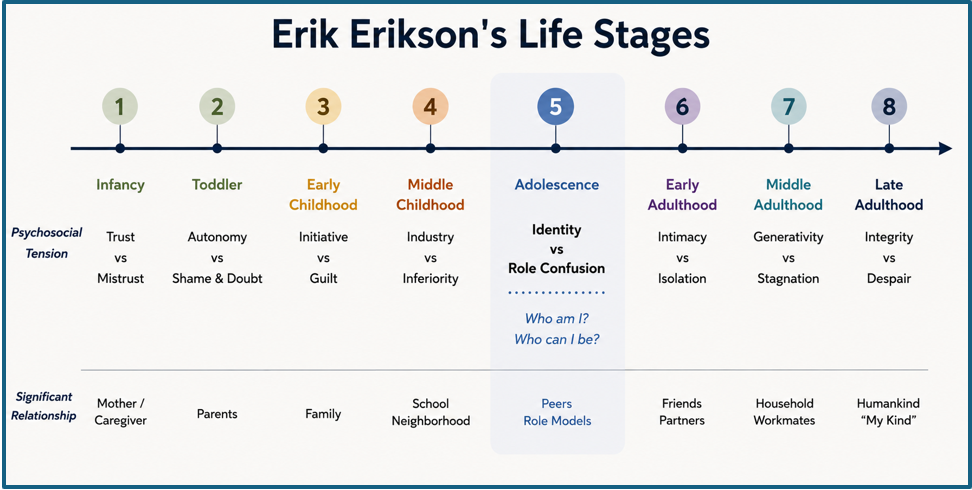
Erikson saw development as a lifelong process, with changing psychological challenges unfolding within changing relationships. Graphic: Jan Swan, with ChatGPT
IDENTITY CRISIS
Erikson coined the term identity crisis to describe this period of questioning and exploration. He didn’t intend “crisis” to mean catastrophe, but rather a time of upheaval when adolescents seek alternatives and want to make their own choices.
But crisis was also attached to a profound shift in influence. Adolescents begin moving beyond their parental/childhood identities toward encountering peers, other adults, groups, ideals, and possible roles that offer competing answers to who they might become.
The adolescent’s willingness to put his trust in those peers and leading, or misleading, elders who will give imaginative, if not illusory, scope to his aspirations is only too obvious. —Erik Erikson, Identity: Youth and Crisis (1968), Erikson, *Identity: Youth and Crisis
Perhaps another dilemma of stage 5, as I see it, is that a person has simply not lived long enough to have collected enough life lessons to answer all these questions — or to experience themselves as recognizably the same person over time. This is the concept, also discussed in post 33, about self-continuity — our subjective connection among our past, present, and future selves. Erikson was already treating a sense of “sameness and continuity” as fundamental to identity decades earlier.
But what happens when confusion going into this period isn’t resolved coming out? This interested Erikson, who wrote that persistent role confusion could leave a young person uncertain about future choices and about their place in adult life. He also connected developing an individual identity with the later capacity to form an identity in relationship with others. In his model, after all, identity vs role confusion is followed by intimacy vs isolation. A sense of who I am helps make possible a sense of who we are.
Of course, Erikson’s stages are not as linear a progression as it may seem. We don’t successfully resolve one developmental crisis, advance to the next, and leave the earlier one behind. Lifespan is an important concept, since we know identity can continue developing well into adulthood. In Jungian parlance, development continues “as the sun moves across the sky,” when we reconsider our commitments and life events are likely to disrupt an identity that once seemed settled. Different parts of identity can develop at different rates.
Erikson provided a jumping off place for a new generation of researchers. If adolescence is a particularly important period for figuring out who we are, what are young people actually doing when they form an identity?
Psychologist James Marcia [see post 35] would take up that question — and turn Erikson’s broad idea into something researchers could begin to study.
What Does This Have to Do with Difference?
Jung and Erikson were writing long before anyone used the word neurodivergence as we do today. Their theories weren’t designed to explain why one person develops differently from another. Yet they gave us some remarkably durable ideas: becoming ourselves continues across a lifetime; adolescence brings particularly intense questions about who we are and where we belong; other people participate in that process; and confusion about identity doesn’t necessarily disappear because we reach a certain age.
That last point seems especially important when we think about difference. If developing a sense of self depends partly on experience, relationships, opportunities, feedback, and having enough freedom to explore who we might become, then people won’t enter the process under identical circumstances. A young person who learns and communicates differently, struggles to fit in, develops asynchronously, or repeatedly receives signals that something about them is “wrong” is still asking the same human questions: Who am I? Where do I fit? Who might I become? But the answers may be harder to find.
Jung and Erikson couldn’t tell us what happened next. But they gave later psychologists the questions. Researchers would begin looking more closely at how people explore identities, how they make commitments, when identity formation actually occurs, and why its timing and course vary so much from one person to another.
That takes us to James Marcia — and eventually much closer to neurodivergence.
Coming Up Next

In Post 35: Early Theories of Self-Identity Formation, I’ll continue with more contemporary theories of identity formation.
Copyright ©2026 Jan Swan
 English