On Neurodivergence and Otherness
Show Table of Contents
INTRO
1. On Neurodivergence and Otherness: An Introduction
SENSES AND SENSORY SENSITIVITIES
2. Senses Count
3. Neurobiology for Dummies
4. Sensory Transmission and our Reward System
5. Sensory Receptors are the Body’s Cellular Plan
6. A Synthesis: Sensory Systems and our Emotions — Part I
7. A Synthesis: Sensory Systems and our Emotions — Part II
8. Sensory Disorders and Sensitivities
9. Etan’s Story
SYNESTHESIA
10. Synesthesia: Difference, But Not Disorder
11. Synesthesia, Creativity, Artistry — Part I
12. Synesthesia, Creativity, Artistry — Part II
AUTISM AND THE NEURODIVERSITY MOVEMENT
13. From “Mental Defectives” to Autism Spectrum Disorder
14. Changing Conception of Autism
15. Autism Diagnoses and Behavior Patterns
16. Autism Treatments that Help
17. Early Start Autism Treatment: A Case Study
18. Neurodivergence and the Neurodiversity Movement
19. Neurodiversity Takes Flight
20. ADHD and Neurodevelopmental Disorders
21. ADHD: A Preponderance of Risk Factors and Symptoms
22. ADHD: Inattentive, Impulsive … and Hyperactive?
23. ADHD: Named, Renamed, Still Needs a New Name
24. ADHD: Treatment and Coping Skills for All Ages
LGBTQ+
25. Neurodiversity and the LGBTQ+ Fight
26. LGBTQ+ Identity and Expression
27. LGBTQ+ and Mental and Behavioral Healthcare
ON LANGUAGE
28. Language Matters In and Around Neurodiversity
29. Neuroinclusion and Disability Language
30. Neurodivergent Language Difficulties
ON CREATIVITY AND GIFTEDNESS
31. Neurodiversity and Creativity
32. Giftedness is a Piece of Neurodivergence
SELF-IDENTITY
33. Self-Identity: The Cornerstone of Neurodiversity
34. Early Theories of Self-Identity Formation
35. Contemporary Theories of Self-Identity Formation
36. Authenticity and the Search for Self
37. Self-Schemas and Neurodivergence
38. Self-Labeling and Parts Work
39. Complexity, Clarity, and Self
IMPROVING LIFE FOR NEURODIVERGENT PEOPLE
40. Empathy Recognizes and Navigates Difference
41. Reducing Neurotypical-on-Neuroatypical Conflict – Part I
42. Reducing Neurotypical-on-Neuroatypical Conflict – Part II
43. Communicating Across the Neurospectrum – Part I
44. Communicating Across the Neurospectrum – Part II
45. Neurodiversity: Advocacy and Education
46. Neuroinclusion in the Workplace
47. A Neurodiverse Lifestyle
IN CONCLUSION
48. In Conclusion: Neurodivergence and Inspiration
31. Neurodivergence and Creativity
I care about world peace, public school education, social justice, and the environment. Two topics I’m passionate about are mental health for anyone in need and creativity and the arts. This blog gives me a platform to marry the two. The upside of neurodiversity is its strong correlations with creativity in thought, invention, and art-making/ performing. It’s a huge topic on its own, and I’ve covered some aspects in terms of synesthesia. I’ll talk about creativity and autism or ADHD — as a way to address anyone’s potential, whether or not ND or just choosing to color outside the lines. I’ll also touch on giftedness as a form of neurodivergence.
There are as many definitions of creativity as there are writers, so I’ll talk about creativity as a way of life. The qualities this raises for me are openness to new ideas and experiences, examination of traditions and values, and embracing originality, a healthy anti-authority attitude, and an ability to produce new things by connecting seemingly disparate ideas, forms, and objects. Creativity is a life journey seeing yourself and those you care about thriving in beautiful/ terrible world through the discipline you do/like best: writing, dancing, artmaking, inventing, exploring, believing in ourself, learning from others.
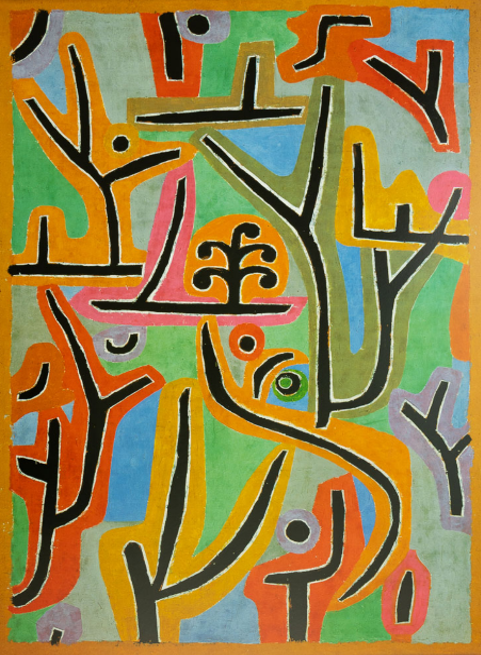
Paul Klee, Park Near Lu, 1938, painting
We often think about creativity as making something, but in fact the root meaning of the word means “to grow.” When we are creative, we feel as if the world and all that is in it is vibrantly alive. Creativity’s by-products are some of the major achievements of civilization — from the invention of the wheel to Mozart’s sonatas.
Human beings are born creative — from infancy on we find innovative ways to negotiate life. The most creative people find ways around obstacles because they see them not just as roadblocks but also as opportunities.
Creativity expands our perceptions, and along with expanded perceptions come new ways of problem solving — from making an exquisite meal when you don’t know how to cook to painting an extraordinary landscape when you are living in a freezing attic and can’t afford a full box of paints. —Shelley Berc, “15 Easy Ways to Live a Creative Life,” Omega Institute
Graphic: Kathryn Vercillo, Neurodivergence & Creativity, Substack
Expressing Creativity in Daily Life
Here are 15 ways to express creativity in daily life from playwright, novelist, and creativity expert Shelley Berc. Her article was published by the Omega Institute in New York, which is dedicated to emotional, mental, and spiritual healing [paraphrased for brevity, reworked to be first-person plural, with my two-cents added in brackets]:
- We can experiment with making our surroundings as beautiful or eccentric as we’re inclined. Add an element of surprise or quirkiness, something unexpected to jolt us and our visitors out of complacency into inspiration. [A feng shui expert blessed my new home. She liked what I had done but told me I needed more love in a particular corner — so I put a love candle and hung a love medallion there. Problem solved! I know I have too many house plants, but I keep potting their offspring].
- New places excite the mind and senses, but we don’t have to take an expensive trip to China to excite the mind. Even window shopping in a new area or trying a new restaurant can stir the imagination.
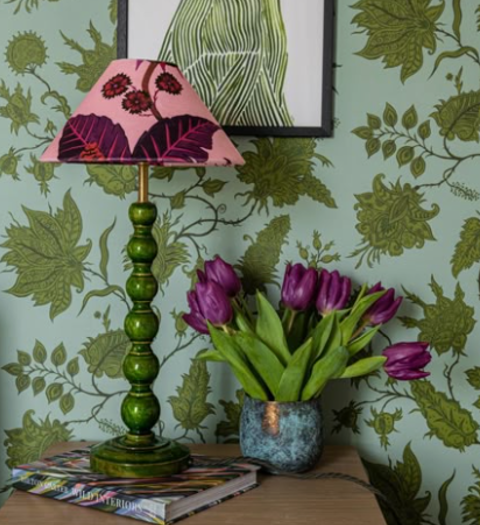
Photo: Wallpaper Direct

3. Spend 10 minutes daydreaming out the window or in nature. [Without devices turned on.]
4. Don’t be self-censoring. [This is so liberating but also hard to do, especially if you’re young and less self-assured. For those of us who are uncensored in social settings, expect some blowback.]
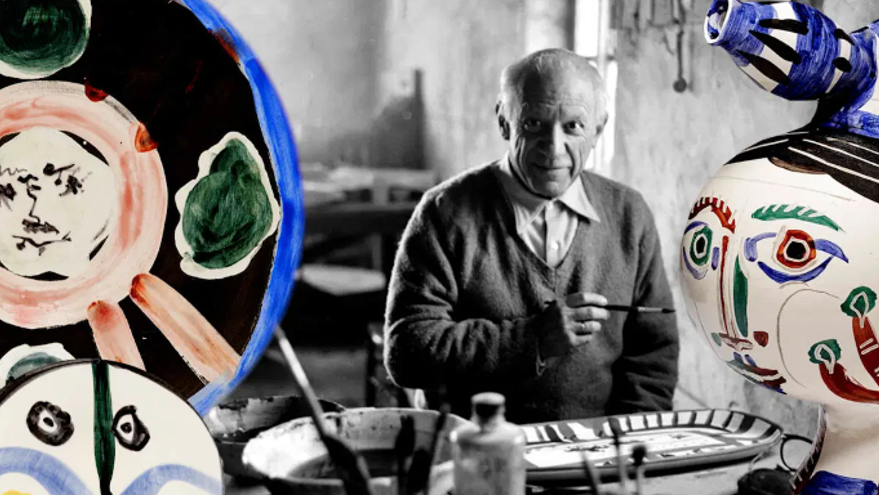
Pablo Picasso painting his ceramic pieces in Vallauris, France, 1950s, The Collector
5. Do something new or something old in a brand-new way. Picasso said, “I am always doing that which I cannot do, in order that I may learn how to do it.” [Picasso was a restless artist, always with something in his hand: a brush, a ceramic wheel, an etching tool. He had some genius as well.]
6. Savor perceptions of the meal we’re eating, the garden we’re walking through, and spend time writing or drawing our perceptions. [I kept journals for a 10-year period of life before I met my husband, which I’ve never reread. Now I write for my website.]
7. Dream our “What ifs.” What if I was an amazing writer? What if I could feel like I’m floating across the room when I walk? This might be a way to make some dreams come true.
8. Visualize imagining and creating effortlessly — and loving the process.
9. Take a notebook and pen [or mobile phone] on outings and note interesting observations. It’s a way to remember our best ideas. [I will draw from photos I take, while watching TV.]
10. We should try not to self-criticize and kill off our creative hopes and dreams before they have a chance.
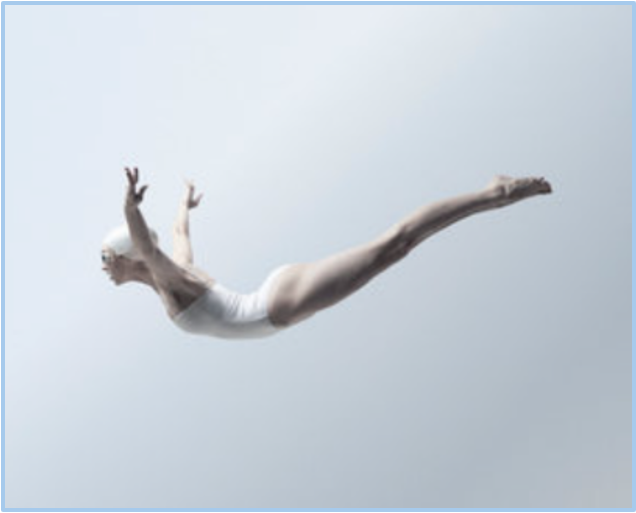
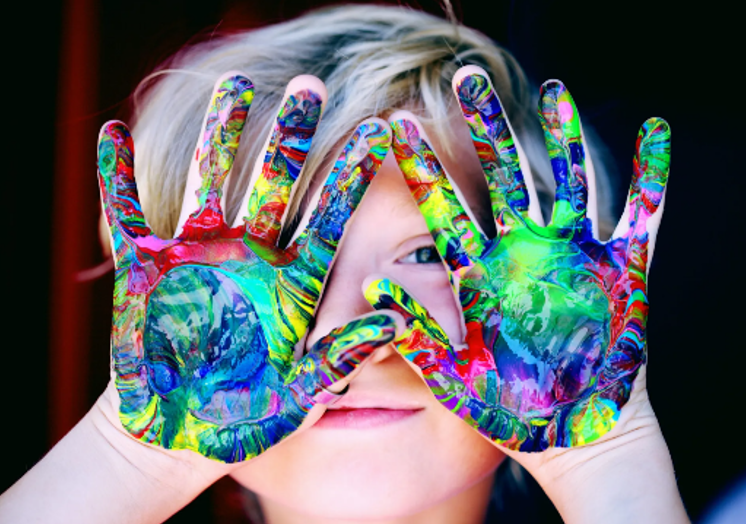
11. Recapture our inner child’s sense of wonderment, love of color, surprise, and curiosity — and spend a few minutes looking around. It can reconnect us with our creative self.
12. Creativity is like a muscle: use it or lose it. Dance, draw, brainstorm, change your life. The more you use your creativity, the easier it becomes and the better you get at it. [At a writer’s workshop, the leader told us to live the writer’s life. Write every day. Living the creative life won’t always be appreciated, especially in conservative settings, like the workplace. Others may not like it all, but they’ll see you differently. Leave workplaces, if you can, that shut down you and your good ideas.]
13. Collaborate creatively with others. Write a play, make a quilt, [join a painting club and surprise yourself], design a new workspace, start a new business. [A woman who sadly lost a son who was a composer and performer started a nonprofit website dedicated to her son and other recently deceased artists, to memorialize their legacy and honor their families. My husband was included.]
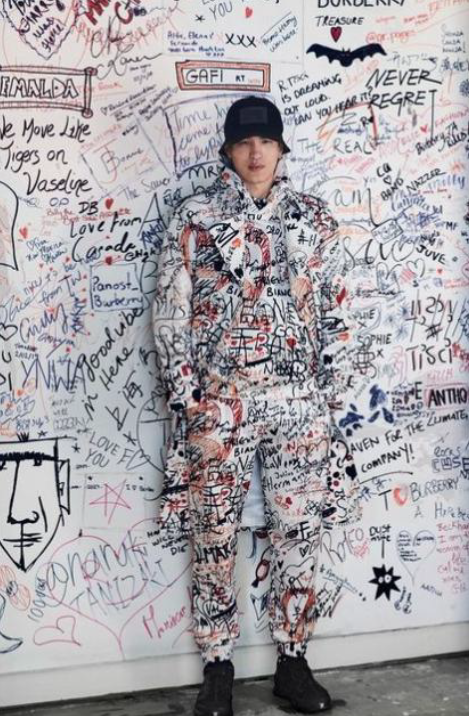
14. Dress wildly — revel in color and texture. Buy or make a fabulous hat. Don’t be age-appropriate. [There are too many on social media telling us how to dress after 50 — making many of us women feel even more invisible than we already feel.]
15. Playwright Samuel Becket spoke on the secret to lifelong creativity: “Fail, fail again, fail better”! [Creative pursuits have failure built in. Others always do it better, get rich and famous, think of it first.]
An additional comment on the notion of failure: I encounter too many people who believe they’re “failures” at art before they even try. Maybe their parents or art teachers in grade school told them they have no artistic talent — and they readily believed them. Even musicians, proud of their ability on keyboards or guitar, talk about their lack of artistic skills.

I am a novice artist, but am willing to keep trying — and not take myself so seriously. Here are examples of my photographs and the drawings that followed:
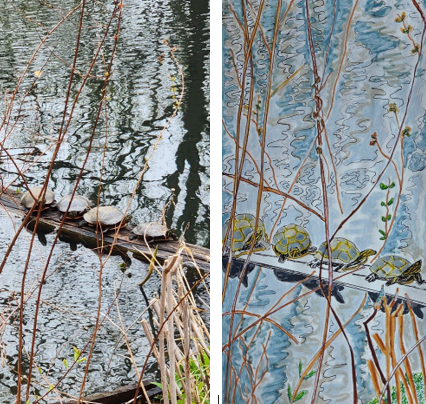
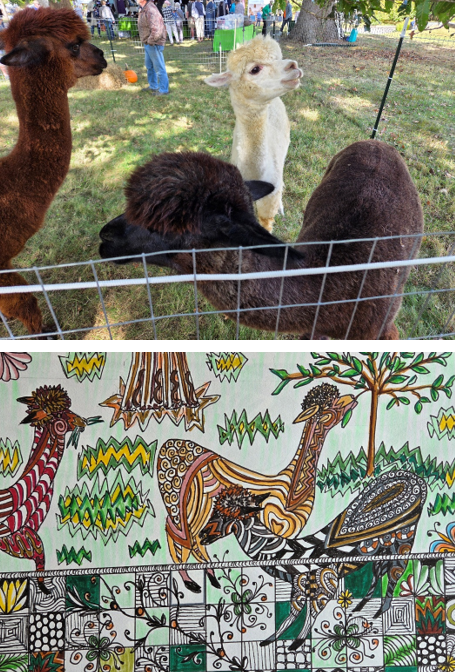
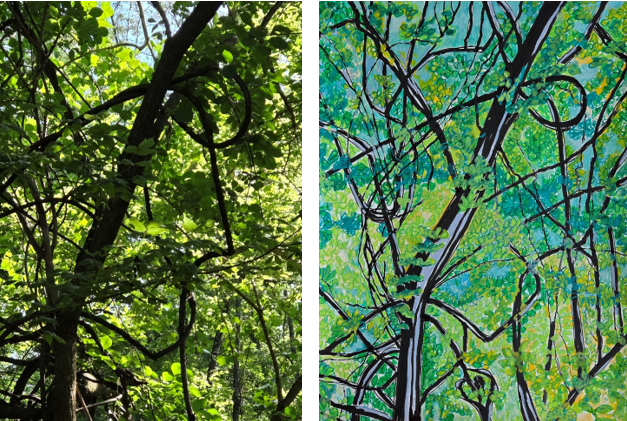
Photos and drawings of turtles, llamas, and trees by Jan Swan
The only thing I’ll add to “Berc’s 15” is that these tips are meant for everyone. I read them thinking about neurodivergents — and only thing I’ amend is this: research has demonstrated strong correlations between autism/ADHD and creativity. Neuroatypicals have a leg up when it comes to living a creative life.
Famous Neurodivergents
More and more ND people are talking about their experiences. This should encourage anyone feeling lost or hopeless. Examples of famous and successful ND’ers [bio details from Wikipedia]:
Sir Anthony Hopkins
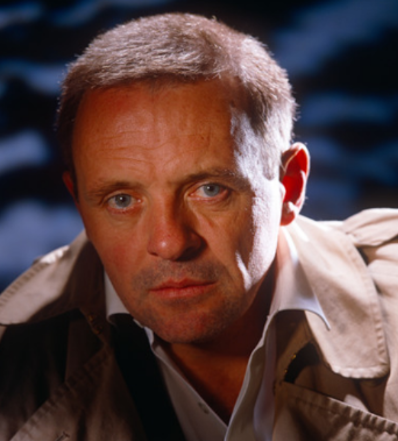
Oscar-winning, Welsh-American actor Sir Anthony Hopkins (b. 1937), known to many as Hannibal Lecter in The Silence of the Lambs (won 1991 Academy Award for best actor), is one of the most recognizable, prolific, versatile, and extraordinary actors of our time. Other less Hollywood but wonderful films I recommend: Howard End (1992), The Remains of the Day (1993), and about Alzheimer’s The Father (2020).
At age 80, Hopkins “came out” on the autism spectrum after a lifetime not understanding the source of his distress, according to “Anthony Hopkins and Asperger’s Condition,” Scott Psychological Centre, UK. He also had dyslexia or ADHD, since he had difficulty in school, couldn’t understand what was being taught, and, as a result, became unruly. Instead of getting supports, he was sent to a boarding school, where the headmaster called him “hopeless.” Hopkins described his “sheer contempt for authority” and his loneliness.
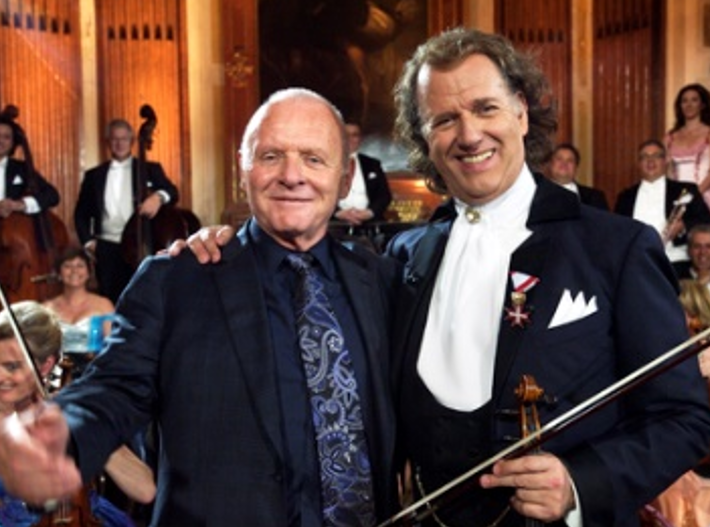
In his solitude, Hopkins composed music (a piece was performed by the Birmingham Symphony Orchestra), wrote poetry, and became an actor. As a self-described “antisocial moron,” he became an alcoholic (sober since 1975). Scott Psychological Centre notes “… addiction in a person with Asperger’s is the same as that in almost all addicts — an attempt to escape the stressors in their life.” Here’s what Hopkins himself says:
“…people with Asperger’s are highly functional, but inconsistent. They have nervous ticks, nervous habits, inconsistently obsessive thinking …. I didn’t know Asperger’s even existed …. I became an actor with a rather worker’s approach to it. My father was a baker, but I was never sure what the hell I was. That led to years of deep insecurity and curiosity. I could never settle anywhere. I was troubled and caused trouble, especially in my early years. I matured a bit, so I’m at much more peace with myself.” —Anthony Hopkins in “Anthony Hopkins and Asperger’s Condition,” Scott Psychological Centre
Hopkins believes autism helped him as an actor. “I definitely look at people differently. I like to deconstruct, to pull a character apart, to work out what makes them tick, and my view will not be the same as everyone else. He’s well-known for his ability to remember lines, perhaps due to a lifelong habit of memorizing poetry and Shakespeare. And he’s a gifted mimic, using any accent for whatever is needed for the character.”
The author [no name given] hopes the Hopkins story makes clear the importance of early diagnosis and intervention, writing: “Although one senses Hopkins’ tremendous perseverance, resilience, ego strength, and creative spirit…” it’s also needlessly painful to go through life having Asperger’s, not knowing it, and not receiving help.
Without identification and support the individual with Asperger’s condition is likely to experience extremely low self-esteem, a damaged self-concept, feelings of not really being a member of the human race …. they are likely to live a life of unfulfilled promise and due to their high intelligence, they will be acutely aware of their shortcomings. Even, with significant success, the psychological distress of coping with these problems, likely contributed to Hopkin’s alcohol problem. —“Anthony Hopkins and Asperger’s Condition,” Scott Psychological Centre
Simone Biles
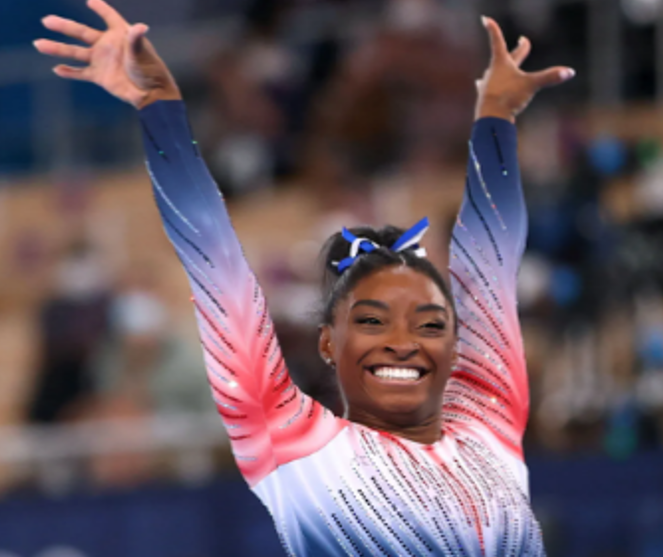
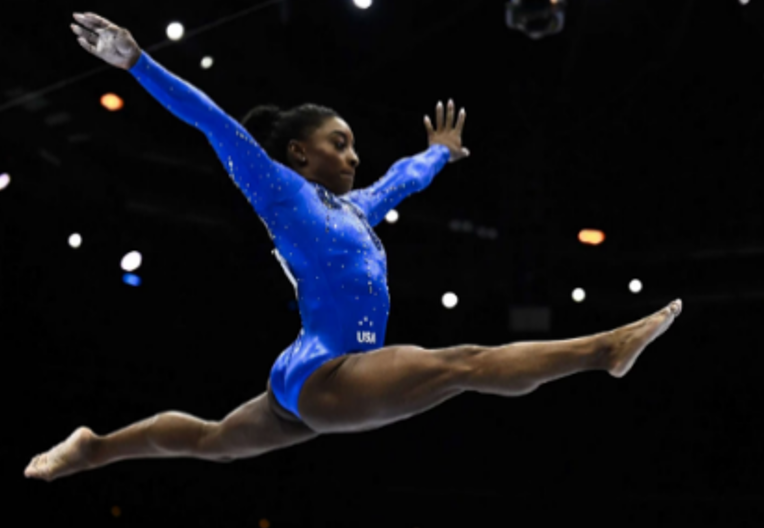
American gymnast Simone Biles (b.1997) has won 11 Olympic and 14 World Championship medals, making her the most decorated gymnast in history. In 2022, President Joe Biden awarded her the Presidential Medal of Freedom. In 2017, Biles spoke about having ADHD, having been diagnosed as a child. She also withdrew from competition for a year for mental health reasons.
F. Scott Fitzgerald
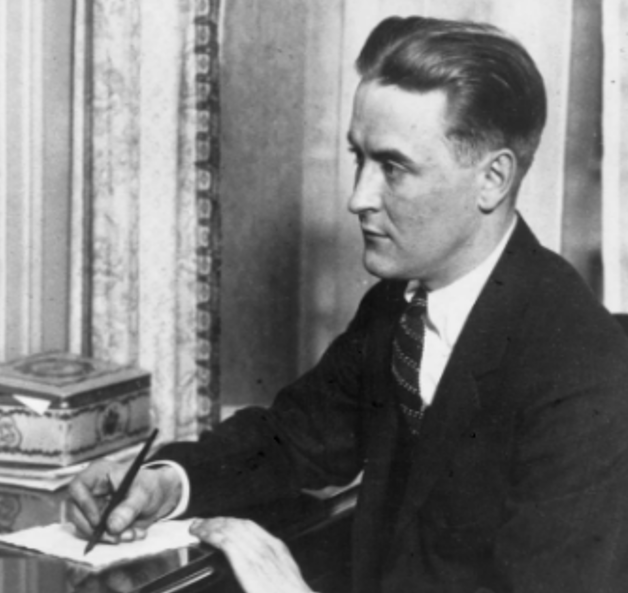
American author F. Scott Fitzgerald (1896–1940) is a favorite novelist. Known for depicting the flamboyance and excess of the Jazz Age (a term he popularized in his short story collection Tales of the Jazz Age), Fitzgerald wrote The Great Gatsby. Sadly, most of Fitzgerald’s recognition came after his lifetime, which was too short due to alcoholism. Hard to know whether his excessive drinking was self-medicating to cover his neurodivergent challenges or the erosion of his mental health from his suicidally “insane” but equally brilliant wife Zelda.
Marie Curie
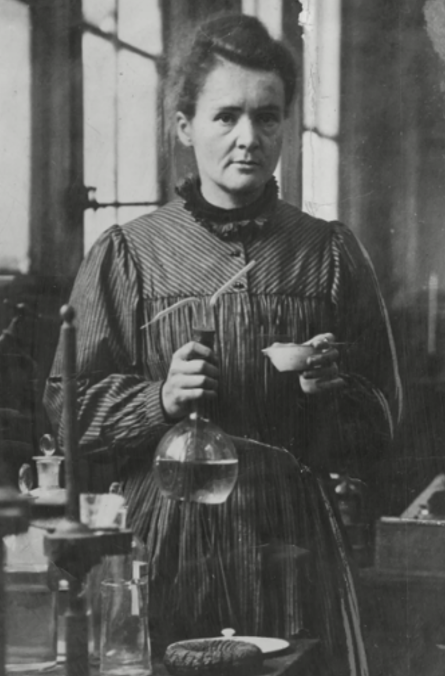
Polish-French physicist/chemist Marie Curie (1867-1834) conducted pioneering research on radioactivity and discovered the elements polonium and radium, by using techniques she invented for isolating radioactive isotopes. These discoveries led to mobile radiography units to provide X-ray services to field hospitals during World War I. Curie was the first woman to win a Nobel Prize, the first person to win a Nobel Prize twice, and the only person to win a Nobel Prize in two scientific fields.
What’s known is Marie Curie suffered from recurrent major depressive disorder (MDD) throughout her life. She might also have had bipolar disorder — given great bursts of energy when not depressed (which was called exhaustion or nervous troubles by her family). She was known to be distant, obsessive, unaffectionate, and overly disciplined. While one shouldn’t make posthumous diagnoses of famous people, it seems reasonable to accept Curie as neuroatypical.
An Unfamous Artist-Neuroatypical
Like his artist father, my son Etan is a natural. He always had the talent, but didn’t always recognize it. One of my best memories was watching Etan and his dad looking at their sketchbooks together. Here’s more from my son talking to me:
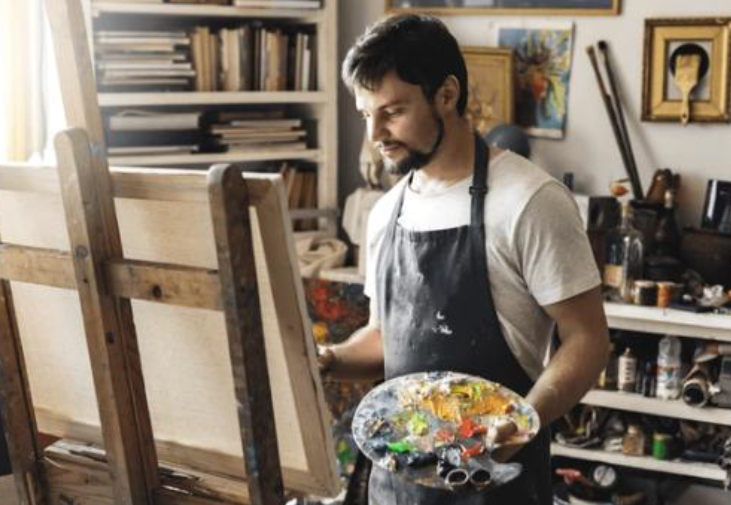
My first memories of feeling like I had artistic ability was in third grade. My friend V and I used to sit together and draw weird characters and superheroes in our journals, but I always felt he was better than I was. Well, he was not an ADHD brain, so he was more confident, more consistent, to me being a little wilder. Now, looking back, I don’t think he was better or worse but simply different — at the time, I thought I was worse. He went on to be extremely successful — it goes to show you how far you can go as an artist if you’re organized in your brain.
My admiration for art came from having my dad’s paintings all around. At a base level, it told me there’s something I don’t know.
I’ve thought about it in terms of genetics — in my family there’s this artistic talent. I revered dad from pretty young just because — I was, wow, look at what he can do. It also comes from you — there was no chance I wasn’t going to be an art person with both of you as my parents, absolutely. —Etan Swan
Giftedness and Neurodivergence

Photo: Kite Kid Mama
One could argue ND/creativity profiles, including synesthesia [see posts 11-12] are about giftedness. This is, for me, a surprising topic. Giftedness as another ND type is rolling toward consensus — but hardly universal, with many still defining it as synonymous with IQ test results. But understanding giftedness as a complex ND condition will ultimately help children and teens labeled as gifted avoid so-called “gifted burnout” and have a better chance at living an emotionally healthy and fulfilling life.
The Columbus Group and Asynchronous Development
A small group of gifted educators met in 1991 after a conference in Columbus, Ohio, and published the following definition of giftedness, which coined the phrase asynchronous development as a defining trait:
Giftedness is asynchronous development in which advanced cognitive abilities and heightened intensity combine to create inner experiences and awareness that are qualitatively different from the norm. This asynchrony increases with higher intellectual capacity. The uniqueness of the gifted renders them particularly vulnerable and requires modifications in parenting, teaching, and counseling for them to develop optimally. —The Columbus Group, Gifted Parenting Support, 1991
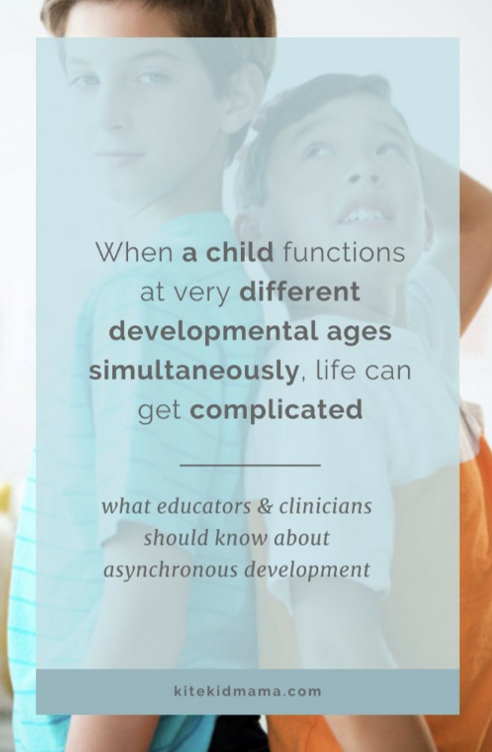
Photo: Kite Kid Mama
This definition was a departure from “defining giftedness specifically as achievement — as doing rather than being,” according to Columbus Group member Stephanie Tolan in her
blog, The Deep End.
She writes they intentionally challenged the prevailing claim that “schools ‘created’ giftedness and that children who were not achieving academically were clearly not gifted (and therefore should not be taking up the limited numbers of ‘seats’ in gifted programs).
Dismayed by the narrowness and external focus of this definition, a group of us whose experience with the gifted had shown us that unusual intelligence was an internal aspect of the child, apparent well before the start of school, gathered to discuss how we might help to refocus attention on this way of understanding the gifted population.”
Asynchrony is when a gifted child’s intellectual, physical, emotional, or social development is uneven or happens at different rates, like thinking above but acting below their age level. A young child might have a mature conversation only to dissolve in tears over a minor incident. Or an older child imagines wonderful stories, but can’t write them down.
Defining giftedness as asynchronous development is recognized by teachers, parents, and psychologists internationally. It provides “a way of comprehending both the potential for extraordinary achievement and the struggles the gifted face in being out-of-sync both internally and with the expectations of the broader culture.” Tolan also wrote a 2013 book, Off the Charts.
In addition to asynchrony, other noted characteristics of gifted children include:
- Overexcitabilities: Highly reactive to environments emotionally, sensorially, imaginatively, intellectually, or through Psychomotor disturbances: associates physical activity with conscious mental activity, affecting thought, body movements, and facial expressions.
- Emotional intensity: Highly sensitive and empathetic, which can help them connect with others, but can also make them susceptible to overstimulation.
Giftedness may not only have similar traits to children with autism or ADHD, but they may be comorbid with them. As Zakreski says, studies find “… overlap between autistic brains and ADHD brains and gifted brains and dyslexic brains. And you might have all of them.” Tung writes, “A lot of times, gifted kids are smart enough that they can compensate for and even mask those deficits. But eventually, a lot of them end up hitting a wall.”
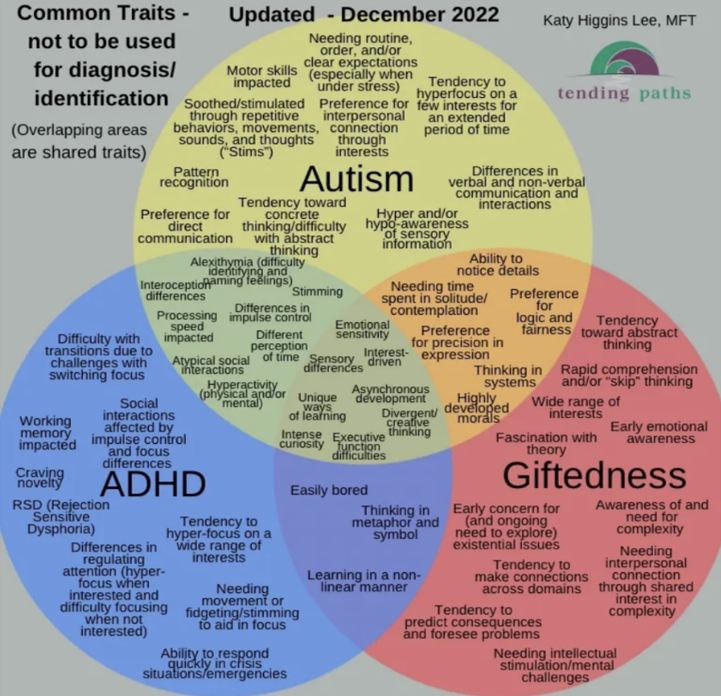
Overlapping/different traits: neuroatypical and giftedness. Graphic: Katy Higgins Lee
Coming Up Next
Feeling compassion for gifted people might seem like feeling sorry for the very rich, drinking alone on the deck of their yacht and wondering whether life has meaning. But further reading on the topic shows the extensive connection between giftedness and neurodivergence. In Post 32: Giftedness is a Piece of Neurodivergence, I’ll discuss gifted burnout and ways to avoid it. This is more than a niche topic. It’s relevant for anyone who’s different, trying for acceptance in an unyielding, rejecting society.
Copyright ©2026 Jan Swan
 English