On Neurodivergence and Otherness
Show Table of Contents
INTRO
1. On Neurodivergence and Otherness: An Introduction
SENSES AND SENSORY SENSITIVITIES
2. Senses Count
3. Neurobiology for Dummies
4. Sensory Transmission and our Reward System
5. Sensory Receptors are the Body’s Cellular Plan
6. A Synthesis: Sensory Systems and our Emotions — Part I
7. A Synthesis: Sensory Systems and our Emotions — Part II
8. Sensory Disorders and Sensitivities
9. Etan’s Story
SYNESTHESIA
10. Synesthesia: Difference, But Not Disorder
11. Synesthesia, Creativity, Artistry — Part I
12. Synesthesia, Creativity, Artistry — Part II
AUTISM AND THE NEURODIVERSITY MOVEMENT
13. From “Mental Defectives” to Autism Spectrum Disorder
14. Changing Conception of Autism
15. Autism Diagnoses and Behavior Patterns
16. Autism Treatments that Help
17. Early Start Autism Treatment: A Case Study
18. Neurodivergence and the Neurodiversity Movement
19. Neurodiversity Takes Flight
20. ADHD and Neurodevelopmental Disorders
21. ADHD: A Preponderance of Risk Factors and Symptoms
22. ADHD: Inattentive, Impulsive … and Hyperactive?
23. ADHD: Named, Renamed, Still Needs a New Name
24. ADHD: Treatment and Coping Skills for All Ages
LGBTQ+
25. Neurodiversity and the LGBTQ+ Fight
26. LGBTQ+ Identity and Expression
27. LGBTQ+ and Mental and Behavioral Healthcare
ON LANGUAGE
28. Language Matters In and Around Neurodiversity
29. Neuroinclusion and Disability Language
30. Neurodivergent Language Difficulties
ON CREATIVITY AND GIFTEDNESS
31. Neurodiversity and Creativity
32. Giftedness is a Piece of Neurodivergence
SELF-IDENTITY
33. Self-Identity: The Cornerstone of Neurodiversity
34. Early Theories of Self-Identity Formation
35. Contemporary Theories of Self-Identity Formation
36. Authenticity and the Search for Self
37. Self-Schemas and Neurodivergence
38. Self-Labeling and Parts Work
39. Complexity, Clarity, and Self
IMPROVING LIFE FOR NEURODIVERGENT PEOPLE
40. Empathy Recognizes and Navigates Difference
41. Reducing Neurotypical-on-Neuroatypical Conflict – Part I
42. Reducing Neurotypical-on-Neuroatypical Conflict – Part II
43. Communicating Across the Neurospectrum – Part I
44. Communicating Across the Neurospectrum – Part II
45. Neurodiversity: Advocacy and Education
46. Neuroinclusion in the Workplace
47. A Neurodiverse Lifestyle
IN CONCLUSION
48. In Conclusion: Neurodivergence and Inspiration
36. Authenticity and the Search for Self

Living authentically, according to research, is fundamental to strong self-identity and healthy functioning. Authenticity means being honest with yourself and others about who you are, being open to change, taking time to think about your beliefs and values, and being willing to stand up for what matters to you. Yet, essential parts of a strong self-identity are out of our control, and living authentically meets greater challenges as we become adults in the world.
Many people across the globe grow up amid conflict, whether war, poverty, or discrimination and stigma, due to race, religion, geopolitical affairs, appearance, gender, or other differences. Others grew up with neurodevelopmental delays, mental and behavioral health issues, and neurodivergent conditions. All of these facets of who we are factors into how we become.
If we’re fortunate to be raised by loving, stable parents, which Pysch Central describes as imparting the seeds of self-worth, we’re more likely to be bolstered as adults. But too many don’t have this. They lived without stability or unhealed traumas from their past.
The essential task of adolescence and young adulthood is learning how to stop negative thought loops and endless self-criticism. They can start by recognizing what they need to work on, but also by discovering all the wonderful parts of themselves they don’t notice or ignore — or don’t believe in. By defining and surmounting our barriers, we take small acts of courage that strengthen self-identity — an ongoing affair — through old age.
What Stops Us from Being Ourselves and Being Authentic?
Carl Rogers (1963), one of the most renowned humanistic psychologists, believed that being motivated toward fulfillment and self-actualization is a normal and natural human urge, yet it can be blocked when our needs go unsatisfied. —Jeremy Sutton, “Authentic Living: How to Be Real According to Psychology,” Positive Psychology
Jeremy Sutton writes in Positive Psychology that our will to survive affects how we perceive the world and the people around us. Paraphrasing Carl Rogers from his 1961 classic psych textbook, On Becoming a Person, Sutton says those of us who have our needs met through positive, nurturing environments flourish. Citing others, Sutton adds, we have a natural tendency to strive to become more authentic, developing in the direction necessary to reach our full potential, “like plants growing toward the light.”
We shouldn’t have to struggle to be authentic — like babies, who “simply are. They have no façade and are entirely in touch with whom they are inside. When hungry, they cry; when their needs are met, they stop.”

Yet, as we develop self-awareness and become freer to choose our path forward, we learn, in reality, love and approval are often conditional. Sutton writes, “As children, we are shown more love and affection when we perform well, win the race, and ace a test. We learn there are things we must do to feel an increased sense of belonging and love. This can push us toward lifelong inauthentic living.”
Photo: Raising Children Network
As [Stephen] Joseph reminds us, isn’t it true that for much of our adult lives, we put on a show? During the day, we may experience only fleeting moments where we are truly ourselves, saying and thinking exactly how we feel.
The person living authentically exists “moment by moment, striving to understand themselves, their motivation, defenses, and conditions of worth, while being aware of their responsibilities and choices.” Authentic life involves following our passion and being intimately connected to our natural abilities, strengths, and talents. —Jeremy Sutton quoting British psychologist Stephen Joseph, “Authentic Living,” Positive Psychology
I followed up by going to Joseph’s site, Authenticity Formula, where I picked up this quote:
Your time is limited, so don’t waste it living someone else’s life…. Don’t let the noise of others’ opinions drown out your own inner voice. And, most important, have the courage to follow your heart and intuition. They somehow already know what you truly want to become. —Steve Jobs, Founder of Apple
Authenticity, Self-Actualization, Self-Transcendence
It isn’t normal to know what we want. It is a rare and difficult psychological achievement. —Abraham Maslow, Nitch
Relevant to living authentically are self-actualization and self-transcendence — topics too big to cover but briefly. Not new but important topics to include because of how, in different ways, aspirational these concepts are. When we’re stuck but ready to move forward, when we’re stable but wanting more, or when we want to spread our wings and help others, we need goals that stretch our imaginations and broaden our horizons.
Authenticity seems more immediately attainable. Like starting tomorrow, we can mentally prepare to peel off the mask and affirm who we are. It’s too short a life with too many health consequences to live it suppressed and miserable. There are others out there waiting to surround us with support and belonging, cheering us on to take first steps to find our way.
Self-Actualization
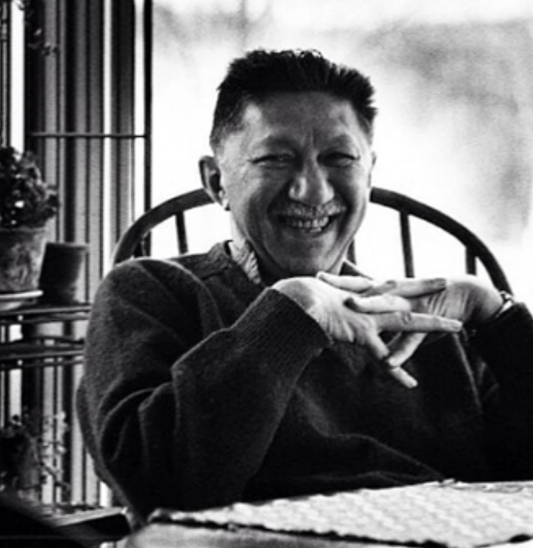
Self-actualization is more a goal taking shape in the semi-distance. Perhaps we don’t fully reach it in a lifetime or maybe it’s achievable with youthful energy. It’s the coming together of many different elements — including authenticity — so we’re alert to all that’s attainable. Self-actualization is commonly pictured as the peak of Maslow’s pyramid. But I’m now learning American psychologist Abraham Maslow (1908-1970) didn’t intend his hierarchy of needs (introduced in his 1943 paper, “A Theory of Human Motivation”) to be a pyramid, nor did he expect us to scale it in one direction.
Abraham Maslow. Photo: Nitch
Many people are familiar with Maslow’s hierarchy of needs in which…safety, belonging, and self-esteem must be satisfied (to a reasonable, healthy degree) before one can fully realize one’s unique creative and humanitarian potential. What many people may not realize is a strict hierarchy was not really the focus of his work (in fact, he never represented his theory as a pyramid).
Especially later in his life, Maslow’s focus was more on the paradoxical connections between self-actualization and self-transcendence and on the distinction between defense and growth motivation. Maslow’s emphasis was less on a rigid hierarchy of needs and more on the notion that self-actualized people are motivated by health, growth, wholeness, integration, humanitarian purpose and the “real problems of life.” —Scott Barry Kaufman, “What Does It Mean to Be Self-Actualized in the 21st Century?”
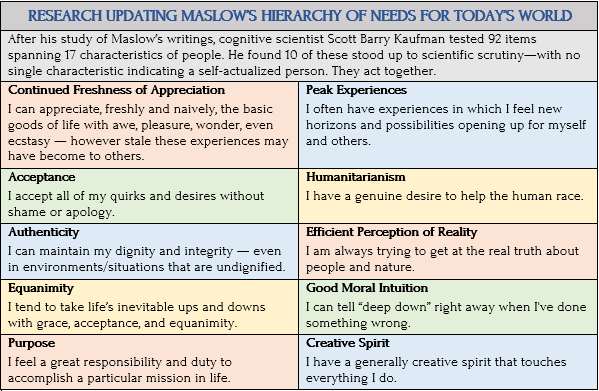
Source: “What Does It Mean to Be Self-Actualized in the 21st Century?” by Scott Barry Kaufman
Kaufman asks, “But what do all these characteristics predict in the real world, when they’re viewed as a single unit?” Here’s what his research found. As Maslow predicted, self-actualization was related to:
- Higher levels of stability
- Links to optimal creativity, wellbeing, and self-transcendence
- Ability to protect our highest-level goals from disruption by distracting impulses/thoughts
- Lower levels of disruptive impulsivity (I get out of control. I’m self-destructive.), nonconstructive thinking (My future is dark. I have doubts I’ll make it.), and a lack of authenticity and meaning (I lack direction. I don’t want to act this way — it doesn’t fit me.).
- Study participants with higher scores were much more motivated by growth, exploration, and love of humanity than by fulfilling deficiencies in basic needs.
- High scores were associated with multiple indicators of wellbeing, including greater life satisfaction, curiosity, self-acceptance, positive relationships, environmental mastery, personal growth, autonomy, and purpose in life.
- High scores also linked to work performance and creativity — predicting greater work satisfaction/performance and greater reports of talent, skill, and creative ability across the arts, sciences, business.

- Significant (but small) correlation with humor ability (Kaufman writes, “Maslow often viewed humor ability as one of the defining characteristics of self-actualization.”).
- Strong correlation with increased feelings of oneness with the world.
“The goal of identity (self-actualization …) seems to be simultaneously an end-goal in itself, and also a transitional goal, a rite of passage, a step along the path to the transcendence of identity. This is like saying its function is to erase itself. Put the other way around, if our goal is the Eastern one of ego-transcendence and obliteration, of leaving behind self-consciousness and self-observation … then it looks as if the best path to this goal for most people is via achieving identity, a strong real self, and via basic-need-gratification.”
Self-actualized people don’t sacrifice their potentialities in the service of others; rather they use their full powers in the service of others (important distinction). You don’t have to choose either self-actualization or self-transcendence—the combination of both is essential to living a full and meaningful existence. —Scott Barry Kaufman, “What Does It Mean to Be Self-Actualized in the 21st Century?”
This next chart compares authentic and inauthentic living, but it represents the extremes. Most of us travel back and forth along the continuum throughout our lives, the goal being to strive for authenticity as we grow older.
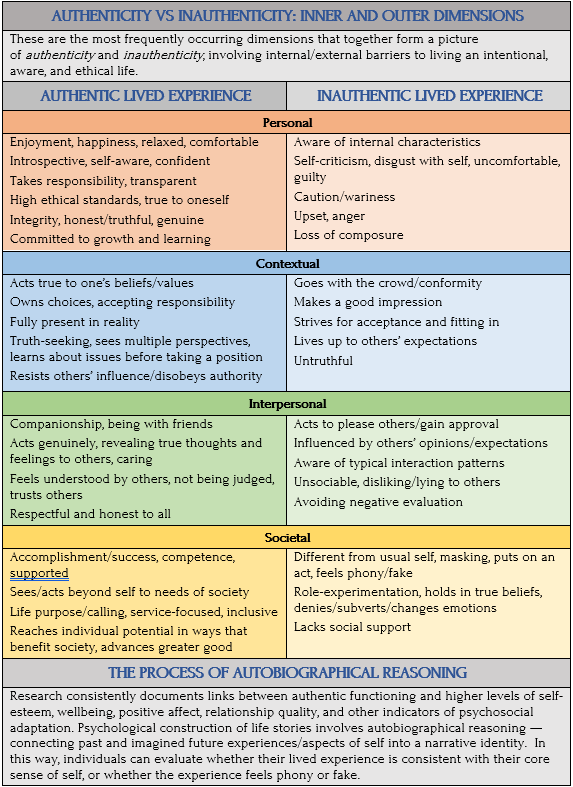
Among multiple sources: Joshua Wilt, “Authenticity and Inauthenticity in Narrative Identity,” Science Direct
Kaufman says Maslow was wrong in believing self-actualization was extremely rare and virtually unattainable among young people. In Kaufman’s research, self-actualization scores showed a typical distribution, like IQ or height. It also didn’t correlate with age, education, gender, race, ethnicity, college GPA or childhood family income—with “different environments helping to bring out the best or the worst in us, I found no evidence the characteristics of self-actualization are limited to a particular swath of humanity.”
Self-Transcendence

Self-transcendence is an even more distant and ethereal goal, when we expand and shift our personal boundaries from the self to caring for others, reducing suffering, or doing something else greater than ourselves. The theory of self-transcendence is a framework for understanding how people cope with difficult life situations and enhance their wellbeing—and for those among us with a more spiritual bent—to achieve (in Maslow’s words) “a state of feeling at one with the world and those in it.”
Maslow coined the term self-transcendence and added it to his revised hierarchy in 1969, describing it as a “higher state in which self-actualized people see beyond their own concerns and perspectives.”
J.W. Turner, The Fighting Temeraire, 1838. Source: Baani’s ArtPoint
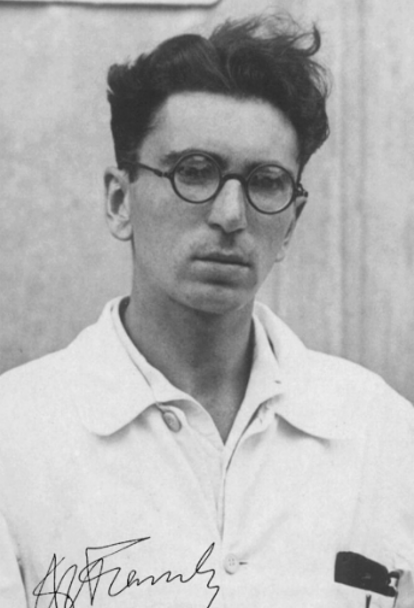
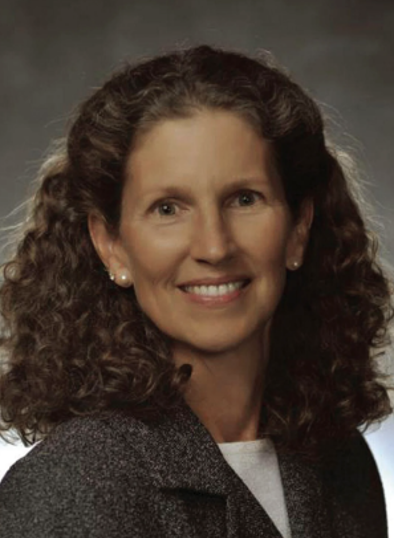
Wikipedia defines self-transcendence as a personality trait that involves the “expansion or evaporation of personal boundaries” — the first spiritual concept incorporated into a major theory of personality. In addition to Maslow, other renowned psychologists — Austrian neurologist, psychiatrist, and Holocaust survivor Viktor Frankl (1905-1977) and American psychologist, nursing theorist, professor Pamela G. Reed — contributed to self-transcendence theory.
Frankl wrote, “The essentially self-transcendent quality of human existence renders man a being reaching out beyond himself.” Frankl invented logotherapy, a form of psychotherapy that describes a search for life’s meaning as “the central human motivational force.”
Reed saw self-transcendence as a natural, desired stage before self-fulfillment and purpose. Her 1991 theory suggested perspectives and behaviors expand (transcend) self-boundaries in multidimensional ways:
- Inwardly: Through introspection, we gain awareness of our values, philosophy, and dreams.
- Outwardly: We relate to others’ and our environment.
- Temporally: We integrate our pasts and futures to have meaning in the present.
In 2015, Reed added transpersonally (we connect with dimensions beyond reality). APA PsycNet (2014) researchers wrote Reed’s theory offers a “holistic and humanistic perspective on human development and wellbeing, especially during events or [when] vulnerability can diminish wellbeing. It has also been tested empirically and has shown positive associations between self-transcendence and wellbeing, quality of life, hope, and coping.”
Sources: Self-Transcendence Research and Scott Barry Kaufman. Photos: Viktor Frankl, Springer Nature Link; Pamela G. Reed, Tucson.com
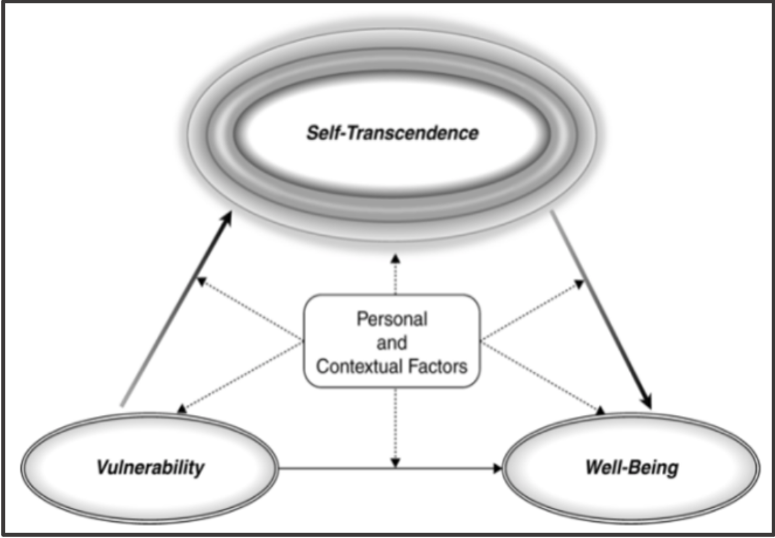
Reed’s nursing theory of self-transcendence is based on vulnerability, wellbeing, and self-transcendence. Singly and together, these three concepts are moderated by age, gender, cognitive ability, health status, personal beliefs, spiritual support, and other sociocultural factors. Transcendence may be an underlying process explaining how wellbeing is possible in the difficult or life-threatening situations we endure.
Self-Transcendence Theory © PGReed, 2012, Nursology
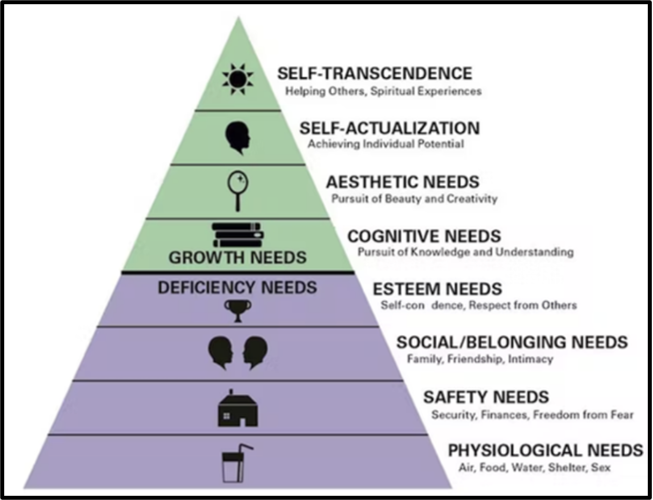
Maslow evaluated self-transcendence from the “perspectives of time, space, culture, ego, others’ opinions, and identification-love.” He’s quoted as saying, “This means transcendence of the selfish Self. It also implies a wider circle of identifications — with more people approaching the limit of identification with all human beings.”
Kaufman notes Maslow’s writings remain relevant today, largely since it was misrepresented at the time (70 years ago) that self-actualizing people were selfish or purely individualistic. “What Maslow believed was “self-actualization is healthy self-realization on the path to self-transcendence.” This conceptualization has been all but lost, and Kaufman is helping bring it back, with fresh insights from research.
Source: Wikipedia
Maslow recognized the peak of human experience was more than achieving a person’s individual potential. Being our best self isn’t just about our self. He recognized through his research that people could, and do, rise above themselves and connect to something greater, and that humans need this connection to the whole in order to be whole. His revised theory looks like this with self-transcendence at the peak of human potential. —Andrea Hunsaker, “Get Over Yourself: Cultivating Self-Transcendence,” MyBestSelf101
There is, however, little evidence that self-transcendence is specifically achievable. Yet it seems the journey toward an ideal gives us more hope, makes us like ourselves better, and creates more meaning in life.
Love doesn’t appear as a standalone word on the hierarchy but belongs to the social/belonging level—our need for relationships, intimacy, friendship, family, and a sense of belonging in a group. This is the desire to feel loved and accepted by others and to give love in return. If this need is not fulfilled, individuals may experience loneliness, depression, and difficulty forming healthy relationships.
Love, belonging, dreaming, connection: This attainment can be more difficult for ND/ neurodiverse populations, especially for those who grow up in homes expecting rigid conformity to neurotypical notions of daily life.
Researcher/author Brené Brown describes authenticity as “the choice to show up and be real. The choice to be honest. The choice to let our true selves be seen.” Brown says, self-transcendence “connects the dots between authenticity, vulnerability, and belonging …. Because true belonging only happens when we present our authentic, imperfect selves to the world, our sense of belonging can never be greater than our level of self-acceptance.” —Quoted by Linda Fisher Thornton, “How Are Authenticity and Self-Actualization Connected?” Leading in Context
The privilege of a lifetime is to become who you truly are. —Carl Gustav Jung
Coming Up Next
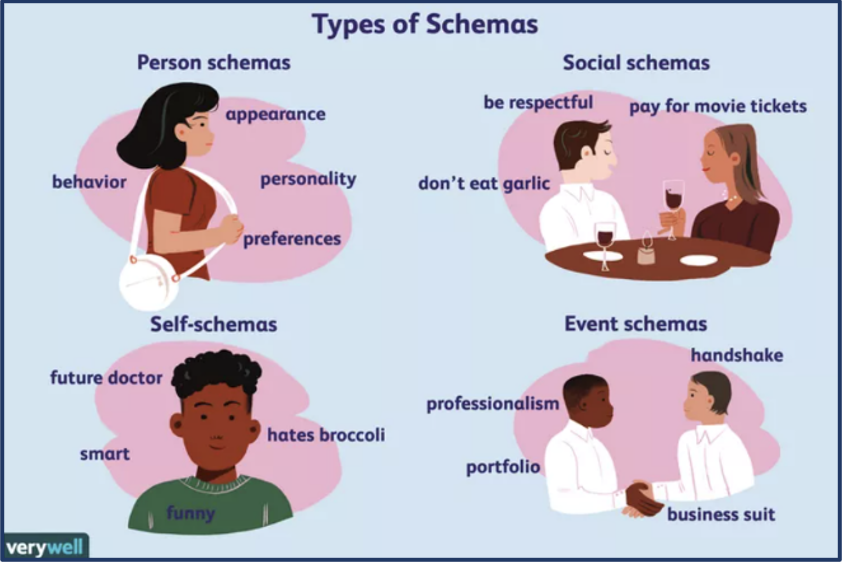
Post 37. Self-Concept and Self-Schema is on a subject I stumbled over like roots on a path. And like roots that become sturdy enough to support and feed a tree, we can’t become the people we’re meant to be or would like to be without strong self-schema. In the neurotypical world, this journey to selfhood is hard enough. In neurodivergence, it takes an effort of a different caliber to achieve selfhood, wellbeing, and fulfillment.
Copyright ©2026 Jan Swan
 English