On Neurodivergence and Otherness
Show Table of Contents
INTRO
1. On Neurodivergence and Otherness: An Introduction
SENSES AND SENSORY SENSITIVITIES
2. Senses Count
3. Neurobiology for Dummies
4. Sensory Transmission and our Reward System
5. Sensory Receptors are the Body’s Cellular Plan
6. A Synthesis: Sensory Systems and our Emotions — Part I
7. A Synthesis: Sensory Systems and our Emotions — Part II
8. Sensory Disorders and Sensitivities
9. Etan’s Story
SYNESTHESIA
10. Synesthesia: Difference, But Not Disorder
11. Synesthesia, Creativity, Artistry — Part I
12. Synesthesia, Creativity, Artistry — Part II
AUTISM AND THE NEURODIVERSITY MOVEMENT
13. From “Mental Defectives” to Autism Spectrum Disorder
14. Changing Conception of Autism
15. Autism Diagnoses and Behavior Patterns
16. Autism Treatments that Help
17. Early Start Autism Treatment: A Case Study
18. Neurodivergence and the Neurodiversity Movement
19. Neurodiversity Takes Flight
20. ADHD and Neurodevelopmental Disorders
21. ADHD: A Preponderance of Risk Factors and Symptoms
22. ADHD: Inattentive, Impulsive … and Hyperactive?
23. ADHD: Named, Renamed, Still Needs a New Name
24. ADHD: Treatment and Coping Skills for All Ages
LGBTQ+
25. Neurodiversity and the LGBTQ+ Fight
26. LGBTQ+ Identity and Expression
27. LGBTQ+ and Mental and Behavioral Healthcare
ON LANGUAGE
28. Language Matters In and Around Neurodiversity
29. Neuroinclusion and Disability Language
30. Neurodivergent Language Difficulties
ON CREATIVITY AND GIFTEDNESS
31. Neurodiversity and Creativity
32. Giftedness is a Piece of Neurodivergence
SELF-IDENTITY
33. Self-Identity: The Cornerstone of Neurodiversity
34. Early Theories of Self-Identity Formation
35. Contemporary Theories of Self-Identity Formation
36. Authenticity and the Search for Self
37. Self-Schemas and Neurodivergence
38. Self-Labeling and Parts Work
39. Complexity, Clarity, and Self
IMPROVING LIFE FOR NEURODIVERGENT PEOPLE
40. Empathy Recognizes and Navigates Difference
41. Reducing Neurotypical-on-Neuroatypical Conflict – Part I
42. Reducing Neurotypical-on-Neuroatypical Conflict – Part II
43. Communicating Across the Neurospectrum – Part I
44. Communicating Across the Neurospectrum – Part II
45. Neurodiversity: Advocacy and Education
46. Neuroinclusion in the Workplace
47. A Neurodiverse Lifestyle
IN CONCLUSION
48. In Conclusion: Neurodivergence and Inspiration
32. Giftedness — A Piece of Neurodivergence

Photo: Tag Walk
One thing we know about giftedness is that it is quite literally a different brain — it’s a piece of neurodivergence. — Psychologist/consultant/former gifted child Matt Zakreski, interviewed by Liz Tung, The Pulse, PBS
Neurodivergent people have differences in their brains that affect their learning, thinking, emotions, senses, and adjustments to change, behavior, relationships, and the world. The reason for this is their neurology. How their brains receive and respond to internal/external stimuli moves away from the “norm.” So, too, gifted children and adults with differently wired brains are therefore, for the most part, neurodivergent. Gifted person and psychologist Matt Zakreski, who works with gifted children, says gifted brains look like other kinds of ND brains.
“So Is Giftedness a Neurodivergence?,” asks Bright Insight co-founder/president, trauma therapist Patty Gently, PhD. She answers her own question with “a clear and resounding yes.” Also the author of Intersection of Intensity: Exploring Giftedness and Trauma (2020), Gently makes the point that, like neurodivergence, giftedness is when a person’s mental/behavioral ability differ from what is typical. Giftedness — along with autism, ADHD, dyslexia, and processing differences — can only be assessed effectively by neuropsychologists.
Brain Scans Tell the Story
Gifted people’s brains are physiologically different, too. In science reporter Liz Tung’s interview with Matt Zakreski, “Why some researchers are approaching giftedness as a form of neurodivergence,” The Pulse, PBS, Zakreski notes how fMRI (functional magnetic resonance imaging) studies have turned around current understanding of giftedness.
Scans show gifted brains have greater volume and connectivity in the cerebral cortex, which allows them to absorb and process information faster. He says gifted children have this “info sponge” phase for longer than their peers. Gently concurs, writing in Bright Insight that research identifies “a higher volume of gray matter (and therefore neuroplasticity), larger subcortical structures, and stronger white-matter microstructural organization in specific brain regions associated with explicit memory.” But that doesn’t preclude executive function deficits, according to Zakreski:
fMRI brain scan from imaging study, Cognitive FX
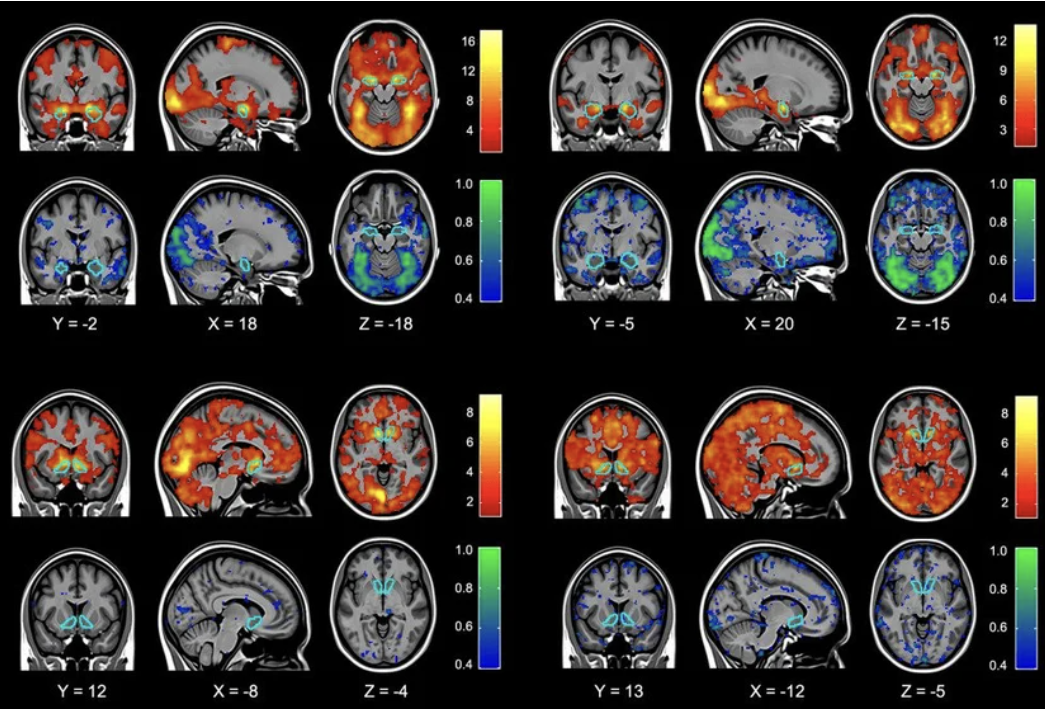
The downside is that, because their brains take in so much information and process it so quickly, further development of the prefrontal cortex gets slowed down. Essentially, there’s a bottleneck because the prefrontal cortex is overwhelmed, in addition to being developmentally delayed compared to the rest of the brain. This is one reason why scientists think that a lot of gifted kids struggle with executive functioning — the ability to prioritize, manage time, stay focused, and organized — not to mention social skills and emotional regulation. —Matt Zakreski, quoted by Liz Tung, The Pulse, PBS
The Gifts of Giftedness
Bright Insight’s definition of giftedness adds to the 1991 definition:

Giftedness is a neurodivergence and measure of identity inclusive of qualities such as advanced cognitive abilities (sometimes seen as creativity or creative problem-solving), rapid pattern-finding, and meaning-making, seemingly asynchronous development and compensation, and overexcitability/heightened intensity that all lend to a qualitative difference in depth and when compared to neurotypical experience and presentation. — Patty Gently, Bright Insight
In Intersection of Intensity, Gently provides her insights as a therapist to the 1991 Columbus Group definition: “I … define gifted persons as complex, neurodivergent beings with distinctly above-average abilities and compulsions even to develop new understanding, knowledge, behaviors, skills, values, attitudes, and preferences …. Learning can be attributed to rapid pattern-finding and meaning-making where new (and interesting to them) material is often retained after one to two repetitions of exposure.”
This pattern-finding and meaning-making also lend to the depth and complexity noticed in gifted persons. Along with a rapid ability and drive to learn, and concerning depth and complexity, it is also noted that gifted persons can experience the world with great intensity or the blunting of intensity in sensual, psychomotor, imaginational, intellectual, and/or emotional domains, and develop in a way that seems initially asynchronous. —Patty Gently, Intersection of Intensity: Exploring Giftedness and Trauma, 2020
Gifted Burnout
Descriptions of giftedness help explain why, despite extraordinary capacities, gifted people can flame out after promising starts. Gifted burnout is not an isolated instance. Gifted children report as teens and adults their deep feelings of inadequacy and shame, believing they’ve wasted their potential and failed to achieve what they were destined to do.
Take a typical 10-year-old child—they’re 10 physically, intellectually, emotionally, and socially. But gifted kids’ brains develop differently—or asynchronously…. So much developmental energy goes to the top part of the brain, the cerebral cortex, that other things lag, because there’s only so much energy to go around. So that same 10-year-old, if they’re gifted, will be intellectually 15, academically 14, socially 9, emotionally 8. —Matt Zakreski, interviewed by Liz Tung, The Pulse, PBS
Meet Michael
Gifted Michael Winkler, who told his story to Liz Tung, The Pulse, PBS, grew up in Pennsylvania and hated school. He couldn’t focus, had no patience, and was bored, feeling like he already knew what was being taught. In class, he read books he hid beneath his desk and performed other “daredevil” acts.

I got really good at juggling my pencils. I would sit there and spin them up in the air and see how many times I could rotate them and catch them. I still have graphite tattoos in my palms, from the sharp pencils coming down and embedding themselves in my palm. —Michael Winkler, interviewed by Liz Tung, The Pulse, PBS
By second grade, Michael was identified as gifted and attended an enrichment program once a week. He found it stimulating but still did poorly in his regular classes. He transferred to a private school with less rigid rules, graduated, went to college — but fell off the “performance cliff.” Zakreski says the reason is gifted children never learned how to study. They easily absorb what they needed to learn in elementary and high school because they aren’t challenged, but then it becomes more challenging in college. “My GPA was so low my first semester freshman year they just immediately dismissed me from the school,” Winkler said. “I think I had a 0.7 my first semester.”
Falling Off the Performance Cliff

Image: iStock
Zakreski says the performance cliff was the end of the line for many gifted children who dropped out of school, worked minimum-wage jobs, or lost that, too, because they lacked people skills or emotional regulation.
Tung writes, Winkler got back on track after a year-long leave, taking continuing education classes on study skills and working nights as a forklift operator, finally graduating, and spending his 20s in China. Currently, he’s lives in the U.S., where he works in technology services at a hotel. He’s happy where he is now, saying “I know I probably had the processing ability to live a different life, but I’ve never felt like that was my calling and I missed out on it or anything.”
Perfectionism, Burnout, and Other Pitfalls of Giftedness
Zakreski says for kids who care deeply about academics — especially the ones who end up at elite colleges, surrounded by equally intelligent classmates who did learn how to study and work hard — academic failure can be a profoundly destabilizing experience.
“In the absence of a better narrative, most gifted people who are used to solving their own problems through just sheer force of will, go, ‘I must be broken, I must be deficient. There’s something wrong with me now,’” he says to Liz Tung, who adds, “For kids whose entire sense of self and self-worth is invested in their intelligence, this can feel disastrous — even if their perceived failures aren’t failures at all.”
Meet Brian

Unlike Michael, Brian sailed through most of school, got a PhD, and completed a postdoc at the National Institutes of Health (NIH). But that didn’t mean he had it easy. In college, Brian struggled with mental health issues that left him barely hanging on in a rigorous, competitive pre-med program. He felt out of place, like a failure compared to his classmates — especially when it came to their social lives.
“‘Not only can they get excellent grades, but they can also do all sorts of extracurricular and leadership roles, do research, and then still have the time to party on weekends,’ Brian said. ‘I just felt like it was just too much. I couldn’t keep up with it.’”
As a college senior, he said, “‘I was getting into this big mental doom loop of spiraling into comparison and thinking that I’m a loser.’” He opted for a PhD in medicinal chemistry.
Brian finds his work at NIH challenging and fulfilling but still feels he’s wasting his potential. “‘I just feel ever since I started prioritizing work-life balance, I’ve started to become less and less impressive in terms of accomplishments relative to my intelligence. I know people of my intelligence are doing what I view to be much more impressive things than I am.’”
This anxiety about “wasted potential” [is a] direct result of both the pressure we put on gifted kids and the way their brains work. Not only have gifted kids been told their whole lives they’re destined for greatness, some studies suggest their brains are wired for both emotional intensity and black-and-white thinking. The result? Perfectionism. There’s this idea if you’re not the best you’re a failure. And I think it’s probably, pound-for-pound, the biggest source of burnout… I mean, it’s the hamster wheel of doom, right? It’s like, you just go faster and faster and faster and faster until it flings you off. —Matt Zakreski, interviewed by Liz Tung, The Pulse, PBS
Stats
According to the National Association of Gifted Children (NAGC), the U.S. Department of Education’s Office of Civil Rights estimates 6% of public school students are enrolled in gifted and talented programs. The most widely quoted figure about the number of burnout gifted kids is 1/6 — though Zakreski thinks that number is higher.
Meet a Family from Down Under
In an candid and heartwarming post, “Giftedness is not what I thought it was,” Australasian Journal of Gifted Education, Australian Association for the Education of the Gifted and Talented (AAEGT), the anonymous writer is the parent of three gifted children. Their imagined picture of a perfect family, with quiet, studious children breezing through school with straight A’s was as illusory as believing they would all grow into scientists. Here’s an extended passage [edited for brevity]:

Photo: Alamy
Our life is messy and crazy — and loud …. It’s laughter and constant talking and not listening to mum and dad. It’s stubbornness and cheekiness and arguing and never-ending questions. It is siblings who play for hours in amazing worlds that exist only in their imaginations. It’s three kids running around the museum with the same enthusiasm as a theme park. It’s the fascination with a ladybug on a leaf ….
But gifted is also a house full of big emotions. It’s needing fairness and justice like it’s oxygen. It’s 5-year-olds sobbing about climate change. Because they understand everything they see and hear about it at the level of a much older person, but they only have the emotional skills of a 5-year-old
to deal with this. It’s 6-year-olds stressing in silence for weeks that overfishing and warming seas mean their grandchildren won’t get to see fish in the ocean. It’s preschoolers having nightmares about being sucked into black holes or an extinction-level asteroid hitting the earth.
Pre-schoolers who are genuinely terrified of these things because they can’t fathom the unlikeliness of that ever happening to them. As a psychologist once explained, gifted is a 6-year-old wondering whether death is permanent, while everyone else is wondering what’s in their lunchbox that day. And just because parenting these little people is not stressful enough, research shows that if the needs of gifted children are not met, they’re more likely to experience anxiety, social problems, and depression (NAGC).
Gifted is also not really being understood a lot of the time…. the word asynchrony is where some of your skills are advanced while some are lagging…. So you might be three years ahead in math but one year behind in English. You might be a young child who can do algebra but not tie your shoelaces.

Photo: Shutterstock
Sometimes gifted means not caring one scrap about what you’re learning in school. Sometimes it’s the stress of knowing you’re smart but getting poor grades. Gifted is being made to learn things in your first year of school that you knew when you were 2—and being totally confused and frustrated about why.
Research shows gifted learners not only learn faster but are more likely to unlearn math, science, and foreign languages when made to revise the content more than 2-3 times after mastery (as is done in a normal classroom) (NAGC). All of these things can lead to disengagement from school and kids losing their love of learning. Research also shows that 18%-25% of gifted students drop out of school early (NAGC). And when parents go to teachers for help, often the understanding is just not there. —Anonymous, Australasian Journal of Gifted Education
More from anon:

I’m pretty sure talking at 8 months isn’t normal!? Should she be able to do her older brother’s homework while she’s still in Kindy? It’s your 2-year-old making words with one of the five billion alphabet sets you’ve had to buy from Kmart … the only way to keep them occupied. It’s not knowing enough about the space-time continuum when Santa discussions come up … It’s saying, ‘Hey Siri.’ A lot. And then asking weird questions like, “If there was no air resistance, would raindrops kill us?” It’s knowing way more than you ever thought you would know about the Oort cloud or Rube Goldberg machines or the physics of how geckos climb walls. Having gifted kids teaches you to see the world in new and amazing ways. It allows you to see the beauty and excitement in even the smallest of things. And it is so much joy …. and excitement about the world, deep thinking, worry, love and endless laughter. Though sometimes, gifted can just be really hard. —Anonymous
Educating and Living with Gifted Children and Teens
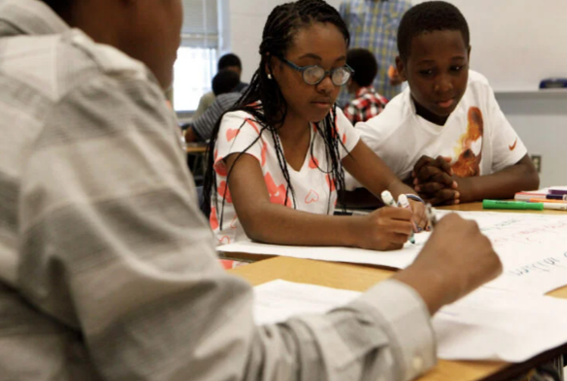
With new understanding of gifted neurodivergence and what people need, there’s a chance for greater protections to challenge them intellectually while providing opportunities for them to take risks, get needed supports, develop social-emotional skills (like resilience and frustration tolerance), and find a balance to live the life of a “whole person.”
Shine Smith, 13, and Chris Douglas, 13, are 2 of 50 students participating in a program reaching out to gifted students in pursuit of a college education. WHYY, Philadelphia and Delaware
Coming Up Next

As I think about all these aspects of neurodivergence — from synesthesia to giftedness, from autism to ADHD, from sensory overload to living in fear of rejection for who you are (many in the LGBTQ+ community) — I find myself thinking more about self-identity. We’ve known this since Freud, maybe Aristotle, that it takes a strong self-identity to survive and surmount the turmoil of our life transitions and find our place in society. Beginning with Post 33: Self-Identity: The Cornerstone of Neurodivergence, I’ll explore how our self-identities come to be and why we need to know about this toward improving our lives.
Sources
Copyright ©2026 Jan Swan
 English