On Neurodivergence and Otherness
Show Table of Contents
INTRO
1. On Neurodivergence and Otherness: An Introduction
SENSES AND SENSORY SENSITIVITIES
2. Senses Count
3. Neurobiology for Dummies
4. Sensory Transmission and our Reward System
5. Sensory Receptors are the Body’s Cellular Plan
6. A Synthesis: Sensory Systems and our Emotions — Part I
7. A Synthesis: Sensory Systems and our Emotions — Part II
8. Sensory Disorders and Sensitivities
9. Etan’s Story
SYNESTHESIA
10. Synesthesia: Difference, But Not Disorder
11. Synesthesia, Creativity, Artistry — Part I
12. Synesthesia, Creativity, Artistry — Part II
AUTISM AND THE NEURODIVERSITY MOVEMENT
13. From “Mental Defectives” to Autism Spectrum Disorder
14. Changing Conception of Autism
15. Autism Diagnoses and Behavior Patterns
16. Autism Treatments that Help
17. Early Start Autism Treatment: A Case Study
18. Neurodivergence and the Neurodiversity Movement
19. Neurodiversity Takes Flight
20. ADHD and Neurodevelopmental Disorders
21. ADHD: A Preponderance of Risk Factors and Symptoms
22. ADHD: Inattentive, Impulsive … and Hyperactive?
23. ADHD: Named, Renamed, Still Needs a New Name
24. ADHD: Treatment and Coping Skills for All Ages
LGBTQ+
25. Neurodiversity and the LGBTQ+ Fight
26. LGBTQ+ Identity and Expression
27. LGBTQ+ and Mental and Behavioral Healthcare
ON LANGUAGE
28. Language Matters In and Around Neurodiversity
29. Neuroinclusion and Disability Language
30. Neurodivergent Language Difficulties
ON CREATIVITY AND GIFTEDNESS
31. Neurodiversity and Creativity
32. Giftedness is a Piece of Neurodivergence
SELF-IDENTITY
33. Self-Identity: The Cornerstone of Neurodiversity
34. Early Theories of Self-Identity Formation
35. Contemporary Theories of Self-Identity Formation
36. Authenticity and the Search for Self
37. Self-Schemas and Neurodivergence
38. Self-Labeling and Parts Work
39. Complexity, Clarity, and Self
IMPROVING LIFE FOR NEURODIVERGENT PEOPLE
40. Empathy Recognizes and Navigates Difference
41. Reducing Neurotypical-on-Neuroatypical Conflict – Part I
42. Reducing Neurotypical-on-Neuroatypical Conflict – Part II
43. Communicating Across the Neurospectrum – Part I
44. Communicating Across the Neurospectrum – Part II
45. Neurodiversity: Advocacy and Education
46. Neuroinclusion in the Workplace
47. A Neurodiverse Lifestyle
IN CONCLUSION
48. In Conclusion: Neurodivergence and Inspiration
28. Language Matters In and Around Neurodiversity
Graphic: Shutterstock
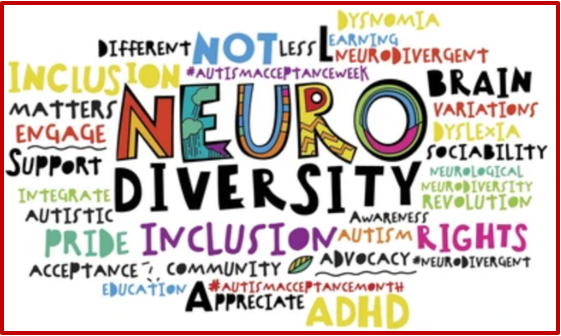
Neurodiversity is a paradigm shift in language and terminology — to
communicate a paradigm shift in understanding and celebrating difference. It promotes “otherness” in a dominate society that can be at times rigidly opposed to change and, remarkably at other times, open. It’s feeling the power of the new language to change mindsets and accept people no matter who they are, how they choose to live, and what they need to be a full part of the society we live in. How far we get depends on many factors, like where we live in the world.
Language reflects who we are as individuals and as a people in any given time — a private and public effort to define ourselves and not be defined by others. It’s a contemporary take on a historical journey our near and far ancestors traveled.
Language constantly shifts meaning as we evolve as people, but also divides us in mistrust, confusion, and fear. Either we honor one another in how we respect others’ language or pronoun preferences, or we disrespect one another by pejorative uses that show our biases and resistances.
For those of us who seek to propagate and build upon the neurodiversity paradigm – especially those of us who are producing writing on neurodiversity – it’s vital that we maintain some basic clarity and consistency of language, for the sake of effective communication among ourselves and with our broader audiences. Clarity of language supports clarity of understanding. —Nick Walker, Ph.D., “Neurodiversity: Some Basic Terms & Definitions,” Neuroqueer
Terms in Constant Flux
In writing the autism story [see post 18], I noted how the term was formed 100 years ago by removing the middle letters of AUToeroticISM, Freud’s debunked theory of pre-verbal infant consciousness. At the beginning of this century, autism became autism spectrum disorder (ASD). A person on the spectrum wasn’t an “autistic person.”
Now, as the culture accepts difference over disorder, we see a return to autism and autistic. It’s okay to be on the autism spectrum or simply AS — dropping the D for disorder. It’s also okay to define disabilities caused by autism to receive therapies or accommodations. According to Google, “There is no single, universally accepted language to describe ASD. Some people prefer to identify with identity-first language, while others prefer person-first language.”
Google’s meta-analysis:
- Autism spectrum disorder or ASD: The broader literature typically uses these terms.
- Autism: Many people still use this term.
- On the autism spectrum: The autism community highly endorses this term.
- Autistic: A large percentage of autistic adults, families, and friends endorse this term, but fewer professionals do.
- Person with autism: Almost half of professionals endorse this term, but fewer autistic adults and parents do.
Yesterday, my son was bipolar. Today he has bipolar disorder. Tomorrow he might be OR have … bipolar — full circle, as people see old things in new light, as pride replaces shame. Now, he’s comfortable with has bipolar, but maybe tomorrow he’ll prefer bipolar neuroatypical. I’m already okay with dropping disorder, even though I know this is a difficult condition with bouts of outright illness.
Sources: Mrs. Speechie P
My other son doesn’t like being labeled as ADHD because of the D. (I’ve invented the term AND for Attentional NeuroDivergent. So far my son and I like it.)
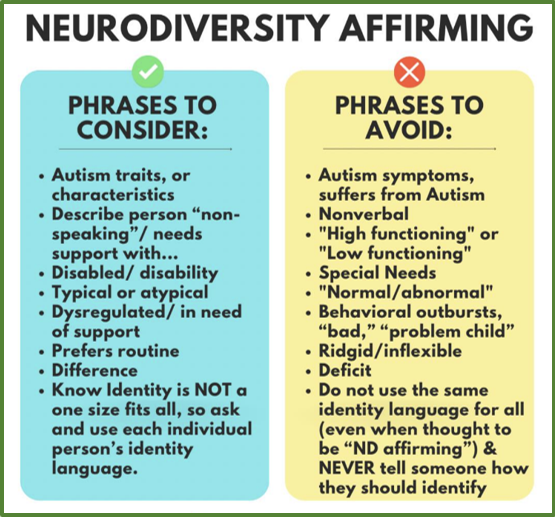
Obviously, terms conveying another era’s prejudices and ignorance can’t stand. The crippled of my childhood morphed into handicapped, then disabled. Differently abled had a brief surge but went the way of all ableist terminology, well-intentioned for its time — but off target. We’re now here with with disability — which may also be headed for the dustbin. The descriptor I’ve noted on health sites is with health conditions or impairments. Who can remember that!? Handicapped is still used to modify accessibility, as in handicapped parking — too expensive to change all those signs, perhaps.
Many reject newly drawn lines — from abnormal to neurodiverse — for not including all of us straight neurotypicals. If, in fact, neurodiversity as an umbrella term following the all-inclusive biodiversity example, then this omission doesn’t make sense. We are all neurodiverse by definition. But, as a social-political movement, being all-inclusive dilutes the argument. Same-sex marriage had to be exclusive — because the rest of us already had the right. Neurodivergent means different brain neurology from what’s typical, which by definition can’t include all of us.
Umbrella Terms with Elongated Acronyms
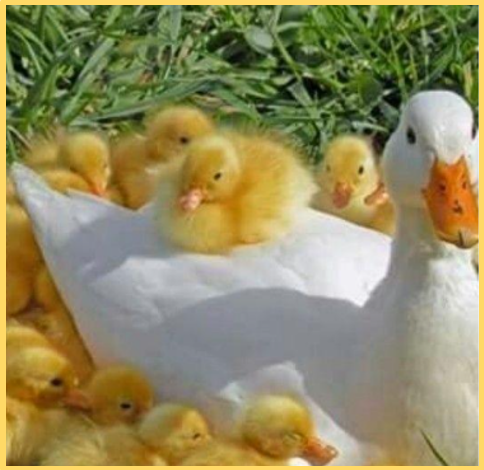
Umbrella terms start out with narrowly defined subsets of groups, like baby ducks under the wing of mama duck. But once her wingspan opens more widely to include other ducklings, let alone chicks from another species, the squabbling might get quite raucous. When the global autism community created the neurodiversity movement, debates and conflicts still arose [see Autism Wars, post 18]. Once other groups liked what they saw and adopted the language of neurodiversity, its definition expanded. Its force as a movement about the rights of people with “a-normal” brain circuitry turned into identity politics. Identity politics doesn’t necessarily bring diverse groups together under the umbrella but starts to divide them — and leaves people more uncertain as to where they belong.
Groups grapple with what to call themselves, balancing between being too inclusive so the boundaries are too porous, and risking being too tightly defined so others feel excluded. LGB adds T, adds Q, adds + once the A and I start to make the letter chain hard to remember. I can’t recall AANHPI (Asian American and Native Hawaiians/Pacific Islanders) — but after Asian Americans and Pacific Islanders, it’s easy to forget. Neither LGBTQAI or AANHPI roll of the tongue, but the terms are less about marketing and memorability and more about the power and identity of the group.
Gender Expansive
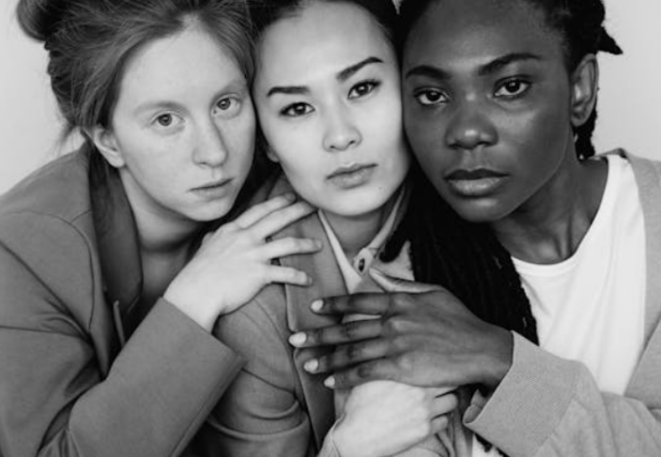
Photo: Pexels
Gender expansive is a term coined in 2012 after the Human Rights Campaign (HRC) surveyed 10,000 LGBTQ+ American youth and learned of their uncertainty about their gender identity and expression. It’s a flexible descriptor for people with a gender identity/expression or experience that neither aligns with their sex assigned at birth nor with the gender binary. Other terms with similar meanings include gender nonbinary, gender diverse, gender creative, gender independent, gender nonconforming, genderqueer, gender fluid, and androgynous.
The evolution of these terms tell a story that could be illustrated on a timeline — similar to the changing language of autism or disability over time. Today, the message to the world is, “Don’t you define me, don’t you put me in a box. I will describe myself by narrow or expansive terms — whatever I decide. That’s all you need to know, but we can talk.”
Belonging Uncertainty

Stanford University academics writing about DEI in a New York Times’ opinion piece noted, “An excessive focus on identity can be just as harmful as the pretense that identity doesn’t matter.” And, “I thought this quote about college campus DEI programs to be apt for neurodiversity.
Stanford University psychologists Geoffrey Cohen and Greg Walton coined the term belonging uncertainty to mean the “state of mind in which one suffers from doubts about whether one is fully accepted in a particular environment or ever could be.”
This afflicts all of us at one time or another, but it’s the everyday reality of minorities, ND, or LGBTQ+ students/ adults. Cohen, author of Belonging: The Science of Creating Connection and Bridging Divides, notes how it can be experienced at any age and in any situation — school, workplace, a “snooty restaurant, or even in a brief social encounter.”
Belonging uncertainty has adverse effects. When we perceive threats to our sense of belonging, our horizon of possibility shrinks. We tend to interpret ourselves, other people, and the situation in a defensive and self-protective way. We more readily infer that we are incapable or that we aren’t meant to be there, that we will not understand or be understood. We’re less inclined to accept challenges that pose a risk of failure. —Geoffrey Cohen, “Understanding and Overcoming Belonging Uncertainty,” Behavioral Scientist
An excessive focus on identity can be just as harmful as the pretense that identity doesn’t matter.… It shows all students [and ND or LGBTQ+ people] feel excluded from academic, [work, and civic] communities at one point or another, whatever their background. Belonging is a foundation for the shared pursuit of [humanity] and knowledge and the preparation of [all people, no matter their identity,] and students as citizens and leaders of a diverse society.” Geoffrey Cohen and Greg Walton, The New York Times [backets mine]
Belonging certainty is about identity. Some feel they belong once they see their literal representation in the group’s expanded acronym, but others accept an unmemorable mouthful can be solved by adding +. Still others feel it’s unnecessary to throw their identity into the big pot — they’re fine just as they are. But to be a movement, ND people need to belong and see themselves as insiders, as fighters, as deserving the same full rights and privileges of the neurotypical majority.
Neurominority, Normal, and Spikey Profiles
The final terms I’ll describe, within an ever-widening circle of terms beginning with “neuro,” are neurominorities, which science seems to prefer; normal, which is what you want when taking your temperature; and spikey profile, a term I wish I had when my children were in high school.
Neurominority
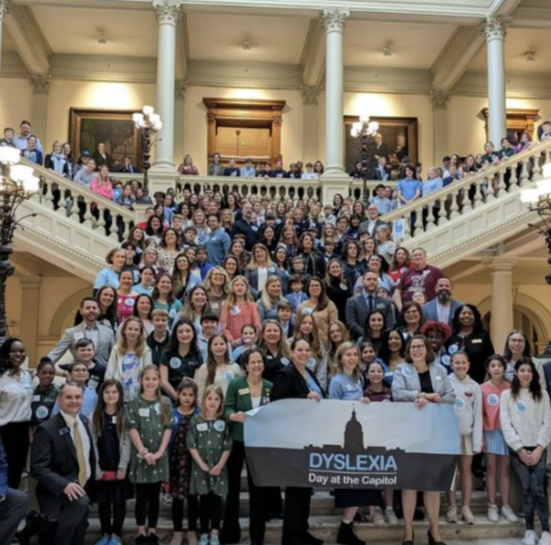
Within a lengthening neuro word list is neurominority, a term preferred by science. Neurominorities are groups with similar forms of neurodivergence — described as “innate, pervasive, and sometimes intense ways of being that have similar or related brain function and behavioral traits.” Autism is a neurominority, as are people with dyslexia or Down Syndrome. The neurodiversity movement is inclusive of all neurominorities.
It’s also possible to be neurodivergent without belonging to a neurominority — people whose ND conditions are not innate but acquired. Like people with traumatic brain injuries (TBI) or those who’ve altered neurocognition through heavy use of psychedelics or meditation practice.
Dyslexia Day at U.S. Capitol, organized by a grassroots organization, Decoding Dyslexia Georgia, Instagram
Understanding the importance of nomenclature, sensory sensitivity, and the lasting psychological effects of intersectional social exclusion is key for physicians wanting to interact confidently and positively with neurominorities. The proposed biopsychosocial model allows us to provide therapeutic intervention (medical model) and recommend structural accommodation (legislative obligation) without pathologization (social model)…. We can deal pragmatically with the individuals who approach us and strive for the best outcomes, given their profile and environment. —Jonathan Mooney, Normal Sucks: How to Live, Learn, and Thrive, Outside the Lines, Stimpunks Foundation
Normal
Jonathan Mooney, author of Normal Sucks, provides the perfect segue to the next word on my list. Normal has become an abnormal term, unless we’re taking our temperature. In the pathologizing of difference, it’s loaded. I came across Mooney by chance — and have now watched his YouTube talks. He’s deadly serious in an in-your-face kind of way, but also funny and sweet, recounting his personal journey from neglected ND youth to the inspirational writer and lecturer he is today.
‘Normal was created, not discovered, by flawed, eccentric, self-interested, racist, ableist, homophobic, sexist humans. Normal is a statistical fiction, nothing less. Knowing this is the first step toward reclaiming your power to define yourself, know yourself, and love yourself for who you are, not who you should be.
All societies have struggled with normal and, as French anthropologist Claude Lévi-Strauss wrote, have made the cultural “problem” of differences, anomaly, and abnormality central to every culture. Normal and its twin — not normal — are the “fundamental problems of the human condition.” We are all surrounded by institutions, systems, and cultural practices that demand and enforce normalcy…. I want you to be prepared. I want you to know how to live, and thrive, in a world that will at some point tell you, as it does us all, that you’re not normal because of what you think, how you look, who you love, how you learn, how you feel, how you behave, or what you believe.
I want you to know that normality is a problem to be struggled with, to be resisted, and ultimately, an idea to be rejected and replaced. And I want you to know, if those judges of normality wound you, like they have me and so many others, how to stitch yourself up and fight for a world that is not governed by those judges. When normal comes for you, I want you to be able to say what I couldn’t when it came for me. Normal sucks. —Jonathan Mooney, Normal Sucks: How to Live, Learn, and Thrive, Outside the Lines, Stimpunks Foundation
Spikey Profiles
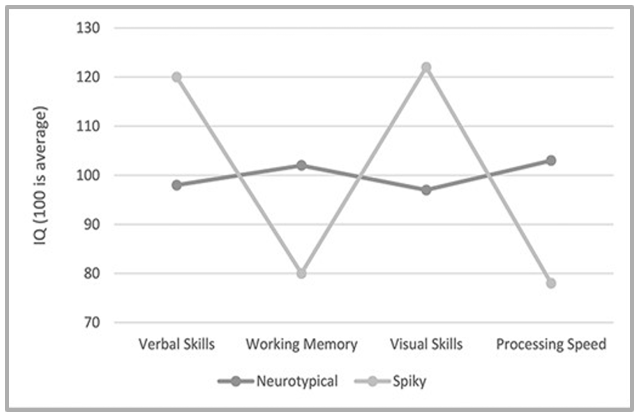
Spiky profile with IQ scores in British Psychological Society’s report in “Neurodiversity at work: A biopsychosocial model and the impact on working adults,” Nancy Doyle, British Medical Bulletin, 2020
Mooney also talks about psychologists and educators who have found a term to describe “neurodiversity within-individuals” as opposed to “between-individuals” — the range being within our cognitive ability, “wherein there are large, statistically significant disparities between peaks and troughs of the profile.” Mooney writes, an NT has cognitive scores falling within 1-2 standard deviations of each other, forming a relatively flat profile, regardless of the scores being average, above, or below. From flat to spiky, the ND profile is numerically distinct, as the diagram shows.
Most of us are average in functional skills and intellectual assessment. Some excel at all, some struggle at all, and some have spiky profiles — excelling/average/ struggling. Before I discussed my sons’ chaos brains. Now I’m thinking of Jaden and Etan’s spikey cactus brains — this is just how I would’ve visualized their mental report cards in their younger years.
Emerging research finds the spiky profile may be a definitive expression of neurominorities within which symptoms cluster into conditions like autism, ADHD, dyslexia, dyspraxia. Once corroborated, these findings might be a game changer for the neurodiversity cause, affecting how schools and workplaces see people with spiky performance ranges. Mooney adds, though there are clear biological markers for those with spiky profiles—and these lead to observable psychological differences—there’s nothing innately disabling about those differences.
Within the biopsychosocial model of neurodiversity, understanding work-related intervention and treatment becomes more about adjusting the fit between the person and their environment than about treating a disorder. Critical review of the extant biopsychosocial research supports the social model proposition that the individual is not disabled, but the environment is disabling. —Jonathan Mooney, Stimpunks Foundation [emphasis added]
The “Neuro’s” Describe Where We Are Now
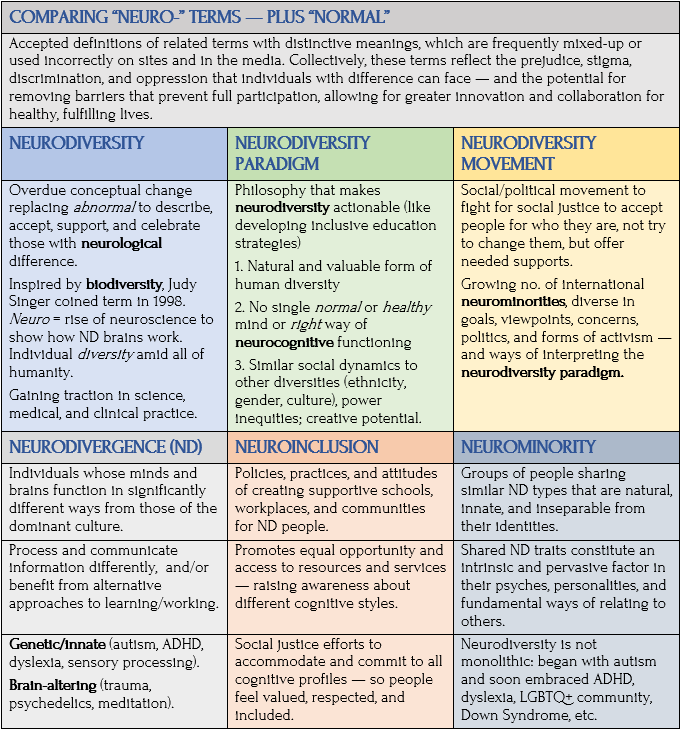
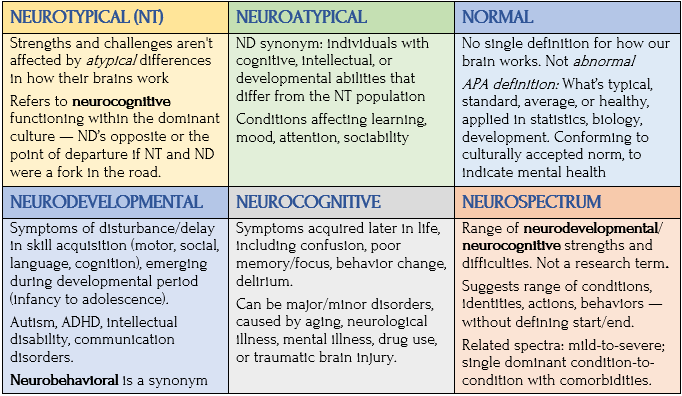
This next chart is a late addition to this post on language. I decided we needed a quick cheat sheet to sort out the terms, because they have specific meanings for people but are often mixed up and used incorrectly.
Coming Up Next
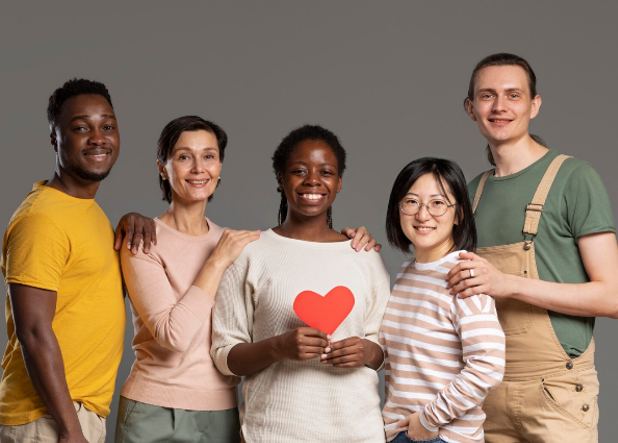
Post 29: Neuroinclusion and Disability Language is the second in a trio of posts on language. If we agree that words matter, then understanding why language frequently needs to change matters. Sometimes the terms and phrases seem labored and even annoying, but I get it totally. Newer terminologies elevate the discourse around the rights of others and respect for their dignity.

Photo: Pexels
Copyright ©2026 Jan Swan
 English