On Neurodivergence and Otherness
Show Table of Contents
INTRO
1. On Neurodivergence and Otherness: An Introduction
SENSES AND SENSORY SENSITIVITIES
2. Senses Count
3. Neurobiology for Dummies
4. Sensory Transmission and our Reward System
5. Sensory Receptors are the Body’s Cellular Plan
6. A Synthesis: Sensory Systems and our Emotions — Part I
7. A Synthesis: Sensory Systems and our Emotions — Part II
8. Sensory Disorders and Sensitivities
9. Etan’s Story
SYNESTHESIA
10. Synesthesia: Difference, But Not Disorder
11. Synesthesia, Creativity, Artistry — Part I
12. Synesthesia, Creativity, Artistry — Part II
AUTISM AND THE NEURODIVERSITY MOVEMENT
13. From “Mental Defectives” to Autism Spectrum Disorder
14. Changing Conception of Autism
15. Autism Diagnoses and Behavior Patterns
16. Autism Treatments that Help
17. Early Start Autism Treatment: A Case Study
18. Neurodivergence and the Neurodiversity Movement
19. Neurodiversity Takes Flight
ADHD
20. ADHD and Neurodevelopmental Disorders
21. ADHD: A Preponderance of Risk Factors and Symptoms
22. ADHD: Inattentive, Impulsive … and Hyperactive?
23. ADHD: Named, Renamed, Still Needs a New Name
24. ADHD: Treatment and Coping Skills for All Ages
LGBTQ+
25. Neurodiversity and the LGBTQ+ Fight
26. LGBTQ+ Identity and Expression
27. LGBTQ+ and Mental and Behavioral Healthcare
ON LANGUAGE
28. Language Matters In and Around Neurodiversity
29. Neurodivergent Language Difficulties
30. Disability-Inclusive Language Guidelines
ON CREATIVITY AND GIFTEDNESS
31. Neurodiversity and Creativity
32. Giftedness is a Piece of Neurodivergence
SELF-IDENTITY
33. Self-Identity: The Cornerstone of Neurodiversity
34. Early Theories of Self-Identity Formation
35. Contemporary Theories of Self-Identity Formation
36. Authenticity and the Search for Self
37. Self-Schemas and Neurodivergence
38. Self-Labeling and Parts Work
39. Complexity, Clarity, and Self
IMPROVING LIFE FOR NEURODIVERGENT PEOPLE
40. Empathy Recognizes and Navigates Difference
41. Reducing Neurotypical-on-Neuroatypical Conflict – Part I
42. Reducing Neurotypical-on-Neuroatypical Conflict – Part II
43. Communicating Across the Neurospectrum – Part I
44. Communicating Across the Neurospectrum – Part II
45. Neurodiversity: Advocacy and Education
46. Neuroinclusion in the Workplace
47. A Neurodiverse Lifestyle
IN CONCLUSION
48. In Conclusion: Neurodivergence and Inspiration
27. LGBTQ+ and Mental and Behavioral Healthcare

LGBTQ+ individuals are resilient, strong, and able to do well despite what happens around them, if they have supportive families,communities, and peers. Still, there’s risk for people without such support to experience abuse, discrimination, social exclusion, poverty, and mental disorders — due to the circumstances of their lives or perhaps confusion around their sexual/gender identities. Feeling shame, fear, unsafe, or experiencing a traumatic event can increase the risk of mental health conditions and make everyday life seem an overwhelming struggle.
Discrimination is often the reason LGBTQ+ people might hesitate to seek mental healthcare,especially if they’re younger, find it difficult to access care, or have previously been poorlytreated in healthcare settings.
Despite this, LGBTQ+ individuals who need professional help shouldn’t soldier on without it. Individual and group therapy not only helps alleviate symptoms,but it fosters supportive community. A psychologist trained in LGBTQ+ mental and behavioralhealth can help direct individuals to targeted therapies, treat anxiety or depression before they become aggravated conditions, or simply help find paths toward a fulfilling life. Now with online therapy, even geography and affordability can be managed.
Coming Out

A significant, often difficult decision is coming out to parents, family/friends, at school/in the workplace. Feeling safe is highly personal. It’s intimidating to guess how people are going to react. One source I read noted also entails a level of privilege not necessarily available to everyone. In fact, many LGBT youth accept their same-sex desires or gender identity at puberty or before — similar to how straight teens become aware of their sexuality — free of any notion of difference, stigma, or shame in terms of the gender of those to whom they’re attracted. And like straight teens growing into their sexuality, LBGTQ+ teens want to face their futures free of the stigma of difference and free to be who they are and love who they love. They intend to come out at some point in their lives, mostly during high school or college.

I came out to my parents last year. When I told them, they started asking awkward questions that, if I were talking about a boy, they would never ask. Like, “Are you attracted to her?” Ummm, yeah. I thought my mom would be more understanding because she was on a softball team, and there were maybe three straight women…. But they didn’t let me bring a girl home for dinner, and I’m not allowed to tell my sister. And my mom was like, “Just because guys don’t like you doesn’t mean girls will.” —Emily, 20, Minneapolis, Glamour
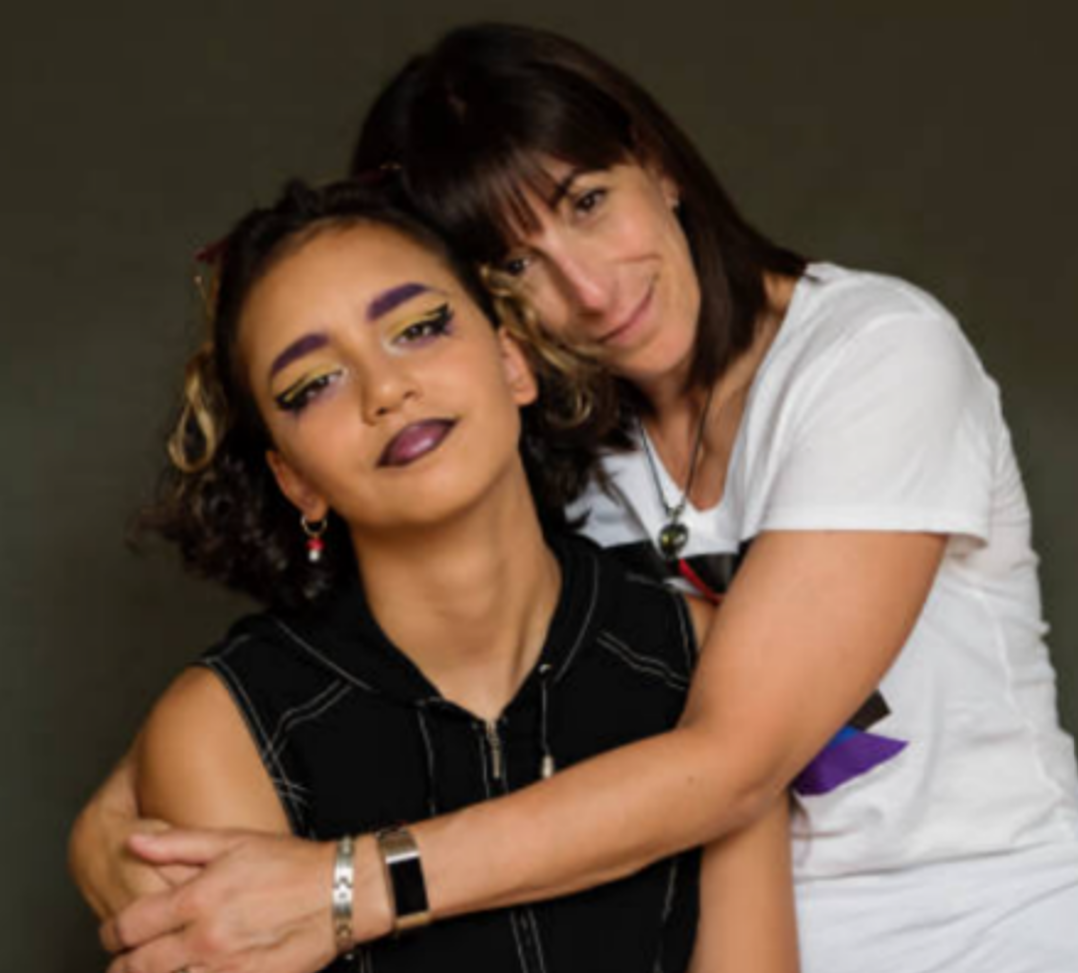
Emily, Glamour. Photo by Laurel Golio
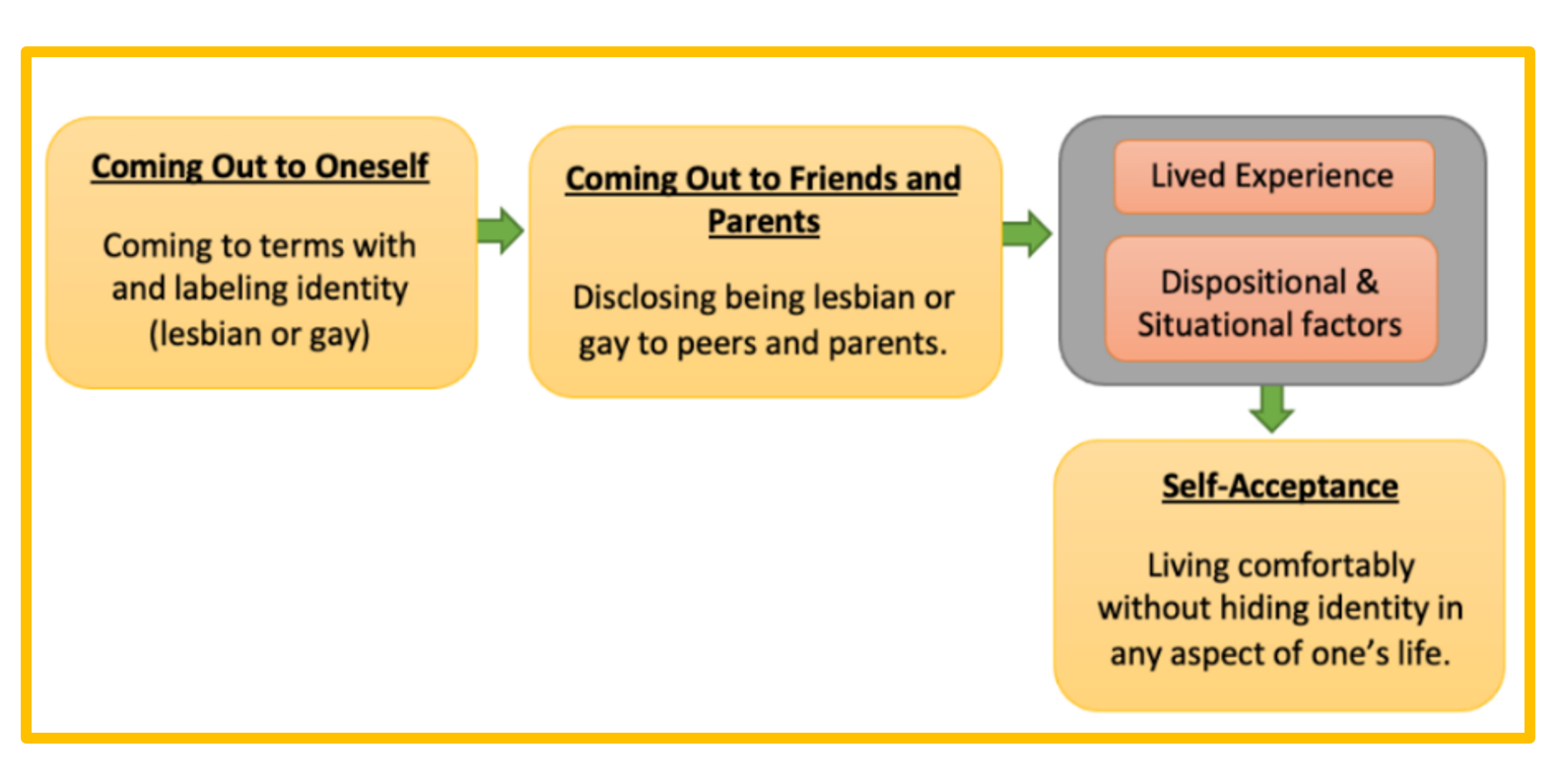
Source: Archiane Fernandeza, “True Colors: The Lesbian and Gay Youth Lived Experience of the Coming Out Process in Aklan,” 2023, International Journal of Applied Sciences
Parents and others may withhold love and support, rejecting what they don’t understand. Despite positive social trends, rejection can be traumatic.
- 40% of LGBT adults experienced rejection from family/close friends.
- 86% of LGBTQ youth were harassed/assaulted at school.
- Comparing healthy parent child relationships to those with strained relationships: 3.4X were more likely to do illegal drugs, 8.4X to attempt suicide, 6X to be depressed, 3.4X have unprotected sex.
Most teens don’t trust or ask for help because of the threat of discrimination, social isolation, shame, stigma, rejection. They might not confide in their parents because of the stakes. Research into gay/lesbian youth confirms gender identity is affected by family conditions and the environment of school, society, work, and media — especially in conservative areas.
HOW TO COME OUT

There’s no one way to come out. Mental health experts suggest three phases as a guide to finding the
least stressful, most comfortable way:
- Knowing oneself: The first phase is to come out yourself by recognizing your sexual and emotional attractions. This “internal coming out” can occur as a child or teen, but sometimes later, as an adult.
- De-masking makes it easier to meet those with similar feelings, which builds self-esteem, closer relationships, and connection to the LGBTQ+ community.
- Decision-making: The second phase is making the decision to come out to family, friends, and/or colleagues and taking the risk to do so.
- Living openly: The third phase involves living openly as an LGBTQ+ person. Research shows living authentically reduces suicidality, decreases stress biomarkers (blood pressure, cortisol, adrenaline), and has a positive effect on all aspects of life.
The development of a lesbian, gay, or bisexual (LGB) sexual identity is a complex and often difficult process. Unlike members of other minority groups (ethnic and racial minorities), most LGB individuals are not raised in a community of similar others from whom they learn about their identity and who reinforce and support that identity. Rather, LGB individuals are often raised in communities that are either ignorant of or openly hostile toward homosexuality. —Wikipedia
HOW TO COME OUT

Karine Jean-Pierre, the first Black and openly queer White House press secretary. Source: Getty, The Pink News
As reported in The Pink News, Karine Jean Pierre made history as the first Black and out LGBTQ+ person to become White House press secretary. On 9/11/2022, she tweeted her coming out story to 2.4 million followers. In the video, with 75,000 views, she said it wasn’t easy with a “traditional and conservative” family. It “wasn’t something you mentioned out loud or celebrated. But my family, like many many other families, grew to accept who I was. They saw who I was didn’t change who I was as a person, and it didn’t change the things I liked to do, and it didn’t change the goals I had for my life.”
The beauty of America is its freedoms and the promise that you can achieve your dreams no matter your race, sex, country of origin, sexual orientation, or gender identity…. Don’t feel discouraged if you come out and your family doesn’t embrace you right away. Love always wins! —Karine Jean-Pierre, The Pink News
Karine Jean-Pierre, the first Black and openly queer White House press secretary. Source: Getty, The Pink News
Models of Sexual Identity Formation and Coming Out
Historical models of sexual identity formation and integration describe coming out as a sexual minority process only. More contemporary models see it as a universal process — since straight populations develop the same way. James Marcia’s identity status trajectories [also see post 35] set the stage for today’s thinking.
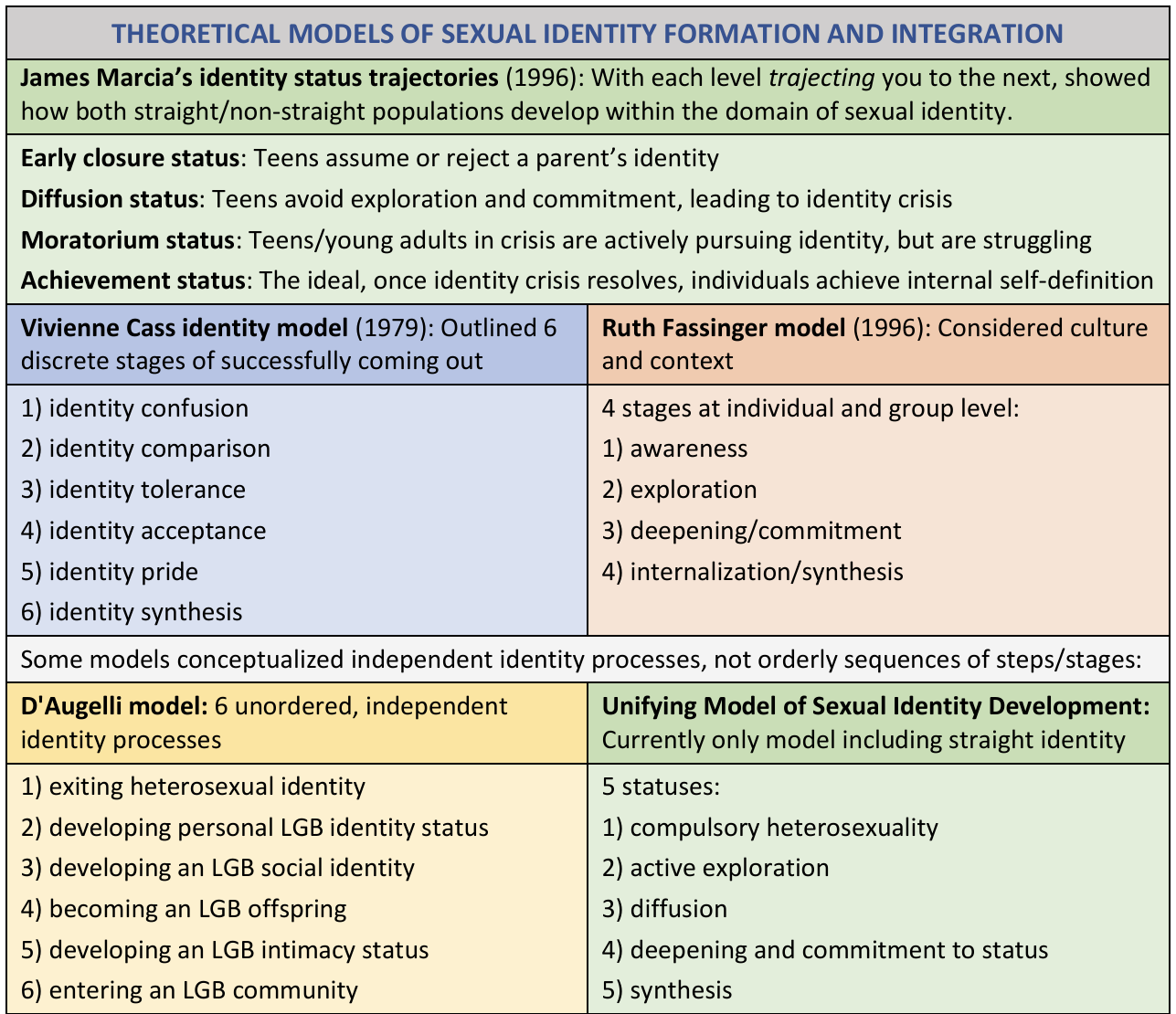
Photo: Wikipedia
Behavioral Health Evaluation and Treatment Options
Healthcare Discrimination and Lack of Access [sm hed]

Photo: Shutterstock
According to Mental Health America, evidence for why LGBTQ+ people seek mental healthcare is — above all else — the effects of discrimination, cultural insensitivity, violence, and stigma. For teens, this includes coming out to unaccepting parents or social rejection/school bullies.
And yet, medical/mental healthcare is often inaccessible and LGBTQ-sensitive professionals are in short supply. Many LGBTQ+ individuals are denied services, aren’t seen as having legitimate relationships, need to educate providers about their identity or have it questioned or denied. They worry about breaches of confidentiality by school, work, or healthcare professionals. For LGBTQ+ youth, this includes being discovered by parents and other authorities.
- A study found LGBTQ+ individuals were 2.5X more likely than peers to use mental health services.
- 3/10 faced difficulties the prior year accessing needed medical care due to cost, including 50% of trans people. 16% overall and 40% trans people avoided preventive screenings due to discrimination.
- 14% percent of LGBTQ people experienced a visibly uncomfortable doctor/provider due to actual/perceived sexual orientation (14%); harsh or abusive language (8% percent); doctor/provider intentionally refusing to recognize family members (8%); or unwanted physical contact (7%).
- Transgender individuals faced unique obstacles to accessing healthcare, including 1/3 who had to teach their doctor about trans issues to receive appropriate care.
Despite this, it’s worth the effort to find LGBTQ+ professionals or sensitive professionals to help people, especially young people, to de-pathologize emotional distress, difficult thoughts, and behaviors — and navigate straight/NT environments. An excellent resource is the Trevor Project‘s Breaking the Barriers to Quality Mental Health Care for LGBTQ Youth.
Mental and Behavioral Health Evaluation [sm hed]
The first step is to get a neuropsychological assessment to identify individual needs. Therapists who conduct these need expertise in gender dysphoria/nonconformity, nonbinary gender identity, and working with the LGBTQ+ population. Here’s what they look for:
- Goals, risks, and expectations of treatment
- Degree of social support and protection
- Mental health, impact of gender identity, including minority stress, risk-taking behaviors
- Body dysmorphia, especially in gay/bisexual men; sexual health concerns
Therapeutic Treatment
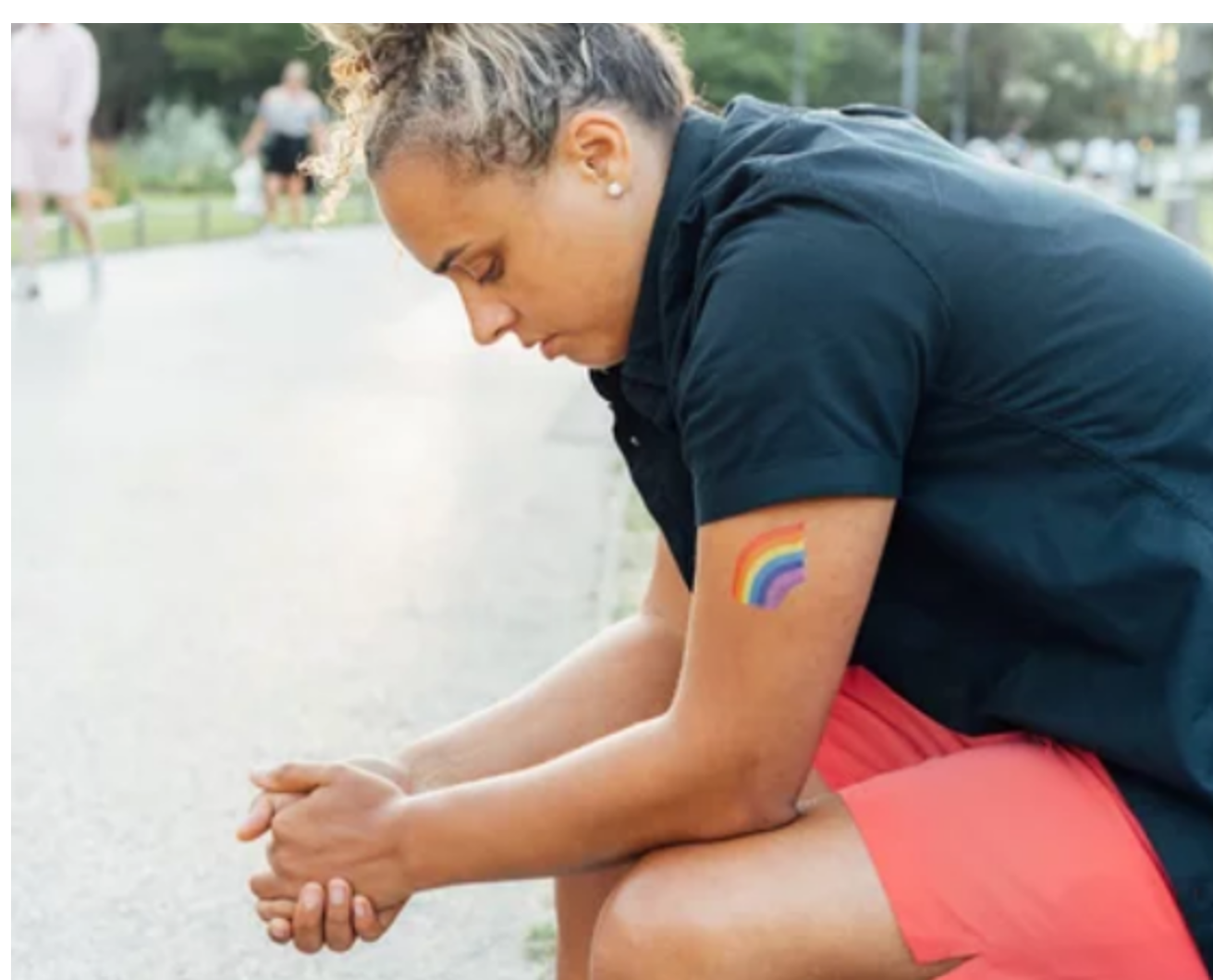
Source: Minus18
Based on the assessment, therapist and individual seeking help create an individualized treatment plan, one with a safe space assuring confidentiality.
A note about the discredited, pseudoscientific practice called conversion therapy, because it actually persists in some isolated and hyper-religious corners of society. It targets vulnerable LGBTQ+ youth, attempting to turn
them straight. It’s outlawed in nearly half the U.S. states. Healing/supportive therapy explores gender identity and expression and lessens gender dysphoria. It helps with minority stress and social/legal/medical issues, options related to coming out, healthy sexuality (especially if transitioning), finding a support network, and learning to self-advocate.
Other supports include CBT groups for social anxiety and social skills, education/career counseling, parent training, nutrition counseling, and addiction services.
Transgender and Transitioning

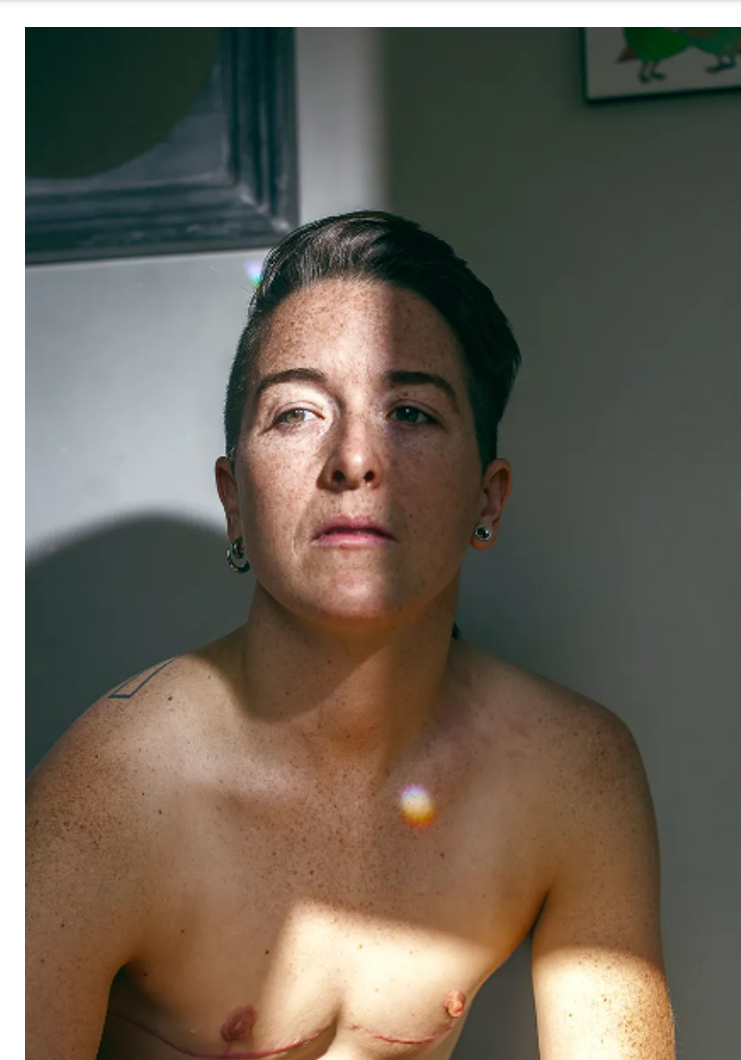
Gender dysphoria is diagnosed if someone feels great distress for at least six months, at odds with their gender identity and assigned sex at birth, and
inappropriate in that gender role.
Trans people typically feel more than simply out of sync with a stereotypical gender role — they have a strong, persistent desire to be a different gender.
Treatment helps them explore their gender identity and find what feels comfortable, easing short-term distress. Over time, treatment options can be changing gender expression, body modifications, hormone blockers, hormone replacement therapy (HRT), and/or surgery.
Treatment approaches are based on personal goals, a risk-benefit evaluation of medication, presence of other conditions, and consideration of social/economic issues. Therapists usually suggest individuals experience living for a time in a gender role consistent with gender identity before taking life-changing options, which can cause irreversible permanent changes, even if process is discontinued. World Professional Association for Transgender Health provides criteria for hormonal/surgical treatment of gender dysphoria:
- Persistent, well-documented gender dysphoria.
- Capacity to make a fully informed decision and consent to treatment.
- Legal age in a person’s country. If younger, standard of care for children and adolescents.
- Reasonably controlled medical or mental concerns.
Not all trans individuals choose to, or have the option to, transition with medication or surgery.
Mayo Clinic notes additional criteria apply to some surgical procedures. A medical doctor experienced in transgender care conducts a pre-treatment medical evaluation to rule out/address medical conditions that might affect these treatments. It can also help manage tobacco/drug/alcohol use, test for HIV, provide options for fertility preservation, and document potentially harmful treatments (unprescribed hormone use, silicone injections, self-surgery).
Photographer Melody Melamed intended her portraits to “…touch people,” she said. “In a way, this is more for people who are experiencing this transition, specifically people I photograph. I know there are plenty of trans men and women who I’m sure can identify with these people and these images. Even if you’re not trans, I hope that you can get a sense of understanding this is real, this is existing. It’s powerful stuff and we should take it seriously.” The Cut
Making Sense of Hormones/Neurohormones, Hormone Blockers/HRT (GAHT)

Source: Mayo Clinic
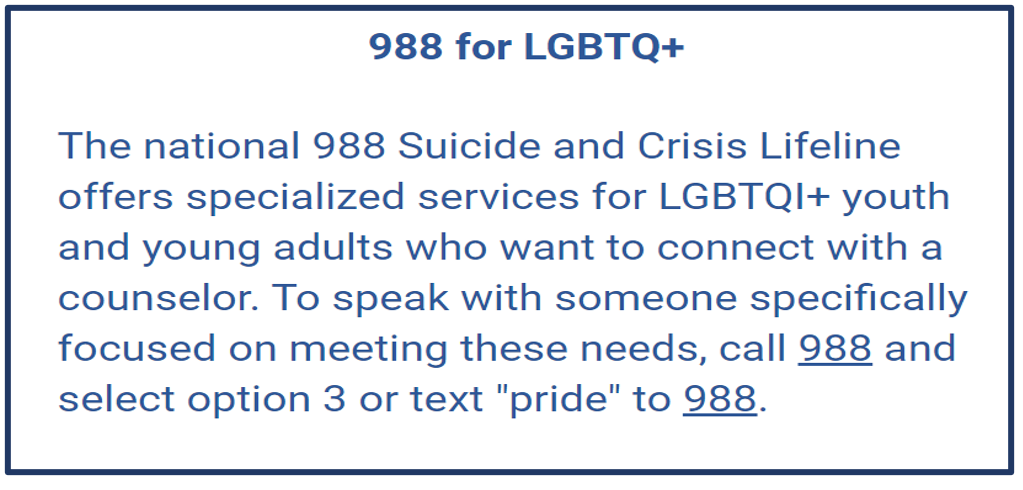
988 for LGBTQ+
There’s a hotline specially for LGBTQ+ people or anyone who senses someone is having a difficult time.
Source: American Psychiatric Association
For Those Caring for or Supporting Someone Else

Learn who they are: We are responsible for our own education — it’s not up to LGBTQ+ people to make us comfortable. But we should talk to people to learn about them. A lesbian couple might want to talk about their professional lives. A nonbinary person may want to talk about their personal journey. Listen. Be genuine.
Respect and privacy: We all want to be accepted and treated with respect. The first step is to be a good ally — even if you don’t identify with their choices. Be open-minded and ask about them without judgment, but tread carefully. Everyone has a right to their privacy. Don’t ask trans individuals about transitioning.

Use the right language and pronouns: Language changes, so be willing to make mistakes, and try again without being defensive or receding. Use preferred terms, names (also for partners), and pronouns.
Make no assumptions about gender. You can’t tell anything by looking at someone.
Coming Up Next
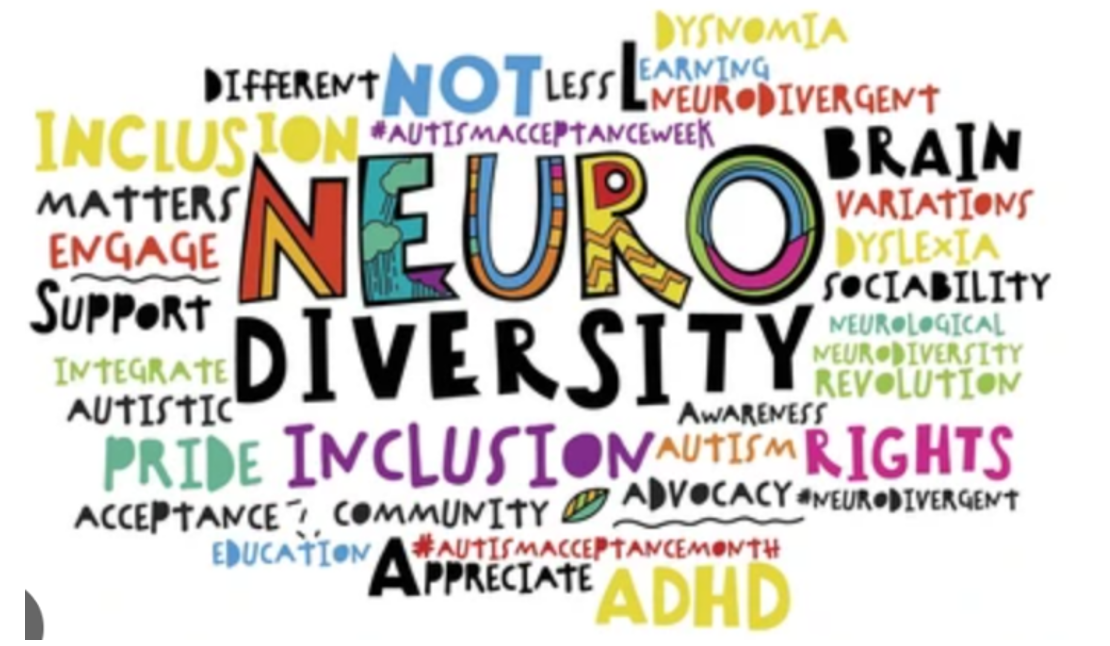
Language is the subject of the next several posts. Post 28: Language Matters In and Around Neurodiversity shows how language changes, sometimes radically, from year to year, struggling to keep up with fast-moving societal changes in science, norms, values, preference, and law.
Changing language can be a minefield for a writer. A misstep can inadvertently cause
more misunderstanding or hurt. Whether it’s about descriptive terms, pronouns, ethnicity, or inclusive acronyms to stand for a heterogenous subgroup, I’m all for it. Because terms historically were about subjugation, superiority, and division, we need now to opt for accuracy and compassion in how we use terms, how we communicate in general, and the solidarity we can show when we get it right.
Sources
Copyright ©2026 Jan Swan
 English