
Narcissism and the Rest of Us
Show Table of Contents
INTRODUCTION
NARCISSISM DEFINED
2. Is There a Narcissist in Your Life?
3. Narcissus and the Origins of Narcissistic Thought — Part I
4. Narcissus and the Origins of Narcissistic Thought — Part II
5. Narcissus and the Origins of Narcissistic Thought — Part III
NARCISSISTIC DEFENSES
6. A Narcissist’s Self-Defense — Part I
7. A Narcissist’s Self-Defense — Part II
8. A Narcissist’s Self-Defense — Part III
NARCISSIST PERSONALITY DISORDER VS TRAITS
9. When Narcissism is a Personality Disorder
10. Narcissism and the Maladaptive Umbrella
11. Malignant Narcissism and the Narcissism Spectrum
12. When Narcissism is Compounded by Comorbidity
NURTURE VS NATURE
15. Narcissism: Flipping Self-Esteem on its Head
16. The Double-Edged Sword of Grandiose Narcissism
NARCISSISM’S DARK SIDE
19. Narcissistic Rage and Narcissistic Self-Awareness
20. Trait Narcissism and the Illusion of Control
21. Beyond Narcissism: Dark Personality Traits — Part I
22. Narcissist Sociopaths: Dark Personality Traits — Part II
ROMANTIC LOVE AND BOUNDARY-SETTING WITH A NARCISSIST
23. Romantic Love with a Narcissist — Part I
24. Romantic Love with a Narcissist — Part II
25. The Narcissist’s Non-Apology Apology
26. Boundary-Setting with Narcissists — Part I
27. Boundary-Setting with Narcissists — Part II
28. Boundary-Setting with Narcissists — Part III
29. Shattering Narcissus’ Mirror… So They Can Live
CONCLUSION
30. On Narcissism: What About the Rest of Us?
19: Narcissistic Rage and Self-Awareness

Photo: Alan Vernon/Getty Images, from Daniel Jones and Miya Lee, “Tell Us About a Moment of Regrettable Rage,” The New York Times
Narcissism is scary to the rest of us because the narcissists we know are predictably unpredictable. We can expect conversations to go awry because things we say are wildly misinterpreted and then misremembered for all time — randomly pulled out at moments of conflict to inflict maximum damage. If we make a mildly critical statement, like “You don’t respect my boundaries,” the narcissist uses an effective defensive maneuver, say, blame-shifting, and responds, “You’re the one who doesn’t respect boundaries!” It’s you, not me. A sense of righteousness is only matched by a sense of being wronged. Reactions can be off-point, accusatory, snide, sarcastic, indignant, or plain angry — but every once in a while turn into rage. For anyone who hasn’t been the brunt of narcissistic rage, consider yourself lucky.
So far in writing this series, I’ve found the standout insights for understanding narcissistic behavior at its most extreme to be the following:
- Narcissistic injury [post 8]
- Grandiosity’s double-edged sword of rivalry vs admiration [post 16]
- Aggression in the face of ego-threat [post 15]
- Researcher Mitja Back’s insight about narcissism’s wobbly self-esteem issues [post 15]
This post will add to this list with discussion of the observing ego, narcissistic self-awareness (do narcissists know they’re narcissists?), and narcissistic rage.
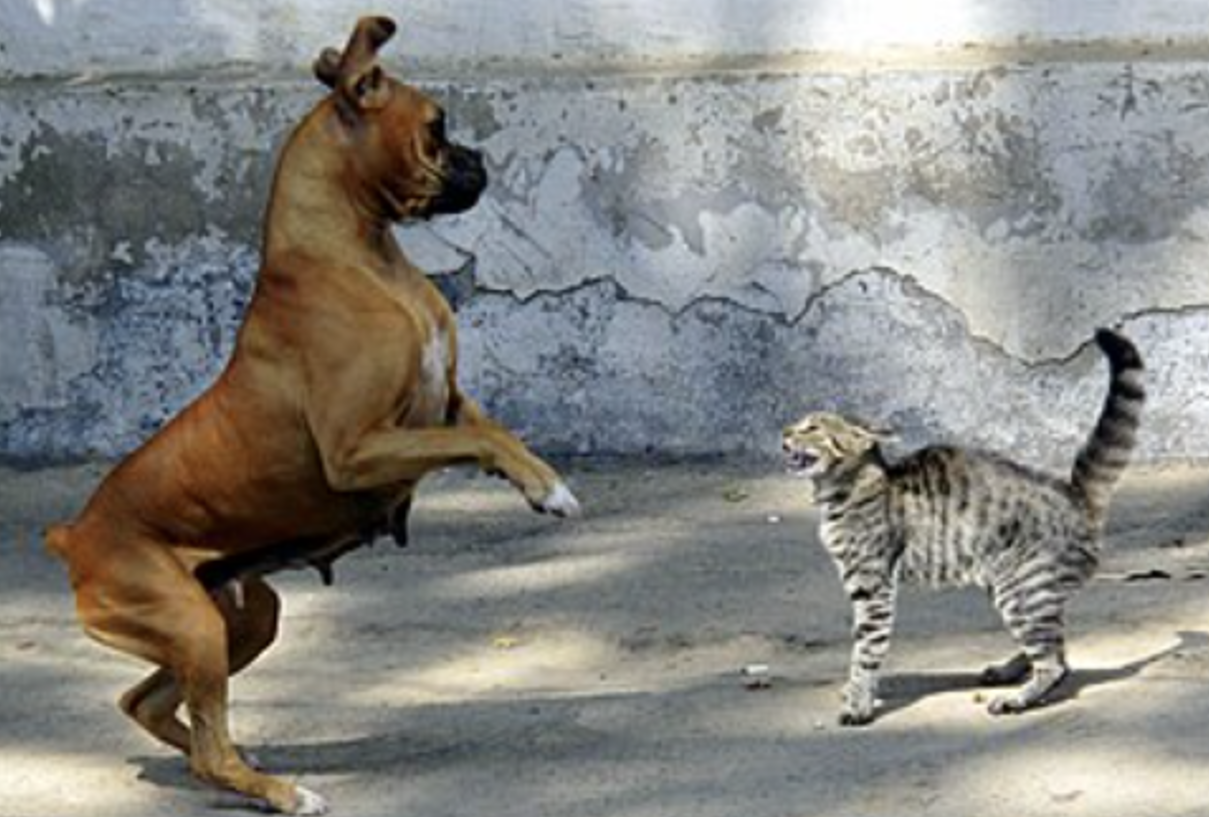
Fight or Flight Response (FFR). Photo: Wikipedia
Armed with these insights, we might improve how to talk and react to the narcissists in our lives, despite themselves, it seems sometimes. Here’s Back’s insight:
A narcissist’s inflated self-view is fragile and unstable, requiring constant self-regulation processes to maintain and protect it from threats. These processes are not about building healthy self-esteem, but about managing a precarious internal state that vacillates between grandiosity and vulnerability. —Mitja Back, quoted by researchers Stathis Grapsas and colleagues, “The Why and How of Narcissism: A Process Model of Narcissistic Status Pursuit, PubMed Central/NIH.

South African crested porcupine family. Photo: Instagram
A precarious internal state that vacillates between grandiosity and vulnerability. We might remember these words the next time we’re lured into engaging with a narcissist when they’re raging. At the height of their rage, we can’t expect lowered defenses. We can’t speak our truth and trust it can be heard as intended. It’s not the time for genuine exchange. The narcissist has too much to lose, would feel too exposed — when what they want is to bend our will to their needs.
It takes courage to deal with people who make us want to fight or flee — to see their conflict as about them and not us.
It takes courage to deal with people who make us want to fight or flee — to see their conflict as about them and not us. Rather, we need to observe as dispassionately as possible, stop feeding their narcissistic supply, and snuff out the rage like depriving fire of oxygen.
A therapist told me hugging a narcissist is like hugging a cactus. I said, more a porcupine — because you don’t just get stuck, the quills are fired at you. But I hold out hope. I wish to hug my narcissist out of love and feel their love back, not their quills.
I keep trying to figure out what I’m doing wrong. Who I am. Who I should be. The part of me — the child, the emotional self, the repressed shadow, in my case, clueless, desperate — is either ready to give up or get plain angry out of total helplessness. It does control my actions, to a degree … so I seem to be broadcasting threats and demands, constantly. I do make insane demands, threaten and try to control people close to me, and constantly strive for “validation” — narcissistic supply — while it never seems to satisfy me.
Well, yeah. Because I can’t receive it. All I can do is use social norms as an orientation for what I’m worth.

Photo: Guideposts
I try to enhance my status because the assumption is I’m still doing something wrong. Nobody seems to feel like sending me a desperately needed signal of “I see YOU. You exist. And you’re okay… I guess?”
People who are objectively much, much worse — judged by their adherence to rationally comprehensible social norms and achievements compared to mine — seem to get this validation and agreement all the time. Just how terrible of a failure must I be? When the frustration finally flips the situation from desperation to defiance, just how stupid, inane, incompetent, and blind must everyone else be to misjudge me like that, to treat me so cruelly? If I can’t win by being good, alright. Let’s play this game. Let’s see who’s better. You can’t hurt me any more than YOU already did. I’m immune and not a crybaby like YOU people.
My mind is a fricking terrawatt railgun, and YOURS is a butterknife. I shouldn’t have been so mean. I am much, much better at being an asshole than all of YOU together. Sound like narcissistic rage? It is. That is pretty much how I feel when I get nasty. Which happens as soon as I feel “justified.” The bad thing here is — it works. I have never met anyone who would not immediately submit as soon as I start raging. So the signal is, again, okay, so the only way to get anything close to validation seems to be a massive overdose of orchestrated dominance. Ta-da! Narcissism. —Esch’thon, “Narcissism and Empathy,” Medium
What powerful words. But we see Esch’thon slide from profound self-awareness to wounded narcissist, unable — unwilling? — to prevent the train from jumping the tracks. They don’t quite appreciate what they could do to win the validation they so desperately want, minus manipulation and cruelty. This is a very real self-profile of the “precarious internal state” of the narcissist Esch’thon.
The Observing Ego
The narcissist’s emotional maturity development has become paralyzed somewhere between ages 5-7. Narcissists don’t have the ability to have “observing ego,” therefore are prone to “knee jerk” reactions that are aggressive, abusive, violent, and vengeful — unlike emotionally stable and healthy adults. The narcissist doesn’t learn how their behavior affects other people despite the people they lose or the disasters they create.
There’s always justification or excuse for the behavior. The classic narcissistic admission of bad behavior is: “I did it because I was angry.” The narcissist truly believes this is reason enough, regardless of the damage, distrust, and consequences. Empathy is non-existent to the severely damaged individuals lined up during a tirade. Trust me, it’s not personal: sadly narcissists simply don’t have the inner resources to feel anything but their own pain. —Clinical psychologist Jamie Turndorf, PhD, relationship expert, author
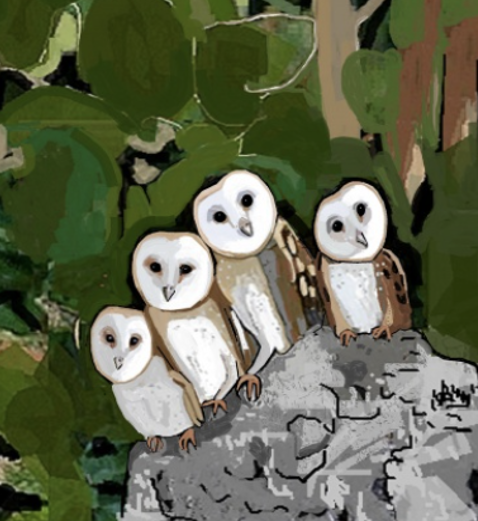
Image: Public Domain Pictures

The psychoanalytic concept of an observing ego — developed in 1965 by psychologists Arthur Miller, Kenneth Isaacs, and Ernest Haggard — is our ability to step back and reflect on our thoughts, emotions, and behaviors. But this essential life skill seems to be missing in high narcissism — the path blocked toward a robust and resilient observing ego. Just as the 90-lb weakling doesn’t stand a chance against the weightlifter, the high narcissist doesn’t have the “mental agility to engage in honest, non-judgmental self-reflection required for growth,” Turndorf writes. She offers the following explanations. Maybe the narcissist:
Graphic: From a Charles Atlas ad, 1940s, Medium
- Has an idealized “false self” that would be ego-threatened by admitting to vulnerability or shame.
- Isn’t motivated to change because they believe their behaviors are justified and beneficial.
- Over-relies on defense mechanisms [see post 6, post 7, and post 8] to safeguard against painful self-reflection.
- Might cognitively understand their narcissism, but rarely has emotional insight or empathy for the pain they cause others.
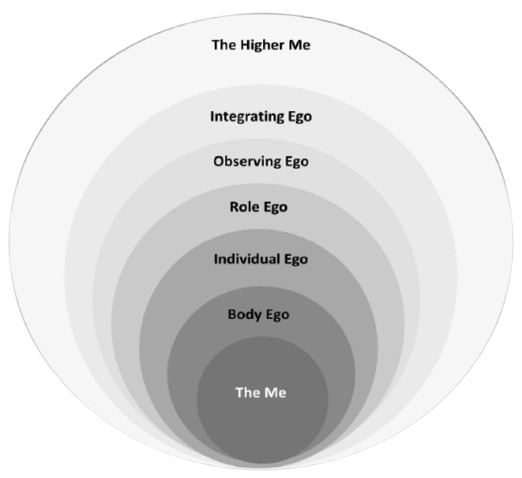
Personality development is depicted as a series of “ego-aspects,” ranging from “The Me” to “The Higher Me.” The observing ego is formed after age 2 and lasts a lifetime. It assimilates the 3 previous ego-aspects, which start when life does. Graphic: Bodynamic International
We can strengthen our own observing ego — that is, if we want to gain more insight into ourselves, build self-confidence, and help us make choices consistent with our values and goals. For the inclined, this can involve practicing self-reflection techniques, like those learned in cognitive-behavioral therapy (CBT):
- Mindfulness meditation, journaling, identifying emotional triggers: Such practices can deepen understanding of things that consistently provoke strong emotional responses — so we can prepare mentally and emotionally to respond calmly.
- Monitoring self-talk:Replacing self-criticism (“I’m not good at this.” “I can’t do that.”) with a more compassionate and positive internal voice can build self-confidence and self-respect. Or: avoiding unsupportable grand statements with too many superlatives (“I’m the best writer, artist, baseball player.” “Only I can fix it.”) — creating unrealistic expectations that inevitably leads to disappointment — and also has an off-putting effect on others.
- Seeking constructive feedback:Asking trusted friends, family, or work colleagues for honest perspectives on how we behave and are perceived — without becoming defensive. This can reveal blind spots.
- Separating facts from interpretation: Honing internal self-assessment skills, as a sense of self may be overly dictated by the opinions of others.
- Overcoming external or lifestyle barriers: Like, no time to reflect, distractions, lack of trust-worthy feedback, or being raised in an environment where “feelings” are frowned on or it feels unsafe to be different. This can change habits of emotional suppression or masking.
- Making promises we will keep to ourselves or others, we build self-respect, feelings of competence, and ability to complete tasks — and don’t let others down.
- Resisting faulty negative assumptions about the future: By overcoming our natural negativity bias, we can prevent negative expectations from spiraling out of control and derailing our motivation and actions.
- Eliminating “giving up” statements that cause us to abandon something because of frustration or potential failure. “I can do this!” is motivating and increases self-confidence and feelings of effectiveness in the world.
The last three points were made by Jennifer Guttman, Psy.D., “How Observing Your Ego Can Improve Your Social Functionality,” Psychology Today. She describes observing ego as a critical component of our social functioning. She also advises us to observe our ego when we’re alone, “because our brain is listening to us.”
For high narcissists, researchers and clinical psychologists may believe change is theoretically possible. But they also know anything less than a full commitment to long-term, specialized therapy with a psychiatric professional is doomed to fail. Perhaps taking steps to develop an observing ego is a good place for the narcissist to start — no doubt a lifetime effort.
Do Narcissists Know They’re Narcissists?
Researchers once aimed to reform narcissists. They speculated a major impediment was the narcissist’s lack of self-awareness, but with true feedback they would change. Writing in Psychology Today, humanistic psychologist Scott Barry Kaufman notes his clinical experience doesn’t support this assertion: “It seems to me as though such people are not only aware of who they are, they embrace it.”
To back up his observation, Kaufman cites 2011 research by Erika Carlson and colleagues, Washington University, St. Louis. In “You probably think this paper’s about you: Narcissists’ perceptions of their personality and reputation,” published in the Journal of Personality and Social Psychology, the Carlson team writes that narcissists surprisingly have insight into their personality and reputation.

Photo: Dmytro Vietrov/Shutterstock. Scott Kaufman, “Do Narcissists Know They Are Narcissists?” Psychology Today
They’re aware of how others perceive them, including the negative aspects of their personality.
The Carlson research not only disproves the prior assumption about self-awareness, but also suggests a more effective intervention would be to “emphasize the interpersonal and intrapsychic costs of being seen as narcissistic by others.” According to Kaufman, narcissists are unlikely to change unless it would benefit them in achieving status and power. More from Kaufman:
Unsurprisingly, researchers found narcissists think they’re hot stuff. Those scoring high in narcissism tended to rate themselves as more intelligent, physically attractive, likable, and funny than others. Interestingly, they also rated themselves as having higher levels of negative aspects of narcissism, such as being power-oriented, impulsive, arrogant, and prone to exaggerate their abilities. Narcissists are aware they’re narcissists.
There was a strong positive correlation between narcissism and having a reputation for narcissism: These individuals were definitely perceived as narcissists, even though other people didn’t think the narcissists were nearly as great as the narcissists themselves thought they were. And the narcissists were well aware of their reputation: When asked how others perceived them on the positive traits, their results were closer to how they were actually perceived than their own self-perceptions of the very same traits. —Scott Barry Kaufman, “Do Narcissists Know They Are Narcissists?” Psychology Today
What’s intriguing about the research is narcissists’ self-awareness doesn’t motivate change.
Perhaps narcissists assume others are just failing to realize how awesome they really are. They may think people are just “too dim to recognize their brilliance.” Another possibility is narcissists may think critics are “jealous of them.” They may take in negative feedback but then think to themselves: those haters are just jealous! —Scott Kaufman
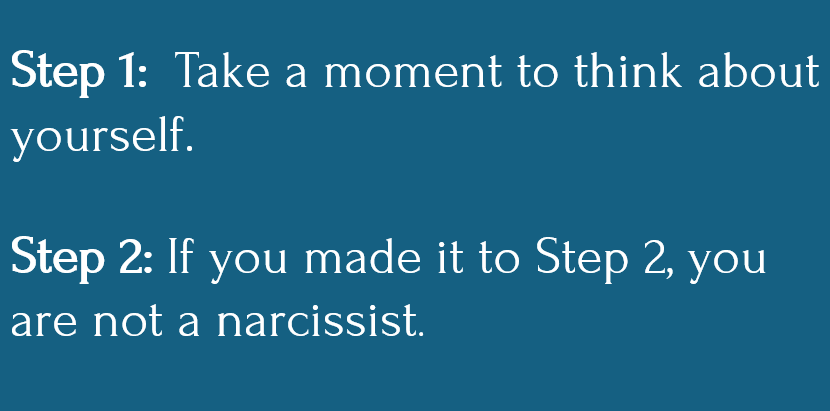
Scott Barry Kaufman, “Do Narcissists Know They Are Narcissists?,” Psychology Today. Graphic by Jan Swan
Kaufman writes, bragging may be how they demand the recognition they believe they deserve. “Narcissists score at the top of the scale on measures of entitlement. As the researchers note, this idea is consistent with self-verification theory.”
This requires an explanation. Self-verification theory, developed by social psychologist William Swann in the early 1980s, proposes we’re motivated to seek feedback and interact with others in ways that confirm our pre-existing self-concepts, even if those self-views are negative.
Gap Between Self-Perception and Meta-Perceptions
The Carlson team suggests narcissists believe they’re exceptional people and behave in arrogant ways because they’re attempting to bridge the gap between their positive self-perceptions and their relatively negative meta-perceptions (perceptions of how others see them). They add, narcissists may even discontinue relationships just because they can’t bridge the gap.
According to Kaufman, narcissists care more about being perceived as superior on agentic traits (industriousness, assertiveness, dominance) than on agreeableness and honesty. “Narcissists don’t seem to care whether they are perceived as good people; they’d rather be admired than liked.” The results also suggest narcissists understand they make positive first impressions, but these deteriorate over time as people get to know them. It makes sense they feel more rewarded by short-term relationships. Kaufman: “Narcissists have trouble forming long-term relationships. They tend to think they’re ‘too good’ for most people and are always seeking ‘better’ relationship alternatives.” Ta-da! Self-verification.
In Sum
Carlson’s research confirmed in 2011 what’s now well known. Narcissists rarely change because “they don’t want to. They love their lifestyle,” adds Kaufman. They may seek treatment because of a life crisis, like losing a job or a partner — but rarely because they regret their actions.
Narcissists are well aware of their arrogance and narcissism. They understand their reputation, but choose not to change since their narcissism, they believe, is what gives them a leg up on their pursuit of status and power. They’d rather be admired or even feared than liked and prefer newer, shorter-term relationships because they’re more gratifying.
So where does narcissistic rage enter this story of contented narcissistic self-awareness?
Narcissistic Rage
Narcissistic rage often occurs when the narcissist isn’t treated as the center of attention, even when there are other priorities …. Examples range from intense outbursts and sudden fits of anger, to passive-aggressive acts such as simmering resentment, icy silence, deliberate neglect, or cutting sarcasm. What distinguishes narcissistic rage from normal anger is that it is usually unreasonable, disproportional, and cuttingly aggressive (or intensely passive-aggressive), all because the narcissists’ wants and wishes are not being catered to.” —Business professor/coach Preston Ni, “8 Signs of Narcissistic Rage: Narcissistic rage and its destructive consequences,” Psychology Today.
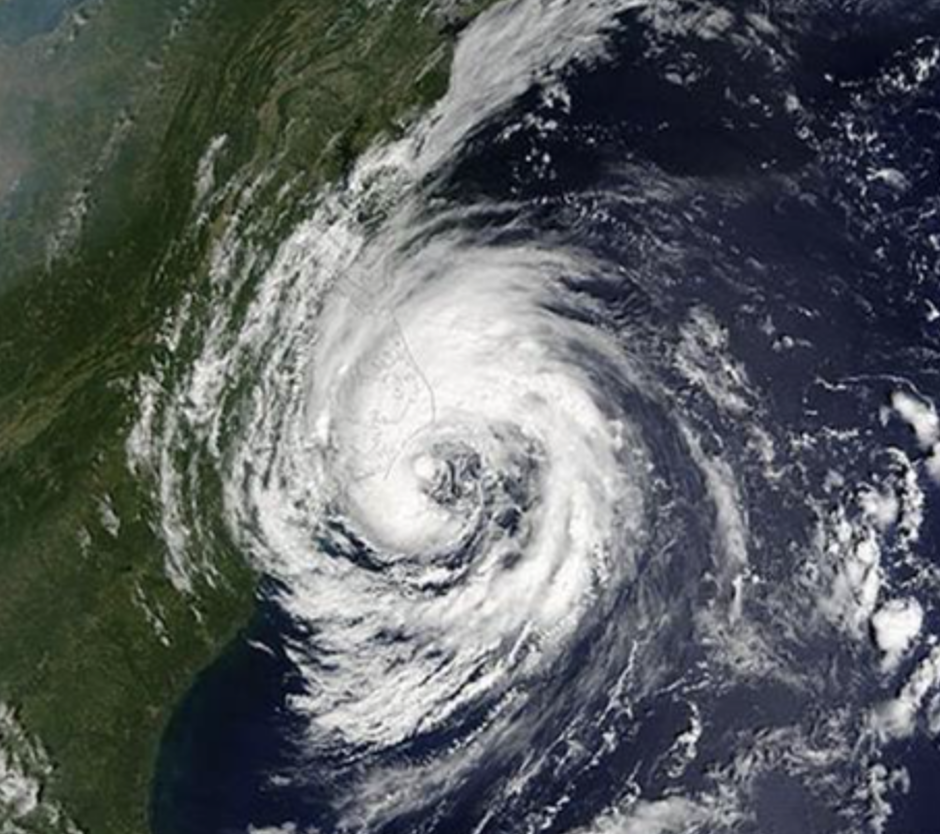
Photo: Weather.gov
Ni offers rage scenarios, which are what we might expect from a narcissist who’s thwarted, experiences an ego injury, is criticized, ignored, or called out. He then explains how narcissistic rage affects the narcissist:
- Family estrangement, breakups of romantic relationships, loss of friends: Multiple studies show the negative impact on those surrounding the narcissists. They can “experience relationship cut-offs from others, feeling let down, disappointed, lied to, used, manipulated, violated, exploited, betrayed, ripped-off, demeaned, invalidated, or ignored.”
- Loneliness and isolation, since most narcissists have few, if any healthy, close, and lasting relationships. Some higher-functioning narcissists achieve external success in life, at the expense of others, and find themselves lonely at the top.

Photo: Pikiwizard
- Missed opportunities, from a lack of true substance and/or connectedness.
- Financial, career, or legal trouble, from rule-breaking, gross irresponsibility, careless indulgence, or other indiscretions.
- Damaged reputation, from personal and/or professional lack of credibility, reliability, and trustworthiness.
- Deep-seated fear of rejection or being unimportant. Ni writes, “This is the core of narcissistic rage. Many narcissists are constantly hounded by the insecurity that people may not see them as the privileged, powerful, popular, or special individuals … and react intensely when their fears are confirmed.”
Coming Up Next

In Post 20: Trait Narcissism and the Illusion of Control, I continue to report on current research that uses all kinds of methodology to distinguish what the researchers call trait narcissism (mainly, grandiose and vulnerable narcissism). Because DSM-5 only recognizes narcissistic personality disorder (NPD), there hasn’t been a lot of research on these less severe but still disabling forms of narcissism. I’ll look into the illusion of control and other theories that provide a nuanced understanding of different expressions of narcissism. Research into trait narcissism will have great significance for treating these conditions for the highly motivated.
 English