
Narcissism and the Rest of Us
Show Table of Contents
INTRODUCTION
NARCISSISM DEFINED
2. Is There a Narcissist in Your Life?
3. Narcissus and the Origins of Narcissistic Thought — Part I
4. Narcissus and the Origins of Narcissistic Thought — Part II
5. Narcissus and the Origins of Narcissistic Thought — Part III
NARCISSISTIC DEFENSES
6. A Narcissist’s Self-Defense — Part I
7. A Narcissist’s Self-Defense — Part II
8. A Narcissist’s Self-Defense — Part III
NARCISSIST PERSONALITY DISORDER VS TRAITS
9. When Narcissism is a Personality Disorder
10. Narcissism and the Maladaptive Umbrella
11. Malignant Narcissism and the Narcissism Spectrum
12. When Narcissism is Compounded by Comorbidity
NURTURE VS NATURE
15. Narcissism: Flipping Self-Esteem on its Head
16. The Double-Edged Sword of Grandiose Narcissism
NARCISSISM’S DARK SIDE
19. Narcissistic Rage and Narcissistic Self-Awareness
20. Trait Narcissism and the Illusion of Control
21. Beyond Narcissism: Dark Personality Traits — Part I
22. Narcissist Sociopaths: Dark Personality Traits — Part II
ROMANTIC LOVE AND BOUNDARY-SETTING WITH A NARCISSIST
23. Romantic Love with a Narcissist — Part I
24. Romantic Love with a Narcissist — Part II
25. The Narcissist’s Non-Apology Apology
26. Boundary-Setting with Narcissists — Part I
27. Boundary-Setting with Narcissists — Part II
28. Boundary-Setting with Narcissists — Part III
29. Shattering Narcissus’ Mirror… So They Can Live
CONCLUSION
30. On Narcissism: What About the Rest of Us?
2. Is There a Narcissist in Your Life?
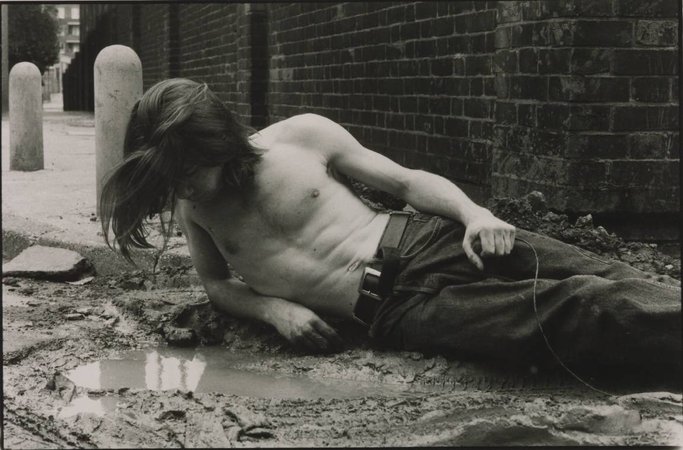
Mat Collishaw, Narcissus, 1990, photograph, Tatem London. Artspace
Since narcissists are disinclined to identify themselves as narcissists or to seek treatment, they’re also not likely to read a blog on narcissism. For this reason, I write for those living with or among narcissists and for those deeply affected by narcissists. Or in close relationships with narcissists, which can be difficult, oftentimes traumatic, potentially harmful.
Most online advice for those in dating or married relationships with narcissists suggests how to approach partners without losing self-esteem. But, if partners aren’t willing to change, experts say, it might be best to leave them. Advice for non-romantic but otherwise “toxic” relationships also suggests possible solutions, but again, it might come down to walking away.
I believe (without knowing if this is generally true) that most of us in close proximity to a narcissist find estrangement isn’t a desirable option. Maybe it’s an aging parent or an adult child with a disability. Maybe it’s someone we’ve put up with for so long, our lives so intertwined within the larger family, that it’d be too disruptive to cut off ties. Sometimes cutting off from people seems better in the short-term but has long-term consequences — and vice versa (seems worse in the short-term but has long-term benefits). It’s often tragic when family members turn their backs on one another, without first trying to understand.
There’s either an epidemic of estrangement in families or it’s more out in the open — young adults cutting off from aging parents or parents cutting off adult children who can’t or won’t find their way. Brothers grow up close, maybe even go into business together, and now don’t speak. Estrangement can be fueled — on both sides of the relationship — by self-centered interests, self-righteousness, senses of injustice, complex financial dependencies, or feelings of being exploited.
In notorious examples of wealthy family rifts, there’s also greed, grift, and paranoia — fodder for TV miniseries. If both sides are aggrieved by a pattern of mistreatment, who do we root for? Who do we hold out hope for?

From TV program, Sucession. Photo: HBO
For me, it’s the mediator, the calm voice, the observer who sees fault on both sides, listens, and promotes healing. Maybe not dramatic, but heroic.
Narcissism plays into qualities that feed resentment and distrust and make relating and reconciliation difficult and estrangement likely. I hope my blog makes room for those who’d like to find an alternative to breaking contact. This might entail helping narcissists in their life mitigate the worst of their tendencies, so they can have fulfilling relationships and more stress-free lives. Afterall, most “narcissists” are not all narcissistic all the time and not all their behaviors are intended to manipulate and dominate.
I often struggle with how to tap into my better angels to understand the complexity of the narcissistic personality and elevate what’s good — and not trigger more of the bad. As we read in post 1, narcissism’s spectrum ranges from healthy narcissism that allows us to believe in ourselves and our abilities and strive to meet our life goals to full-blown personality disorder wreaking havoc on self and on others. Sliding along the continuum to health isn’t possible unless the narcissist wants to change and seeks help — and even then it’s difficult [see post 29]. An individual’s ability to change and improve relating to the world is highly contextual and individual. Each relationship must be navigated on its own course.
Narcissism isn’t an uplifting topic. We just have to search for the uplift and work on it every day.
My Story

As a girl, I wanted my life to follow an idealized version of my beautiful mother’s fairytale romance and life with my father. My parents married young and had three children by the time my mother was 26. Her glamorous wedding portrait — a bride in a lacy dress with long lacy chain — sat on our piano all through my childhood. I wanted to meet my future husband and have my fairytale ending.
But the fairytale stopped serving me as a teen, when my focus was on independence and getting away from home.
While some parents and teens handle this time well, others of us find the transition between dependence and independence, between late adolescence and young adulthood, to be fraught.
This was partly because my late adolescence was a time of great social and political upheaval — assassinations, wars, protests that turned lethal, government corruption, and a youth movement that rejected the social and cultural norms of our parents. For me, it was also tumultuous within — worsening relations with my parents, as I sought independence at a cost to family harmony.
After college, I moved across country and, with semi-annual visits back home, stayed away for a near decade. It was, I found, the only way to go through the trial-and-error process of defining myself as an individual apart from parental identity.
Once I had enough self-confidence and financial self-sufficiency I returned to the same side of the country with a renewed commitment to family, my career — and myself.
Despite my solo progress, I found my relationship with my mother was stubbornly stuck. I was naive to think it would be otherwise. It was easy to disappoint my mother or cause a slight, and I was no match for the force of her reactions, or for how quickly conversations could turn.
Right around this time, Ingmar Bergman’s affecting 1978 film Autumn Sonata, came out.
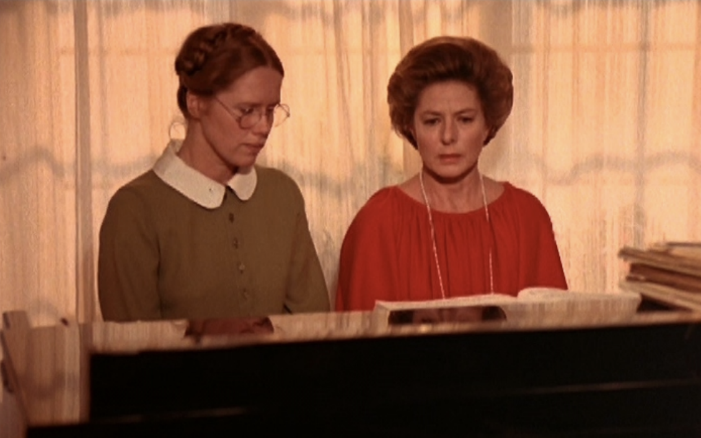
Ingmar Bergman’s Autum Sonata (1978). Scene by Green
The film captures the mother-daughter dynamic, as they both perform the same piece by Chopin. The repressed adult daughter (Liv Ullmann) wakes up to who her prominent, domineering mother (Ingrid Bergman) really is and how she’s treated. As the mother plays the piece with greater technical proficiency, we see the daughter’s defeated expression of sadness, contempt, and exasperation. She recognizes how her mother’s demonstration of superiority captures their relationship. When she finishes playing, the daughter has no words to express her emotional isolation.
The daughter finally confronts her — and we cheer for her — only to see her demolished by her mother’s words in retaliation.
In the end, the daughter writes her mother a letter of apology — an expression of utter defeat.
The film opened my eyes to uncomfortable truths. Narcissists never account for their behavior but criticize ours. They never apologize because they’re never wrong. In critical moments, they just don’t see us.
Without intervention, the narcissist-to-non-narcissist pattern lasts a lifetime. From the child’s internalizing of adult behaviors to the teen’s irrational rebellion to the adult grappling with difficult, often toxic relationships, narcissism is a trap and a vicious cycle. This was my story, and I was very slow to recognize the patterns.
In what I now recognize as displacement, I’ve sometimes reacted strongly to controlling or self-important behavior in others — more strongly than the moment alone would justify. As psychotherapist Ron Siegel said in a NICABM (National Institute for the Clinical Application of Behavioral Medicine) webinar, someone’s expression of “… grandiosity can activate our defenses more quickly and intensely.”
A Fool’s Errand
An inexperienced teen or young adult lacks the perspective or experience to fend for themselves against a controlling person with power over them. The parent or boss, perhaps unwittingly, uses emotional tricks to manipulate, dominate, and assert their will.
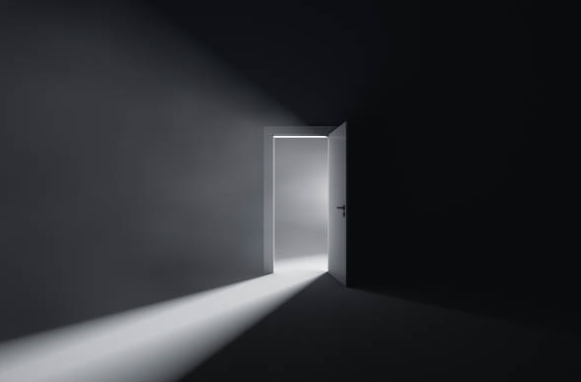
The young person may want a close relationship with a parent or a productive one with a boss, but may not know how to achieve that without losing themselves in the process. It can feel like groping along a darkened corridor hoping to see a door opening to the light — but not quite sure what they might encounter before they get there. Something small or of little consequence might suddenly blow up, despite best efforts.
Narcissistic rage [see post 19] is inevitable with a narcissist. Even as adults, most of us are ill-equipped to deal with someone who’s unmalleable, change-resistant, egocentric, or ethnocentric (viewing one’s own ethnic, racial, or cultural group as superior to others).
Narcissists in our lives listen long enough to pull the conversational thread back to self. They interrupt but are affronted when interrupted. They’re thin-skinned, but react to perceived criticisms with wicked verbal attacks, name-calling, and defensiveness. They own none of what they cause to happen. Conversations shift quickly in their favor. Disagreements don’t resolve so much as circle, leaving the non-narcissist tied up in knots. They are victims of manipulations that no one owns. Of course, there are no apologies if you’re never wrong.
Despite these terrible moments, life with a narcissist is not all bad. They can be genuinely loving, charming, generous, intelligent, funny, dedicated to family, and popular with friends. It’s just that it’s on their terms. Maybe creating excitement or fun is evidence of their greatness. Stick with me, you’ll do great! Follow my lead, because I’m terrific!
Narcissistic traits, when not too severe, come and go without impairing the quality of their lives. The narcissist is fine. They see their relationships as intact. It’s those of us on the other side of the relationship who feel emotionally whipsawed and wrung out.
For so long, I thought my teen and emerging adult years were tumultuous because of something wrong with me, which prevented me from getting along with my mother. But decades later I see I wasn’t rebellious because I was a teenager. I was rebellious because I didn’t yet have another way to become separate.
What I didn’t understand then — and took much longer to learn — is that growing up in that kind of environment doesn’t have to define you. But it doesn’t release you on its own, either.
The patterns follow quietly. In how you react. In what you tolerate. In what feels familiar, even when it isn’t good for you.
At some point, the work becomes yours — not to assign blame, but to recognize what shaped you, and to decide what you will carry forward and what you won’t.
Raised by a Narcissistic Mother
I’m neither qualified nor trained to assess and diagnose anyone, my mother included. I can only perceive her to have streaks of narcissism — someone with a great capacity to love but who’s vision is non-universal, self-referential, and short on empathy. My story is hardly unique. Here’s someone else’s [paraphrased/edited for brevity]:

Being a daughter of a narcissistic mother is particularly challenging. Narcissistic mothers can view their daughters as competition and be jealous of them. While most parents want their children to shine, a narcissistic mother may be jealous of her daughter’s youth, beauty, education, accomplishments, even her relationship with her father.
The daughter may be punished for attention she receives from others or for doing too well. This sends a confusing message. The daughter is required to do well and make her mother proud. But she shouldn’t do too well and outshine her mother. If the daughter is too successful, her narcissistic mother may act proud in public but punish her in private. —Blog post, “Raised by a Narcissistic Mother,” Psychologia
According to psychiatrist/author Lea Lis, writing in Psychology Today, narcissistic mothers may show some of these traits:
- Lack of empathy and insight as to how they affect others.
- Fragile self-esteem, inability to handle any form of criticism.
- Selfish exploitation of relationships, including verbal aggression and abuse.
- Prone to depression and substance abuse.
- Friendly and well-liked in social settings, but cutting behind closed doors.
As Lis states, children of narcissistic mothers may sublimate their needs to make them happy. Even into adulthood, they want unconditional love from a parent unable to provide it. Young children may hide their true self while behaving or “performing” to get their mother’s approval. Later on, as teens and adults, they may be prone to depression and substance abuse, develop fragile egos, and have difficulty with rejection.
Is There a Narcissist in Your Life?
According to the Mayo Clinic, personalities consist of a complex combination of different traits, which affect how we understand and relate to the world around us, as well as how we see ourselves. Ideally, these personality traits allow us to adapt flexibly to a changing environment, leading us to healthy relationships and strong coping strategies. When people have less adaptive personality traits, they tend to greater inflexibility (rigid, black-and-white thinking) and less healthy ways of coping (substance abuse, uncontrolled anger, difficulty trusting and connecting with others).
Personality forms early in life through a blend of genetic traits (your temperament) and environment (surroundings, events, relationships, patterns of family interactions). A disordered personality is a mental health condition. It’s a lifelong pattern of seeing self and reacting to others in ways that cause problems understanding emotions, tolerating distress, and tamping down impulsivity — affecting all aspects of their lives.
Concisely expressed by Julie Hall in her article “Anatomy of a Narcissist: These are the inner workings of the narcissistic personality,” Psychology Today, “Narcissism is a mental illness rooted in identity and self-esteem instability primarily resulting from insecure attachment with caregivers in infancy and childhood. There may be genetic predispositions to narcissistic defenses in a child that get activated by alienating experiences in the environment.”
It’s common to miss the signs that someone in our life is a narcissist and that our mental health and self-identity can be compromised by our relationship with them. As Psychology Today notes, “Countless people are victimized, even terrorized, by people who are not good to or for them.” We need to consider questions about how narcissists in our lives make us feel [paraphrased from Psychology Today]. Maybe not always but sometimes, we may feel…
- Ground down or deceived by a romantic partner
- Unfairly criticized by a boss
- Emotionally manipulated by a parent
- Gaslighted by a friend
- Manipulated or abused by an adult child
Maybe we feel heartache, extreme anxiety, or judged as inadequate or a failure. Maybe we’ve referred to ourselves or have been called untalented, lazy, unattractive, unlovable, ungrateful. As Lis writes, “If you feel you need to hide perfectly normal parts of your life to avoid narcissistic rage, you’re probably a victim of a narcissist.”
Coming Up Next
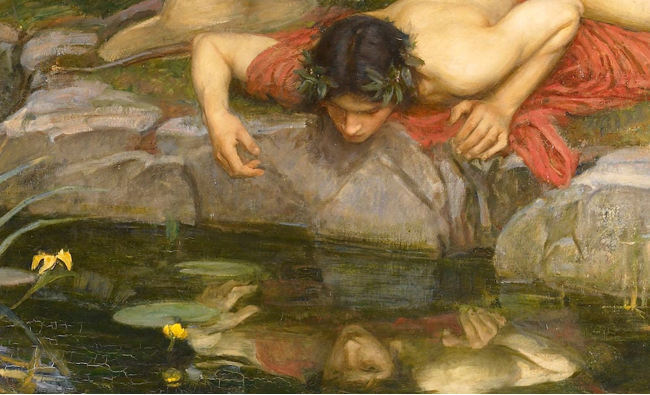
Post 3: Narcissus and the Origins of Narcissistic Thought — Part I starts with the myth of Narcissus and the many wonderful paintings and photographs depicting the handsome boy gazing intently at his reflection to the exclusion of the world around him. From there, I recount a 3-part history-in-brief on the origins of narcissistic theory through today. Narcissism has been recognized as a feature of humankind since the beginning of recorded history — and no doubt before that. There have always been people who thought they were better than everyone else, who were power hungry, and who had no remorse or care for those they hurt. Narcissism wasn’t identified as a disorder until the mid-20th century, but the early years of narcissism research revealed much about who we are, how our personalities are formed, and why there’s such a range of severity and outcomes.
 English