Narcissism and the Rest of Us
Show Table of Contents
INTRODUCTION
NARCISSISM DEFINED
2. Is There a Narcissist in Your Life?
3. Narcissus and the Origins of Narcissistic Thought — Part I
4. Narcissus and the Origins of Narcissistic Thought — Part II
5. Narcissus and the Origins of Narcissistic Thought — Part III
NARCISSISTIC DEFENSES
6. A Narcissist’s Self-Defense — Part I
7. A Narcissist’s Self-Defense — Part II
8. A Narcissist’s Self-Defense — Part III
NARCISSIST PERSONALITY DISORDER VS TRAITS
9. When Narcissism is a Personality Disorder
10. Narcissism and the Maladaptive Umbrella
11. Malignant Narcissism and the Narcissism Spectrum
12. When Narcissism is Compounded by Comorbidity
NURTURE VS NATURE
15. Narcissism: Flipping Self-Esteem on its Head
16. The Double-Edged Sword of Grandiose Narcissism
NARCISSISM’S DARK SIDE
19. Narcissistic Rage and Narcissistic Self-Awareness
20. Trait Narcissism and the Illusion of Control
21. Beyond Narcissism: Dark Personality Traits — Part I
22. Narcissist Sociopaths: Dark Personality Traits — Part II
ROMANTIC LOVE AND BOUNDARY-SETTING WITH A NARCISSIST
23. Romantic Love with a Narcissist — Part I
24. Romantic Love with a Narcissist — Part II
25. The Narcissist’s Non-Apology Apology
26. Boundary-Setting with Narcissists — Part I
27. Boundary-Setting with Narcissists — Part II
28. Boundary-Setting with Narcissists — Part III
29. Shattering Narcissus’ Mirror… So They Can Live
CONCLUSION
30. On Narcissism: What About the Rest of Us?
22: Narcissist Sociopaths: Dark Personality Traits — Part II
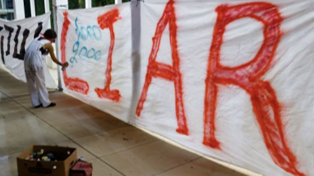
Photo: Getty Images
Not all narcissists act on their darkest impulses to hurt anyone who gets in their way or causes them to feel vulnerable or puts them down. But when they do lie, cheat, manipulate, or worse, it’s probably because they have dark personality traits in addition to their narcissism.
This is what we learned in the prior post on the dark factors of personality or “the D-factor.” What some researchers might prefer we call antagonistic personality characteristics. In this continued discussion, I’ll talk about narcissism and lying and share an extended profile of a self-admitted sociopath who is trying to make her life better.
An international meta-study — conducted by Padmakali Banerjee, et al., “Unmasking deception: Pathological lying in narcissists and the role of subconscious energy healing therapy,” World Journal of Advanced Research and Reviews — cites multi-disciplinary research findings on pathological lying in narcissists, which has been studied for several decades. I’ll paraphrase/abbreviate their findings, as follows:
- Pathological lying is a deeply ingrained, maladaptive behavior in those diagnosed with narcissistic personality disorder (NPD). Lies help to maintain their grandiose sense of self and control how they’re perceived, while shielding themselves from emotional exposure (vulnerability, shame, and perceived inadequacy). While chronic deception provides short-term relief, it harms relationships and further distances them from their authentic selves.
- Cognitive-behavioral and psychodynamic theories suggest narcissists’ lies are driven by a combination of cognitive distortions and emotional dysregulation. Through their lies, narcissists construct a reality where they are constantly admired, respected, and valued — protecting their fragile ego from perceived threats to their self-esteem. Lying is a first defense against criticism, rejection, or anything that could potentially diminish their carefully constructed self-image.
The D-Factor and Lying
Another study looked at how D-factor traits are linked to lying. Christian Hart — psychology professor, Texas Woman’s University, and director, Psychological Science program and Human Deception Laboratory — writes of his team’s research in “Spot the Liar: Looking Beyond Narcissism,” Psychology Today. Dark traits in the study included narcissism, callousness, sadism, vindictiveness, and deceitfulness and showed how these traits were associated with telling three types of lies:
- Altruistic lies benefit others or spare their feelings (“I love your haircut!”).
- Vindictive lies hurt others (spreading false rumors).
- Self-serving lies benefit self or make oneself look better (lies on resume).

In this drawing (artist unknown), young George Washington tells his father he chopped down the cherry tree. But historians say this never happened. From Alia Hoyt and Jane McGrath, “11 of the Biggest Lies in History,” How Stuff Works
The research team showed narcissism as unrelated to telling altruistic lies, yet surprisingly narcissism is one of the weakest of the dark personality traits in connection to vindictive or self-serving lies.
Narcissism Doesn’t Explain Lying
According to Hart, et al., while narcissists misrepresent themselves to protect their image, they’re less motivated to harm or exploit others compared to those with other dark traits. Sadism, callousness, and vindictiveness are more clearly tied to unethical behavior. Narcissists often score high in other dark traits — so it’s possible those traits, not narcissism itself, drive harmful actions.
Maybe it’s time to stop relying on overused labels like narcissism to explain the liars and manipulators we encounter. We should pay more attention to signs of the other dark traits to maintain healthier boundaries and make better decisions about whom to trust. The next time someone uses narcissism to explain a person’s prolific lying, we should consider whether other dark traits better account for their dishonesty. —Christian Hart, “Spot the Liar: Looking Beyond Narcissism,” Psychology Today [paraphrased for brevity]
Writer/educator Nancy Lovering, in “How Narcissists Blame and Accuse Others for Their Own Shortcomings,” PsychCentral, offers a different take on the mechanism that connects narcissistic tendencies with D-factor traits. She writes that such individuals tend to blame others for their own bad behavior. “If they are lying, then they will accuse others of lying. If they are cruel, they will say that others are cruel. If they are stealing and scamming, then they will accuse others of stealing and scamming. They never take responsibility, and it’s always someone else’s fault.”
The opposite is also true. They attribute other’s good characteristics to themselves. “If they see someone being nice, they will say, No, no, this person is not nice. I am nice! If somebody is successful and happy, the narcissist will say, That person is such a loser and a fake. I am really successful and authentic!”
We were introduced to this defensive mechanism, called projection [see post 7]:
When people project their flaws and moral shortcomings onto others, or lack personal responsibility, or blatantly lie, it’s clear what’s going on — they’re trying to hide their undesirable characteristics or inflate their false image. They’re trapped and struggling in their own web of lies and deception. But since they’re adults who hurt others, including children, it is really pathetic, obvious, and tragic.
Narcissists, psychopaths, sociopaths and other people with dark personalities traits think that others are stupid and they’re clever. They can be quite cunning. It’s senseless and pathetic when you see them bending and negating reality — but many people fall for it. They prey on the weak and confused. The stronger your sense of self is, the less susceptible you are to gaslighting and other forms of manipulation. —Nancy Lovering, in “How Narcissists Blame and Accuse Others for Their Own Shortcomings,” PsychCentral
Narcissistic Sociopaths
So it’s rarely just the narcissist who relies on dark personality tactics and defenses. It’s more likely to be seen in D-factor personalities oriented to power and control or who lack empathy and remorse. These are the characteristics of abusive people, with personality disorders beyond narcissism, who break the law and have severe neurotic tendencies.
In “I’ve been ‘diagnosed as a psychopath’ — this is what it’s like,” Daily Mail, UK, Madison Burgess writes briefly about his psychopathology in response to questions on social media. He’s separated from his wife (and child) due to cheating. He regretted the separation, but felt no remorse and admitted he was likely to cheat again. His reason was his impulsivity—if the opportunity came up, he wouldn’t be able to turn it down. But he also stopped the thread because of people’s reactions and questions that saw him only one way, even though he was attempting to deal more effectively with the hand he was dealt.
I’d like to quote a longer passage from Patric Gagne’s article, “I Always Knew I Was Different. I Just Didn’t Know I Was a Sociopath,” Wall Street Journal, itself an excerpt from her book, Sociopath: A Memoir. Patric Gagne is a writer, former therapist, and current advocate for people suffering from sociopathic, psychopathic, and antisocial personality disorders.
I want to be open about my experiences because I know I’m not alone.
I suffered from a…compulsion brought about by the discomfort of apathy, the nearly indescribable absence of common social emotions like shame and empathy…. All I knew was that I didn’t feel things the way other kids did. I didn’t feel guilt when I lied. I didn’t feel compassion when classmates got hurt on the playground. For the most part, I felt nothing, and I didn’t like the way that “nothing” felt. So I did things to replace the nothingness with…something.
This impulse felt like an unrelenting pressure that expanded to permeate my entire self. The longer I tried to ignore it, the worse it got. My muscles would tense, my stomach would knot. Tighter. Tighter. It was claustrophobic, like being trapped inside my brain. Trapped inside a void.
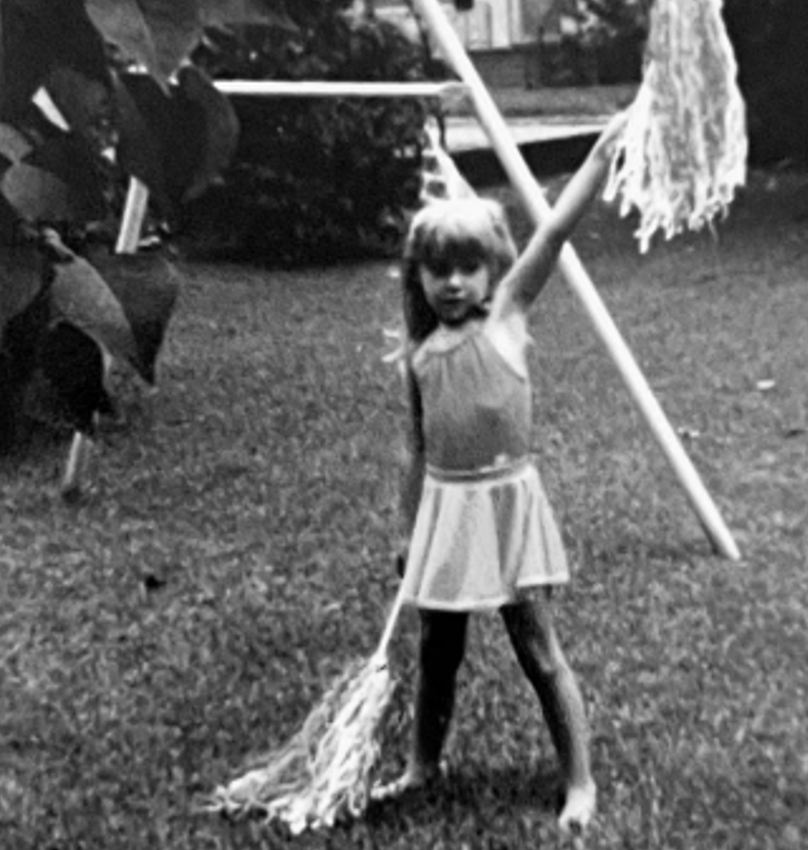
Stealing wasn’t something I necessarily wanted to do. It just happened to be the easiest way to stop the tension. The first time I made this connection was in first grade, sitting behind a girl named Clancy. The pressure had been building for days. Without knowing exactly why, I was overcome with frustration and had the urge to do something violent.
I wanted to stand up and flip over my desk. I imagined running to the heavy steel door that opened to the playground and slamming my fingers in its hinges. For a minute I thought I might actually do it. But then I saw Clancy’s barrette. She had two in her hair, pink bows on either side. The one on the left had slipped down. Take it, my thoughts commanded, and you’ll feel better.
I liked Clancy and I didn’t want to steal from her. But I wanted my brain to stop pulsing, and some part of me knew it would help. So, carefully, I reached forward and unclipped the bow. Once it was in my hand, I felt better, as if some air had been released from an overinflated balloon. I didn’t know why, but I didn’t care. I’d found a solution. It was a relief.

Finally, Patric’s mother discovers she is stealing.
Sweetheart, listen to me,” she said, kneeling. “Taking something that doesn’t belong to you is stealing. And stealing is very, very bad.” Mom paused, not sure what to do next. She took a deep breath and asked, “Have you done this before?”
I nodded and pointed to the closet. Together we went through the box. I explained what everything was and where it had come from. Once the box was empty, she stood and said we were going to return every item to its rightful owner, which was fine with me. I didn’t fear consequences and I didn’t suffer remorse, two more things I’d already figured out weren’t “normal.” Returning the stuff actually served my purpose. The box was full, and emptying it would give me a fresh space to store things I had yet to steal.
“Why did you take these things?” Mom asked me.
I thought of the pressure in my head and the sense that I needed to do bad things sometimes. “I don’t know,” I said.
“Well… Are you sorry?” she asked.
“Yes,” I said. I was sorry. But I was sorry I had to steal to stop fantasizing about violence, not because I had hurt anyone.
Empathy, like remorse, never came naturally to me…. My teachers talked about “honor systems” and something called “shame,” which I understood intellectually, but it wasn’t something I felt. My inability to grasp core emotional skills made the process of making and keeping friends somewhat of a challenge. It wasn’t that I was mean or anything. I was simply different.
Now that I’m an adult, I can tell you why I behaved this way. I can point to research examining the relationship between anxiety and apathy, and how stress associated with inner conflict is believed to subconsciously compel people to behave destructively. I believe that my urge to act out was most likely my brain’s way of trying to jolt itself into some semblance of normal. But none of this information was easy to find. I had to hunt for it. I’m still hunting.
For more than a century, society has deemed sociopathy untreatable and unredeemable. The afflicted have been maligned and shunned by mental health professionals who either don’t understand or choose to ignore the fact that sociopathy—like many personality disorders — exists on a spectrum.
After years of study, intensive therapy, and earning a PhD in psychology, I can say that sociopaths aren’t “bad” or “evil” or “crazy.” We simply have a harder time with feelings. We act out to fill a void. When I understood this about myself, I was able to control it.
It is a tragic misconception that all sociopaths are doomed to hopeless, loveless lives. The truth is that I share a personality type with millions of others, many of whom have good jobs, close-knit families, and real friends. We represent a truth that’s hard to believe: There’s nothing inherently immoral about having limited access to emotion. I offer my story because I know I’m not alone. —Patric Gagne, “I Always Knew I Was Different. I Just Didn’t Know I Was a Sociopath,” Wall Street Journal
We get to read these profiles about those who’ve been diagnosed and treated, fighting against natural predilections that aren’t socially acceptable or are outright antisocial. In combination with narcissism, these symptoms can make life feel insurmountable.
Coming Up Next
In Post 23: Romantic Love with a Narcissist — Part I, I’ll give a snapshot of being in a romantic relationship with a narcissist, as well as discuss techniques like gray-rocking and the no contact rule for cutting off narcissistic supply: how to deprive the narcissist of emotional oxygen and leave you standing.
 English