
On Anxiety and Panic Disorders
Show Table of Contents
INTRO
FEAR VS ANXIETY VS ANXIETY DISORDERS
- Emotional Health vs Mental Health
- Fear vs Anxiety
- Personal Journeys with Anxiety and Panic Disorder
- Fear, Anxiety, and Fight or Flight
- The Evolutionary Role of Anxiety
- When Anxiety Drifts to Disorder
- The Ancient Advantage and Current Anguish of SAD
PHOBIAS, ANXIETY / PANIC ATTACKS
- Phobias and the Rapid Onset of Fear
- Specific Phobia and Agoraphobia
- Anxiety Attacks vs Panic Attacks vs Panic Disorder
- Anxiety Disorder Risk Factors and Symptoms
- Why Anxiety Goes Undiagnosed — and Untreated
TREATING AND COPING WITH ANXIETY
7. When Anxiety Drifts to Generalized Anxiety Disorder
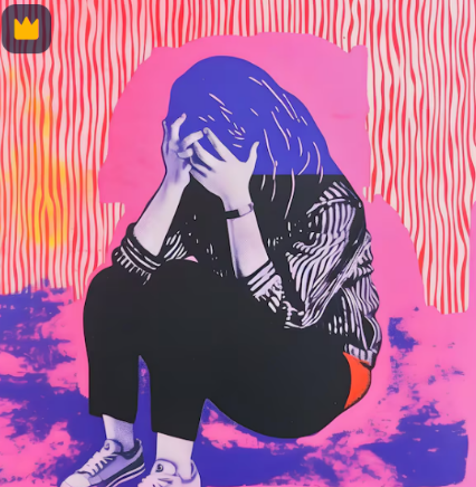
One aspect of my anxiety was my catastrophizing. Pre-cellphone, my husband was two-hours late bringing our two small boys home from an outing. Imagining the worst. I was reduced to standing at the door staring straight at the street, as if the pavement would disgorge them at any moment. When they arrived, I burst into tears. Brittle as a plane of glass, I shattered, unable to check my emotions.
This wasn’t new to me. In the first year of my marriage, I had my husband sliding off roofs, getting electrocuted, and many other deadly mishaps. Before that, I was the subject of my disaster narratives. Imposter syndrome, about to get fired, dumped, rejected, go unloved, cancelled. Even writing this makes me cringe — what unnecessary misery I put myself through and for so long.
My first therapist told me I had a ***er mind. That shocked me at the time, in a good way — I started to understand how my internal thoughts sounded out loud.
Once I was diagnosed with generalized anxiety disorder (GAD), in therapy, and given anti-anxiety meds, I slowly stopped the catastrophizing and other self-deprecatory negative thought loops and ruminations. It took effort — and I’m still not free minus constant vigilance, therapy, and meds.
I searched to find someone else, like me, who catastrophizes — secretly — because at the same time we’re thinking hair on fire we’re also thinking, there’s no fire, please calm down. We don’t tell anyone, even as a kid where maybe mom could help us feel better, because we don’t want to appear as forlorn and hopeless as we feel.
Here’s a catastrophizing soulmate’s story [edited for brevity]:
I spent a childhood in terror. I thought drug dealers were going to crawl up my two-story brick wall and kill me. I thought forgotten homework would end my entire school career. I lay awake at night, convinced my house would burn down. I thought I was acting weird. I knew I was acting weird. In college, I used the same two words as a source text and thought I’d be convicted of plagiarism and kicked out of school. I always worried I’d forgotten something. That I wouldn’t finish my work in time. That my boyfriend would die in a fiery car crash whenever he wasn’t in my direct line of sight. —Elizabeth Broadbent, “Living with GAD Is a Life of Constant, Irrational Fear, Healthline
Elizabeth Broadbent was ultimately diagnosed with a severe case of GAD. She started therapy, learned mindfulness, and used anti-anxiety meds. I’ll let her complete her story:
And, most importantly, I no longer worry that my husband will die in a fiery car crash. I don’t stress about not finishing my work on time…. When the worries come back, I find myself at my therapist’s door, waiting for an update and a tinkering. It takes constant work. I have to keep trying to banish the wolves from the door. But my condition is manageable. And I no longer live in fear. With all that said, GAD can be an ominous shadow, lurking in the corner and threatening to materialize into a real-life villain. Some days, it creeps back into my life…
In particular, I startle easily, which is simple for outsiders to observe. In the grips of GAD, it can take me hours to fall asleep. These are the times when my loved ones know to be extra patient, extra supportive, and extra kind, while I rein in the beast.
With its benign name, generalized anxiety disorder is far from benign. It defines and shapes us and damages years of our lives until we realize we don’t have to feel this way. Like driving an old car with bad shock absorbers, we don’t need to feel every bump on the road. A smoother ride is just a better way to deal with the journey — a way not to, as Karl Albrecht described [post 2], fear our fears. Three GAD profiles:
The GAD Chronicles
Meet Robin

A newly minted college graduate moves to a big city to start her adult life. She’s full of promise, but not prepared for how competitive the market is for jobs and apartments. She finds an affordable small studio far out in the exurbs, but her job search doesn’t go well. She misses her college friends — though they meet online to play videogames and chat on Discord. It’s fun and the only time she can be herself.
After more fruitless months jobhunting, Robin borrows money from a retired parent — which makes her feel bad. Yet, instead of working harder to find a job, she starts sleeping away the afternoons, smokes more cannabis, stops cleaning and organizing her place, and no longer bothers with dressing up or putting on makeup to go out.
Meet Sara
A young woman with two children, Sara’s proud of how well she juggles her responsibilities as a mother, wife, middle school teacher, and keeper of the household. She handles 90% of the childcare, arranging playdates, attending the kids’ school activities, and taking them to doctors. Her husband was the primary breadwinner until he was downsized. After a futile month trying to reconnect with similar work, he takes a job at a third less pay. Every evening, he closes himself off in his man cave. Meanwhile Sara gets a promotion to a supervisory role, with a much needed bump in salary — in essence, making up the difference in her husband’s lost pay. Now she’s on equal footing with her husband as breadwinner and starts assuming more financial control of the household. The role switch takes a toll on their marriage. Sara still does most of the household work and childcare, but her kids are acting out from lack of attention. Her husband has his head in his computer and pretty much ignores the children and her.
Meet Oliver
A high school senior who lived in a semi-rural community knew for a long time he was gay, but also knew instinctually not to tell anyone — including his parents. Despite what’s on TV and social media, he understood his parents, school friends, and church would not have accepted him. Instead, he wore the mask and pretended his lonely, isolated, and secret online life was okay — until he could leave home. Now, relocated to a small city not too far from home, Oliver connects with the LGBTQ+ community, finds a partner, and moves in with him. He’s happier, for sure, but wants to come out, longing for his family to accept him. With his partner’s encouragement, Oliver takes the big leap. The two of them travel to see his parents, but after a few awkward hours they leave. He rationalizes they need more time to absorb the news, and things will get better. Instead, he doesn’t hear from his family and does not visit them for the next holiday celebration — a tradition in his extended family.
GAD: A Serious Mental and Behavioral Disorder
While anxiety has had adaptive advantages as a strong signaling system for millennia, anxiety disorder is not protecting Rob, Sara, and Oliver from threat. Rather, it’s exposing them to acute anxiety, conflict, and fear of ego-death. They’re not saving their lives from danger, but their lives are centered around conflict, disappointment, frustration, anger, and loss.
If they don’t get help, it’s possible they’re candidates for developing generalized anxiety disorder (GAD) and/or social anxiety disorder (SAD), both of which are highly treatable.
Everyone worries. I quoted scientist Mermelstein who wrote someone who never worries is a sociopath. It’s only an anxiety disorder once the worry becomes excessive, ongoing, irrational, difficult to control, feels bad physically, interferes with life, and is about nothing and everything — and is felt every day, most of the day, for six months or more.
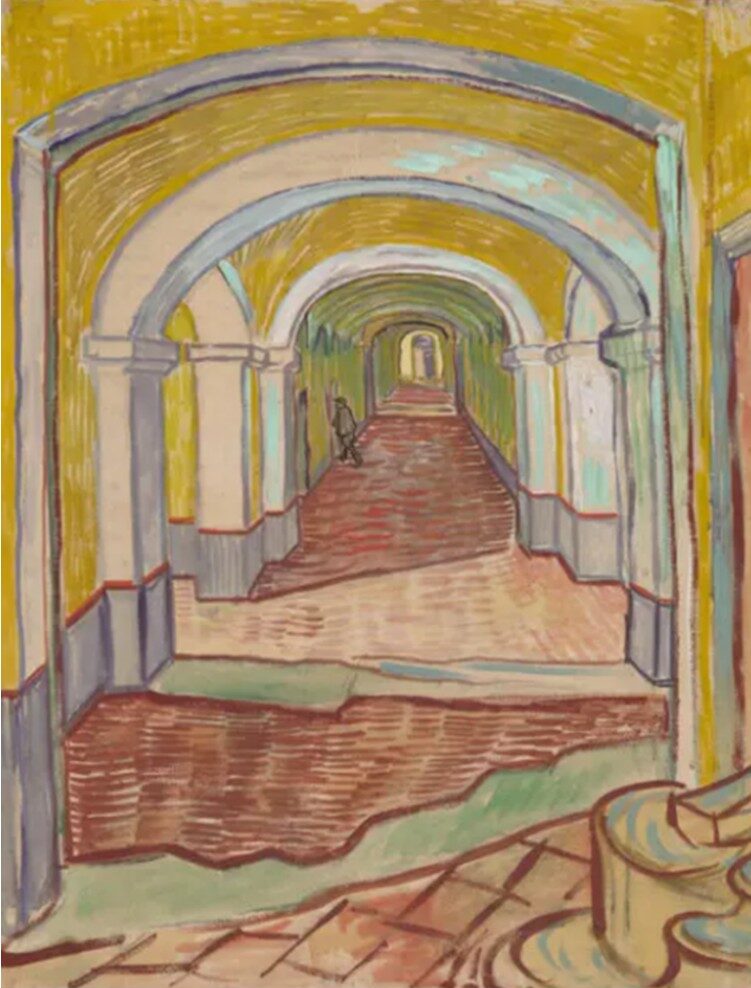
Vincent Van Gogh, Corridor in the Asylum, 1889
Because anxiety symptoms and triggers are so broadly all-encompassing and yet so individually specific, GAD becomes the “all-inclusive” disorder. When I was first diagnosed with GAD in college, the university doctor told me it was a catch-all for nonspecific anxiety — but mostly a way to get reimbursed by insurance.
GAD is a mental and behavioral disorder — specifically, an anxiety disorder — and a lot more serious and debilitating than my campus therapist would have me believe. Up to 12% of Americans have GAD at some point in their lives. Untreated, it can go on for a lifetime, spiraling downward to cause further stress and helplessness. What we worry about can jump around from one concern to another and change over time as we get older. We can feel anxiety even when worries are not completely consuming — or there’s no apparent reason.
Sunday Syndrome
My GAD came equipped with insomnia, especially on Sunday nights. Even as a girl, I couldn’t fall asleep on Sunday nights. My father, also a poor sleeper, would tell me stories until I drifted off, but at some point that stopped and the sleeplessness did not. Until Trazadone entered my life a few years ago, I’d start off every week with a serious sleep deficit.
I thought I was worried about Mondays and the week to come. One of my therapists told me it was because of what I was leaving, not what I was facing. Not because of work on Monday, but leaving the safety of my home and my parents on Sunday. Interesting, but not convincing. Here’s what I worry about: my sons, finances, work, health, the healthcare system, love relationships, family matters, political leadership, war, racism, climate change, misogyny.
How about your sleepless nights? What keeps you up?
Candidates for GAD
Children, teens, seniors, and everyone in between are susceptible to GAD. Often foundational to other anxiety disorders, GAD is genetically linked with depression. Living with GAD can be a long-term challenge, especially if it occurs with other anxiety or mood disorders.
Fortunately, GAD is treatable, generally with short-term, effective, and cost-effective methods [posts 9-13 cover anxiety disorder risk factors, symptoms, treatment, and coping strategies].
Once our quality of life is strongly compromised, it’s time to get professional help. While I don’t have Olatunji credentials, I’ll attempt to analyze whether Rob, Sara, and Oliver are feeling common anxiety or are experiencing GAD.

Robin
Robin needs immediate help. The minute she swapped out jobhunting for sleeping and smoking weed and started neglecting her appearance, she was no longer merely anxious. Coupling that with her guilt and negative self-talk about the financial assist from her parent, and you have someone with an anxiety disorder. It’s probably temporary, though. With some help and medication, she will be back on track and land her starter job. She may never feel so forlorn again, or she may have frequent bouts of anxiety — but will hopefully recognize the signs and get professional help sooner in the future.
Sara
Sara is deprived of her husband’s support. Children, job, and home are demanding even more from her now that she’s a supervisor, no longer has summers off, and feels her marriage has been damaged beyond repair. She’s anxious much of every waking hour. Something needs to change for Sara. Either she convinces her husband to get professional help, they go to couples therapy, or she ends the marriage — but she knows her current life is unsustainable for her. Like Robin, Sara is experiencing a bad moment in a life not otherwise anxiety-riddled. She will survive this, but not too well without professional intervention. It doesn’t seem like she needs medication, but perhaps her husband does.
Oliver
Oliver’s story is a sad and all-too-common one. Many parents who are rigidly traditional, maybe with religious or culturally strict parents of their own, would rather break off contact with their children than be (unfairly) considered pariahs in their communities. This has changed for the better in many places in our society — but not everywhere. Societal norms for good or ill have profound effects on individuals. Oliver has probably had GAD since he was a pre-teen and suppressing his gender identity. He’s carried this for far too long. His parents have rejected their son for who he is and who he was born to be. Oliver’s choices seem to be binary: keep trying to wear down his parents’ resistance and be accepted by them with no guarantees of success (and the risk of more hurt) or adjust to life without them in it, creating new traditions with his partner and their friends. Oliver not only needs therapy to deal with his GAD, but also to guide him through his choices that will affect him for the rest of his and his parents’ lives.
Profiles and photos are composites, based on people I know.
The Damage of Excessive Concealment
In these GAD profiles, I see Oliver at greatest risk for a long struggle with comorbid anxiety and depression. While Robin and Sara are in crises, eventually they’ll make a change or make peace with their situations. Time will tell, and time will heal. But Oliver’s identity is denied by his parents. I found this in an NIH paper on anxiety’s evolution:
The capacity to conceal anxiety and other negative emotions has evolved. Excessive concealment may lead to psychopathology. —NIH
Concealing emotions makes them worse, leading to:
- Impaired performance
- Signals of distress
- Reduced encouragement to succeed on the part of parents, teachers, and supervisors
This last point is certainly something to consider. Concealing or suppressing our emotions is damaging to self-identity, feelings of self-worth, safety, and parental love. And by doing that we risk performing less well as school or work and, therefore, are less likely to be encouraged by key figures in our life. So not only is Oliver isolated in his growing up, he’s receiving less support for becoming his best self.
Research has shown that having low expectations can limit our capacity to develop and grow and lead to feelings of helplessness and despair. Equally, having high expectations of ourselves can help us adapt to changing circumstances and keep going. —Misha Ketchell, executive director, The Conversation, Australia and New Zealand
Key to our emotional wellbeing is a robust capacity to grow and develop — to feel our potential, our creative spirit, to strive to find our place in the world. Even as I write this, I feel hopeful we can each, in our own ways, accomplish this. We must believe in ourselves and, if we are not in a good place, get professional help.
I’ve talked about building-block emotions and the evolution of fear and anxiety — to express how much bigger and more awe-inspiring this is than we are as individuals. The biopsychosocial vastness of it all. Maybe when we’re in pain, weighed down by pressure, we can be inspired by our connectedness to the human dilemma extending back to our prehistoric forebears. This is the thought I’m having. Knowing our brains have cellular memory from the caveman makes me want to keep fighting. I understand it’s hard to pursue life goals when we’re struggling to get through each day. But what’s the choice? We must start by getting through each day.
Fortunately, GAD is treatable, generally with short-term, effective, and cost-effective methods [posts 9-13 cover anxiety disorder risk factors, symptoms, treatment, and coping strategies].
Once our quality of life is strongly compromised, it’s time to get professional help. While I don’t have Olatunji credentials, I’ll attempt to analyze whether Rob, Sara, and Oliver are feeling common anxiety or are experiencing GAD.
Coming Up Next

In Post 8: The Ancient Advantage and Current Anguish of SAD, I’ll describe social anxiety disorder, before we move on to phobias and panic disorder.
 English