On Anxiety and Panic Disorder
Show Table of Contents
INTRO
FEAR VS ANXIETY VS ANXIETY DISORDERS
- Emotional Health vs Mental Health
- Fear vs Anxiety
- Personal Journeys with Anxiety and Panic Disorder
- Fear, Anxiety, and Fight or Flight
- The Evolutionary Role of Anxiety
- When Anxiety Drifts to Disorder
- The Ancient Advantage and Current Anguish of SAD
PHOBIAS, ANXIETY / PANIC ATTACKS
- Phobias and the Rapid Onset of Fear
- Specific Phobia and Agoraphobia
- Anxiety Attacks vs Panic Attacks vs Panic Disorder
- Anxiety Disorder Risk Factors and Symptoms
- Why Anxiety Goes Undiagnosed — and Untreated
TREATING AND COPING WITH ANXIETY
15. Treatment Options for Anxiety Disorders — Part I
Doctors, psychiatrists, and researchers agree: even severe anxiety disorders are highly treatable. Therapy and medication can relieve symptoms — and just as importantly, reduce the likelihood of future episodes. In post 13, I wrote about what happens when anxiety curtails our lives. Here and in the next post, we turn toward what helps — and why it’s worth reaching for.
- Lowered risk for health complications: Having the right support and treatment can lower risk for the medical or other mental health issues anxiety can cause.
- Lower stress that there’s help: Finding someone who understands what we’re going through starts the process of dealing with our serious issues. We can feel some immediate relief.
- Elevate quality of life: Anxiety may cause some of us to self-isolate and miss out on things we might enjoy. (Re)building difficult relationships with family and friends can help us get through something rough, like lowering our stress to leave the house and be active.
When to Seek Professional Help
In the last post, I discussed the importance of seeking professional help once worries, fears, or anxiety/panic attacks cause extreme distress or disrupt work, school, or daily routines.
But we need to go before the acute stage — before anxiety becomes the organizing force of daily life.
Evidence-Based Therapy for Anxiety Disorders
Evidence-based therapies (EBTs) — also called evidence-based practices in psychology (EBPPs) — mean scientific and clinical research has shown a therapeutic treatment or treatment plan to be effective. Psychotherapy is an EBT. Research demonstrates most people in talk therapy experience symptom relief and function better in their lives:
- 75% of people in psychotherapy show improved emotional and psychological wellbeing
- Links with positive changes in the brain and body
- Other benefits: fewer sick days and medical problems, less disability, more work satisfaction
Treatments I’ve selected to discuss are EBTs. The next chart summarizes how these therapies are typically matched to different anxiety patterns. It’s not rigid — but it gives a sense of what tends to work where. Medication, though not mentioned in the chart, is often used alongside therapy — sometimes briefly, sometimes longer-term — I’ll cover these options in the next post.
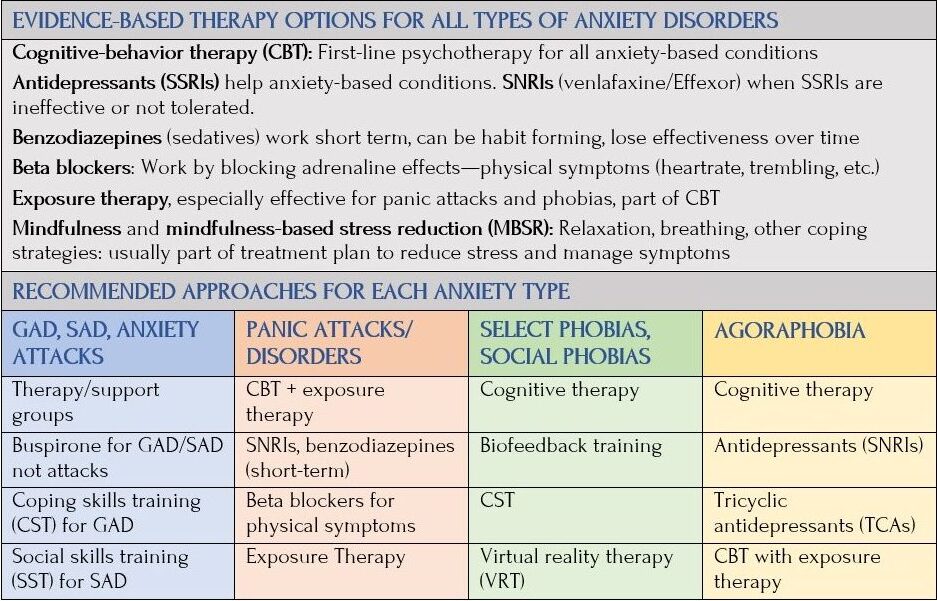
Psychotherapeutic Treatment Options
There are too many types of therapy for me to discuss, so I’ve picked those more focused on anxiety. I’ll stick to shorter-term, high-yield, effective (EBTs), and cost-effective. Different types of psychotherapy work better with different personalities, needs, tolerances, and clinical situations. What’s most important is to find what’s right, but it’s bewildering. Look to a trusted therapist to choose an approach or combination of approaches.
Psychotherapy or Talk Therapy

Individual psychotherapy helps us deal with stressful life events, impact of trauma, medical illness, absence or loss of someone you love (divorce, illness, death), and anxiety.
- Therapy’s first aim is relief from symptoms (maybe with medication). To just feel better.
- Secondly, to set goals for what you’d like to achieve. These can change, as your trust relationship with your therapist grows.
- Third, check our tolerance for deeper probing. Talk therapy helps to find root causes for what you’re feeling—to help function better, improve mental and emotional outlook, and grow as a person.
Personally, therapy has helped me through the death of my husband, cope with my son during years when our communications were tense and hurtful, and understand my anxiety attacks—even deal with my anxiety in real time. Through therapy, I’ve made better decisions and gained a greater sense of peace, even when my life was anything but peaceful.
Even if you find talk therapy is not for you, don’t just quit. If you want to end it, take a few sessions to conclude and sum up your progress, and create an alternative treatment plan. Unless you do it this way, you could inadvertently hurt yourself and find yourself less likely to find another path forward.
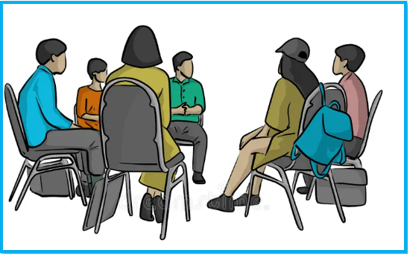
Family and Group Psychotherapy may be conducted in a family (mostly parent and child), couple, or a group of unrelated people. Key is your commitment to the process because it can get hard, and sometimes you may feel pushed to uncomfortable places.
Frequency and duration: Psychotherapy can be relatively short term, dealing with something immediate (months) or dealing with more complex issues over the long term (years). It’s typically once a week, but can depend on circumstances. I’ve gone from weekly/in-person to every other week/online. Individual therapy is often used with other therapies and medications — hopefully not just medication alone.
Cognitive-Behavioral Therapy (CBT)
Cognitive-behavioral therapy (CBT) is a highly effective form of psychotherapy considered the treatment of choice for anxiety disorders. Typically short-term, it seeks to identify and change self-destructive or unhealthy thoughts, feelings, and behaviors. Because thoughts, emotions, and behaviors are all linked, altering one can alleviate difficulties in another. In this way, CBT is different from other psychotherapies.
CBT focuses on how unhealthy thoughts, feelings, and behaviors are learned, shaped by the environment, but interconnected and in dialogue — and how unhealthy versions can be changed in ways consistent with our values and ability to cope with major life events.
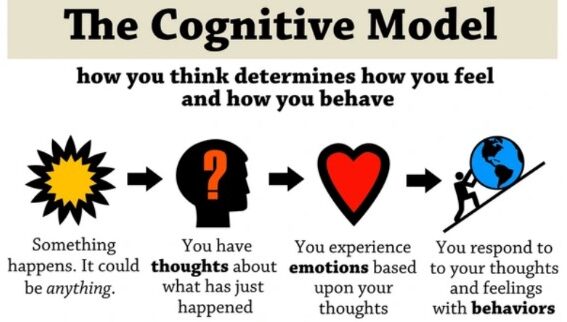
Image: Modern Mental Health
It’s how we replace the thing feared with new ways of thinking, feeling, and behaving around it, assigning it a new context. Successful outcomes give us more control over our lives as we learn to:
- Realize how automatic thoughts — distorted or negative — may affect emotions
- Evaluate whether automatic thoughts and assumptions are accurate or biased
- Develop skills to help notice, interrupt, defuse, and/or correct biased thoughts
CBT is for individuals, parents, children, couples and families. It treats substance use disorder (SUD), serious mental illnesses (like bipolar disorder), personality disorders, and pain management and other physical conditions. The strongest evidence exists for anxiety disorders, general stress, somatoform disorders (psychosomatic disorders causing physical symptoms in response to psychological distress), bulimia, and anger control problems.
Interpersonal Therapy (IPT)
IPT is a short-term form of CBT treatment that helps us understand underlying interpersonal issues, like unresolved grief, changes in social or work roles, conflicts with significant others, and problems relating to others. It helps us learn healthy ways to express emotions and improve communication and how to relate to others. It’s most often used to treat depression, but helps with anxiety as well—especially in managing especially close relationships.
Cognitive Therapy
Cognitive therapy is the treatment of choice for phobias. In the CBT family, it’s solely focused on our thoughts not emotions. It teaches us new ways to think about or face situations that cause panic and help us be less afraid. We learn how our body physically responds—within the context of our internal and external environmental. Cognitive therapy is an effective, relatively short-term treatment—averaging 6 months or less—for treating all kinds of anxiety disorders, phobias, agoraphobia, and panic disorders.
Behavior Therapy
Behavior therapy is an umbrella term for evidence-based treatments (EBTs) for a variety of psychological symptoms and disorders. Like CBT, it’s based on the idea that behavior is learned and therefore can be changed—by identifying and changing potentially unhealthy or self-destructive behaviors. Treatment focuses on our current symptoms and encourages us to engage in new, more helpful, and adaptive behaviors. The result is we have more awareness about our behaviors and fears, when and why they happen, and how they prevent us from leading a fulfilling life. Evidence shows most people receiving behavior therapy reduce their symptoms and see improvement by using new skills. Forms of behavior therapy:
Exposure Therapy
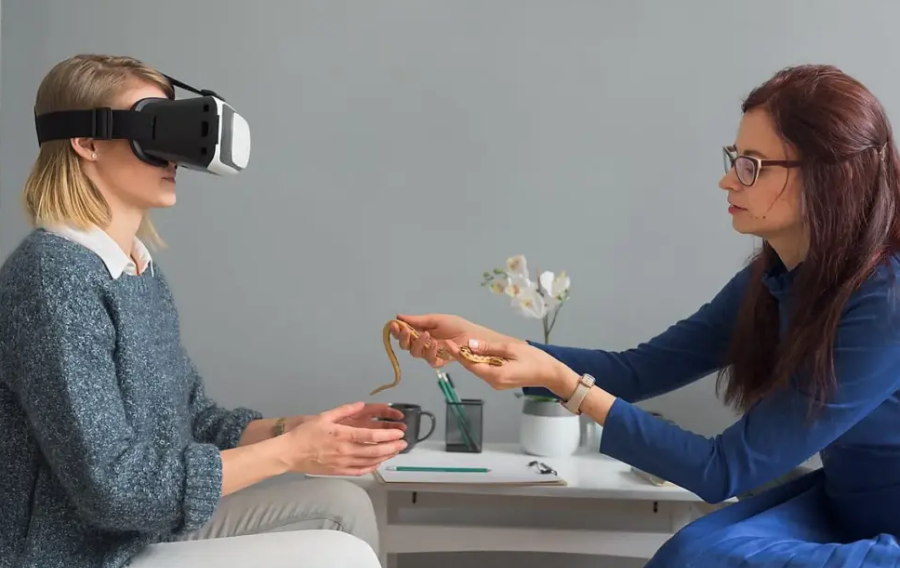
Photo: Ibex.media/Stocksy
Exposure therapy is a behavioral therapy that involves graduated exposure to a phobic stressor. It’s the best treatment for phobic disorders and works for all anxiety disorders. Therapists gradually and gently bring you into contact with what you fear, starting with the least frightening situations and moving on until the most difficult situations no longer interfere with your life. In addition to exposure therapy, you learn mindfulness and other relaxation techniques to slow your breathing and better understand your symptoms are harmless.
Specific phobia: Not all phobias need treatment, but if one affects daily life, exposure therapy helps to overcome fears—often permanently.
Social phobia: Guides us to re-evaluate troubling thoughts and beliefs, such as “everyone is watching me” or “if I say the wrong thing, people will think I’m stupid.”
Agoraphobia: Treatment needs to deal with unexpected panic attacks. Exposure techniques are proving to be as effective as medication.
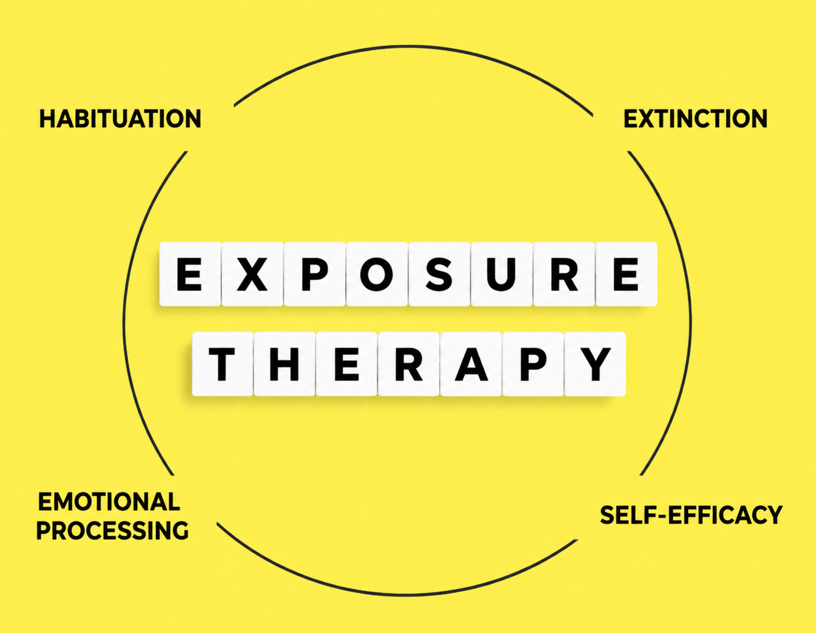
Exposure therapy is effective for more than one reason. Researchers propose several mechanisms, including habituation (reduced emotional response over time), extinction learning (forming new associations that compete with fear), emotional processing (working through distressing emotions rather than avoiding them), and self-efficacy (the belief that one can manage distress without avoidance).
Coming Up Next

In Post 16: Treatment Options for Anxiety Disorders — Part II, I’ll continue talking about treatments, like relaxation therapies conducted with a therapist. In the final posts in the series, I’ll mention some newer therapies and follow that with coping strategies to do on our own. The experts say the winning combination to heal from debilitating anxiety, panic, and phobia is a combination of psychotherapy, medication, and lifestyle changes. As a lifelong anxiety sufferer, I find that comforting to hear. We’re not our disorder, nor are we slaves to it. We can feel that what we do for ourselves is far from hopeless — it’s a source of strength … and hope.
Sources
See the end of post 16
 English