On Anxiety and Panic Disorder
Show Table of Contents
INTRO
FEAR VS ANXIETY VS ANXIETY DISORDERS
- Emotional Health vs Mental Health
- Fear vs Anxiety
- Personal Journeys with Anxiety and Panic Disorder
- Fear, Anxiety, and Fight or Flight
- The Evolutionary Role of Anxiety
- When Anxiety Drifts to Disorder
- The Ancient Advantage and Current Anguish of SAD
PHOBIAS, ANXIETY / PANIC ATTACKS
- Phobias and the Rapid Onset of Fear
- Specific Phobia and Agoraphobia
- Anxiety Attacks vs Panic Attacks vs Panic Disorder
- Anxiety Disorder Risk Factors and Symptoms
- Why Anxiety Goes Undiagnosed — and Untreated
TREATING AND COPING WITH ANXIETY
12. Anxiety Disorder Risk Factors and Symptoms
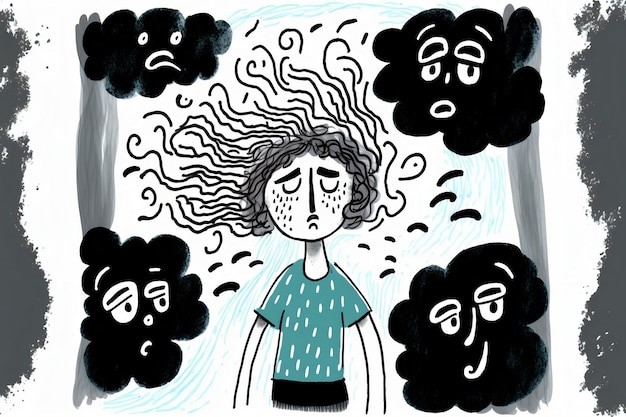
Photo: AI-generated, Adobe Stock
I’ve written quite a bit in these posts about the evolutionary advantages of fear and anxiety — and when these emotions trip over the line into disorders. This shift happens when fear and anxiety are no longer tied to an immediate threat, become disproportionate, intensify, or persist over time.
Since most scientific inquiry is theoretical — cave paintings didn’t depict anxiety — scientists still don’t fully understand how anxiety is rooted in genetics or heredity. There is some evidence of first-degree relatives with generalized anxiety disorder (GAD) being more likely to have GAD.
According to the World Health Organization, anxiety disorders, like other mental health conditions, result from a complex interaction of social, psychological, and biological factors. Some points of evidence:
- Genetic studies suggest the hereditary contribution to developing GAD is only 30%–40%.
- Environmental factors are most likely an important factor in developing anxiety disorders.
- There’s high comorbidity (co-occurrence) between GAD and major depressive disorder (MDD), with 72% of those with lifelong GAD also having MDD at some point in their life.
Risk Factors vs Causes
First a word about the terms risk factors and causes which have different meanings.
- Risk factors are behaviors or predispositions that increase the likelihood of developing a condition or experiencing a particular health problem. These can include lifestyle choices, genetic predispositions, environmental factors, and demographic characteristics.
- Causes are more directly responsible factors for a particular outcome happening, rather than merely contributing. These are specific behaviors, exposures, or conditions.

When causes are unclear, risk factors help explain why a condition is more likely to develop, so doctors, mental health specialists, and researchers can diagnose, treat, and conduct further research into causes—leading to more effective treatment.
Risk Factors for Anxiety Disorders
Anyone can have an anxiety disorder, but people who have lived through abuse, severe losses, or other adverse experiences are more likely to develop one.
Anxiety disorders are also closely related to and affected by physical health. Many effects of anxiety — physical tension, nervous system hyperactivity, and substance use — are also risk factors for disease. In turn, people with these diseases may also find themselves experiencing anxiety disorders due to the difficulties associated with managing their conditions.
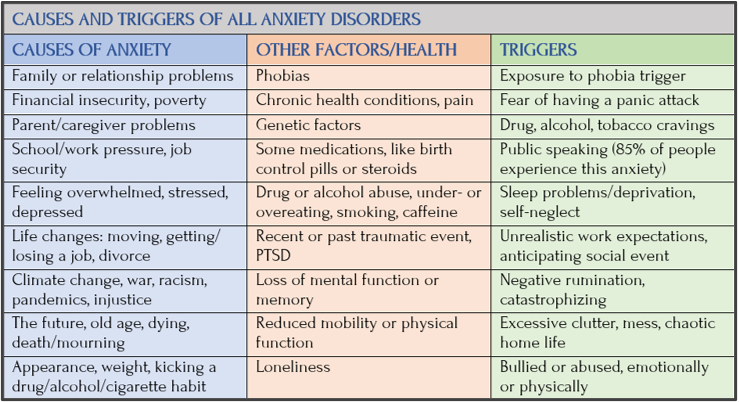
Anxiety doesn’t arise from a single source. It builds — from predispositions, life experiences, and situations we find ourselves in. The chart below separates what increases vulnerability from what actively sets anxiety in motion.
Generalized Anxiety Disorder (GAD)
Stress and anxiety help the body cope with difficult situations that arise temporarily. Persistent stress and anxiety can lead to GAD, along with broader complications: depression; disruptions in immune, digestive, sleep, and reproductive systems; and increased risk for conditions such as ulcers, heart disease, and diabetes.
If you are irritable as the result of anxiety and that irritability is affecting important relationships either at home or work, that’s a target to treat because it’s interfering. There are many people who don’t recognize that significant worry, irritability, emotional lability, and procrastination are symptoms of a treatable anxiety disorder. These traits or characteristics can severely inhibit a person’s relationships or career and limit the anxious person’s personal happiness and success. —Sandra Swantek, MD, AMA podcast
It Didn't Look Like Anxiety
My friend Lilah wouldn’t have called it anxiety, because she saw herself as responsible. Thoughtful. Rational. But over time, thinking things through began to take longer. I noticed this on the phone when we were making plans. What used to take a few minutes stretched into hours — and then I wouldn’t hear from her. When she did call back, she seemed different for days, as if we had never had the conversation at all. I began to sense something was off. This is what she told me.
At night, Lilah’s mind ran ahead of her life. She replayed conversations and couldn’t stop them from returning. Decision-making became difficult, branching into real and imagined consequences — then consequences of consequences. She began to focus on how many ways things might go wrong. She told her husband, but he didn’t seem to notice — or take her seriously.

Photo: Life Screening
During the day, she ignored the tightness in her chest. A low, constant hum of tension. She was alarmed at how quickly she became irritable — especially with people she cared about. Small decisions felt heavier than they should. Larger ones sometimes stalled entirely.
Lilah tried to reassert her rational mind — and adjusted. She double-checked things. Prepared more. She began laying out the next day’s outfit, something she had never done before. She checked her schedule repeatedly to make sure she didn’t miss work-related commitments, but avoided non-work situations that felt uncertain or exposed. She took comfort in routines, and when her sleep became interrupted, she told herself it was just a phase.
From the outside, much of this looked like competence. She met deadlines. Showed up. Managed responsibilities. But it took more effort than it used to, and less of it felt easy.
At some point — Lilah couldn’t say exactly when — the worry stopped feeling connected to anything in particular. It was no longer about a meeting, or a decision, or even a specific fear. It was just there, moving from one topic to another, or settling over everything at once.
When I finally suggested anxiety, she argued with me. She said she didn’t feel panicky. It didn’t look like what she thought anxiety was supposed to be. It was just her.
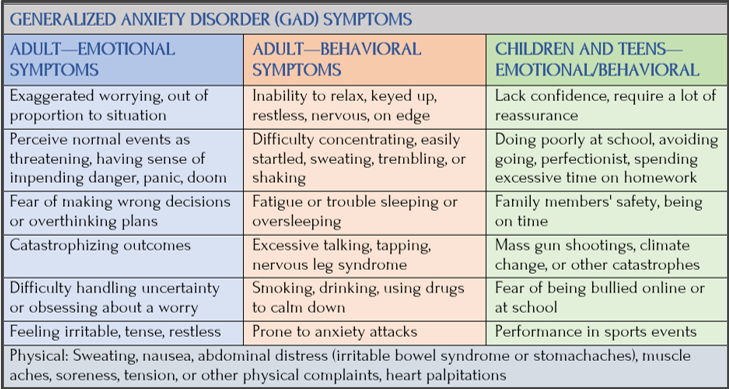
What shows up over time isn’t always obvious in the moment — but the patterns are recognizable when you see them laid out.
Symptoms of Anxiety Disorders
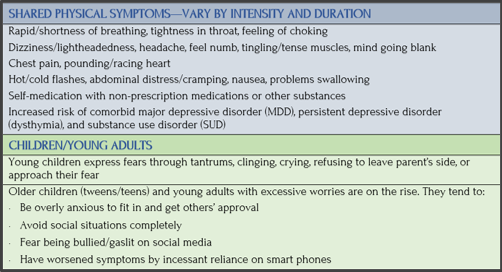
People with anxiety disorders, worldwide, share similar symptoms of a variety of anxiety-based disorders. To be diagnosed, all anxiety disorders or anxiety-based conditions must be consistent, ongoing, and persist for at least six months. Commonly, diagnoses are complicated by comorbidities with other psychiatric disorders, like major depressive disorder (MDD), substance use disorder (SUD), eating disorders, obesity, and possibly an experience of trauma or family history with GAD.
People with anxiety disorders have great difficulty with a broad range of everyday situations. They can experience excessive fear or worry about a specific situation (panic attack or social event). If they can, they avoid situations that make them anxious, but this is not always possible.
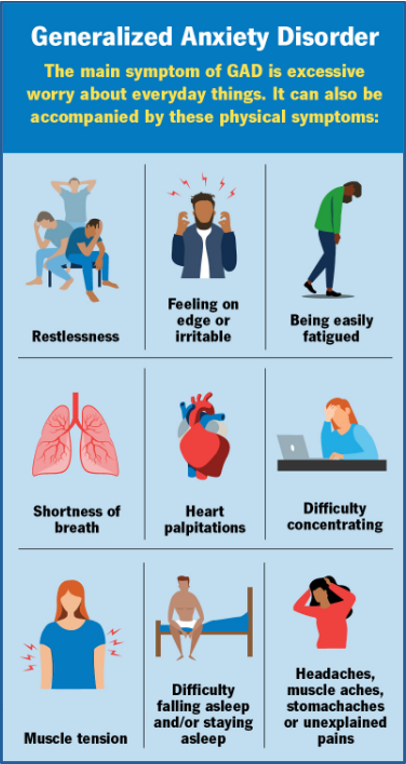
Symptoms of Generalized Anxiety Disorder (GAD)
What anxiety looks like in daily life is often broader — and more physical — than people expect.
These are the patterns that tend to show up over time, as seen in this chart.
Graphic: Cleveland Clinic
Panic Disorder Symptoms
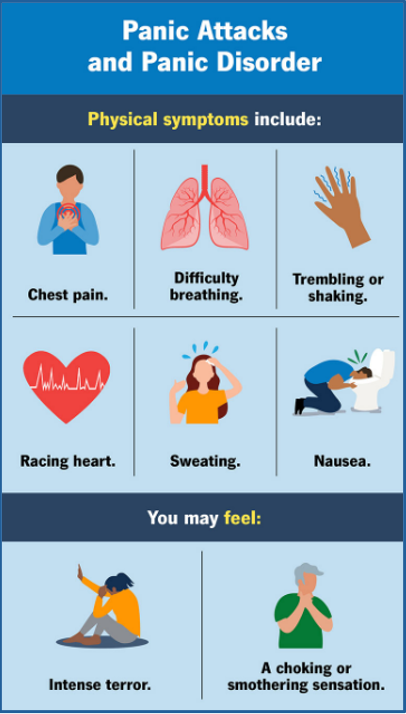
A common symptom of panic disorder is an intense fear of having more panic attacks — a fear causing panic attacks to become more intense and frequent. Avoiding anything an individual thinks might trigger a panic attack can make them curtail their activities and reduce their quality of life. They live with constant fear that they’re about to have a medical emergency, like a heart attack or mental breakdown — and fear they may not return to how they felt before. Such episodes can occur suddenly, unprompted by a known stressor or something feared. They are frequently accompanied by emotional and physical symptoms. Panic disorders often start in the late teens or early adulthood and affect more women than men.
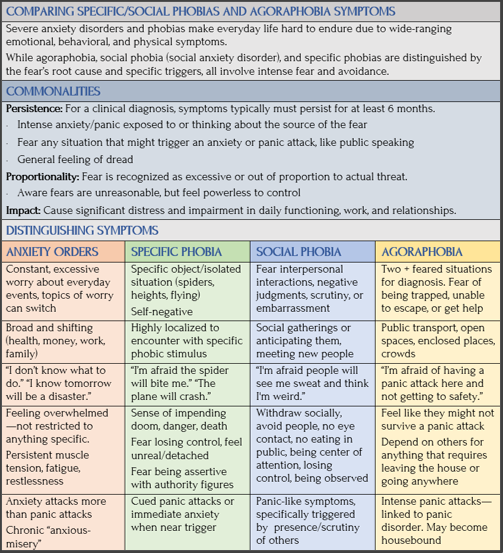
Fears and Avoidance Behaviors
Not all anxiety disorders look the same. The differences matter — not just for diagnosis, but for understanding how fear gets organized in the mind.
Graphic: Cleveland Clinic
Coming Up Next
What anxiety looks like in daily life is often broader — and more physical — than people expect. These are the patterns that tend to show up over time, as seen in this chart.

In Post 13: A Proper Diagnosis — Untreated Anxiety Disorders, I’ll discuss diagnoses for anxiety disorders and the medical, psychological, and emotional costs of not getting treated for your anxiety.
Sources
 English