On Bipolar Disorder
Show Table of Contents
INTRO
1. On Bipolar Disorder: Introduction
2. Jaden’s Story: A Journey to Mania
3. The Bipolar Rockies: A Witness to Mania
4. Bipolar Spectrum Disorder: More Than Mood Swings
5. How Bipolar Risk Takes Shape
6. A Sensitive System Under Stress
TIME
8. Bipolar Disorder and Circadian Rhythms: Why Sleep Isn’t Just Sleep — Part I
9. Bipolar Disorder and Circadian Rhythms: The Goal is Stabilization — Part II
SIGNIFICANCE AND MISREADING
10. Reward Sensitivity and Bipolar Vulnerability
11. Bipolar and Cannabis: Relief, Risk, and Regulation
12. Bipolar, Hypomanic Personality, and Narcissism: Similar Traits, Different Meanings
DIAGNOSIS AND SYSTEM FAILURE
13. Bipolar Diagnosis, Misdiagnosis, and the Hidden Barrier of Stigma
14. When Diagnoses Overlap: Bipolar, ADHD, Borderline
15. When Bipolar Disorder Affects the Body
16. The Raw Shock of a Bipolar Diagnosis
TREATMENT AND COPING
17. Bipolar Treatment: Medication Non-Optional
18. Bipolar Treatment: It Takes a Village
19. Coping With Bipolar: Things to Do
20. Famous People and Bipolar Disorder
21. Future Breakthroughs: New Bipolar Research
22. Bipolar Poetry: Inside My Mind
14. When Diagnoses Overlap: Bipolar, ADHD, Borderline

In the prior post, I discussed stigma and its related impact on missed or late diagnoses for bipolar disorder (BD). I also described a frequent and consequential miss: when mania goes unreported and only depression is treated — often in ways that worsen bipolar outcomes.
But there’s another looming area that confounds accurate diagnosis: overlapping symptoms with other conditions and personality disorders. These can occur in different ways. A person may, in fact, have a comorbid condition — or the symptoms may simply resemble another disorder. In post 12, I explored this by looking at bipolar symptoms that can mimic narcissistic traits. Although the behaviors may look similar, they often arise from entirely different psychological and biological processes.
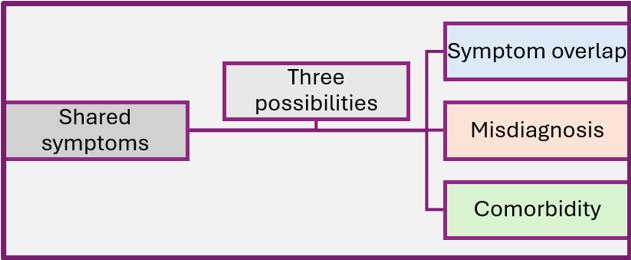
In this post, I’ll look at two of the most common conditions that intersect with BD: attention-deficit/hyperactivity disorder (ADHD) and borderline personality disorder (BPD). Examining symptoms over time — along with family history — can help determine whether someone has a true comorbid condition, overlapping symptoms, or even a misdiagnosis. Each possibility leads to very different treatment decisions and outcomes.
What’s required is careful assessment during moments of relative calm — not in the midst of acute mania.
Gold Standard Diagnostics

In this post, I’ll look at two of the most common conditions that intersect with BD: attention-deficit/hyperactivity disorder (ADHD) and borderline personality disorder (BPD). Examining symptoms over time — along with family history — can help determine whether someone has a true comorbid condition, overlapping symptoms, or even a misdiagnosis. Each possibility leads to very different treatment decisions and outcomes.
What’s required is careful assessment during moments of relative calm — not in the midst of acute mania.
Diagnosing bipolar disorder is rarely straightforward. One reason is that clinicians traditionally rely on a method considered the most accurate: longitudinal observation, also called dimensional diagnosis. To determine the severity and frequency of mood swings, they often need to observe several mood cycles before confirming diagnosis.
According to the National Institutes of Health, this longitudinal approach remains the gold standard for diagnostic accuracy.
The reason is simple: bipolar disorder is defined not just by symptoms, but by patterns. A depressive episode alone may look identical to major depression. Only when a manic or hypomanic episode appears does the pattern become visible.
But the gold standard creates a serious problem. Waiting for multiple mood cycles to appear can delay diagnosis for years. During that time, many individuals are treated only for depression, often with medications that fail to help bipolar depression — or worsen mood instability.
In addition, some patients don’t return for follow-up, while others struggle to track their moods accurately. When someone is in severe distress, careful long-term monitoring may become secondary to urgent care.
And more tragically, late diagnoses contribute to suicide attempts and dying by suicide. As a research team writes:
Longitudinal assessment is crucial, as the episodic nature of bipolar disorders often requires observation over time to capture the characteristic mood fluctuations between depressive and manic or hypomanic states. Diagnosis can be delayed by up to seven years, leading continued impaired functionality, psychosocial and interpersonal difficulties, greater treatment resistance, and increased suicide risk.
Suicidal behavior is significantly increased in bipolar disorders. About 30–50% of adults with bipolar disorders have attempted suicide in their lifetime, and 5–20% have completed it. —Vincenzo Oliva, et al., “Bipolar disorders: an update on critical aspects,” PubMed Central/NIH
Symptom Overlap vs. “Classic” Comorbidity vs “Pure” Comorbidity
In this post, I’ll look at two of the most common conditions that intersect with BD: attention-deficit/hyperactivity disorder (ADHD) and borderline personality disorder (BPD). Examining symptoms over time — along with family history — can help determine whether someone has a true comorbid condition, overlapping symptoms, or even a misdiagnosis. Each possibility leads to very different treatment decisions and outcomes.
What’s required is careful assessment during moments of relative calm — not in the midst of acute mania.
Understanding comorbidity has implications for understanding bipolar disorder. At first, the breakdown is two-fold: symptom overlap vs comorbidity. Now I see it as three-fold: symptom overlap vs traditional comorbidity vs “shared” or pure comorbidity.
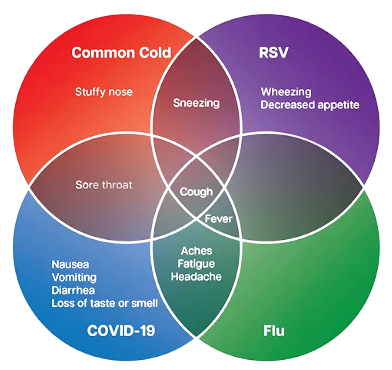
This graphic shows symptom overlap in respiratory illnesses which can make it difficult to distinguish the common cold from more serious manifestations.
Traditionally, clinicians have used a straightforward framework: his person has multiple disorders. That language is still necessary in clinical settings. But it doesn’t fully capture what research is beginning to show.
A more nuanced view is emerging: This person has vulnerabilities in underlying regulatory systems that can show up in different ways. Less memorable perhaps, but this shift — from counting diagnoses to understanding systems — can reduce stigma and open the door to more precise treatment.
From this perspective, what we’ve been calling “comorbidity” may not always reflect separate, unrelated conditions. In some cases, it may reflect shared disruptions in systems that regulate mood, attention, stress, sleep, and energy.
Three Ways Symptoms Can Overlap
To make sense of this, it helps to distinguish three different possibilities:
- Symptom overlap occurs when different conditions produce similar outward behaviors, but through different underlying mechanisms. One example [see post 12] is the grandiosity or extreme confidence of mania which can resemble narcissistic We could call these common traits “false friends.” They look alike, but they do not come from the same place.
- Classic comorbidity, by contrast, is when a person meets full diagnostic criteria for two distinct conditions at the same time. This is the standard clinical model and remains essential for treatment decisions. It’s about what’s observed and then sequenced in treatment.
- Shared or “pure” comorbidity is an emerging concept of different conditions arising from overlapping vulnerabilities in the same underlying systems. What appears as multiple disorders may, in part, reflect different expressions of a shared biological foundation.
These distinctions matter. Treatments that help one condition can worsen another. For example, ADHD stimulant medications can trigger mania in someone with unrecognized BD, while antidepressants can destabilize mood in someone with bipolar depression misdiagnosed as unipolar depression.
Because of these risks, clinicians try to evaluate symptoms during periods of relative stability and look for patterns over time — how long mood changes last, what triggers them, and whether they occur in episodes or persist across situations.
Shared Underlying Regulating Systems
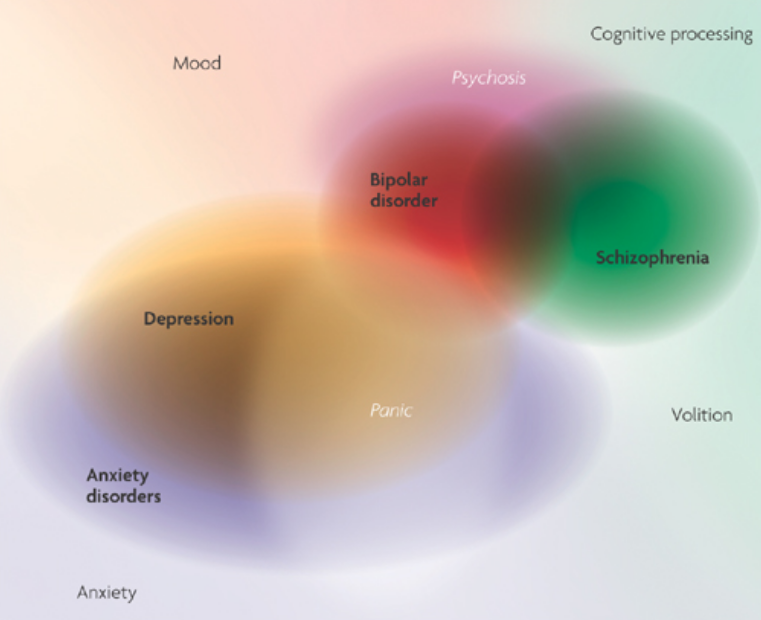
This graphic shows overlaps in mental health conditions. Image: “Psychiatric Disorders Overlap and Might be Extremes of Personality Traits, Genetics, Research Gate
But in research, a different understanding is beginning to take shape. Increasingly, scientists are asking whether these overlaps reflect not coincidence, but shared disruptions in underlying biological systems — systems as we’ve learned in earlier posts that regulate stress, sleep, energy, metabolism, and — as we’ll see in the next post — inflammatory, metabolic, vascular, and other drivers of illness.
From this perspective, comorbid BD with psychiatric and medical conditions may not be entirely independent problems, but different expressions of interconnected processes within the body.
But having overlapping systems doesn’t mean they’re organized and expressed in the same way — that’s why diagnosis has a bit of a Sherlock Holmsian sleuthing involved. In this emerging view, what has traditionally been called “comorbidity” may, in part, reflect a deeper pattern of system overlap — one that shifts the focus from counting diagnoses to understanding how regulatory systems function across the whole person.
Some definitions to guide discussion:
Distinguishing between overlap and comorbidity matters enormously in bipolar disorder. Treatments that help one condition may worsen another. Because ADHD stimulant medications can trigger mania in individuals with untreated bipolar disorder, it can be like playing with fire if the full picture isn’t accurate. Similarly, standard antidepressants may worsen mood instability if BD has not yet been recognized.
Because of these risks, clinicians try to evaluate symptoms during periods of relative stability rather than during acute crisis. They look for patterns that unfold over time — how long mood changes last, what tends to trigger them, and whether symptoms occur in episodes or persist across many situations. But the path to diagnosis takes an unconscionably long time, while a person can be receiving these with wrong treatments.
Precision Psychiatry
Recognizing these challenges, researchers are now exploring ways to shorten the path to diagnosis without sacrificing accuracy. This asks why there’s symptom overlap — and what are its implications for the fundamental at-risk factors for one, two, or even three comorbidities.
The emerging field of precision psychiatry aims to identify earlier warning signs of bipolar illness before years of observation are required. As one research team writes:
There is a growing recognition that earlier identification and intervention could significantly improve outcomes. This has led to increasing attention toward prevention strategies, particularly those aimed at early detection and early intervention. These approaches may delay illness onset, reduce symptom severity, slow progression, and in some cases, prevent full-blown BD.
Early identification carries ethical challenges, including risk of overdiagnosis, stigma, false positives, and treatment decisions under uncertainty. — Marianna Mazza, et al., “Catching the Storm Before It Breaks: Advancing Early Diagnosis and Intervention in Bipolar Disorder,” PubMed Central/NIH
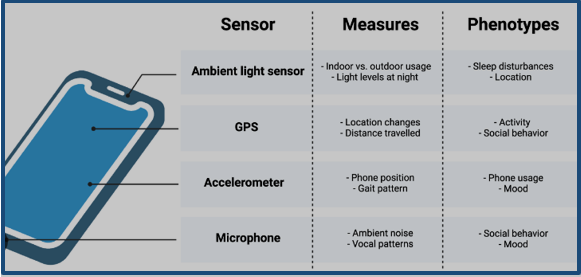
An example of digital phenotyping using a smartphone to predict psychological traits and states from digital variables. Graphic: Christian Montag, et a., ”Digital phenotyping in molecular psychiatry—a missed opportunity?” Molecular Psychiatry, Nature.com
Several approaches are currently being studied:
- Digital phenotyping analyzes smartphone data — sleep patterns, activity levels, typing speed — to detect subtle changes in psychomotor activity that may precede a mood episode.
- Biological biomarkers include experimental blood tests designed to distinguish bipolar and unipolar depression during a person’s first depressive episode.
- Staging models identify early or at-risk phases of illness using family history, subclinical symptoms, and cognitive patterns rather than waiting for a full manic cycle.
Large research initiatives are also collecting brain imaging and genetic data from thousands of participants in an effort to map illness trajectories more precisely.
Taken together, these efforts reflect a major shift in the field. For decades, clinicians had little choice but to wait for bipolar disorder to declare itself through repeated mood episodes. Increasingly, researchers like Mazza and team hope to detect bipolar vulnerability earlier and intervene, before the storm fully breaks.
Even with these advances, however, diagnosis remains challenging in everyday practice because bipolar symptoms can closely resemble unrelated and related conditions. With that in mind, I’ll look more closely at two conditions that frequently intersect with bipolar disorder: attention-deficit/hyperactivity disorder (ADHD) and borderline personality disorder (BPD). In these cases, symptom overlap is common — but true comorbidity can also occur, creating a much more complex clinical picture.
Common Psychiatric Bipolar Spectrum Comorbidities
Research suggests, in contrast with standalone bipolar, that comorbid bipolar can be more severe, with earlier onset, more mood episodes, and greater functional impairment. In my son Jaden’s case, BD-I was eventually treated, but his ADHD remained untreated. I can’t know exactly how much this shaped the course of his illness. But it raises a question that many families face: how do these two conditions interact when only one is being addressed?
Diagnosing BD and ADHD
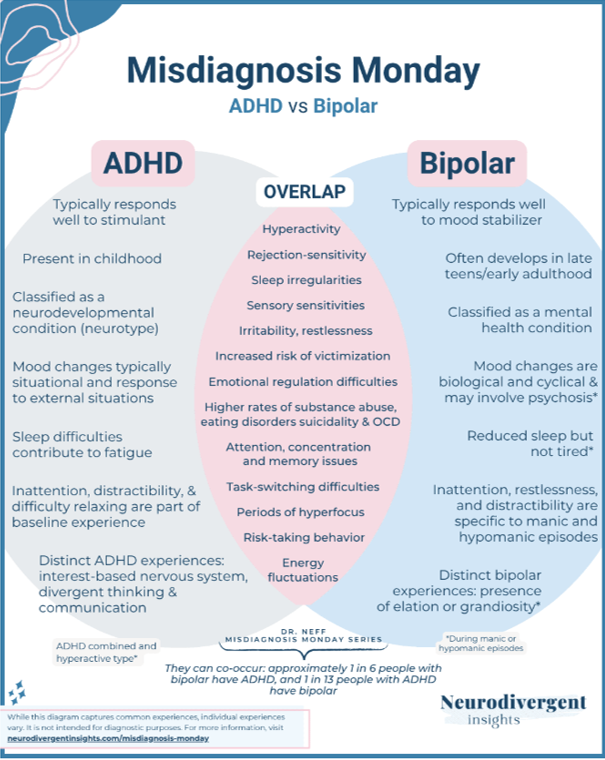
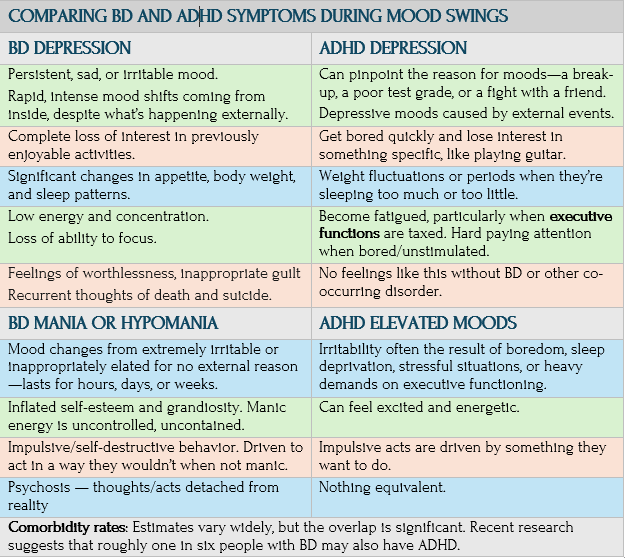
BD and ADHD share many outward traits — impulsivity, distractibility, restlessness, emotional dysregulation — yet it remains unclear whether they are two distinct disorders. It’s not surprising they’re often confused — or occur together.
But there is a key difference in pattern.
- Bipolar symptoms tend to occur in episodes — distinct periods of depression or mania/hypomania.
- ADHD symptoms are typically persistent, present across situations and over time.
This distinction is critical because treatment strategies can conflict. It’s not uncommon for people with BD to have been diagnosed with ADHD as children and treated with stimulant medications, which can trigger bipolar manic episodes if underlying BD hasn’t yet been recognized.
ADHD/bipolar similarities and differences — why the two conditions can be confused. Neurodivergent Insights
BD and ADHD: A Bad Combination
When both conditions are present, outcomes are often more severe: earlier onset, more frequent mood episodes, shorter periods of stability, and increased risk of suicide. For this reason, clinicians often stabilize bipolar symptoms first before addressing ADHD.
It is essential that a clinician evaluate a patient for ADHD when BD is part of the picture. The debilitating and tormenting nature of this illness cannot be overestimated, especially in someone who also has ADHD. Since the comorbidity rates are high, any time someone is diagnosed with one, the presence of the other should always be looked for. —Dr. Roberto Olivardia, clinical psychologist and instructor, Harvard Medical School, and author of “Solving the ADHD-Bipolar Puzzle,” ADDitude Magazine, 2023.
BD and ADHD share genetic implications: relatives of those with BD had a significantly higher chance of having ADHD, and among relatives of ADHD people BD occurred more frequently.
There are also shared risk factors related to maternal substance abuse and maternal stress exposure during pregnancy. Also, people with childhood adversities and trauma were found more likely to develop ADHD and BD.
Comorbid ADHD and bipolar disorder is distinctly higher than expected if they are independent conditions and their linkage is capable of multiple explanations. In managing such states a sequential approach is favored, with the bipolar condition being brought under control first before initiating any stimulant medication for the ADHD. —Gordon Parker, “Comorbid ADHD and Bipolar Disorder — An Update,” PubMed Central/NIH
According to Healthline, more research is needed to understand the best treatment option for comorbid BD/ADHD. Most professionals treat BD first and then target ADHD symptoms, understanding that the medications for each lie in uneasy states of co-existence.
But what may be right in the moment may not work over the long haul. I hope, for my son’s sake, they find a way to alleviate his untreated ADHD in a way that’s safe, effective, and humane.
BD and Borderline Personality Disorder (BPD): Diagnosing Comorbidity
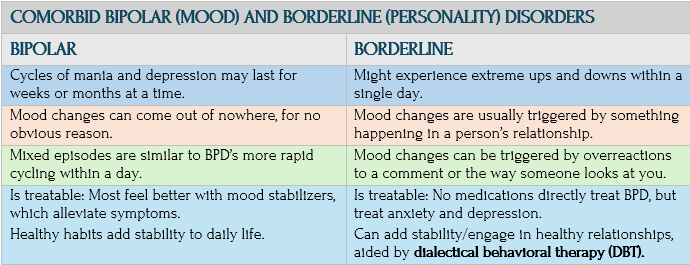
The BD/BPD overlap can be even more confusing. Both involve mood instability, impulsivity, and risk of self-harm. But again the pattern and origin differ:
- In BD, mood shifts tend to occur in longer episodes, often without a clear external trigger.
- In BPD, emotional shifts are typically rapid and reactive, closely tied to interpersonal experiences — especially fears of abandonment or relationship instability.
BPD is also characterized by patterns of identity disturbance, unstable relationships, and intense sensitivity to perceived rejection.
It’s possible to have both conditions. Like other comorbidities, the risk profile increases and treatment must be carefully adapted. According to research:
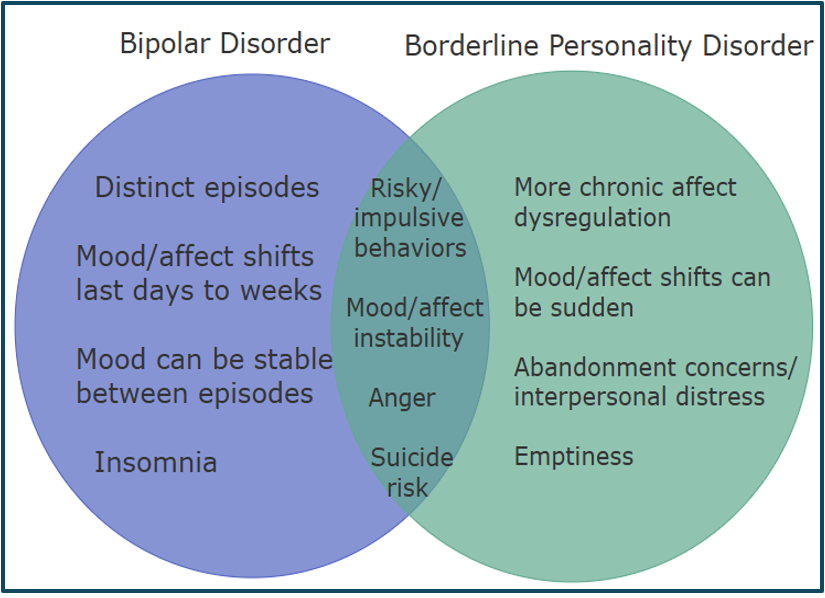
Text from International Bipolar Foundation, redesigned for legibility
- BPD’s affective (mood) instability trait is directly associated with BD.
- BPD’s impulsivity traits are not directly associated with BD.
- BPD traits of impulsivity increase the risk of suicide in those with BD — meaning those showing both BD and BPD symptoms are at greater risk for suicide.
Comparison of BD and BPD
The Destructive Side of Untreated BD
BD is dangerous when misdiagnosed, its symptoms miscast as unipolar depression or dismissed as a personality flaw or weakness. It can take years to get the right diagnosis and treatment.
For Jaden, it took one year. His first two episodes and hospitalizations occurred exactly one year apart, with nearly identical symptoms. Only then could the psychiatrists begin to rule out other possibilities in favor of a bipolar diagnosis.
He had lived with ADHD since early childhood, so there was no clear “before” to compare it to — no obvious line between one condition and another.
And as with many people living with comorbid bipolar disorder, his illness has not unfolded in isolation. Compounded stress, and at times trauma, have shaped the course of his life as much as any diagnosis. At a certain point, it becomes difficult to distinguish the condition from the life lived alongside it.
Coming Up Next

In this post we see the potential harm done of bipolar symptom overlap, comorbidity with other psychiatric conditions, late diagnosis, and misdiagnosis. But perhaps unknown to many who were unaware of bipolar as a systemic illness — brain and body — there are numerous physiological comorbidities as well. In Post 15: When Bipolar Affects the Body, I’ll discuss two medical conditions with high bipolar comorbidity: heart disease and inflammation.
Sources
 English