
On Bipolar Disorder
Show Table of Contents
INTRO
1. On Bipolar Disorder: Introduction
2. Jaden’s Story: A Journey to Mania
3. The Bipolar Rockies: A Witness to Mania
4. Bipolar Spectrum Disorder: More Than Mood Swings
5. How Bipolar Risk Takes Shape
6. A Sensitive System Under Stress
TIME
8. Bipolar Disorder and Circadian Rhythms: Why Sleep Isn’t Just Sleep — Part I
9. Bipolar Disorder and Circadian Rhythms: The Goal is Stabilization — Part II
SIGNIFICANCE AND MISREADING
10. Reward Sensitivity and Bipolar Vulnerability
11. Bipolar and Cannabis: Relief, Risk, and Regulation
12. Bipolar, Hypomanic Personality, and Narcissism: Similar Traits, Different Meanings
DIAGNOSIS AND SYSTEM FAILURE
13. Bipolar Diagnosis, Misdiagnosis, and the Hidden Barrier of Stigma
14. When Diagnoses Overlap: Bipolar, ADHD, Borderline
15. When Bipolar Disorder Affects the Body
16. The Raw Shock of a Bipolar Diagnosis
TREATMENT AND COPING
17. Bipolar Treatment: Medication Non-Optional
18. Bipolar Treatment: It Takes a Village
19. Coping With Bipolar: Things to Do
20. Famous People and Bipolar Disorder
21. Future Breakthroughs: New Bipolar Research
22. Bipolar Poetry: Inside My Mind
2. Jaden’s Story: A Journey to Mania

Photo: Vecteezy
As a baby, Jaden stopped people in the street. He was that adorable. He was a sweet and loving boy throughout his childhood, but he was also quirky. His first response to trying something new was NO. He was not cajole-able — he didn’t do something just to please someone else. No was no, and that should’ve been the end of it.
My husband and I used to say Jaden marched to the beat of his own drummer — and, for the most part, we let him be himself. However, there were non-negotiables. He had to go to school and do his homework. He had to join family get-togethers.
But it was in the squishy middle where I faltered as a parent. Do I let him decide? Or do I cause him to have a meltdown by forcing something on him? I learned to consider all options before I said anything to my little son — to know in advance whether something was “you have to, you have no choice” or “either way, you get to decide.” I had to know the nonnegotiables — because if Jaden saw any hesitation in my response he’d wear me down until I threw up my hands and said, “Do what you want.” I didn’t want to be controlled by a six year old, but there it was.
Once I figured out this strategy, I could see Jaden actually benefitted from my black-and-white rule setting. He manipulated “principles” but complied with “rules.”
So Young and Already So Unique
I won’t dwell (at his request) on his refusal of the bottle and how he almost “drowned” at his first drink from the sippy cup. From the moment he started with finger foods, he rejected anything with color, texture, and taste. His universe of food consumption was narrowed to pasta with butter and parmesan — hold the parsley. Later, he added chicken fingers and French fries, often ordering two dinners from the children’s menu to sate his hunger. One memorable, abundant Thanksgiving at a cousin’s home, Jaden only ate white bread. That was my son.
Other Fond Memories
- Baby Jaden was allowed his pacifier only at home, but I was urging him to quit. One day, we saw an older child with a pacifier. Jaden pointed at him, sensing how this was wrong. He told me he would quit in three weeks. Three weeks later, he quit.
- Jaden would not wear any binding clothing. Only sweats. For ten more years.
- In nursery school, Jaden didn’t want to change activities when the class did. He’d refuse to transition from sand-and-water play to painting. The teacher thought I was upset by this, so tried forcing him. I told her to let him be, and he was happy again. Transitions were hard.
- At age four, Jaden understood the concept of multiplication. One of his preschool teachers asked me if she could write her master’s thesis about Jaden’s learning and behavior. She adored him, so I said yes. The other teacher saw him as a problem child.
- In fourth grade, two years before he was diagnosed with attention-deficit/hyperactivity-disorder (ADHD), his teacher noted how Jaden liked to quietly wander around the classroom, checking things out. He didn’t like sitting at his desk, seemed bored, and rarely volunteered to answer a question. The school suggested Jaden should repeat the grade to be an “academic leader.” I couldn’t imagine making a bored child repeat a grade, but did agree to him getting tested. The school was stunned when Jaden tested in the high superior range on every assessment. When I asked him about the experience, Jaden brightened. He loved the tests — and all the neat stuff he was asked to do.
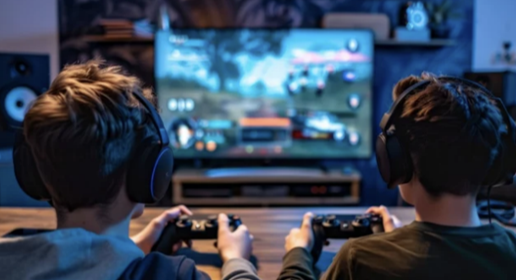
- Before he started first grade, Jaden was hospitalized for Lyme’s disease. There he was introduced to the Mario Brothers — to this day, videogame play is essential to my son’s ability to find calm in stormy seas.
- On a videogame-free vacation, I brought along Mancala, an ancient Chinese game of strategy. Never, not once, could I beat my middle schooler at this game. To this day, he wins every time, whether board games or chess.
Mancala being played in Mozambique. Photo: Wikipedia

- In fifth grade, the school introduced a math program that looked like chutes and ladders. Parents complained because they couldn’t help their kids with homework. I didn’t need to. Jaden loved this program and knew exactly what to do. Once the kill-and-drill homework returned, he stopped doing it.
Photo: Beyond Book Smart


- In HS math, Jaden had to make-up a test, but the teacher kept him in the noisy classroom. To concentrate, he put on his noise-canceling headphones. he teacher saw he was rude and disrespectful and sent him to the principal’s office. Another trip for mom to the school, reminding them Jaden had ADHD and an individualized education plan (IEP). I had many such fights with the school to honor Jaden’s accommodations.
- He went on to major in math in college.
Chaotic, smart, conceptual, disorganized, rigid, creative
Throughout Jaden’s young life, I recognized the ways he was different. He had no interest in sports and wasn’t particularly coordinated, though he liked inline skating for a time. He refused to participate in anything organized, even chess club where he could’ve excelled, or attend anything, like the senior prom. A good friendship ended with someone who wanted to do normal HS activities. Instead, Jaden found some friends who were equally disengaged and not the mom-friendly types.
But even with all that, I didn’t see anything terribly wrong. Jaden was funny, interesting, smart as a whip — I was only alarmed by his erratic grades and his chances of getting into college. Looking back, yes, there were signs. His rigidity and unwillingness to try anything new belied an anxiety and insecurity without a surface “tell.” He never showed typical nervous anxiety.
But it was there. His ADHD seemed like a school homework issue — I didn’t take it too seriously. As a parent, I didn’t have the language to understand ADHD as a neurological brain condition, now known to have a genetic correlation with BP as well as other comorbidities (co-occurring) conditions that tend to develop in later young adulthood.
What I didn’t know then embarrasses me today. I talked to child psychiatrists and psychologists about Jaden — didn’t any of them see future probabilities? Could they have explained his slow-to-develop executive functioning and self-regulation deficits (I didn’t know these terms at the time) were more significant and might require further intervention? Jaden didn’t mind seeing one psychologist because they played games and talked about his dog — but nothing changed.
ADHD Meds
At one point in middle school, Jaden was prescribed a low-dose of Ritalin. I was nervous about giving him a stimulant medication. It didn’t seem to do anything for him, so I stopped it. When he was halfway through college, his math classes turned into three-hour seminars, and he could not stay alert. In one class, an old radiator was clanking, the professor spoke with an accent, and Jaden knew he’d fail unless he did something. Amazingly, he spoke to the school about changing classrooms (and they obliged), and he started with Adderall. Jaden stayed on this until his first episode some five years later. He can no longer receive treatment for ADHD, which has caused him problems with concentration.
Bipolar Onset at Age 25
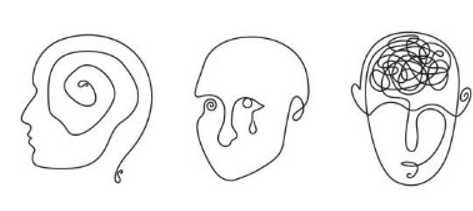
Jaden was first hospitalized after a psychotic episode when he was 25—the median age for the majority of BD cases. It wasn’t until his second episode one year later, practically to the day, that he was diagnosed as having bipolar disorder I (BD I).
There isn’t a medical diagnostic test for BD. It requires cataloguing symptoms over time to rule out other things and wait for the high-and-low patterns of BD to emerge.
It turns out my son had the most extreme and severe version of this disorder. Hearing the words bipolar disorder sent me into a fugue state. No, this is not my son. My healthy adult son who graduated college and had a job and was financially independent.
I was reminded of taking him to the pediatrician when Jaden was in fifth grade and, as we were leaving, the doc said, let’s just have him read the eye chart. He failed spectacularly. Meaning, how long had he been unable to see the chalk board at school?!?
So, once again, I had to think, what do I know about my own child? What is bipolar disorder? I clearly wasn’t an abusive parent. Both my husband and I loved him unconditionally. Besides for some normal stuff, neither of us had bipolar disorder or any other disorder. I felt like a lost, wet cat in a storm, unable to protect my kitten from lightning striking.
Reimagining the Person We Thought We Knew and Loved
More than just characterized by extreme highs and lows, BD mood changes are “drastically” different from what a person is typically like, says the Mayo Clinic. If behavior seems familiar, they could be simply personality traits or signs of another mental health condition, like ADHD.
If you always speak quickly, make impulsive decisions, and don’t sleep much, those aren’t signs of a manic episode. —Mayo Clinic
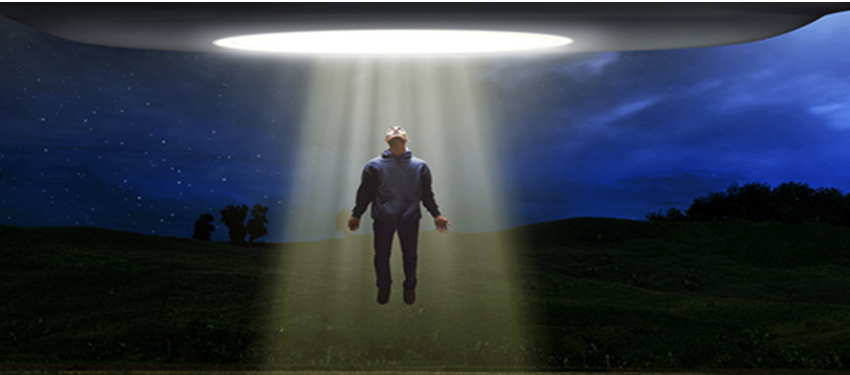
Behaviors change the person we thought we knew and loved — as if we lost them to an alien takeover by the UFO-Bipolar. I miss my son’s sly humor and cool disposition. He’s permanently changed. He’s a new somebody I’ve had to reacquaint myself with. And there are times I don’t like to talk about, let alone think about, when my son blamed me for destroying his life, his brain, and who accused me of terrible things. But in another moment, the old humor slips through a crack. A look. A response to something inane. And my heart leaps — there he is, I think to myself. There’s my son.
Coming Up Next

Post 3: The Bipolar Rockies: A Witness to Mania continues Jaden’s story.
Sources
 English