On Bipolar Disorder
Show Table of Contents
INTRO
1. On Bipolar Disorder: Introduction
2. Jaden’s Story: A Journey to Mania
3. The Bipolar Rockies: A Witness to Mania
4. Bipolar Spectrum Disorder: More Than Mood Swings
5. How Bipolar Risk Takes Shape
6. A Sensitive System Under Stress
TIME
8. Bipolar Disorder and Circadian Rhythms: Why Sleep Isn’t Just Sleep — Part I
9. Bipolar Disorder and Circadian Rhythms: The Goal is Stabilization — Part II
SIGNIFICANCE AND MISREADING
10. Reward Sensitivity and Bipolar Vulnerability
11. Bipolar and Cannabis: Relief, Risk, and Regulation
12. Bipolar, Hypomanic Personality, and Narcissism: Similar Traits, Different Meanings
DIAGNOSIS AND SYSTEM FAILURE
13. Bipolar Diagnosis, Misdiagnosis, and the Hidden Barrier of Stigma
14. When Diagnoses Overlap: Bipolar, ADHD, Borderline
15. When Diagnoses Overlap: Physiological Drivers
16. The Raw Shock of a Bipolar Diagnosis
TREATMENT AND COPING
17. Bipolar Treatment: Medication Non-Optional
18. Bipolar Treatment: It Takes a Village
19. Coping With Bipolar: Things to Do
20. Famous People and Bipolar Disorder
21. Future Breakthroughs: New Bipolar Research
22. Bipolar Poetry: Inside My Mind
15. When Bipolar Disorder Affects the Body

As I get deeper into writing this series, I’m unsettled by how little most of us know — myself included — about the profoundly complex nature of bipolar disorder. We call it a psychiatric disorder because its most recognizable symptoms involve mood, thought, behavior, and energy. But systems coordinated by the brain — stress response, circadian rhythm, reward regulation, and metabolism — interact with processes throughout the body.
That helps us understand an alarming finding that has emerged repeatedly in bipolar research: people with bipolar disorder have substantially higher rates of physical illness and premature death than the general population. The greatest threats to their life expectancy are suicide and physical illness — particularly cardiovascular disease.
A 2023 systematic review and meta-analysis encompassing 57 studies and more than 678,000 people with BD found twice the overall risk of premature death compared with the general population. In addition to cardiovascular disease, deaths from natural causes that were substantially elevated include cerebrovascular (relating to blood flow, arteries, and veins in the brain), respiratory, and infectious disease.
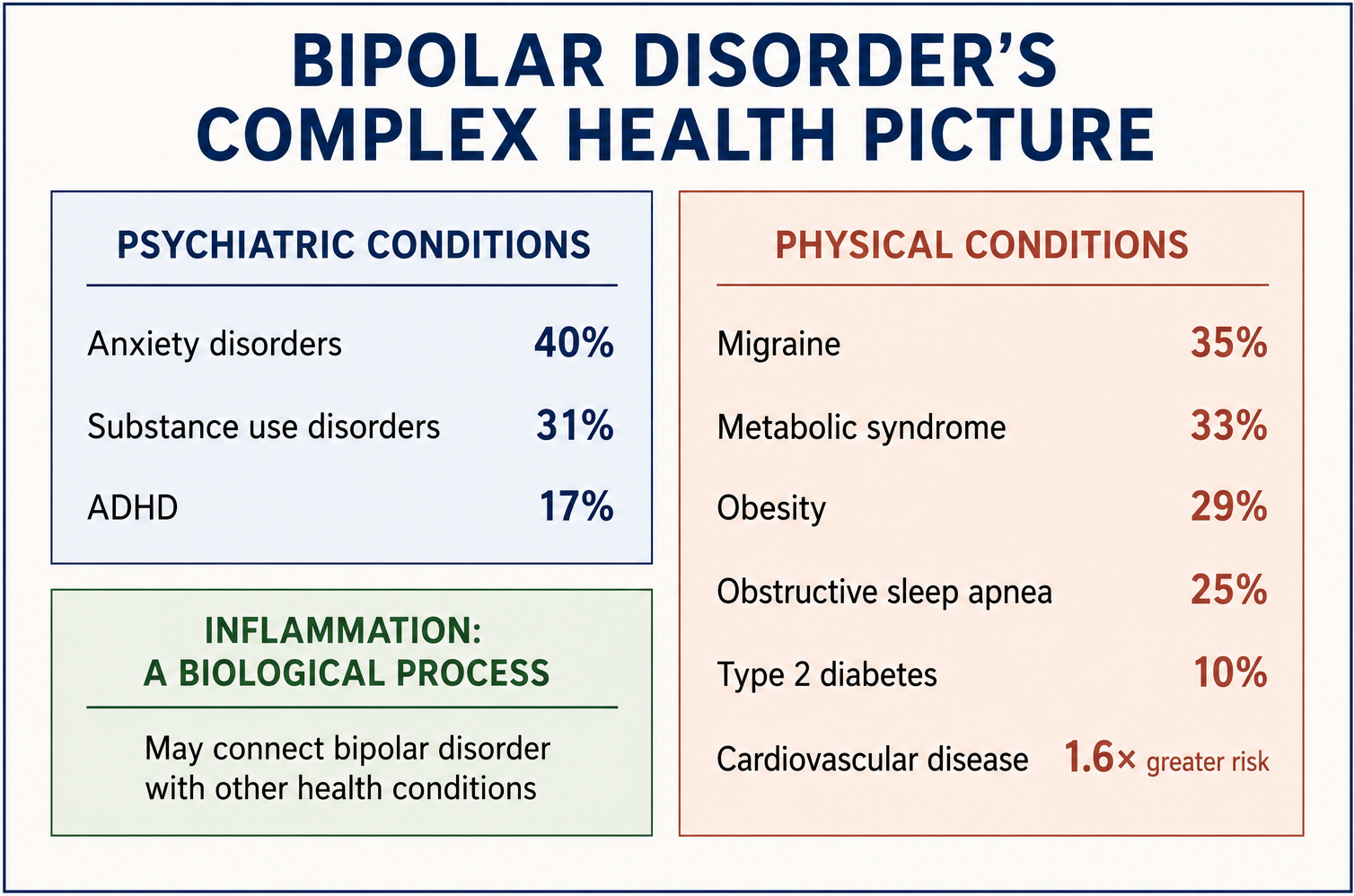
These conditions frequently co-occur with bipolar disorder, but prevalence varies with age, population, diagnostic criteria, treatment, and study design. Figures are rounded estimates from large reviews and meta-analyses. They reflect current research and are likely to change as the evidence continues to develop. Original graphic: Jan Swan, with Chat GPT
This has changed how many — but not all — think about bipolar disorder. Its consequences don’t stop with mood.
This post is research heavy so I don’t inadvertently make a claim that isn’t supported by the evidence. Sources for each section are listed at the end of each section.
Bipolar Disorder and the Heart
Cardiovascular disease is among the most consequential physical comorbidities. But research findings also vary — an important caution against treating any one percentage as the risk faced by an individual person
- 2023 meta-analysis found cardiovascular mortality 76% higher among people with BD than in the general population..
- Large U.S. study of nearly 600,000 adults (ages 18-75) found even young adults with serious mental illness (SMI) seemed to show increased cardiovascular risk.
- In a 30-year study, estimated cardiovascular risk was 25% among people (ages 18-59) with BD, schizophrenia, or schizoaffective disorder, compared with 11% among those without SMIs.
There isn’t one answer to why.
Sources: Taís Biazus, et al., Molecular Psychiatry, “All-cause and cause-specific mortality among people with bipolar disorder: a large-scale systematic review and meta-analysis.” 2023, PubMed/NIH; Christoph Correll, et al., “Prevalence, incidence and mortality from cardiovascular disease in patients with severe mental illness: A large-scale meta-analysis,” World Psychiatry,, 2017, PubMed/NIH.
Photos in this section: World Heart Federation and its Instagram account.
WHY IS THE RISK HIGHER?

The most obvious explanation — though far from the only one — is behavioral. People with BD, especially during severe mood episodes, are statistically more likely to smoke, exercise less, struggle with nutrition, and develop obesity, hypertension, and diabetes — all established risk factors for heart attacks, strokes, and vascular disease. Conversely, healthy behaviors (regular exercise, nutritious eating, sleep, and routine medical care) may never become priorities.
Treatment also contributes. Some antipsychotic medications increase appetite and weight, which can adversely affect glucose and lipid metabolism. These risks warrant monitoring weight, blood glucose, blood pressure, and cholesterol as an important part of long-term medical and psychiatric care.
METABOLISM IS PART OF THE STORY
Metabolic syndrome is a cluster of conditions — including abdominal obesity, elevated blood pressure, abnormal blood lipids, and impaired glucose regulation — that together substantially increase the risk of cardiovascular disease, as well as type 2 diabetes.
A major meta-analysis found metabolic syndrome in 37.3% of people with bipolar disorder — nearly twice the odds found in comparison populations.
Medication mattered. Among people taking antipsychotics, the prevalence was about 45%. But here’s a finding I want to note: among people with bipolar disorder who were not taking antipsychotics, it was still 32%.
Source: Davy Vancampfort, et al., “Metabolic syndrome and metabolic abnormalities in bipolar disorder: a meta-analysis of prevalence rates and moderators,” PubMed/NIH

Photo: Heart Health and Research, UK
In sum: The findings are sufficiently complicated that we can’t make simple claims — it’s the medication, for example, or BD causes metabolic disease. What we can say is that BD occurs within a striking constellation of cardiometabolic risks influenced by multiple factors — medication, behavior, access to healthcare, sleep and circadian disruption, stress physiology, and possibly other biological processes researchers are still working to understand.
Despite growing evidence that people with BD face substantially greater cardiovascular risk, patients looking at standard cardiovascular risk factors on reputable cardiovascular sites may never see bipolar disorder mentioned. The medical field has some catching up to do.
When the Body Keeps Adapting to Stress
Our bodies are constantly adjusting to what happens around and within us. As we see in the fight-or-flight response (FFR) [see post 5 in my anxiety series], the brain and body mobilize when faced with a challenge: stress hormones change, heartrate and blood pressure may rise, energy becomes more available, and immune activity can change. Once the challenge passes, these systems ordinarily settle back. Allostasis is this capacity to adjust, and it’s essential to survival.
STRAINED STRESS SYSTEMS: ALLOSTATIC LOAD
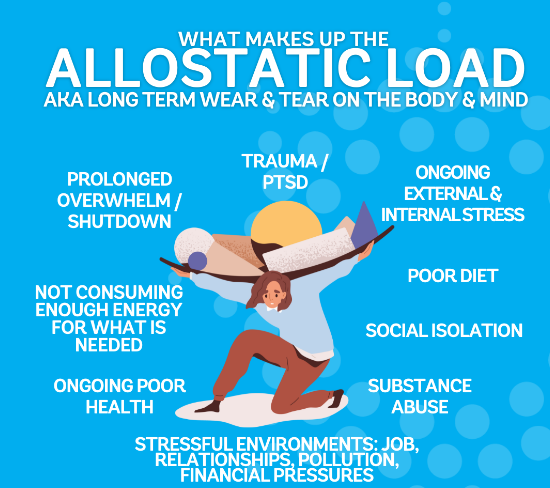
Graphic: Sunshine Support
Our bodies aren’t built to handle intense, prolonged, or cumulative stress. Over time, repeatedly activating these systems places a cumulative physiological burden on the body. This is what research calls allostatic load. Bipolar researchers Flávio Kapczinski and colleagues describe it more simply as bodily “wear and tear.”
Bipolar mania and depression disrupt sleep, activity and energy levels, stress responses, appetite, and daily rhythms. Researchers suggest repeated episodes — and the emotional intensity and chronic stress surrounding them — may add to allostatic load over time.
Once again, it’s important not to get ahead of the science. Allostatic load isn’t something we have in our bloodstream. It’s a proposed estimate using combinations of biological markers, not proof that bipolar episodes cause physical disease.
For now, allostatic load gives researchers a way to investigate how some of bipolar’s bodily systems may interact. The stress-response system doesn’t operate independently of sleep, metabolism, cardiovascular function, or the immune and hormonal systems. When demands on these interconnected systems accumulate, the effects may extend far beyond mood.
Source: Flávio Kapczinski, et al., “Allostatic load in bipolar disorder: implications for pathophysiology and treatment,” Neuroscience & Biobehavioral Reviews, 2008, PubMed/NIH
Circadian Disruption Doesn’t Stop with Sleep
In post 8 and post 9, I discussed the unusually sensitive circadian systems of people with BD. The important connection for this post is to note that our internal clocks regulate more than sleep. They help coordinate hormones, metabolism, blood pressure, body temperature, immune activity, and when organs and tissues perform many of their daily functions.
So when circadian rhythms become repeatedly disrupted, researchers look beyond the consequences for mood. Irregular sleep and biological timing may also contribute to metabolic and cardiovascular risk — another possible route through which the effects of bipolar disorder extend throughout the body.
And again, this doesn’t mean circadian disruption causes heart disease or diabetes. As with allostatic load, the relationships are complex and still being investigated. But it helps explain why researchers increasingly study sleep, metabolism, stress, immune activity, and cardiovascular health together rather than as unrelated problems.
Source: Xiu Yan, et al., “Circadian rhythm disruptions: A possible link of bipolar disorder and endocrine comorbidities,” 2022, Frontiers
Inflammation: Another Piece of the Puzzle
Our bodies aren’t built to handle intense, prolonged, or cumulative stress. Over time, repeatedly activating these systems places a cumulative physiological burden on the body. This is what research calls allostatic load. Bipolar researchers Flávio Kapczinski and colleagues describe it more simply as bodily “wear and tear.”
Bipolar mania and depression disrupt sleep, activity and energy levels, stress responses, appetite, and daily rhythms. Researchers suggest repeated episodes — and the emotional intensity and chronic stress surrounding them — may add to allostatic load over time.
Once again, it’s important not to get ahead of the science. Allostatic load isn’t something we have in our bloodstream. It’s a proposed estimate using combinations of biological markers, not proof that bipolar episodes cause physical disease.
INFLAMMATORY SIGNALING
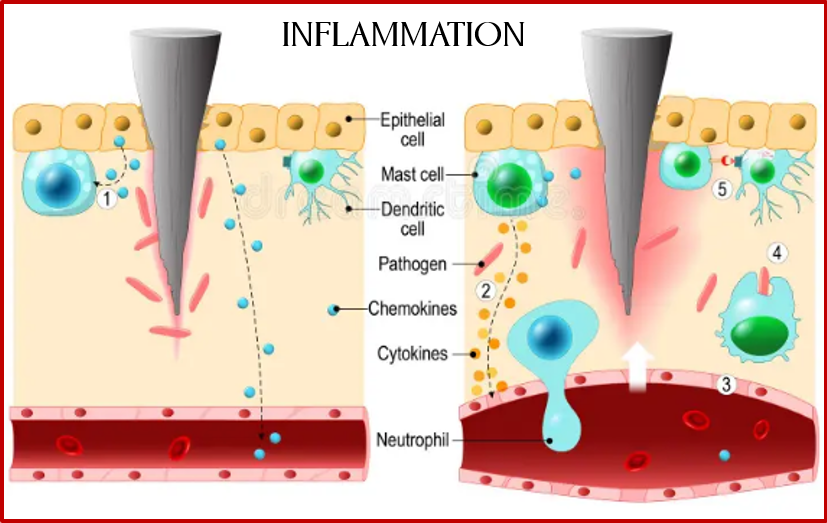
Inflammation is an immune response involving chemical signals, including cytokines, that recruit and coordinate immune activity. The inflammatory differences studied in bipolar disorder are far subtler than the acute tissue response shown here. Graphic: Creative BioMart, Dreamstime
Bipolar disorder remains an intriguing but still unsettled area of inflammation research. Multiple studies and meta-analyses have found differences in inflammatory markers among people with BD compared with people without the disorder. These markers are measurable substances that give researchers clues about inflammatory activity in the body.
One important group is cytokines — small proteins cells use to communicate with one another and help coordinate immune responses. Some cytokines increase inflammatory activity; others help regulate or limit it.
Cytokines therefore play two roles:
- They help carry messages between cells involved in inflammation — part of what researchers call inflammatory signaling.
- When researchers measure cytokine levels in blood, those measurements can serve as biomarkers of inflammatory activity.
Other inflammatory biomarkers, such as C-reactive protein (CRP), can provide additional evidence of inflammation.
Studies have found differences in inflammatory activity associated with BD, but findings vary considerably among individual markers, people, and mood states. And they also don’t tell us what comes first: whether inflammation contributes to BD or whether BD — or the stress, sleep disruption, metabolic changes, and other conditions associated with it — increase inflammatory activity. Or perhaps these processes influence one another.
Migraine and Autoimmune Disease
Two other areas deserve brief attention because they offer additional clues about the biological connections researchers are investigating in BD
MIGRAINE: A NEUROLOGICAL CLUE

Photo: Johns Hopkins Medicine
The association between migraine and BD, particularly bipolar II, is unusually strong. Meta-analyses estimate that roughly one-third of people with BD experience migraine, though estimates vary substantially among studies.
Much more than a severe headache, migraine is a neurological disorder that can involve nausea, extreme sensitivity to light and sound, and disturbances in sensory processing. Some people experience aura — temporary neurological symptoms such as flashing lights, blind spots, tingling or numbness, and sometimes difficulty with speech — before or during an attack.
What intrigues researchers is how much biological territory migraine and BD appear to share. Studies have explored possible connections involving circadian rhythms, neurotransmitters, neuronal excitability, mitochondrial energy metabolism, oxidative stress, genetics, and inflammatory pathways — several of which are familiar by now. Both are also episodic disorders, with periods of relative stability interrupted by recurring attacks or episodes — another intriguing parallel, though not evidence of a common cause.
But overlap doesn’t establish a shared cause. No single biological mechanism has been shown to explain why migraine occurs so frequently with BD.
AUTOIMMUNE DISEASE: ANOTHER IMMUNE CLUE
Autoimmune diseases give researchers a different kind of clue. In autoimmune conditions, the immune system mistakenly attacks the body’s own cells or tissues. Findings from systematic reviews and population studies have found associations between BD and some autoimmune diseases.
This leads to a question about whether immune and inflammatory processes might help explain why these conditions occur together with BD more often than expected. Researchers are investigating that possibility, but the evidence isn’t there yet. We can’t say that autoimmune disease causes BD, that BD causes autoimmune disease, or even that a shared inflammatory mechanism explains why they occur together more often than expected. This is a “stay tuned” message.
Source: Michele Fornaro and Brendon Stubbs, “A meta-analysis investigating the prevalence and moderators of migraines among people with bipolar disorder,” PubMed/NIH
Cardiovascular Medicine Is Paying Attention
For many years, cardiovascular risk was understood largely through familiar factors: blood pressure, cholesterol, diabetes, smoking, obesity, diet, and exercise. Mental health received far less attention as part of the cardiovascular picture. The good news is that’s changing.
In 2021, the American Heart Association (AHA) issued a scientific statement describing a “mind-heart-body connection.” Psychological health, the authors concluded, can affect cardiovascular health through interacting biological, behavioral, and psychological pathways. The statement urged clinicians to consider psychological health when evaluating and treating people with or at risk for cardiovascular disease.
For bipolar disorder, recognition had actually begun earlier. In 2015, another AHA scientific statement identified BD and major depressive disorder (MDD) in young people as conditions that predispose them to accelerated atherosclerosis and early cardiovascular disease. Its authors called for earlier cardiovascular risk screening and greater collaboration among psychiatry, preventive cardiology, and other clinicians.
The recognition continues to grow. In 2025, the European Society of Cardiology issued its first clinical consensus statement devoted to mental health and cardiovascular disease. It includes specific guidance for people with an SMI, including bipolar disorder, and emphasizes coordinated care between cardiovascular and mental-health specialists.
This is a dramatic and quite recent advancement in thinking. Mental and physical health are increasingly difficult to treat as separate domains when the same person — and the same body — is living with both.
For people with bipolar disorder and their doctors, awareness is a first step. Long-term care must be more than managing mood episodes, as important as that is. Who knows? Perhaps with paying more attention to both mental and physical health, there will be better overall health.
Sources: Glenn N. Levine, et al., “Psychological Health, Well-Being, and the Mind-Heart-Body Connection,” Circulation, 2021, American Heart Association; Benjamin I. Goldstein, et al., “Major Depressive Disorder and Bipolar Disorder Predispose Youth to Accelerated Atherosclerosis and Early Cardiovascular Disease,” Circulation, 2015, American Heart Association; European Society of Cardiology, “Clinical Consensus Statement on Mental Health and Cardiovascular Disease,” 2025, European Heart Journal.
In Sum: The Mind-Brain-Body Connection
After everything I’ve learned about bipolar disorder, I find it increasingly difficult to think of it simply as a mood disorder, and that’s unexpected from where I started. Mood is certainly where the most recognizable symptoms appear, but a rich repository of research tells us the biology reaches much further.
I’ve been writing over the series about stress response, circadian rhythm, reward and motivation, sleep, metabolism, immune activity, and cardiovascular health. These systems aren’t isolated or independent. They communicate, influence one another, and continually adjust to what is happening within us and around us.
That doesn’t mean science has established bipolar disorder as a systems disorder of regulation. To be diagnosed with BD means a pattern of mood episodes is recognized and treated.
But a systems disorder of regulation is nonetheless a useful way to think about what I’ve learned. It captures something more than mood disorder alone. The difficulty may involve regulation across multiple, interacting biological systems, with consequences that can extend well beyond mood.

Graphic: Andrew Selby, Woman’s Health Mag
And perhaps that helps make sense of the physical-health findings that began this post. Cardiovascular disease, metabolic problems, altered inflammatory activity, migraine, and autoimmune illness don’t prove that one underlying mechanism causes them all. But it seems quite plausible that what happens in the brain and in the body cannot be neatly separated. This is where the mind-brain-body connection becomes more than an abstraction. These things are happening in the same person, in the same body.
That realization changes what living well with bipolar disorder can mean. Protecting sleep and daily rhythms, managing stress, taking medication thoughtfully, getting exercise, attending to nutrition and metabolic health, seeing a primary-care doctor, and monitoring cardiovascular risk are integral to long-term care. They are part of caring for the whole person.
The science is still evolving. But one message from the evidence already seems difficult to miss: when we care for bipolar disorder, we need to care for the body as well as the mind.
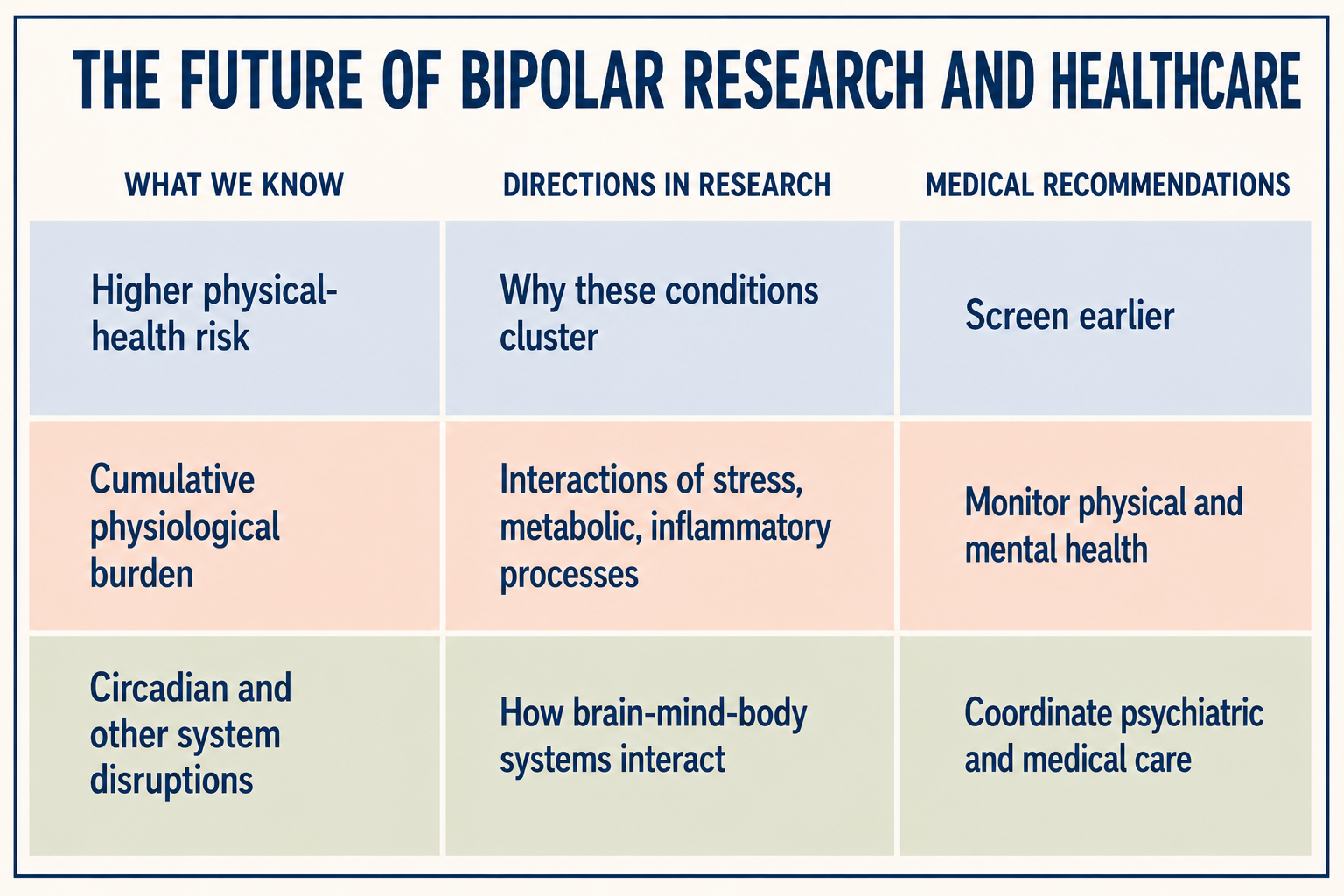
As research expands our understanding of bipolar disorder beyond mood, coordinated care becomes increasingly important. Psychiatric and medical professionals need to work together to monitor and treat the whole person. Original graphic: Jan Swan, with Chat GPT
Coming Up Next

Once there’s an accurate diagnosis, effective treatment can begin. With appropriate medication, therapy, attention to physical health, and strategies for managing daily life, people with this complex lifelong disorder can learn to manage symptoms and live full, productive lives.
But bipolar disorder asks a great deal of the person living with it — and often of the people who love them.
Treatment requires continuing attention because episodes can recur, medications may need adjustment, and periods of instability can bring serious risks, including hospitalization and suicide. Living well with BD is possible, but it takes knowledge, vigilance, support, and care.
In Post 16: The Raw Shock of a Bipolar Diagnosis, I’ll move from the biology and medical complexity of the condition to something intensely personal: what happens when someone is first told they have bipolar disorder.
Sources
American Heart Association [mind-heart-body connection]
American Heart Association [youth, heart disease, MDD, and BD]
PubMed/NIH [causes of mortality]
PubMed/NIH [cardiovascular disease and SMI]
PubMed/NIH [metabolic disorders and BD]
PubMed/NIH [allostatic load and BD]
PubMed/NIH [migraines and BD]
PubMed/NIH [Inflammation, MDD, and BD
 English