On Bipolar Disorder
Show Table of Contents
INTRO
1. On Bipolar Disorder: Introduction
2. Jaden’s Story: A Journey to Mania
3. The Bipolar Rockies: A Witness to Mania
4. Bipolar Spectrum Disorder: More Than Mood Swings
5. How Bipolar Risk Takes Shape
6. A Sensitive System Under Stress
TIME
8. Bipolar Disorder and Circadian Rhythms: Why Sleep Isn’t Just Sleep — Part I
9. Bipolar Disorder and Circadian Rhythms: The Goal is Stabilization — Part II
SIGNIFICANCE AND MISREADING
10. Reward Sensitivity and Bipolar Vulnerability
11. Bipolar and Cannabis: Relief, Risk, and Regulation
12. Bipolar, Hypomanic Personality, and Narcissism: Similar Traits, Different Meanings
DIAGNOSIS AND SYSTEM FAILURE
13. Bipolar Diagnosis, Misdiagnosis, and the Hidden Barrier of Stigma
14. When Diagnoses Overlap: Bipolar, ADHD, Borderline
15. When Bipolar Disorder Affects the Body
16. The Raw Shock of a Bipolar Diagnosis
TREATMENT AND COPING
17. Bipolar Treatment: Medication Non-Optional
18. Bipolar Treatment: It Takes a Village
19. Coping With Bipolar: Things to Do
20. Famous People and Bipolar Disorder
21. Future Breakthroughs: New Bipolar Research
22. Bipolar Poetry: Inside My Mind
3. The Bipolar Rockies: A Witness to Mania

At age 25, when Jaden had his first psychotic episode in a city 200 miles from me, he was brought to a university psychiatric hospital and put on heavy medication to reverse the florid symptoms. As I made my way to see him, I was stunned and unprepared. There were no warning signs. It just happened. Because you need a few high-and-low episodes to confirm a BD diagnosis, I was given an alarming array of possible things it could be.
I process distressful and upsetting moments by writing. It helps me get through whatever’s happening without wandering around my house in a state of high anxiety. I remain calmer and more focused this way.
Photo: Shutterstock
What I’ve been doing, it seems, is “journaling” — less a diary and more a way of capturing impressions, images, favorite music, making drawings — a clinically proven coping mechanism for anxiety, recommended by mental health specialists. And it did help me get through the thicket of confusion, pain, terrifying worry for what my son was going through — the newness of it all. I had no idea what was to come — more than a decade later, I don’t know what’s to come tomorrow.
A Mother’s Contemporaneous Notes
Jaden has given me permission to share these contemporaneous notes from my visits in those first days. I had forgotten a lot, so I’m glad I recorded this experience. My notes are edited for brevity. I removed others from the story for their privacy.
Day 1 — Or, What I'm Calling Day 1 — Friday, July 19
It was a shock to see my son on Friday. He was in too-big jeans folding under his feet, exaggerating his shuffling gate. His eyes were half closed and fluttery. His mouth so dry, he could barely enunciate his words. They sounded like a low rumble. Even in this heartbreaking state, the Jaden humor shone.
The psychiatrist came in and asked if he knew everyone in the room (me, my other son), and he said No. She asked him who he didn’t know, and he pointed to her and said, “You.”
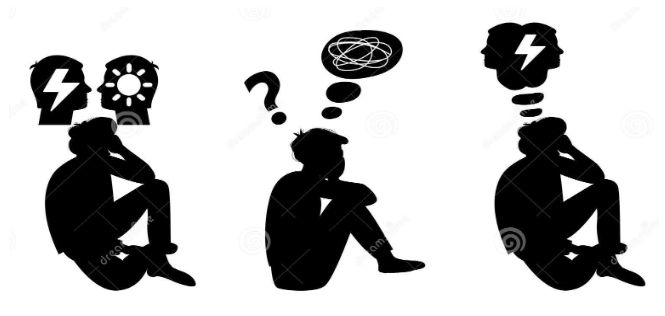
Illustration: Elena Yakovlieva, Dreamstime
My son is now madly brilliant. It is moving and overwhelming to talk to him. I want to remember everything. At first, he wasn’t very sure how to be with us, but that was temporary. Soon he was very affectionate and loving. I liked seeing him relate to us.
The psychiatrist said the difference between good and bad results for recovery were the love and attention from family and friends.
After he ate dinner — and it turned out he hadn’t had a sit-down meal for a week by this time, nor anything to drink or eat in 24 hours — he was communicating more easily, looking better, smiling more. But still manic.
Day 2 — Saturday, July 20
Photo: Shutterstock
At first encounter, Jaden is alert and happy, but wants me to get cigarettes and ranch sunflower seeds for his roommate. I told him no to the cigs but would try for the sunflower seeds (I looked but couldn’t find them). Later the roomie asked me directly for the sunflower seeds and would ask again on Sunday.
He’s more lucid and able to engage with us. There is no small talk. He is working out big themes: pain, conflict, compassion, and man’s relation to nature and god. He tracks in his conversation though sometimes gets confused and needs an assist. But he speaks so beautifully and compellingly you wonder if he wasn’t a Zen master in a prior life. He also made some more grandiose statements of being uniquely gifted to help everyone in the world. I asked him to clarify one thing he was trying to explain. He restated it this way:
Let’s say one man punched another man. The man who gets punched hurts from the pain and is a victim of the pain, but also is now plotting revenge, so carries that pain as well. The “puncher” is guilty about punching the victim but is also worried about revenge—so he is also carrying pain. Wouldn’t it make sense to release both men of their pain before they inflict anymore of it?
Jaden was repetitively rubbing a small circle on his upper chest, right below his shoulder and above his heart. I asked why. He told us this is the site of empathy. This takes care of the pain. And not just for Jaden, but for all of us. All of us need him.
Last night, my husband called to speak to him for the first time. The phones are in the main room and will just ring if one of the patients doesn’t answer. After a frustratingly long time, a woman patient finally picked up, found Jaden, who got on the phone with his dad. But she hung close and pestered Jaden for him to give the phone back to her — which he did. My husband then says to her, I was talking to my son, give him back to me! She asked, Are you mad at me? Finally, she gave the phone back to Jaden, and their conversation ensued. The next day, when I asked Jaden about this, he said with a laugh, Yeah, Dad was really mad about that!
Day 3 — Sunday, July 21
There was a marked improvement today. We all noticed it. No more rubbing the empathetic spot. But we had a new kind of spot to think about. Jaden asked to have “one-on-ones” with each of us. In my “session,” Jaden told me his blind spots are from a combination of his father’s and my blind spots. Because both his parents have blind spots, he has them, too. He needs us — all of us — to hold up a mirror so he can see them.

My sister-in-law came with us and gave Jaden Marley and Me, a touching story about a man and his dog Marley. Jaden knew there was a sad part so, as he told me later, he read the last paragraph and found out the author got a new puppy! He loved the cute doggie pictures. And he loved the Penny Arcade comic book his brother brought him. I brought him Milan Kundera’s The Incredible Lightness of Being, one of my all-time favorites — but really! What a weird choice. He couldn’t have read that book then. Not even now.
Related to the concept of blind spots, we talked about dealing with the constraints on our lives, our life choices, our actions. Because of these constraints, Jaden said, we can too easily fall into blame and resentment and close off to one another. So, we have to do a better job of paying attention to the intent: a parent’s intention being love, that is.
This tells me something. If I annoy my adult son by asking too many questions to keep open previously closed lines of communications, he can now forgive me because he knows it comes from a place of love.
Today was remarkable — first time he talked about the mental break. He offered a metaphor about the rational brain and the emotional brain being like separate grinding gears. Then, with a great gesture of his hands, showed us how these two gears flipped around and are now back in alignment.
He said he’s in the eye of the storm and needs to stay there. He understands he trashed his room but doesn’t seem remorseful. Much too soon. He wants me to hire sunflower-seed roommate for $600 to work on his house and room.

Day 3 — Monday, July 22
Today Was Three Weeks Long. Day 1: In the afternoon, I came alone to speak to the psychiatrist, with Jaden’s permission. My son was showing a lot of sadness, so they knew depression is some of the trigger for the break. He will need long-term support and treatment for this. Jaden admits he thought he could figure all this out for himself but was wrong.
Week Two of Day 3: Jaden and I spoke for over an hour. I have learned a lot about my son these past few days, things that maybe I was too blind to see? But, no, adult children can elect to what extent they do or don’t engage their parents in their lives. Perhaps we all set up preconditions to closeness, based on our perception of reactions we might not want to get. But we can change that when we’re willing to reflect and grow.
We have a new closeness. Jaden asked me to think about my secrets. He said, we all have them. Some of us may live our entire lives with secrets. The healthiest among us don’t.
Jaden asked me not to rent out the rooms in his house (his roommates fled the house Jaden owns after he tore it up). He’s promised them to his fellow inmates.
Week Three of Day 3: I’m making sure Jaden has company: my brother, who’s helping fix Jaden’s house, a cousin, a roommate who left but remained a friend — a nice young woman, my other son, and me. It was a social bee.
Jaden didn’t seem delusional and was in full comic swing. He asked his brother and friend about the state of the TV (still working?), her chair, and about what happened to his cell phone and cell phone battery — which got separated at some point. He was interested in what each of the roommates was up to. He was incredibly happy that his friend found a nice place to live. My brother thought Jaden sounded like he was holding something back but found the visit hopeful.
Slyly, Jaden asked me to give him $20 for “snacks and cigarettes.” I said I didn’t think he needed it. He said he did. Later he asked again. I spoke to the nurse, and she said there was no reason for money. I told Jaden, and he came clean. It was for his roomie, who was leaving the next day. Oh well! At least, Jaden said, he could tell him that he tried.
Update
Jaden’s second manic episode followed the first by one year — he was safe as long as the earth didn’t complete its orbit of the sun. No clear trigger or so many triggers. Hard to know.
Coming Up Next


In Post 4. Bipolar Disorder: More than Mood Swings, I provide details and diagnostic criteria for the mood swings that bipolar disorder is known for. This is important information, for sure, but it’s also the beginning of understanding a brain disease that misfires on so many of our body’s systems and functions.
 English