On Forgiveness and Estrangement
Show Table of Contents
INTRODUCTION
A LONG HUMAN CONVERSATION
- Why Humans Evolved to Need Both Forgiveness and Exclusion
- Forgiveness: Between Moral Ideals and Human Reality
- Estrangement: From Unthinkable to Acceptable
- Estrangement: Ambiguity, Memory, and the Limits of Repair
- How Science Adds to the Conversation
CONNECTION, SAFETY, PEACE
- Why Forgiveness Is So Hard
- Brothers Apart: A Story of Sibling Estrangement
REPAIR OR LETTING GO WELL
- Moving Forward Without Simple Answers
- Living Beyond All-or-Nothing Choices
4: Estrangement: From Unthinkable to Acceptable
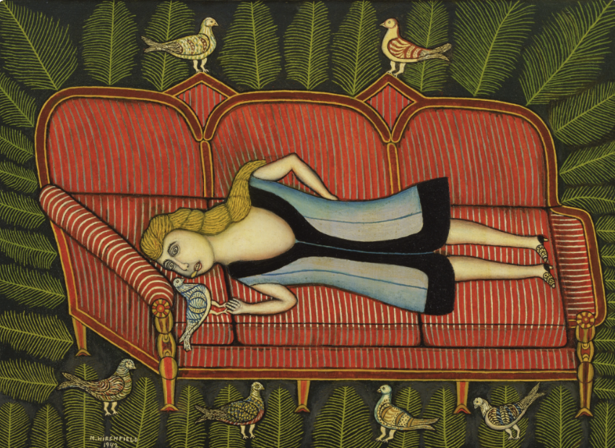
Morris Hirshfield, Girl with Pigeons, 1942, The Museum of Modern Art, Folk Artwork
If our ancient forebears prioritized forgiveness over exclusion to keep the clan intact as a matter of survival, there’s no such clear imperative today. Our “clans” — extended families once bound by geography, inheritance, economic necessity, and the watchful authority of elders — are far more dispersed.
The social laws governing duty, marriage, and belonging have also changed. Increasingly, many of us seek lives shaped less by obligation than by the pursuit of safety, dignity, and psychological peace.
Forces dividing families today — often less material than psychological — include abuse, emotional trauma, political or social fracture, chronic judgment and criticism, or competition. Conflicts that roil and rupture families may be less visible than in the past, but the upheaval they cause is no less profound.
In fact, estrangement has become a healthier and more psychologically legitimized alternative than it would have been for earlier generations — freer of the stigma that once made family rupture nearly unthinkable. In what feels like the span of a generation, estrangement has moved from moral failure to, for some, an act of necessity or self-protection.
Social media is saturated with the pain and anguish of aging parents who feel abandoned by their adult children, alongside adult children who see little reason to reconcile with parents they experience as harmful, invalidating, or unchanged. In these fractured relationships, ambiguity reigns. What truly causes the rift? Is it irreparable or could improved communication and understanding repair the relationship? And what does repair even require — if reconciliation is even the goal?
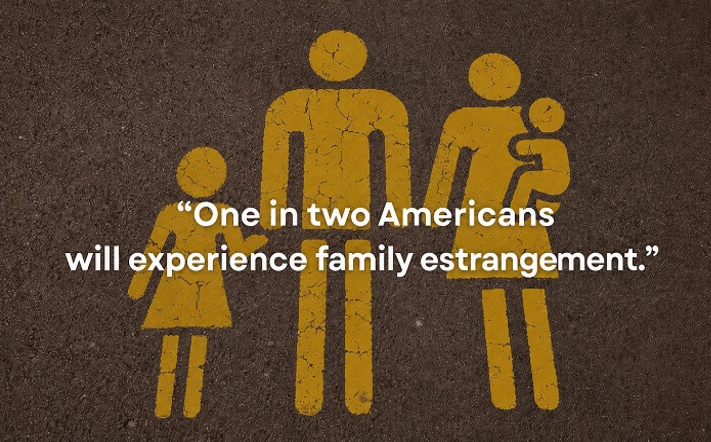
According to a recent book, Fault Lines: Fractured Families and How to Mend Them, by Cornell sociologist Karl Pillemer, 27% of the U.S. population, or some 67 million people, are currently living with an active estrangement in their family — and the majority find the experience emotionally distressing.
An International Phenomenon
First, it’s worth looking more closely at Pillemer’s finding. According to The Harris Poll and multiple other sources, between one-quarter and one-half of adults report some form of family estrangement, depending on how estrangement is defined.
Despite this prevalence, family estrangement is still often treated as rare, shameful, or too private to discuss openly, with those who pull away sometimes dismissed as disloyal, ungrateful, or dramatic. But research suggests otherwise. Whether defined as emotional distance, limited contact, or full no-contact, estrangement is far more common than many of us realize. Millions of people make painful decisions to prioritize mental health, safety, or wellbeing over ongoing dysfunction — often after repeated, unsuccessful attempts to repair the relationship.
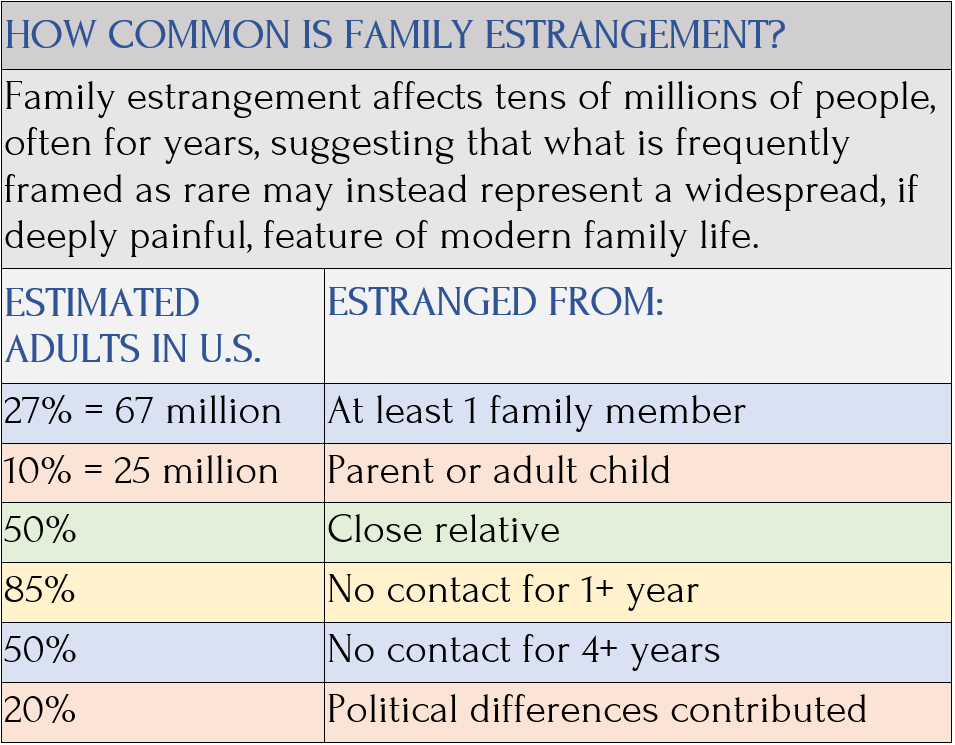
Sources: Karl Pillemer, Fault Lines: Fractured Families and How to Mend Them (Cornell Family Reconciliation Project); The Harris Poll / Purposeful Empathy, national survey data on family estrangement (Karl Pillemer/Will Johnson); Becca Bland and Stand Alone (UK), with Centre for Family Research, University of Cambridge, Hidden Voices: Family Estrangement in Adulthood (2015); Joshua Coleman, Rules of Estrangement; and context data from Pew Research Center studies on political polarization and family division.
If estrangement is increasingly common, psychology may help explain why families now interpret conflict, harm, and repair differently than previous generations.
Pillemer, along with Will Johnson of The Harris Poll, conducted the first national survey on estrangement. They found family rifts are not only tied to catastrophic abuse or dysfunction — though abuse certainly plays a major role in many cases — but also to conflicts over values or ideology, rejection of identity, chronic invalidation, lack of belonging, and deeply incompatible visions of what family itself should mean.
Among the most common were “conflicts over money and inheritance; conflicts with in-laws, harsh parenting or favoritism; divorce; and discrepancies in values and lifestyles, such as a child coming out as gay or lesbian or rejecting a parent’s religion.” In some cases, political differences alone were sufficient to estrange family members.
Family rupture often involves severing communication entirely, including social media blocking, cutting off intermediaries, and recasting the family in lasting ways.
COLLATERAL DAMAGE
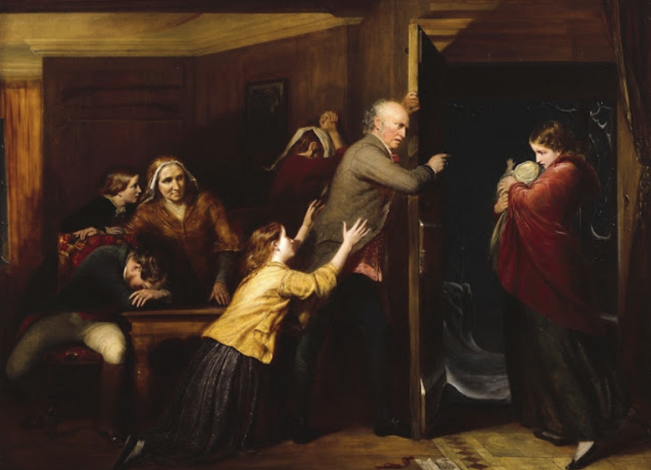
Richard Redgrave, The Outcast, 1851, Royal Academy, UK
Pillemer also emphasizes the broader fallout. Estrangement often creates what he calls collateral damage, pulling uninvolved family members into widening relational fault lines and cutting individuals off from emotional support, practical resources, and longstanding social bonds. These unresolved rifts create chronic stress that can contribute to depression, anxiety, and even physical illness.
At the same time, Pillemer doesn’t frame estrangement as inherently pathological. He acknowledges that severing ties may be necessary and psychologically healthy in the face of abuse, threats, and danger. Yet his work tells him where safety allows, “calling a truce” may often reduce suffering for both sides.
EMPATHY OVER JUDGEMENT
In her work as founder/former CEO of Stand Alone, a UK-based nonprofit dedicated to supporting estranged adults, Becca Bland similarly resists simplistic narratives. Her work emphasizes that estrangement demands empathy over judgment:
Empathy asks us to replace simple stories about family with more honest ones — and to build relationships and systems that can hold that truth. —Becca Bland, Stand Alone
For parents, Bland argues, this may mean confronting a child’s lived experience even when it challenges their self-image as loving caregivers. “It’s about slowing down our instinct to judge and staying with complexity,” she writes. For estranged adult children, it may mean having their decisions understood not merely as rejection, but as attempts to preserve dignity, safety, or mental health.
Together, researchers like Pillemer and Bland believe estrangement is much more than the fringe symptom of a selfish generation. It is instead a profound cultural, psychological, and moral response to harm, obligation, difference, and the fragility of family repair.
Family Autonomy and the Pursuit of Happiness
The Harris Poll, cited by Anita Nowak, PhD, Purposeful Empathy
Most of us recognize that estrangement has evolved away from moral failure and public shame toward, in many circumstances, self-protection. This change reflects a broader cultural transformation in how we define ourselves in terms of family and in society, and how we construct a more meaningful and less stressed life.
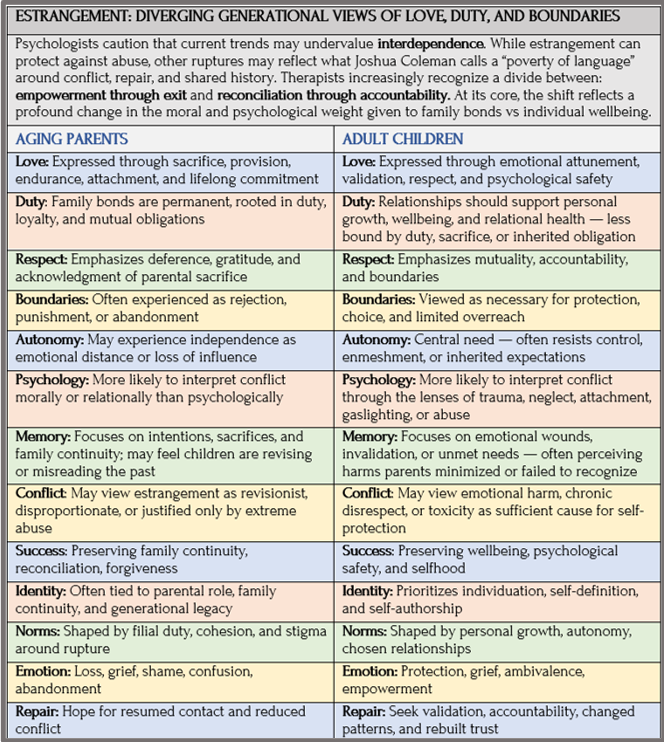
Psychologist Joshua Coleman, senior fellow at the Council on Contemporary Families and author of the book Rules of Estrangement: Why Adult Children Cut Ties and How to Heal the Conflict, writes in The Atlantic that estranged parents and adult children often look at the same family history through different lenses:
Estranged parents often tell me their adult child is rewriting the history of their childhood, accusing them of things they didn’t do, and/or failing to acknowledge the ways in which the parent demonstrated their love and commitment.
Adult children frequently say the parent is gaslighting them by not acknowledging the harm they caused or are still causing, failing to respect their boundaries, and/or being unwilling to accept the adult child’s requirements for a healthy relationship. —Joshua Coleman, “A Family Therapist Looks to Historians for Insight on the Changing Forms of Family Estrangement,” The Atlantic
This divide reflects larger generational changes in what family itself is expected to provide. Coleman quotes historian Stephanie Coontz, director of education and research for the Council on Contemporary Families, as arguing, “‘Never before have family relationships been seen as interwoven with the search for personal growth, the pursuit of happiness, and the need to confront and overcome psychological obstacles.’”
Sources: Karl Pillemer, Fault Lines: Fractured Families and How to Mend Them (Cornell Family Reconciliation Project); Becca Bland and Stand Alone (UK), with Centre for Family Research, University of Cambridge, Hidden Voices: Family Estrangement in Adulthood (2015); Joshua Coleman, “A Family Therapist Looks to Historians for Insight on the Changing Forms of Family Estrangement,” The Atlantic.
FROM MUTUAL OBLIGATIONS TO MUTUAL UNDERSTANDING
For most of history, family bonds were rooted less in emotional fulfillment than in mutual obligation. Children were expected to support parents, preserve lineage, and maintain continuity, often tolerating painful family dynamics in the name of duty. Obligation frequently outweighed individual happiness.
This began to change beginning in the late nineteenth century and accelerated dramatically through the twentieth. Coleman cites the work of Johns Hopkins sociologist Andrew Cherlin, who noted how traditional anchors of identity — class, religion, community — gradually weakened as they were replaced by ideals of personal growth, emotional fulfillment, and self-determination.
Today’s adult children feel free to reject this generational “baggage.” They question whether love can exist without mutual respect, safety, and accountability. They no longer view honoring parents as an unconditional moral imperative. They don’t want to be reproached for failing to wrap their identity in the family cloak. That’s not the life they imagined for themselves, and they resent the weight of their parents’ expectations.
Instead, today’s young adults seek autonomy over the terms of connection — even when that autonomy risks rupture. Even when estrangement will cause upheaval as they redefine their lives without family.
One Family, Two Histories

Estrangement is made all the more painful by how differently it’s experienced — and remembered — by each side of the conflict. In recurring family ruptures, there is rarely one shared narrative of what happened, particularly when grievances stretch back decades into childhood, adolescence, or long-standing patterns of injury. Instead, estrangement often emerges from competing emotional realities, where memory, responsibility, and love have opposing psychological interpretations. Coleman notes:
Edward Hopper, Hotel Room, 1931. From Isabel Carrasco, “The Haunting Beauty of Being an Outcast, in 20 Paintings by Edward Hopper,” CulturaCollectiva
In [various] studies, common reasons given by the estranged adult children were emotional, physical, or sexual abuse in childhood by the parent, “toxic” behaviors such as disrespect or hurtfulness, feeling unsupported, and clashes in values.
Parents are more likely to blame the estrangement on their divorce, their child’s spouse, or what they perceive as their child’s “entitlement.” —Joshua Coleman, The Atlantic
Parents frequently describe estrangement through grief, bewilderment, and a painful sense that their love, sacrifice, and family history have been erased or rewritten. They believe they did their best, even if imperfectly. They feel judged not only for their failures, but for having their intentions, efforts, and parental devotion discounted entirely. Seen this way, estrangement feels like disproportionate punishment, revisionist memory, or profound rejection.
Adult children, by contrast, often describe estrangement not as impulsive rejection, but as an agonizing act of self-protection after years — sometimes decades — of invalidation, emotional neglect, boundary violations, or outright abuse. Many describe repeated attempts to explain their pain, seek acknowledgment, or build healthier patterns, only to feel dismissed, minimized, or gaslit. They’re hurt because they believe their parents remain unable or unwilling to recognize the emotional reality of their childhoods. For these adult children, estrangement is rarely about punishing a parent. More often, it reflects the painful conclusion that proximity itself has become psychologically harmful.
The psychological reality is often far messier than either side’s singular narrative.
Parents are not always abusive. Adult children are not always selfish. Some estrangements are life-saving responses to genuine danger. Others represent tragic overcorrections shaped by unresolved trauma, generational rift, or broader cultural forces that prioritize autonomy over endurance.
Edvard Munch, Girls on the Bridge, 1901, Sotheby’s
In truth, estrangement often involves imperfect people acting from pain, fear, confusion, inherited wounds, or incompatible understandings of accountability and repair. This ambiguity is part of what makes estrangement so emotionally destabilizing: family members may share history, but they often do not share that history’s same meaning.
In estrangement, there aren’t villains and victims, only hurt people who keep coming up against the painful limits of memory, perspective, healing, and change.
Voices from Estrangement: Ambiguity and Competing Truths
Coleman writes that today’s parents often spend more time, attention, and emotional energy on their children than previous generations, making estrangement especially destabilizing when it occurs. He notes:
Due to the likelihood of divorce, many parents in the past half century have had reason to believe that the relationship with their child might be the one connection they can count on — the one most likely to be there in the future. Yet, in the same way that unrealistically high expectations of fulfillment from marriage sometimes increase the risk of divorce, unrealistically high expectations of families as providers of happiness and meaning might increase the risk of estrangement….
Most estrangements between a parent and an adult child are initiated by the child, according to a 2015 survey of more than 800 people. A survey of mothers 65–75 years old with at least two living adult children found that about 11% were estranged from a child. Of those, 62% reported contact less than once a month with at least one child, and the remaining 38% reported 0 contact in the past year. —Joshua Coleman, The Atlantic
To better understand estrangement’s prevalence, I spent time reading social media discussions — primarily in a 55+ women’s group and on Reddit. Not surprisingly, there were as many perspectives as there were people. The strongest recurring themes were parental alcohol abuse, painful childhoods, family toxicity, grief, and survival. Here are snippets of their posted comments [without attribution]:
ADULT CHILDREN: ESTRANGEMENT AS PROTECTION, RELIEF — AND GRIEF
When I hear people my age talk about estrangement as if it’s some kind of new bandwagon young people are just jumping on for no good reason, it bothers me a lot. Estrangement is hard. Very hard. Nobody makes that decision for no good reason.
I wish people would empathize with the pain of this. If you know someone who has estranged from their family, bring them a meal. Give them a hug. Not having the love of a mother is a pain I hope you never have.
It’s a source of grief and sometimes sadness, but also relief.
I know memories can leave us feeling wistful but if you can’t get them to respond at all are you sure you have shared memories to reminisce about? I feel better now that I’m not having to dance around his overinflated ego. It’s liberating.
More often than not, it’s about their survival.
PARENTS: ESTRANGEMENT AS AMBIGUOUS LOSS
When a child is estranged, there is no ritual. No ending. No clear place to put the grief.
Parents rarely get grace. Rarely get empathy. Rarely get the chance to explain the messy, human truth behind the distance.
It’s unbelievably frustrating to live inside a story where the narrative is already written against you.
No one asks the parent about the years of love, effort, sacrifice, or sleepless nights. No one asks about the context, the history, or the trauma the parent never had support to heal from. No one asks about the countless moments the parent did show up — even when no one was showing up for them.
SHARED EMOTIONAL REALITY: LOSS WITHOUT RESOLUTION
Estrangement is a morbid kind of limbo — the person is not alive to you, nor dead to the world.
There is no truth, only perception, and every single person involved sees it differently.
I believe that in most cases estrangement is not entirely the fault of one person. Often the person who refuses to try to work things out or communicate at all is the one primarily at fault. If you refuse to try when offered an olive branch you need to do some soul searching.
I’m reluctant when people say they have “no idea” why their family member is estranged. It’s often been explained to them many times, many ways. But what they’re looking for is what they deem an “acceptable” reason to cut contact, rather than reflecting on what they’ve actually been told.
These voices don’t offer one story, but touch on grief, protection, relief, bewilderment, blame, survival, ambiguity, and unresolved pain — often all at once.
Coming Up Next

Social media discussions across family groups — parents, adult children, siblings — make it clear that estrangement is neither casual decision nor fad, perpetuated by modern psychology. Rather, estrangement is a deeply painful, morally fraught response to perceived harm, survival, grief, manipulation, and deep-seated misunderstanding, including possible chronic abuse. Estrangement can be like chemotherapy. It may save a life, yet leaves a person depleted, stripping away strength, belonging, and connection while requiring years to recover what was lost.
In Post 5: Ambiguity, Memory, and the Limits of Repair, we can see how these intrinsic tensions play out. For those seeking self-protection, estrangement is often accompanied by feelings of immediate relief. For others, it becomes a source of profound loss, isolation, and invalidation. Especially for younger people, estrangement can calcify misunderstanding and make future reconciliation all but impossible — though rare, reconciliation can occur when someone dares to begin the difficult work of repair.
Sources
See the end of Post 5
Copyright ©2026 Jan Swan
 English