On Forgiveness and Estrangement
Show Table of Contents
INTRODUCTION
A LONG HUMAN CONVERSATION
- Why Humans Evolved to Need Both Forgiveness and Exclusion
- Forgiveness: Between Moral Ideals and Human Reality
- Estrangement: From Unthinkable to Acceptable
- Estrangement: Ambiguity, Memory, and the Limits of Repair
- How Science Adds to the Conversation
CONNECTION, SAFETY, PEACE
- Why Forgiveness Is So Hard
- Brothers Apart: A Story of Sibling Estrangement
REPAIR OR LETTING GO WELL
- Moving Forward Without Simple Answers
- Living Beyond All-or-Nothing Choices
2: Why Humans Evolved to Need Both Forgiveness and Exclusion
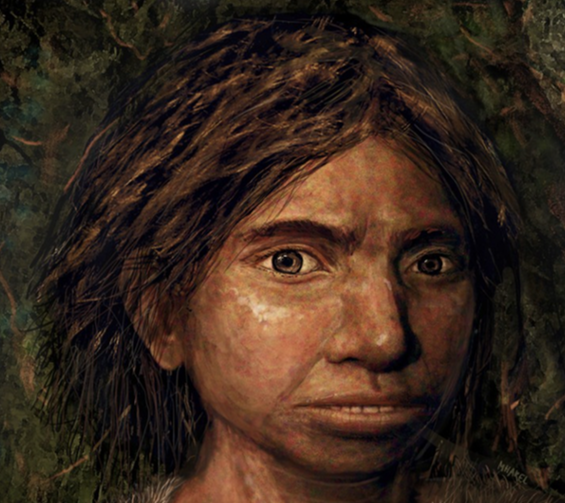
Artist’s rendering of a Denisovan, an extinct ancient human (hominins) related to Neanderthals, who interbred with modern homosapiens, some 380,000 to 470,000 years ago. Some modern people, particularly in Melanesia and Southeast Asia, carry up to 4-6% of their DNA.
We can surmise a lot about ourselves if we think about how we’ve evolved since the days of roaming clans and cave dwellers. For example, I wrote about the evolution of fear in my anxiety series as essential to survival — so fear is hardwired into the most primitive section of our brain. And so, too, forgiveness and precursors to modern estrangement — revenge, retaliation, exclusion — are two likely, ancient paths taken by injured or oppressed individuals or groups to survive and thrive.
Researchers in evolutionary science are probing the origins of our instincts, proclivities, and attempts at conflict resolution. Older theories get refined and tested through studies and meta-analyses, though much remains speculative about early Homo sapiens. As I read this work, the theories governing our survival as a species make more sense for who we are today.
There are oppositional forces that make the group stronger at the expense of the individual. And there are instances where what’s right for the individual serves the larger good, especially in consideration of everyday survival (food, water, shelter) and future survival (reproduction/ diversity in the gene pool, intergroup cooperation).
At one time, evolutionary scientists thought forgiveness evolved as the “antidote” to conflict and natural exclusionary tendencies in ancient times. But that’s not the thinking today, thanks to scholarly research and books like psychologist Michael McCullough’s Beyond Revenge: The Evolution of the Forgiveness Instinct. Now the science community believes — in a situation of one entity (individual, group, culture) being wronged by another entity — forgiveness and exclusion both serve important evolutionary purposes.
This post examines how these approaches to conflict are embedded in our DNA, sometimes literally — and when we hate, seek revenge, avoid, or reconcile, we act from instincts that extend back to prehistoric times.
Forgiveness and Revenge: An Evolutionary Struggle
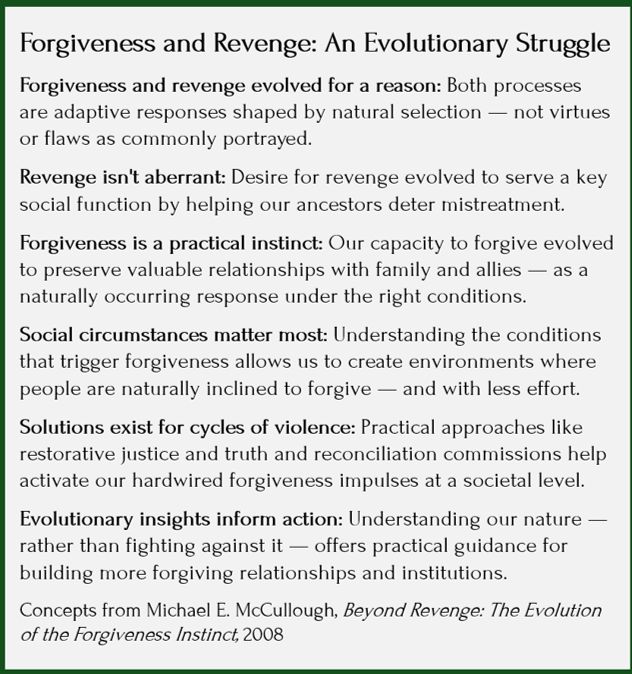
According to McCullough’s 2008 book, the desire for revenge is not some evil demon within us causing people to do terrible things to one another. Instead, he writes, natural selection culled an orientation for revenge to solve social dilemmas in our ancestral past.
Likewise, our capacity to forgive evolved to help our prehistoric ancestors hold onto relationships with genetic relatives and other valuable relationship partners. McCullough writes that social circumstances activated the forgiveness instinct among our forebears — and modern-day humans are more naturally inclined to forgive, often with less effort than we usually assume.
By understanding how evolution shaped our capacity for both forgiveness and exclusion, we can improve how we “make our relationships and social institutions better at activating the forgiveness instinct.” Top of Form
The Social Fabric
We evolved complex emotions, writes Glenn Geher in “Forgiveness Through an Evolutionary Lens,” Psychology Today, to absorb the moral code of the group. These “moral emotions — remorse, shame, gratitude, forgiveness — motivated behaviors to keep people connected with others after transgressions and disruptions in the fabric of the community.” He notes:
The human social mind did not evolve to be adapted to modern large-scale conditions, such as mega-cities; it evolved for millennia as our ancestors lived in small, tight-knit groups that were capped at about 150. People developed longstanding alliances and relationships with one another — relationships that often lasted a lifetime.
Under such conditions, people came to help each other in mutually beneficial ways and learned who could be trusted and who could not be. Such social-cognitive skills were critical for ultimately surviving and reproducing under these ancestral conditions. — Glenn Geher, PhD, “Forgiveness Through an Evolutionary Lens,” Psychology Today
Specifically, forgiveness probably evolved to help people reconnect with others who have wronged them in some way. Here’s how Geher describes a “cost-benefit reasoning process”:
- If you cut the transgressor out of your life completely, you’re less likely to have that person cause you problems in the future.
- But doing so may mean you lose at least one ally, along with more allies — the transgressor’s close friends and family members — an “evolutionarily tricky” dilemma.
- Not only that, forgiving someone to keep their support could lead to the transgressor exploiting you in the future, if they judged you as weak. Researches call this divine forgiveness, which they suggest is more rare and unlikely.
Geher concludes that forgiveness evolved to prevent social rupture from driving people apart, bringing relief to tense situations, and improving chances to move beyond it. But it’s not a guarantee of positive outcomes — so, for good evolutionary reasons, it’s always a process.
The Moment We Decide What Someone Means to Us

Photo: Dreamstime
Something changes between two long-time friends, possibly following an insensitive or harsh comment. Or we feel left out, dismissed, or, worse, betrayed. Perhaps we recognize what seemed like a one-off is actually a pattern.
In that moment, we might ask the same two questions our forebears wondered about: is the other person safe for us? Is the relationship worth keeping?
Religion encapsulates forgiveness as a moral decision that we must choose because it’s good or right.
Yet, in reality, we tend to assess not only what happened, but also what it means. How we react reflects our deeper concern about being taken seriously and being treated with respect. So we respond to both the hurt we feel and its implications.
In small, interdependent groups, being undervalued or mistreated could reduce protection and access to shared resources, increasing vulnerability to further harm. Groups learned to scan for risk when detecting signs of disregard — and that impulse remains within us.
At times, we can reach a clear conclusion, but mostly it’s a process of internal negotiation. In our cost-benefit analysis, we take stock of the friendship. One part of us pushes toward distance, protection, and withdrawal. But another part, certainly in the case of an adult child or a sibling perhaps, we pull toward repair and continuation.
We may have been harmed, but we clearly love this person — or need them. They may be part of our history, our identity, and our daily life. Losing the relationship would come at a cost. This tension reflects how we’re built rather than indecisiveness or weak judgment. Without fully realizing it, we weigh several needs at once.
When we opt for forgiveness and continue the relationship despite some level of risk, the other person may change or limit harmful behavior. We may rely on longer breaks between visits.
Forgiveness doesn’t require us to ignore or minimize harm. The process often depends on taking it seriously enough to assess clearly. When our evaluation doesn’t support repair, we move toward distance, exclusion, or estrangement. We do so as a form of protection rather than failure or cruelty.
But we remain open to what the other person does. Do they apologize, for example? Is it sincere? Do they signal their desire for the relationship?
From the outside, these choices may appear inconsistent. From the inside, they often follow a consistent logic. We evolved with the capacity for both retaliation and forgiveness because human relationships vary in value, reliability, and risk. No single response applies to every situation. We ask whether a relationship can sustain both truth and connection, or whether we need to let it go.

Fear of Exploitation
Researcher Anthony Lopez, PhD, assistant professor at Washington State University in political psychology, talks about forgiveness in relation to exploitation. In “Evolution Makes Forgiving Hard,” ProSocial World, Lopez, writes, “Forgiveness is emotionally difficult for a good evolutionary reason: a psychological motivation to unconditionally respond to exploitation with meekness or submission simply could not evolve. What we more commonly see in nature is some form of retaliation in response to transgressions, or just plain avoidance.” He adds:
Forgiveness is hard because evolution has endowed us with the psychological motivation to avoid being exploited by others, and the easiest way to prevent exploitation is not to forgive, but to hit back.
Discussion of forgiveness must begin by understanding the urge to retaliate.
Direct retaliatory violence is perhaps nature’s most reliable conflict resolution mechanism. It evens the score by reversing any gains that might be had by the aggressor. —Anthony Lopez, PhD, “Evolution Makes Forgiving Hard,” ProSocial World
But, Lopez cautions, not all forms of retaliation are the same. He distinguishes between two forms: revenge and negative reciprocity. Revenge is an extreme form of retaliation and serves a unique purpose.
Revenge, Hatreid, and the Implacable Foe
After a slight or more serious breach of trust, an act of revenge is more than retaliatory.
According to Lopez, revenge is meant to cause suffering and to be out of proportion with what preceded it. It’s motivated by hatred and the idea that another’s existence and wellbeing will cause harm.
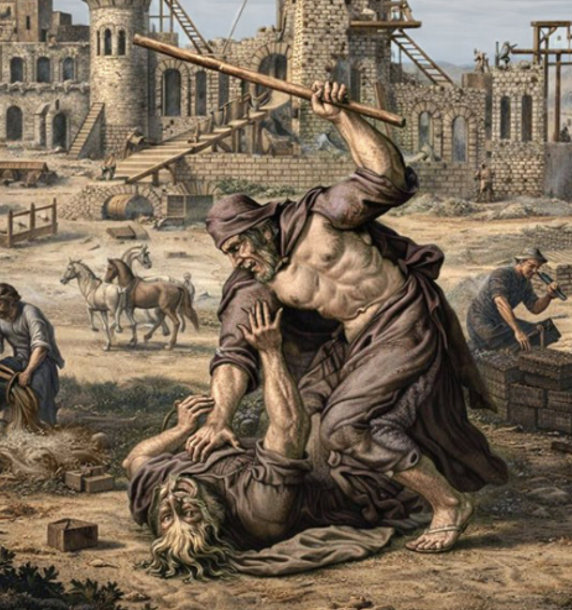
“Moses Striking the Egyptian” (detail), Amsteredam Haggadah, 1695-1712. Standford Universities Libraries. Thetorah
There is a perception that the very existence of some individual or group is an imminent threat to your life. The role of hate is important here and is meant as an explicit contrast with anger. Hate is triggered in part by a belief that an out-group is actually unable to change their villainous ways. Revenge is triggered by the perception (real or not) of the implacable foe: the maniacal menace whose mind cannot be turned, and whose behavior cannot be stopped. —Anthony Lopez, ProSocial World
From the Hatfields and McCoys to the Arab-Israeli conflict, Lopez asserts, “anthropologists widely recognize that raids and ‘blood revenge’ are the most common form of and motivation for warfare across the world.” Revenge can be easily triggered between groups because the “evolutionary cards” are stacked in that direction.
Evolving from life in small nomadic groups, we’ve inherited biases, intuitions, and suspicions that lead us to prefer in-group to out-group associations. Lopez asserts such biases orient us toward revenge and away from reconciliation and compromise as misguided and dangerous.
NEGATIVE RECIPROCITY AND THE CHALLENGE OF FORGIVENESS
Revenge is an extreme reaction to perceived wrongs, but there are other forms of punishment of rivals that isn’t about their complete eradication. What researchers call negative reciprocity, another type of cost-benefit analysis.
An exchange of cost takes place: you harm me, and I respond with an equivalent and proportional harm. Unlike revenge, it’s a proportional response meant to change minds with the promise of restoring or building a cooperative relationship. Lopez writes, negative reciprocity “is an evolved strategy meant to achieve a delicate balancing act: it seeks to end unjust or apparently inequitable behavior, while repairing a cooperative relationship with the one who has wronged you.”

Source: sciencephoto
We are social organisms, which means that we are particularly vulnerable to exploitation from others around us, but it also means we depend heavily on others for valuable cooperative opportunities. There are two parts to the success of negative reciprocity as a conflict resolution strategy: proportionality and forgiveness. —Anthony Lopez, ProSocial World
So we come full circle: forgiveness is a possibility but not likely until we determine that we won’t be further manipulated or exploited, and we weigh the cost-benefits for ourselves as individuals and for the groups we’re a part of. We need to have enough “in the bank” to want to restore status quo. Or the group incentive is to override our individual hesitations and pressure us into forgiveness. The reverse can also occur, when group pressures override an individual’s reluctance to forgive or reconcile.
Intergroup Forgiveness and Evolutionary Psychology
If experience tells us we’re capable of harming those closest to us — emotionally, socially, materially, physically — we may recognize that mostly we seek opportunities to restore relationships rather than abandon them. According to Thomas McCauley, et al., “An Evolutionary Psychology View of Forgiveness: Individuals, Groups, and Culture,” Current Opinion in Psychology, Science Direct, opting for forgiveness is a process that a “victim goes through to change their motivation toward a transgressor. This change is crucial for maintaining and repairing relationships, especially when thinking less of harm caused but the survival of the group from ‘reproductive success’”:
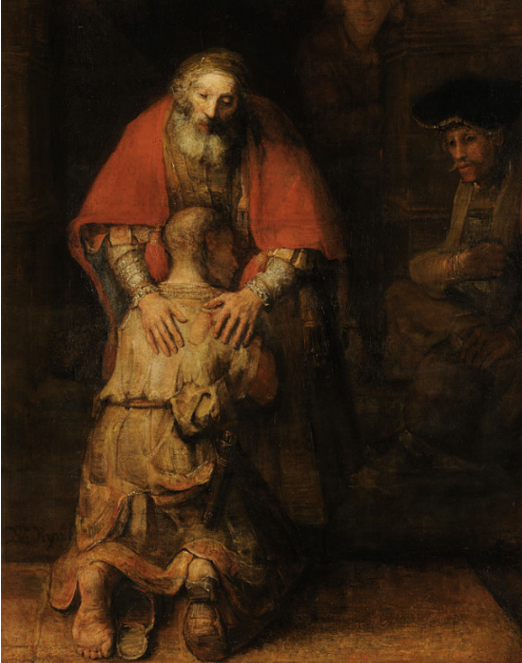
Rembrandt, Return of the Prodigal Son (detail), 1668-1669. Hermitage Museum, St. Petersburg. Wikipedia
Guided by the principle of natural selection, an evolutionary perspective on psychology rests on the assumption that psychological mechanisms evolve to maximize inclusive fitness … [regarding] an individual’s direct reproductive success and the reproductive success of the individual’s genetic relatives, which raises the reproductive success of the individual indirectly. — Thomas McCauley, et al., “An Evolutionary Psychology View of Forgiveness: Individuals, Groups, and Culture,” Current Opinion in Psychology, Science Direct.
Retaliation and Forgiveness in the Adaptive Toolkit
Seen from an evolutionary perspective, our genetic forbears had both “retaliatory tendencies” and “capacity for forgiveness” — a “broad toolkit of motivational systems in humans fashioned by natural selection to help us avoid exploitation, resolve conflicts of interest, and restore valued relationships,” writes Lopez. This adaptive toolkit relates to the diverse problems humans faced in ancestral environments.
Resolving a conflict with a close friend or someone within your own group involves risks and opportunities that are quite different than those faced when seeking to resolve a conflict with an enemy or with a stranger from an out-group.
Neither retaliation nor forgiveness is an unalloyed good; both involve significant risks and benefits. But we owe it to ourselves to at least consider the reasons why forgiveness might be difficult, and to challenge ourselves to consider the possibility that forgiveness might sometimes be worth the risk. Although forgiveness often follows rather than creates the conditions that facilitate reconciliation, the conditions for peace are never created on their own.
Over the past decade, there’s increasing scientific understanding of forgiveness, providing new insights into causes and effects. An evolutionary approach to understanding helps to explain not only how forgiveness and estrangement, retaliation, or revenge work, but — as McCauley, et al., state in their summary — why humans have the capacity to forgive in the first place.
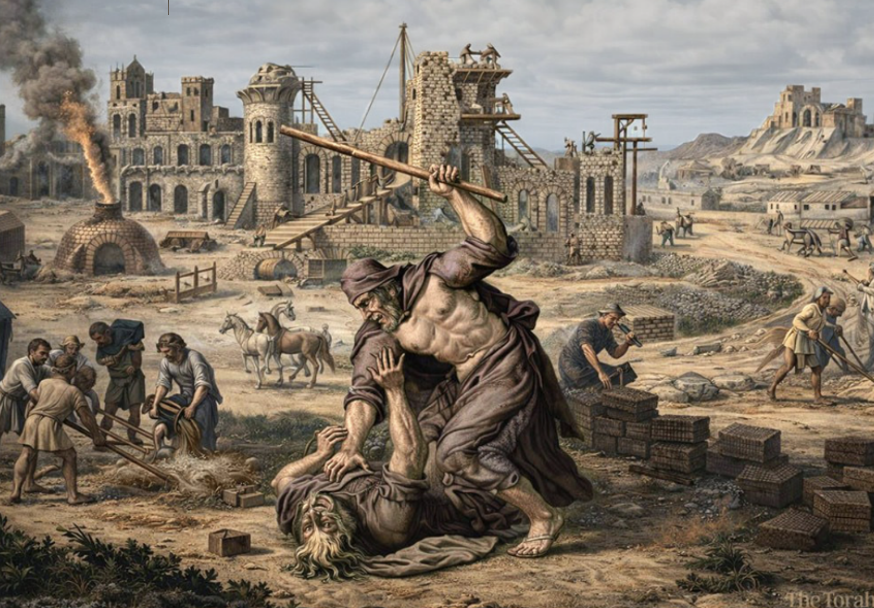
When Moses sees an Egyptian striking a Hebrew, he kills the Egyptian. “His brothers” the Egyptians, with whom he identifies at the beginning of the Torah verse, are not the same as “his brothers,” with whom he identifies at the end. Reflexively, Moses has left the ranks of the perpetrators and joined those of the victims. Does Moses get involved because he knows he is a Hebrew or does he act out of a sense of justice? “Moses Striking the Egyptian,” Amsteredam Haggadah, 1695-1712. Standford Universities Libraries. From prof. rabbi Jonathan Magonet, “Raised as an Egyptian, How Does Moses Come to Identify as a Hebrew?” Thetorah
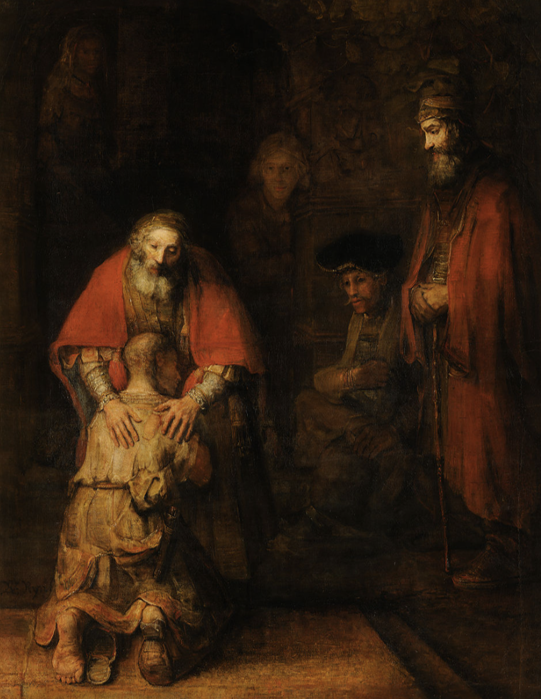
Rembrandt’s Return of the Prodigal Son (c. 1668–1669) depicts the emotional climax of the new testament parable. It’s the moment a wayward son, who squandered his inheritance on a life of reckless decadence, returns home in rags to seek mercy from his father. The painting portrays forgiveness as an act of unconditional love that transcends human justice. It was completed near the end of Rembrandt’s life after he faced personal tragedies, including bankruptcy and loss of his wife and children.
Coming Up Next
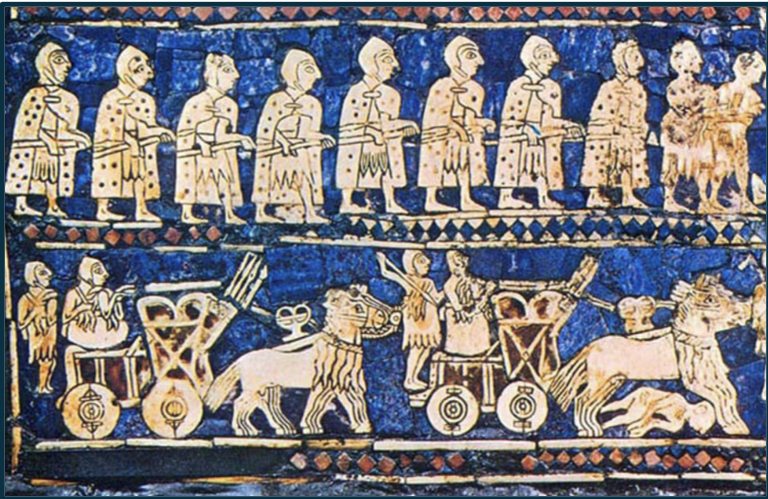
In Post 3: Forgiveness: Between Moral Ideals and Human Reality, I discuss forgiveness as one of humanity’s oldest moral ideals and its implications for how we act today. What forgiveness asks of us is deeply complex, shaped by religion, culture, philosophy, and the human struggle between hurt, justice, and repair.
Copyright ©2026 Jan Swan
 English